Loading...
Cleopatra VII vs Suleiman the Magnificent
Suleiman the Magnificent leads by 26.0 pts · 2 figures compared
…
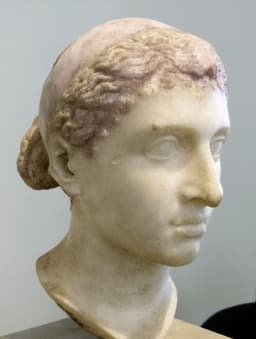
Cleopatra VII
Politician · Ancient
47.2Total
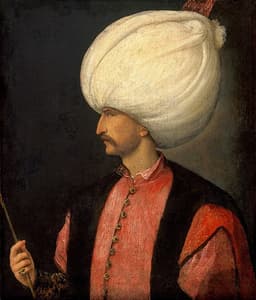
Suleiman the Magnificent
Emperor · Medieval
73.2Total
Basic Information
Born
-69
1494
Died
-30
1566
Era
Ancient
Medieval
Nationality
Egypt
Ottoman Empire
Occupation
Politician
Emperor
Civilization
Middle Eastern
Middle Eastern
Score Comparison
Military (10%)
20.0
85.0
Political (20%)
45.0
78.0
Influence (20%)
40.0
72.0
Legacy (20%)
80.0
68.0
Leadership (15%)
40.0
72.0
Strategy (15%)
25.0
72.0
TOTAL
47.2
73.2
Cleopatra VII — Complete Timeline
48 BC
Alliance with Julius CaesarPolitical Action◆ Major
Cleopatra allied with Julius Caesar during the Roman civil war. She had herself smuggled into his palace in Alexandria rolled in a carpet. Caesar supported her claim to the throne, defeating her brother Ptolemy XIII and restoring her as co-ruler of Egypt.
Impact: regional
47 BC
Birth of CaesarionPolitical Action◆ Major
Cleopatra gave birth to Ptolemy XV Caesar (Caesarion), claiming he was Julius Caesar's son. This birth strengthened her political position and provided a potential heir to both Egypt and Rome, though Caesar never officially acknowledged him as his heir.
Impact: regional
41 BC
Alliance with Mark AntonyPolitical Action◆ Major
Cleopatra formed a political and romantic alliance with Mark Antony, a Roman triumvir. She provided him with financial and military support for his campaigns in the East. Their relationship produced three children and solidified her control over Egypt.
Impact: regional
31 BC
Battle of ActiumWar
The combined naval forces of Cleopatra and Mark Antony were decisively defeated by Octavian's fleet under Agrippa at Actium in Greece. Cleopatra fled with her ships, and Antony followed, leading to their eventual downfall and Octavian's rise as Augustus.
Impact: globaltragic
30 BC
Death of CleopatraPolitical Action
After Octavian's forces captured Alexandria, Cleopatra died by suicide, traditionally said to be from the bite of an asp. Her death ended the Ptolemaic dynasty and Egypt became a Roman province, marking the end of Hellenistic Egypt's independence.
Impact: globaltragic
Suleiman the Magnificent — Complete Timeline
1522 AD
Siege of RhodesWar◆ Major
Suleiman personally led a massive Ottoman campaign against the Knights Hospitaller on Rhodes. After a six-month siege, the knights surrendered and were allowed to leave. This victory secured Ottoman control over the eastern Mediterranean.
SiegeMediterraneanKnights Hospitaller
Impact: regional
1526 AD
Battle of MohácsWar
Suleiman's Ottoman army defeated the Hungarian forces of King Louis II at Moh
BattleHungaryOttoman expansion
Impact: regional
1529 AD
Siege of ViennaWar◆ Major
Suleiman besieged Vienna, the Habsburg capital, with a large army. The siege failed due to supply issues, disease, and strong defenses. This defeat halted Ottoman expansion into central Europe and marked the empire's furthest advance westward.
SiegeViennaDefeat
Impact: regional
1530 AD
Codification of Ottoman lawReform◆ Major
Suleiman oversaw the compilation and standardization of Ottoman legal codes, known as Kanun. These laws regulated criminal justice, land tenure, and taxation, creating a unified legal system that balanced sharia with secular law. He earned the title 'Kanuni' (the Lawgiver).
Legal reformKanunOttoman Empire
Impact: nationalconstructive
1536 AD
Execution of Ibrahim PashaPolitical Action◆ Major
Suleiman ordered the execution of his grand vizier and close friend Ibrahim Pasha, who had served for 13 years. The reasons remain debated, but likely involved Ibrahim's growing power and conflicts with Suleiman's wife, Hurrem Sultan. This event demonstrated the absolute power of the sultan.
ExecutionCourt politicsPower
Impact: nationaltragic
Expert Analysis
Cleopatra VII vs Suleiman the Magnificent
# The Throne and the Serpent: Cleopatra and Suleiman, Two Faces of Power in the Eastern Mediterranean
On a sweltering August day in 30 BCE, a woman in her late thirties lay dying in a palace in Alexandria, the bite of an asp still burning in her flesh. Across the centuries, in September 1566, an old man of seventy-two breathed his last in a tent outside the besieged Hungarian fortress of Szigetvár, his heart still pounding with the rhythm of conquest. One was the last pharaoh of Egypt, a queen who had gambled everything on love and alliance. The other was the longest-reigning sultan of the Ottoman Empire, a lawgiver and conqueror who had reshaped the world. Both ruled in the shadow of Rome—Cleopatra in its dying grasp, Suleiman in its new incarnation as the Habsburg Empire. Yet their paths, their fates, and their legacies could not have been more different.
Origins
Cleopatra VII was born into a world of decay. The Ptolemaic dynasty, Greek Macedonian in origin, had ruled Egypt for nearly three centuries, but by 69 BCE it was a hollow shell—riven by incest, intrigue, and the ever-present threat of Rome. Her father, Ptolemy XII, had bought Roman favor with bribes and servility. Cleopatra grew up speaking Egyptian, Greek, and several other languages, a rare intellectual in a family of degenerates. She learned that power was not inherited but seized, and that survival meant mastering the art of seduction—not just of men, but of empires.
Suleiman, by contrast, was born into the apex of a rising power. In 1494, the Ottoman Empire was already the dominant force in the eastern Mediterranean, and Suleiman was the only surviving son of Sultan Selim I, a conqueror who had doubled Ottoman territory. Suleiman’s upbringing was one of discipline and preparation: he studied the Quran, law, history, and military strategy in the royal palace in Istanbul. He was trained to rule, not to scheme. While Cleopatra had to claw her way to the throne through a civil war with her own siblings, Suleiman ascended to power at age twenty-six with the empire at his feet, his father having cleared the path by executing potential rivals.
Rise to Power
Cleopatra’s rise was a masterpiece of political theater. In 48 BCE, she was a twenty-one-year-old queen in exile, her brother-husband Ptolemy XIII having driven her from Alexandria. The Roman civil war between Julius Caesar and Pompey had spilled into Egypt, and Pompey had been murdered on the beach by Ptolemy’s men. Caesar arrived, furious and in need of allies. Cleopatra saw her chance. She had herself rolled into a carpet—or, as some accounts say, a linen sack—and smuggled past her brother’s guards into Caesar’s quarters. When the carpet unrolled, the queen of Egypt was at his feet. Within months, she was his lover, his ally, and the mother of his son, Caesarion. She had turned her exile into a throne.
Suleiman’s rise was far less dramatic. He became sultan in 1520 upon his father’s death, and no one challenged him. The Janissaries, the elite slave-soldiers of the empire, had grumbled briefly but were quickly pacified with a raise. Suleiman’s first act was to release Egyptian and Persian prisoners held by his father, a gesture of magnanimity that signaled a new era. He then turned his gaze northward, toward Hungary and the heart of Europe. His rise was not a gamble but a coronation, the natural unfolding of a dynasty at its zenith.
Leadership & Governance
Cleopatra ruled through personal charisma and strategic alliance. She had no standing army of her own—Egypt’s military was a shadow of its former self—so she wielded influence instead of swords. She charmed Caesar into backing her claim, then after his assassination in 44 BCE, she pivoted to Mark Antony, the most powerful Roman in the east. Together, they formed a political and romantic partnership that aimed to create a new Hellenistic empire, with Alexandria as its capital, independent of Rome. She funded Antony’s campaigns with Egyptian gold and bore him three children. But her governance was always reactive: she was a brilliant tactician in a game where she held no cards of lasting power.
Suleiman, by contrast, governed from a position of overwhelming strength. He was both a warrior and a bureaucrat. In 1530, he oversaw the codification of Ottoman law—the Kanun—which standardized criminal, financial, and administrative rules across a sprawling empire. He balanced the power of the Janissaries, the religious scholars, and the provincial governors with a masterful hand. His military campaigns were meticulously planned: the 1522 Siege of Rhodes, where he crushed the Knights Hospitaller after six months of relentless bombardment; the 1526 Battle of Mohács, where he annihilated the Hungarian army and killed King Louis II; and the 1529 Siege of Vienna, which, though a failure, proved that the Ottomans could threaten the heart of Europe. Suleiman was not just a conqueror; he was an administrator who understood that an empire is built on laws as much as on swords.
Triumph & Tragedy
Cleopatra’s greatest triumph was her survival—until it wasn’t. For nearly two decades, she kept Egypt independent, a feat that no Ptolemaic ruler after her would match. She stood on the deck of her flagship at the Battle of Actium in 31 BCE, commanding the Egyptian fleet alongside Antony. But Octavian’s admiral Agrippa outmaneuvered them, and the battle was lost. Cleopatra fled, and Antony followed, leaving their fleet to be destroyed. The tragedy was not just military: it was the collapse of a dream. When Octavian’s forces entered Alexandria in 30 BCE, Cleopatra tried one last seduction—she sent messages to Octavian, offering to abdicate in exchange for her children’s lives. He refused. She died by her own hand, the story goes, choosing the bite of an asp over the humiliation of being paraded in chains through Rome.
Suleiman’s greatest triumph was his longevity and his reach. He expanded the empire to its greatest territorial extent, from Budapest to Baghdad, from the Crimea to the Nile. He was a patron of the architect Sinan, who built the Süleymaniye Mosque, a masterpiece of Islamic architecture that still dominates the Istanbul skyline. But his tragedy was personal and profound. In 1536, he ordered the execution of his closest friend and grand vizier, Ibrahim Pasha, a man who had served him for thirteen years. The reasons remain murky—jealousy, fear of Ibrahim’s growing power, or the machinations of Suleiman’s wife, Hurrem Sultan. Later, Suleiman executed his own son, Mustafa, on suspicion of rebellion. The sultan who had codified justice ended his life haunted by the blood of those he loved.
Character & Destiny
Cleopatra was a creature of her era: the late Hellenistic world, where empires were made and unmade by the whims of Roman generals. Her intelligence, her languages, her charm—these were her weapons, and they were formidable. But she could not build an army, and she could not buy loyalty from the Roman Senate. Her destiny was to be the last of her line, a footnote in the rise of Augustus. She understood that her power was borrowed, and she chose to end it on her own terms.
Suleiman was a creature of his era as well: the golden age of the Ottoman Empire, when the world seemed to bend to the will of the sultan. He was confident, methodical, and ruthless. His personality was shaped by the certainty that he was the shadow of God on Earth, the Caliph of Islam, the ruler of the world. That certainty allowed him to build an empire that would last for centuries, but it also allowed him to destroy the men who had made him great. His destiny was to be remembered as the Magnificent—a title that speaks to his power, but not to his peace.
Legacy
Cleopatra’s legacy is one of myth. She has been remembered as a seductress, a tragic queen, a symbol of feminine power and fatal passion. Shakespeare, Hollywood, and countless artists have reshaped her story into a romance of East and West. But the historical Cleopatra was a politician of rare skill, fighting a losing battle against the inevitable tide of Roman domination. She left no empire, no law code, no enduring institution—only a story.
Suleiman’s legacy is one of substance. The Kanun remained the basis of Ottoman law for centuries. The Süleymaniye Mosque still stands. The Ottoman Empire, which he brought to its peak, would survive for nearly four hundred years after his death. He is remembered not as a romantic figure but as a ruler who defined an age. In Turkey, he is known as Kanuni, “the Lawgiver”—a title that speaks to his greatest achievement.
Conclusion
Standing in the Süleymaniye Mosque in Istanbul, looking up at the dome that seems to float on light, one feels the weight of Suleiman’s empire—solid, enduring, built to last. Standing on the shore at Actium, looking out at the sea where Cleopatra’s fleet was shattered, one feels only the wind and the water, and the memory of a queen who gambled everything and lost. These two rulers, born a thousand miles and fifteen centuries apart, both faced the question of how to hold power in a world dominated by Rome. Suleiman answered by becoming Rome’s rival, building an empire that could match it. Cleopatra answered by trying to become Rome’s partner, and she was crushed. In the end, the difference between them was not intelligence or ambition—it was the simple, brutal arithmetic of power. Suleiman had the army, the treasury, and the time. Cleopatra had only herself. And that was never enough.
Rankings
🥇
Suleiman the MagnificentLeader
Mil: 85.0Pol: 78.0Inf: 72.0
73.2
🥈
Cleopatra VII
Mil: 20.0Pol: 45.0Inf: 40.0
47.2
+26.0 behind
How This Comparison Works
Algorithm
Each figure is scored on 6 dimensions (0—100 scale) based on structured historical data: Military (10%), Political (20%), Influence (20%), Legacy (20%), Leadership (15%), Strategy (15%). The weighted total produces the final ranking.
Data Sources
Scores are computed from structured sub-indicators in the database. Scale factors adjust for era (Ancient ×0.85, Modern ×1.0) and civilization size (Eastern ×1.05, Other ×0.80) to account for differences in population and military scale.
Maximum 3 Figures
Comparisons are limited to 2—3 figures to ensure readability and statistical meaningfulness.
Error Margins
±5 points per dimension — Sub-scores are derived from historical records with inherent uncertainty. Two figures within 5 points on a dimension should be considered roughly equivalent in that area.
Total Score Accuracy
±3 points overall — The weighted combination of 6 dimensions produces a total score with approximately ±3 points of uncertainty. Differences of less than 3 points are not statistically significant— the figures are effectively tied.
Known Limitations
- Historical records are incomplete and uneven across civilizations
- Figures from oral-tradition societies may be underrepresented
- Occupation labels can misclassify multi-role figures
- Scores measure capability and impact, not moral character
- Quantitative scoring is a comparison tool, not absolute truth
Capability Radar
Military (10%) — Battles & Warfare
Battles
20
95
Win Rate
15
90
Expansion
10
95
Political (20%) — Governance & Reform
Reform
40
90
Diplomacy
85
88
Economy
55
85
Influence (20%) — Cultural & Global Reach
Cultural
80
90
Global
85
88
Legacy (20%) — Historical Impact
Historical
85
92
Longevity
90
85
Leadership (15%) — Power & Stability
Tenure
60
95
Stability
35
85
Strategy (15%) — Tactics & Innovation
Strategy
30
92
Tactics
25
85
Reform
10
80
Similar Comparisons
Comments & Discussion
No comments yet. Be the first to share your thoughts!