Loading...
Cleopatra VII vs Julius Caesar
Julius Caesar leads by 35.6 pts · 2 figures compared
…
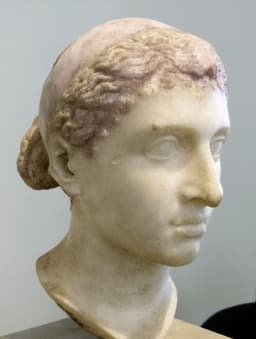
Cleopatra VII
Politician · Ancient
47.2Total

Julius Caesar
General · Ancient
82.8Total
Basic Information
Born
-69
-100
Died
-30
-44
Era
Ancient
Ancient
Nationality
Egypt
Roman Republic
Occupation
Politician
General
Civilization
Middle Eastern
Western
Score Comparison
Military (10%)
20.0
88.0
Political (20%)
45.0
78.0
Influence (20%)
40.0
85.0
Legacy (20%)
80.0
82.0
Leadership (15%)
40.0
80.0
Strategy (15%)
25.0
85.0
TOTAL
47.2
82.8
Cleopatra VII — Complete Timeline
48 BC
Alliance with Julius CaesarPolitical Action◆ Major
Cleopatra allied with Julius Caesar during the Roman civil war. She had herself smuggled into his palace in Alexandria rolled in a carpet. Caesar supported her claim to the throne, defeating her brother Ptolemy XIII and restoring her as co-ruler of Egypt.
Impact: regional
47 BC
Birth of CaesarionPolitical Action◆ Major
Cleopatra gave birth to Ptolemy XV Caesar (Caesarion), claiming he was Julius Caesar's son. This birth strengthened her political position and provided a potential heir to both Egypt and Rome, though Caesar never officially acknowledged him as his heir.
Impact: regional
41 BC
Alliance with Mark AntonyPolitical Action◆ Major
Cleopatra formed a political and romantic alliance with Mark Antony, a Roman triumvir. She provided him with financial and military support for his campaigns in the East. Their relationship produced three children and solidified her control over Egypt.
Impact: regional
31 BC
Battle of ActiumWar
The combined naval forces of Cleopatra and Mark Antony were decisively defeated by Octavian's fleet under Agrippa at Actium in Greece. Cleopatra fled with her ships, and Antony followed, leading to their eventual downfall and Octavian's rise as Augustus.
Impact: globaltragic
30 BC
Death of CleopatraPolitical Action
After Octavian's forces captured Alexandria, Cleopatra died by suicide, traditionally said to be from the bite of an asp. Her death ended the Ptolemaic dynasty and Egypt became a Roman province, marking the end of Hellenistic Egypt's independence.
Impact: globaltragic
Julius Caesar — Complete Timeline
58 BC
Gallic WarsWar◆ Major
Caesar, as proconsul of Gaul, launched a series of campaigns that conquered all of Gaul (modern France, Belgium, and parts of Switzerland). He fought numerous battles, including against the Helvetii, the Belgae, and the Gallic chieftain Vercingetorix. The wars brought immense wealth and a loyal army to Caesar.
Gallic WarsConquestRoman Expansion
Impact: regional
49 BC
Crossing the RubiconPolitical Action◆ Major
Caesar led Legio XIII across the Rubicon River into Italy, defying the Roman Senate's order to disband his army. This act triggered a civil war against Pompey and the Optimates, ultimately leading to Caesar's dictatorship and the end of the Roman Republic.
Roman Civil WarEnd of RepublicPower Struggle
Impact: global
48 BC
Battle of PharsalusWar◆ Major
Caesar's outnumbered army defeated the larger forces of Pompey the Great at Pharsalus in Greece. Caesar's tactical use of a reserve line to counter Pompey's cavalry charge proved decisive. Pompey fled to Egypt, where he was assassinated, leaving Caesar as the undisputed master of the Roman world.
Roman Civil WarBattleDecisive Victory
Impact: regional
44 BC
Appointment as Dictator for LifePolitical Action◆ Major
The Roman Senate appointed Caesar dictator perpetuo (dictator for life), granting him unprecedented personal power. This move concentrated military, legislative, and judicial authority in one person, effectively ending the Roman Republic's traditional system of checks and balances and alarming many senators.
DictatorshipEnd of RepublicPower Consolidation
Impact: regionaldestructive
Assassination on the Ides of MarchPolitical Action◆ Major
A group of Roman senators, led by Marcus Junius Brutus and Gaius Cassius Longinus, stabbed Caesar to death at a meeting of the Senate in the Theatre of Pompey. The assassination was intended to restore the Republic, but instead triggered another civil war that led to the rise of the Roman Empire.
AssassinationRoman PoliticsEnd of Republic
Impact: globaldestructive
Expert Analysis
Julius Caesar vs Cleopatra VII
# The Fate of Ambition: Caesar and Cleopatra at History’s Crossroads
On a spring morning in 44 BCE, the most powerful man in the Roman world fell to twenty-three dagger blows on the floor of the Senate chamber. Just fourteen years later, the last queen of Egypt pressed an asp to her breast in a palace chamber, choosing death over humiliation. Between these two deaths lies one of history’s most revealing contrasts: two figures who shaped their age, yet who began with vastly different resources and ended with legacies that could hardly be more unequal. What drove Julius Caesar to eternal glory and Cleopatra to tragic memory? The answer lies not in their stars, but in themselves.
Origins
Caesar was born into the chaos of a dying republic. His family, the Julii, claimed descent from the goddess Venus, but they were patricians of modest means in an era when money bought power. His father died when Caesar was sixteen, leaving him to navigate Roman politics in the shadow of Sulla’s proscriptions. This was a world where a man’s worth was measured in military commands and provincial governorships, where the Senate and the people fought for control of an empire that had outgrown its constitution. Caesar learned early that in Rome, a name meant less than a legion.
Cleopatra entered a world already in collapse. By 69 BCE, the Ptolemaic dynasty had ruled Egypt for nearly three centuries, but its glory had faded into court intrigue, sibling murder, and Roman domination. Her father, Ptolemy XII, had bought Roman favor with bribes, leaving his children a kingdom that was technically independent but practically a client state. Cleopatra was raised in Alexandria, the greatest city of the Hellenistic world, speaking nine languages and studying philosophy, astronomy, and diplomacy. She understood that her throne depended not on Egyptian strength, but on Roman sufferance.
Rise to Power
Caesar’s path was a masterclass in calculated risk. He climbed the Roman ladder—quaestor, aedile, praetor—borrowing enormous sums to fund games and bribes, always gambling that future commands would repay his debts. His real breakthrough came in 58 BCE, when he secured the governorship of Gaul. Over eight years, he conquered a territory that doubled the size of the Republic, writing his own propaganda in the *Commentaries* and forging an army that loved him more than Rome. When the Senate ordered him to disband his legions, he made his choice: in 49 BCE, he crossed the Rubicon River with a single legion, uttering the famous words *“Alea iacta est”*—the die is cast. Civil war followed, and by 45 BCE, Caesar was master of Rome.
Cleopatra’s rise was more desperate. At eighteen, she inherited the throne alongside her younger brother Ptolemy XIII, who soon drove her into exile. While Caesar was conquering Gaul, she was raising an army in Syria. In 48 BCE, she saw her opportunity: Caesar arrived in Alexandria, pursuing his rival Pompey. Cleopatra had herself rolled in a carpet and smuggled into his palace. The gamble succeeded. Caesar was charmed, and he restored her to the throne—though as his ally, not his equal. Where Caesar had conquered, Cleopatra had seduced.
Leadership & Governance
Caesar ruled as a revolutionary reformer. As dictator, he overhauled the calendar, extended citizenship to provincials, reorganized local government, and launched public works that employed the Roman poor. He was a military genius who fought fifty battles and won them all, from the siege of Alesia to the lightning campaign at Zela—where he coined the phrase *“Veni, vidi, vici.”* Yet his political wisdom faltered at the crucial moment. He pardoned his enemies, packed the Senate with his supporters, and accepted honors that blurred the line between first citizen and king. He seemed to believe that his brilliance alone could reconcile the Republic to one-man rule.
Cleopatra governed as a pragmatist. She stabilized Egypt’s economy, reformed its currency, and maintained the grain shipments that Rome depended on. Her military score of 25 reflects her reality: she was never a battlefield commander. Instead, she wielded gold, charm, and political acumen. Her alliance with Mark Antony after 41 BCE gave her a Roman patron who loved her, and for a decade she ruled Egypt as effectively its independent queen. She bore Antony twins and a son, Caesarion, whom she claimed was Caesar’s heir. Her strategy was to preserve her kingdom by binding Rome’s leaders to her personally—a fragile foundation for any empire.
Triumph & Tragedy
Caesar’s greatest moment came in 46 BCE, when he celebrated four triumphs in Rome: for Gaul, Egypt, Pontus, and Africa. He paraded captives, distributed wealth, and seemed to stand at the peak of human achievement. His tragedy followed swiftly. On the Ides of March, 44 BCE, a conspiracy of senators—many of them his pardoned enemies—stabbed him to death. His last words, according to tradition, were *“Et tu, Brute?”* He had trusted too much in his own clemency.
Cleopatra’s triumph was more personal. In 41 BCE, she sailed up the Cydnus River to meet Antony, dressed as Aphrodite on a golden barge, and secured his devotion—and with it, the survival of her kingdom for another decade. Her tragedy came at Actium in 31 BCE, where her sixty ships fled the battle, a decision that historians still debate. Whether panic or calculation, it doomed Antony’s fleet. When Octavian captured Alexandria the next year, Cleopatra tried one final seduction—but the new master of Rome was immune. Rather than march in his triumph, she chose the asp.
Character & Destiny
Caesar was audacity incarnate. He took risks that would have destroyed lesser men—crossing the Rubicon, fighting at Munda with his back to the wall—and won because he believed the gods favored him. His personality was magnetic, his energy boundless, his ambition limitless. But that same ambition blinded him. He ignored warnings of conspiracy, disbanded his bodyguard, and walked into the Senate unarmed. His character made him great; his character killed him.
Cleopatra was resilience in silk. She survived exile, civil war, and the deaths of two Roman lovers. She played a weak hand with extraordinary skill, turning her kingdom’s weakness into her greatest weapon. Yet her strategy was always reactive, always dependent on a Roman patron. When Octavian proved impervious to her charms, she had no fallback. Her character could preserve, but it could not create.
Legacy
Caesar’s legacy is the Roman Empire itself. His adopted heir, Octavian, learned from his mistakes: he took the title Augustus, not king; he kept the Senate alive; he ruled for forty-five years. The empire Caesar built lasted five centuries in the West and a thousand years in the East. His name became synonymous with imperial power—*Kaiser*, *Tsar*, *Caesar*—and his writings shaped Western literature. His total score of 83.3 reflects a figure who transformed the world.
Cleopatra’s legacy is more complex. Her score of 46.8 captures her limited power, but not her enduring grip on the imagination. She became the archetype of the seductive Oriental queen, a figure of romance and tragedy. Shakespeare, Hollywood, and a thousand artists have reimagined her. Yet for all her fame, she failed. Egypt became a Roman province, Caesarion was executed, and the last pharaoh died by her own hand.
Conclusion
What separates these two figures is not intelligence or ambition—both had plenty of each. It is the nature of their power. Caesar commanded legions; Cleopatra commanded only influence. He could conquer; she could only persuade. In the brutal arithmetic of the ancient world, one legion was worth a thousand charms. Caesar’s story is one of creation—he built an empire from a republic’s ruins. Cleopatra’s is one of preservation—she held her kingdom together through sheer will until the world changed around her. Both died violently, but one left a world transformed, while the other left only a story. And in history, as in life, it is better to be the builder than the dreamer.
Rankings
🥇
Julius CaesarLeader
Mil: 88.0Pol: 78.0Inf: 85.0
82.8
🥈
Cleopatra VII
Mil: 20.0Pol: 45.0Inf: 40.0
47.2
+35.6 behind
How This Comparison Works
Algorithm
Each figure is scored on 6 dimensions (0—100 scale) based on structured historical data: Military (10%), Political (20%), Influence (20%), Legacy (20%), Leadership (15%), Strategy (15%). The weighted total produces the final ranking.
Data Sources
Scores are computed from structured sub-indicators in the database. Scale factors adjust for era (Ancient ×0.85, Modern ×1.0) and civilization size (Eastern ×1.05, Other ×0.80) to account for differences in population and military scale.
Maximum 3 Figures
Comparisons are limited to 2—3 figures to ensure readability and statistical meaningfulness.
Error Margins
±5 points per dimension — Sub-scores are derived from historical records with inherent uncertainty. Two figures within 5 points on a dimension should be considered roughly equivalent in that area.
Total Score Accuracy
±3 points overall — The weighted combination of 6 dimensions produces a total score with approximately ±3 points of uncertainty. Differences of less than 3 points are not statistically significant— the figures are effectively tied.
Known Limitations
- Historical records are incomplete and uneven across civilizations
- Figures from oral-tradition societies may be underrepresented
- Occupation labels can misclassify multi-role figures
- Scores measure capability and impact, not moral character
- Quantitative scoring is a comparison tool, not absolute truth
Capability Radar
Military (10%) — Battles & Warfare
Battles
20
95
Win Rate
15
92
Expansion
10
97
Political (20%) — Governance & Reform
Reform
40
90
Diplomacy
85
85
Economy
55
82
Influence (20%) — Cultural & Global Reach
Cultural
80
88
Global
85
94
Legacy (20%) — Historical Impact
Historical
85
95
Longevity
90
96
Leadership (15%) — Power & Stability
Tenure
60
75
Stability
35
60
Strategy (15%) — Tactics & Innovation
Strategy
30
94
Tactics
25
96
Reform
10
88
Similar Comparisons
Comments & Discussion
Gladio's Ghost6/16/2026
Caesar didn't "fall" to twenty-three dagger blows—he walked into that chamber knowing the plot. He dismissed his bodyguard that morning because he wanted martyrdom, not victory. Compare that to Cleopatra, who spent her last hours perfecting her suicide method with precision. Caesar's death was theater; hers was strategy. He got eternal glory because he died like a Roman senator expects. She got tragedy because she died like a queen, not a Roman puppet.
统计分析员6/16/2026
数据不会说谎:凯撒打下高卢八年,屠戮百万,带回的奴隶数量比罗马之前三百年总和还多——这叫永恒荣耀?这叫经济殖民。反观克利奥帕特拉,她统治埃及二十年,埃及粮仓保持稳定,亚历山大港的学问制度仍在运作,这才是真正的治国能力。历史只记得杀人放火的大将,却记不住维持秩序的实干家。不公平,但这就是数据告诉我们的。
Gladio's Ghost6/16/2026
Caesar didn't "fall" to twenty-three dagger blows—he walked into that chamber knowing the plot. He dismissed his bodyguard that morning because he wanted martyrdom, not victory. Compare that to Cleopatra, who spent her last hours perfecting her suicide method with precision. Caesar's death was theater; hers was strategy. He got eternal glory because he died like a Roman senator expects. She got tragedy because she died like a queen, not a Roman puppet.
书虫老宅6/16/2026
两位都是表演艺术家,但舞台不同。凯撒用拉丁文写战争回忆录,自封终身独裁官,死前还要在遗嘱里给每人发300塞斯特斯。克利奥帕特拉呢?她精通九种语言,控制托勒密末期的媒体机器,自导自演“埃及女王”人设。区别在于,凯撒的表演有元老院追认,她的表演只有罗马人的东方主义凝视。所以一个叫“大帝”,一个叫“妖女”。