Loading...
Cleopatra VII vs Peter the Great
Peter the Great leads by 26.0 pts · 2 figures compared
…
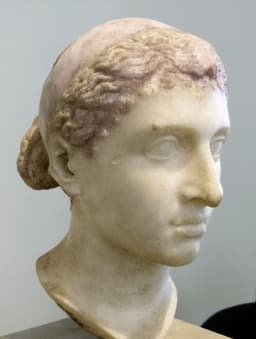
Cleopatra VII
Politician · Ancient
47.2Total
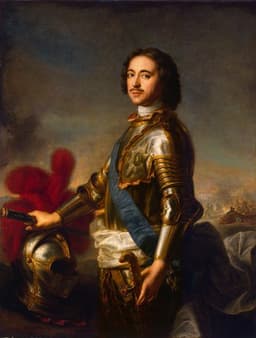
Peter the Great
Emperor · Modern
73.2Total
Basic Information
Born
-69
1672
Died
-30
1725
Era
Ancient
Modern
Nationality
Egypt
Russia
Occupation
Politician
Emperor
Civilization
Middle Eastern
Western
Score Comparison
Military (10%)
20.0
75.0
Political (20%)
45.0
90.0
Influence (20%)
40.0
68.0
Legacy (20%)
80.0
65.0
Leadership (15%)
40.0
78.0
Strategy (15%)
25.0
72.0
TOTAL
47.2
73.2
Cleopatra VII — Complete Timeline
48 BC
Alliance with Julius CaesarPolitical Action◆ Major
Cleopatra allied with Julius Caesar during the Roman civil war. She had herself smuggled into his palace in Alexandria rolled in a carpet. Caesar supported her claim to the throne, defeating her brother Ptolemy XIII and restoring her as co-ruler of Egypt.
Impact: regional
47 BC
Birth of CaesarionPolitical Action◆ Major
Cleopatra gave birth to Ptolemy XV Caesar (Caesarion), claiming he was Julius Caesar's son. This birth strengthened her political position and provided a potential heir to both Egypt and Rome, though Caesar never officially acknowledged him as his heir.
Impact: regional
41 BC
Alliance with Mark AntonyPolitical Action◆ Major
Cleopatra formed a political and romantic alliance with Mark Antony, a Roman triumvir. She provided him with financial and military support for his campaigns in the East. Their relationship produced three children and solidified her control over Egypt.
Impact: regional
31 BC
Battle of ActiumWar
The combined naval forces of Cleopatra and Mark Antony were decisively defeated by Octavian's fleet under Agrippa at Actium in Greece. Cleopatra fled with her ships, and Antony followed, leading to their eventual downfall and Octavian's rise as Augustus.
Impact: globaltragic
30 BC
Death of CleopatraPolitical Action
After Octavian's forces captured Alexandria, Cleopatra died by suicide, traditionally said to be from the bite of an asp. Her death ended the Ptolemaic dynasty and Egypt became a Roman province, marking the end of Hellenistic Egypt's independence.
Impact: globaltragic
Peter the Great — Complete Timeline
1697 AD
Grand EmbassyPolitical Action◆ Major
Peter the Great traveled incognito to Western Europe as part of a diplomatic mission. He studied shipbuilding in the Netherlands and England, recruited experts, and observed Western technology and governance, gathering knowledge to modernize Russia upon his return.
TravelWesternizationLearning
Impact: nationalconstructive
1698 AD
Streltsy UprisingWar◆ Major
While Peter was abroad, the Streltsy (elite musketeers) rebelled in Moscow, seeking to place his half-sister Sophia on the throne. Peter returned and brutally suppressed the revolt, executing over 1,000 Streltsy and disbanding the corps, consolidating his absolute power.
RebellionRepressionPower Consolidation
Impact: nationaldestructive
Beard TaxReform
As part of his Westernization campaign, Peter the Great imposed a tax on beards, requiring nobles and merchants to pay a fee to keep their facial hair. Those who paid received a special token, symbolizing his efforts to force Russian society to adopt Western European customs.
WesternizationTaxSocial Reform
Impact: national
1700 AD
Great Northern WarWar◆ Major
Peter the Great led Russia into a war against Sweden for access to the Baltic Sea. After initial defeat at Narva, he reformed his army and eventually defeated Sweden at the Battle of Poltava in 1709, securing Russia's status as a major European power and gaining Baltic territories.
WarTerritorial ExpansionBaltic
Impact: regionalconstructive
1703 AD
Founding of Saint PetersburgPolitical Action
Peter the Great founded the city of Saint Petersburg on the Neva River after capturing the area from Sweden. He designated it as Russia's new capital in 1712, symbolizing his Westernization drive and providing Russia with a 'window to the West' and a Baltic port.
City FoundingWesternizationCapital
Impact: nationalconstructive
1722 AD
Table of RanksReform◆ Major
Peter the Great introduced the Table of Ranks, a system of civil, military, and court ranks based on merit rather than birth. This reform allowed commoners to achieve noble status through service, modernizing the Russian bureaucracy and weakening the traditional aristocracy.
BureaucracyMeritocracySocial Reform
Impact: nationalprogressive
Expert Analysis
Peter the Great vs Cleopatra VII
# The Reformer and the Queen: Two Paths to Power in an Age of Transformation
On a chill autumn morning in 1697, a tall, rough-hewn Russian of twenty-five stood unnoticed in the shipyards of Zaandam, Netherlands, wearing the simple clothes of a carpenter. He asked no special treatment, carried his own tools, and spent his days learning to shape oak planks into seaworthy vessels. His name was Peter Mikhailov—but he was, in truth, Tsar Peter I of all Russia. Half a continent away and seventy years earlier, on a summer night in 48 BCE, a young woman of twenty-one had herself wrapped in a carpet—or, according to other accounts, a linen sack—and smuggled past Roman guards into the palace of Alexandria. When the bundle was unrolled before Julius Caesar, Cleopatra VII emerged not as a supplicant but as a strategist, ready to reshape the Mediterranean world. One sought power through knowledge; the other through seduction. Both were playing for the highest stakes their eras could offer.
Origins
Peter Alekseyevich Romanov was born in 1672 into a Russia still medieval in its soul—a sprawling, landlocked realm of boyars and serfs, where the church dictated learning and the tsar ruled by divine right. His father died when Peter was four, and his half-sister Sophia seized the regency, leaving the young tsar to grow up in the rural village of Preobrazhenskoye. There, away from court intrigue, he built mock fortresses and sailed toy boats on the Yauza River—a childhood that forged in him a lifelong obsession with military engineering and the sea. He was six feet eight inches tall, possessed of an explosive temper and an insatiable curiosity.
Cleopatra was born in 69 BCE into a very different world—the Ptolemaic dynasty, Greek-speaking rulers of Egypt who had governed from Alexandria for nearly three centuries. Her family was Macedonian in origin, but she was the first of her line to learn the Egyptian language, to dress in native robes, to present herself as the living incarnation of the goddess Isis. Her father, Ptolemy XII, had bought Roman protection with enormous bribes, leaving Egypt a client kingdom deeply in debt. Cleopatra grew up watching her father grovel before Roman senators, and she learned early that independence came only through cunning.
Rise to Power
Peter’s path to absolute rule was forged in blood. In 1698, while he was still abroad on his Grand Embassy, the Streltsy—the elite musketeers who had once supported Sophia—rose in rebellion. Peter returned at a gallop, personally interrogated the rebels, and ordered mass executions. Hundreds were hanged from the Kremlin walls; their bodies were left to rot as a warning. From that moment, no one in Russia doubted who held the sword.
Cleopatra’s rise was no less brutal but took a different form. Her father’s will had named her co-ruler with her younger brother Ptolemy XIII, but the boy’s advisors quickly pushed her into exile. She raised a mercenary army in Syria and marched on Egypt—but she knew she could not defeat the Romans in open battle. So she went to Caesar instead. The rolled carpet, the midnight meeting, the calculated charm: these were not the acts of a romantic heroine but of a politician who understood that power sometimes flows through bedrooms rather than battlefields.
Leadership & Governance
Peter governed like a man building a ship from scratch—furious, hands-on, and utterly relentless. He imposed a tax on beards in 1698, forcing nobles to shave or pay a fee, because he believed that Western appearance would lead to Western thinking. He founded Saint Petersburg in 1703 on a swamp captured from Sweden, declaring it his new capital and a “window to Europe.” He introduced the Table of Ranks in 1722, a system that allowed commoners to rise to noble status through merit—a radical break from the hereditary aristocracy. He built Russia’s first navy, reformed the alphabet, simplified the calendar, and dragged his country into the modern world by the scruff of its neck.
Cleopatra governed through alliance and diplomacy. She understood that Egypt could not match Roman military power, so she made herself indispensable to Rome’s most powerful men. With Caesar, she secured Roman recognition of her throne and bore him a son, Caesarion. With Mark Antony, she formed a partnership that was part romance, part military alliance, and part economic merger. She financed his campaigns, provided Egyptian grain to his armies, and dreamed of a Hellenistic empire that would rival Octavian’s Rome. She ruled Egypt well—the economy flourished, the temples were restored, and the people, who saw her as Isis incarnate, loved her.
Triumph & Tragedy
Peter’s greatest triumph was the Great Northern War (1700–1721), a twenty-one-year struggle against Sweden’s Charles XII. After a devastating defeat at Narva in 1700, Peter rebuilt his army from scratch, learning from his mistakes. At Poltava in 1709, he crushed the Swedish army, and by war’s end, Russia had gained its longed-for Baltic coastline. Saint Petersburg stood as the living monument to his victory.
Cleopatra’s triumph was more fleeting but no less dramatic. At Tarsus in 41 BCE, she sailed up the Cydnus River on a golden barge with purple sails, dressed as Aphrodite, while servants fanned her with ostrich feathers. Mark Antony, the most powerful man in the eastern Mediterranean, was utterly captivated. For a decade, she held him—and with him, the hope of an independent Egypt.
The tragedies came swiftly. Peter’s own son, Alexei, opposed his reforms and fled abroad; Peter had him hunted down, tortured, and executed in 1718. The tsar died in 1725 from a bladder infection, his body worn out by decades of labor. Cleopatra’s end was swifter: after the defeat at Actium in 31 BCE, Antony fell on his sword, and when Octavian’s soldiers came for her, she chose death rather than a Roman triumph. The asp, if that is indeed how she died, was her final act of sovereignty.
Character & Destiny
Peter was a force of nature—brutal, brilliant, and incapable of compromise. He once beheaded a courtier with his own hands during a drunken feast. He worked alongside common laborers, ate with his fingers, and slept in a small, plain room. His personality was Russia itself: vast, chaotic, and striving.
Cleopatra was a creature of nuance—charming, multilingual, and deeply calculating. She could speak nine languages, debate philosophy with Greek scholars, and command armies. She was the last pharaoh, and she knew it. Her personality was Egypt itself: ancient, sophisticated, and fighting for survival.
Legacy
Peter the Great left behind a Russia that was forever changed. He gave his nation a navy, a capital, a bureaucracy, and a place among the great powers. His reforms were incomplete—serfdom remained, and the gap between the Westernized elite and the peasant masses only widened—but he set Russia on a course it would follow for centuries. His legacy score of 75 reflects a nation forever shaped by his will.
Cleopatra left behind a legend. Her Egypt became a Roman province, and her son Caesarion was murdered on Octavian’s orders. But she entered history not as a defeated queen but as a symbol of intelligence, beauty, and defiance. Shakespeare, Hollywood, and countless artists have kept her alive. Her legacy score of 50 is lower than Peter’s, but her cultural influence is immeasurable.
Conclusion
One built an empire; the other tried to save one. Peter the Great and Cleopatra VII faced the same fundamental question—how does a ruler survive and thrive in a world of larger, more powerful forces? Peter answered by transforming his kingdom from within, using sheer force of will to drag Russia into the modern age. Cleopatra answered by navigating the currents of power with intelligence and grace, bending the mighty to her purpose for as long as she could. Both succeeded, and both paid the price. Their stories remind us that leadership is never about choosing between reform and resistance—it is about understanding the moment you are given, and acting before it passes.
Rankings
🥇
Peter the GreatLeader
Mil: 75.0Pol: 90.0Inf: 68.0
73.2
🥈
Cleopatra VII
Mil: 20.0Pol: 45.0Inf: 40.0
47.2
+26.0 behind
How This Comparison Works
Algorithm
Each figure is scored on 6 dimensions (0—100 scale) based on structured historical data: Military (10%), Political (20%), Influence (20%), Legacy (20%), Leadership (15%), Strategy (15%). The weighted total produces the final ranking.
Data Sources
Scores are computed from structured sub-indicators in the database. Scale factors adjust for era (Ancient ×0.85, Modern ×1.0) and civilization size (Eastern ×1.05, Other ×0.80) to account for differences in population and military scale.
Maximum 3 Figures
Comparisons are limited to 2—3 figures to ensure readability and statistical meaningfulness.
Error Margins
±5 points per dimension — Sub-scores are derived from historical records with inherent uncertainty. Two figures within 5 points on a dimension should be considered roughly equivalent in that area.
Total Score Accuracy
±3 points overall — The weighted combination of 6 dimensions produces a total score with approximately ±3 points of uncertainty. Differences of less than 3 points are not statistically significant— the figures are effectively tied.
Known Limitations
- Historical records are incomplete and uneven across civilizations
- Figures from oral-tradition societies may be underrepresented
- Occupation labels can misclassify multi-role figures
- Scores measure capability and impact, not moral character
- Quantitative scoring is a comparison tool, not absolute truth
Capability Radar
Military (10%) — Battles & Warfare
Battles
20
85
Win Rate
15
80
Expansion
10
90
Political (20%) — Governance & Reform
Reform
40
95
Diplomacy
85
80
Economy
55
85
Influence (20%) — Cultural & Global Reach
Cultural
80
85
Global
85
85
Legacy (20%) — Historical Impact
Historical
85
90
Longevity
90
85
Leadership (15%) — Power & Stability
Tenure
60
90
Stability
35
70
Strategy (15%) — Tactics & Innovation
Strategy
30
85
Tactics
25
75
Reform
10
95
Similar Comparisons
Comments & Discussion
Kremlin Carpenter6/16/2026
People romanticize Peter the Great too much. Yes, he swung an axe in Zaandam, but he also executed 1,200 streltsy rebels with his own hands in 1698, forcing his boyars to drink to their own humiliation. Cleopatra rolled out of a carpet, but she ruled a cosmopolitan state with a Greco-Macedonian bureaucracy. Peter’s Russia was still dragging itself out of feudalism while she was debating philosophy in the Library. He gets the “reformer” label; she gets reduced to seduction. History has a gender p
丝绸间谍6/16/2026
把彼得大帝和克利奥帕特拉并列比较,本身就是个阴险的陷阱。一个是男人,用军事和改革定义自己;一个是女人,哪怕她统治了二十年,笼络过恺撒和安东尼,掌控过地中海命脉,最后还得被描述成“从毯子里滚出来”的诱惑者。你们怎么不说彼得把自己关在荷兰船厂学造船,学了十年才建起一支像样的海军?而克利奥帕特拉十四岁就能用九种语言和外国使节谈判?事实不性感,但权力比任何床笫计谋都赤裸。
Datalore Dissector6/16/2026
Let’s talk actual metrics. Peter took 21 years to defeat Sweden at Poltava and secure a Baltic port. Cleopatra survived a Roman civil war, secured grain for Italy during a famine, and stabilized Egypt for two decades. One built a navy from scratch; the other managed a multi-ethnic empire with a grain monopoly that could starve Rome. You tell me who ran the more complex state. The “reformer vs seductress” narrative is ahistorical garbage. She was a CEO of a superpower of its day; he was a regiona
黄河铁蹄6/16/2026
从“大”到“伟大”这个标签,彼得配不配?他赢了北方战争,但代价是俄罗斯人口的百分之二十—还要征用农奴做苦役,把莫斯科变成欧洲的笑话。克利奥帕特拉打输了阿克提乌姆,但她至少没有为了造船而让半个国家饿死。彼得的“现代化”是一种暴力改造,而她的统治是一种精致的表演—你会选一个粗鲁的铁匠还是一位精通修辞的女王?我选后者,因为权力不仅仅是船泡。
Ancient Echo6/16/2026
As a classics scholar, I find the comparison amusing but hollow. Cleopatra was the last Pharaoh of a 3,000-year-old civilization; Peter was a tsar inventing a new one. She argued with Seneca, dined with court philosophers, and authored texts on medicine and numismatics. He argued with his generals about how to aim a cannon. Both were charismatic, but one worked within a dying tradition while the other bulldozed through a sluggish one.