Loading...
Cleopatra VII vs Otto von Bismarck
Otto von Bismarck leads by 18.6 pts · 2 figures compared
…
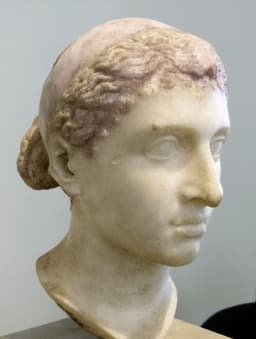
Cleopatra VII
Politician · Ancient
47.2Total
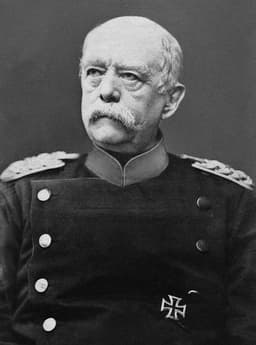
Otto von Bismarck
Politician · Modern
65.8Total
Basic Information
Born
-69
1815
Died
-30
1898
Era
Ancient
Modern
Nationality
Egypt
Germany
Occupation
Politician
Politician
Civilization
Middle Eastern
Western
Score Comparison
Military (10%)
20.0
55.0
Political (20%)
45.0
85.0
Influence (20%)
40.0
82.0
Legacy (20%)
80.0
40.0
Leadership (15%)
40.0
80.0
Strategy (15%)
25.0
50.0
TOTAL
47.2
65.8
Cleopatra VII — Complete Timeline
48 BC
Alliance with Julius CaesarPolitical Action◆ Major
Cleopatra allied with Julius Caesar during the Roman civil war. She had herself smuggled into his palace in Alexandria rolled in a carpet. Caesar supported her claim to the throne, defeating her brother Ptolemy XIII and restoring her as co-ruler of Egypt.
Impact: regional
47 BC
Birth of CaesarionPolitical Action◆ Major
Cleopatra gave birth to Ptolemy XV Caesar (Caesarion), claiming he was Julius Caesar's son. This birth strengthened her political position and provided a potential heir to both Egypt and Rome, though Caesar never officially acknowledged him as his heir.
Impact: regional
41 BC
Alliance with Mark AntonyPolitical Action◆ Major
Cleopatra formed a political and romantic alliance with Mark Antony, a Roman triumvir. She provided him with financial and military support for his campaigns in the East. Their relationship produced three children and solidified her control over Egypt.
Impact: regional
31 BC
Battle of ActiumWar
The combined naval forces of Cleopatra and Mark Antony were decisively defeated by Octavian's fleet under Agrippa at Actium in Greece. Cleopatra fled with her ships, and Antony followed, leading to their eventual downfall and Octavian's rise as Augustus.
Impact: globaltragic
30 BC
Death of CleopatraPolitical Action
After Octavian's forces captured Alexandria, Cleopatra died by suicide, traditionally said to be from the bite of an asp. Her death ended the Ptolemaic dynasty and Egypt became a Roman province, marking the end of Hellenistic Egypt's independence.
Impact: globaltragic
Otto von Bismarck — Complete Timeline
1870 AD
Franco-Prussian WarWar
Bismarck provoked France into declaring war by editing the Ems Dispatch to appear insulting. The resulting conflict saw Prussia and its allies decisively defeat France, leading to the fall of Napoleon III, the capture of Paris, and the annexation of Alsace-Lorraine.
WarProvocationAnnexation
Impact: globaldestructive
1871 AD
Unification of Germany ProclaimedPolitical Action
Following the Franco-Prussian War, Bismarck orchestrated the proclamation of the German Empire in the Hall of Mirrors at Versailles. King Wilhelm I of Prussia was declared German Emperor, uniting the German states under Prussian leadership and establishing the Second Reich.
UnificationGerman EmpireNationalism
Impact: globalconstructive
1878 AD
Enactment of the Anti-Socialist LawsPolitical Action◆ Major
After two assassination attempts on Kaiser Wilhelm I, Bismarck pushed through laws banning socialist organizations, publications, and meetings. The laws remained in force until 1890, suppressing the Social Democratic Party while Bismarck simultaneously introduced welfare reforms to undercut its appeal.
RepressionSocialismWelfare State
Impact: nationaldestructive
Congress of BerlinPolitical Action◆ Major
Bismarck hosted the Congress of Berlin to revise the Treaty of San Stefano and resolve the Eastern Crisis. He acted as 'honest broker,' reducing Russian gains, granting independence to Romania, Serbia, and Montenegro, and placing Bosnia-Herzegovina under Austro-Hungarian administration.
DiplomacyBalkansBalance of Power
Impact: global
1883 AD
Establishment of the Welfare StateReform◆ Major
Bismarck introduced the Health Insurance Bill (1883), Accident Insurance Bill (1884), and Old Age and Disability Insurance Bill (1889). These laws created the first modern welfare state, providing workers with social security and aiming to reduce support for socialist movements.
Social ReformWelfareInsurance
Impact: globalprogressive
1890 AD
Dismissal as ChancellorPolitical Action◆ Major
Emperor Wilhelm II forced Bismarck to resign due to policy disagreements, particularly over anti-socialist laws and foreign policy. Bismarck's departure marked the end of an era, leading to a more aggressive German foreign policy and the eventual unraveling of his alliance system.
ResignationWilhelm IIPolicy Shift
Impact: global
Expert Analysis
Cleopatra VII vs Otto von Bismarck
# The Iron Chancellor and the Last Pharaoh: Two Masters of Survival
In the winter of 1870, Otto von Bismarck stood in the Hall of Mirrors at Versailles, a Prussian Junker in a conquered French palace, watching his king crowned Emperor of a unified Germany. Eighteen centuries earlier and two thousand miles southeast, Cleopatra VII knelt before Julius Caesar in her own palace at Alexandria, unrolling herself from a carpet to beg for her throne. Both were political geniuses who understood that survival required audacity. Yet one built an empire that would shape Europe for a century, while the other saw her kingdom swallowed by Rome. Their parallel paths reveal something profound about the nature of power—and its limits.
Origins
Bismarck was born in 1815, the year Napoleon fell, into a world of fractured German states and rising Prussian ambition. His father was a conservative landowner, his mother a bourgeois intellectual; the boy grew up riding horses and reading history, developing a contempt for idealism and a taste for realpolitik. He entered politics as a reactionary, a man who believed that "the great questions of the day will not be decided by speeches and majority resolutions—but by blood and iron." His was an age of nationalism, industrialization, and the scramble for empire—a time when a bold statesman could redraw maps.
Cleopatra VII was born in 69 BCE into a dying dynasty. The Ptolemies, Greek rulers of Egypt, had spent two centuries murdering one another for a throne that was already a client kingdom of Rome. She was educated in the libraries of Alexandria, fluent in nine languages, and trained in diplomacy from childhood. Her world was one of Roman civil wars, where the only question was which Roman general would decide Egypt's fate. She had no room for blood and iron; she had only beauty, wit, and the desperate cunning of the cornered.
Rise to Power
Bismarck's ascent was methodical. He served as a diplomat in Frankfurt and St. Petersburg, learning the chessboard of European alliances. In 1862, King Wilhelm I appointed him Minister President of Prussia to resolve a military budget crisis. Bismarck simply ignored the parliament, collected taxes illegally, and modernized the army—a move that would have ended a lesser man's career. But he knew that success forgives all sins. He engineered wars against Denmark (1864), Austria (1866), and finally France (1870), each conflict carefully calculated to isolate the enemy and expand Prussian power. The Franco-Prussian War, provoked by his editing of the Ems Dispatch to appear insulting to France, was a masterpiece of strategic deception.
Cleopatra's rise was far more precarious. She became co-ruler at eighteen, but her brother-husband Ptolemy XIII had her exiled. In 48 BCE, she saw her chance: Julius Caesar arrived in Alexandria, chasing his rival Pompey. Cleopatra had herself smuggled into Caesar's presence—rolled in a carpet, according to legend—and charmed the most powerful man in the world. She became his lover, bore his son Caesarion, and used Roman legions to crush her brother. It was a stunning gambit, but it came with a fatal dependency. She had won her throne by attaching herself to a Roman, and Rome would demand payment.
Leadership & Governance
Bismarck governed with a paradox: he was a conservative who created the modern welfare state. In the 1880s, alarmed by the rise of socialism, he introduced health insurance (1883), accident insurance (1884), and old-age pensions (1889)—the world's first comprehensive social security system. "Give the working man the right to work," he said, "and then give him the security of knowing that when he is old he will be cared for." It was a cynical masterstroke: steal the socialists' thunder while banning their parties. The Anti-Socialist Laws of 1878 suppressed political opposition, but the welfare state bought loyalty.
Cleopatra ruled differently. She was a Greek queen who learned Egyptian, dressed as the goddess Isis, and presented herself as the living embodiment of the Nile's fertility. She restored Egypt's economy, reformed the bureaucracy, and built a fleet that rivaled Rome's. But her power was always borrowed. She needed Roman allies to stay on her throne, and each alliance came with a price. With Caesar, she got a son and a temporary truce. With Mark Antony, she got a lover and a war.
Triumph & Tragedy
Bismarck's greatest triumph was the unification of Germany in 1871. Standing in the Hall of Mirrors, he had achieved what generations of German nationalists could not: a single empire, forged in war and diplomacy. He then spent two decades preserving that peace, hosting the Congress of Berlin in 1878 to prevent a general European war. His tragedy came in 1890, when the young Kaiser Wilhelm II, jealous of his power, dismissed him. The Iron Chancellor retired to his estate, bitter and prophetic, warning that the new emperor would lead Germany to ruin. He was right.
Cleopatra's triumph was survival itself. For two decades, she kept Egypt independent while Rome tore itself apart. She gave birth to Caesarion, secured her dynasty, and built a vision of a Hellenistic-Egyptian empire that could stand beside Rome. Her tragedy was the Battle of Actium in 31 BCE, where her fleet, alongside Antony's, was crushed by Octavian. She fled the battle, Antony followed, and both knew the end was near. When Octavian's forces took Alexandria in 30 BCE, she chose death. The asp, if it existed, was a mercy.
Character & Destiny
Bismarck was a man of immense will, capable of patience and brutality in equal measure. He once said, "Politics is the art of the possible," and he lived by that creed—calculating, pragmatic, and utterly unsentimental. His personality shaped his era: he was the architect of German unity, but also the man who taught Germans to distrust democracy and love authority. His dismissal was the result of his own arrogance; he had trained no successor and left a system that depended on his genius.
Cleopatra was a performer of genius, a woman who understood that in a world of men, she had to be more than a queen—she had to be a myth. She played the seductress, the goddess, the mother of a new dynasty. But her personality was also her trap. She needed Antony as much as he needed her, and when he failed, she had no fallback. Her suicide was the final act of a woman who controlled her own story—even in death.
Legacy
Bismarck's legacy is the German nation itself, the welfare state, and a model of realpolitik that influenced statesmen from Kissinger to Putin. He is remembered as the Iron Chancellor, a giant of the 19th century, but also as a warning: his system of alliances and balances collapsed in 1914, and his militarism cast a long shadow.
Cleopatra's legacy is more elusive. She is remembered as a lover, a temptress, a tragic queen—Shakespeare's "serpent of old Nile." But the real Cleopatra was a politician of considerable skill, who nearly saved her kingdom through sheer force of will. She failed because she faced an impossible choice: submit to Rome or fight it. She chose to fight, and lost. Her story reminds us that even the most brilliant diplomacy cannot overcome overwhelming force.
Conclusion
Bismarck and Cleopatra both understood that power is never given—it is taken, held, and lost. But they operated in different worlds. Bismarck had the luxury of a rising nation, a strong army, and an era that rewarded bold statecraft. Cleopatra had a dying kingdom, a foreign army at her gates, and a world that saw her as a client, not a queen. One built an empire; the other lost a kingdom. Yet both were masters of survival, playing the hands they were dealt until the very last card. In the end, Bismarck died in his bed, and Cleopatra died by her own hand. The difference was not in their genius, but in the weight of history that pressed down upon them.
Rankings
🥇
Otto von BismarckLeader
Mil: 55.0Pol: 85.0Inf: 82.0
65.8
🥈
Cleopatra VII
Mil: 20.0Pol: 45.0Inf: 40.0
47.2
+18.6 behind
How This Comparison Works
Algorithm
Each figure is scored on 6 dimensions (0—100 scale) based on structured historical data: Military (10%), Political (20%), Influence (20%), Legacy (20%), Leadership (15%), Strategy (15%). The weighted total produces the final ranking.
Data Sources
Scores are computed from structured sub-indicators in the database. Scale factors adjust for era (Ancient ×0.85, Modern ×1.0) and civilization size (Eastern ×1.05, Other ×0.80) to account for differences in population and military scale.
Maximum 3 Figures
Comparisons are limited to 2—3 figures to ensure readability and statistical meaningfulness.
Error Margins
±5 points per dimension — Sub-scores are derived from historical records with inherent uncertainty. Two figures within 5 points on a dimension should be considered roughly equivalent in that area.
Total Score Accuracy
±3 points overall — The weighted combination of 6 dimensions produces a total score with approximately ±3 points of uncertainty. Differences of less than 3 points are not statistically significant— the figures are effectively tied.
Known Limitations
- Historical records are incomplete and uneven across civilizations
- Figures from oral-tradition societies may be underrepresented
- Occupation labels can misclassify multi-role figures
- Scores measure capability and impact, not moral character
- Quantitative scoring is a comparison tool, not absolute truth
Capability Radar
Military (10%) — Battles & Warfare
Battles
20
60
Win Rate
15
70
Expansion
10
80
Political (20%) — Governance & Reform
Reform
40
90
Diplomacy
85
95
Economy
55
80
Influence (20%) — Cultural & Global Reach
Cultural
80
65
Global
85
75
Legacy (20%) — Historical Impact
Historical
85
85
Longevity
90
70
Leadership (15%) — Power & Stability
Tenure
60
85
Stability
35
70
Strategy (15%) — Tactics & Innovation
Strategy
30
85
Tactics
25
55
Reform
10
75
Similar Comparisons
Comments & Discussion
BLOOD_AND_SAND6/16/2026
Bismarck built a nation; Cleopatra lost one. Let's not romanticize a queen whose "genius" was seducing Roman generals—a strategy that collapsed the second Augustus got wise. She had two hundred years of Ptolemaic stability to work with, yet she gambled it all on Antony's ego. Bismarck played a weak Prussia against Austria, France, and Russia, juggling three wars and coming out with a German Empire. That's real statecraft, not a perfumed carpet trick.
铁血史官6/16/2026
拿克娄巴特拉跟俾斯麦比?简直是拿纸莎草纸比铁十字。那位埃及艳后不过是靠美色延续一个僵尸王朝,而俾斯麦用三次战争把德意志从拼图变成了铁板。她输给屋大维时,连亚历山大图书馆的火光都救不了她;他在凡尔赛宫加冕皇帝时,整个欧洲都在发抖。女王的权谋是床笫之功,铁血宰相的权谋是百年基业—没有可比性。
DATA_DOUBTER6/16/2026
This comparison inflates Cleopatra's agency. She inherited a thriving grain-exporting economy and still lost to Rome's bureaucracy. Bismarck faced Prussia's near-bankrupt army in 1862, defied parliament to fund it, and won in months. One had Nile gold, the other had nothing but political cunning. History buffs love the "carpet story," but let's crunch stats: Cleopatra ruled 21 years and ended annexed; Bismarck ruled 28 and united Germany. Results speak louder than legends.
亚历山大刺客6/16/2026
别把俾斯麦吹得那么高尚。帝国统一的代价是德意志民主被碾碎,工人被铁血镇压,还有那个臭名昭著的《非常法》—这叫治国天才?克娄巴特拉至少在埃及搞了水利和贸易,让尼罗河两岸富了二十年。俾斯麦给欧洲留下的是一战导火索和军国主义传统。一个在沙漠里种花,一个在全欧洲撒火药—你们自己选吧。
CLASSICS_CRITIC6/16/2026
Stop treating Cleopatra as the West's first femme fatale propaganda. She spoke nine languages, governed a multicultural empire, and stabilized Egypt's economy during a Mediterranean-wide grain crisis in 48 BCE. Bismarck was a brilliant bully who exploited nationalism—a force Cleopatra couldn't use because her dynasty was Greek ruling Egyptians. Apples and oranges in power structure; she faced a Roman steamroller, he faced French vanity. Both deserve nuanced respect, not one-upmanship on body cou
德式实用主义6/16/2026
俾斯麦的伟大在于他懂得撤退:1875年他阻止了德国入侵法国,1885年他拒绝殖民扩张,因为他知道力量有限。克娄巴特拉呢?她本可以退守南方