Loading...
Alexander the Great vs Otto von Bismarck
Alexander the Great leads by 19.4 pts · 2 figures compared
…
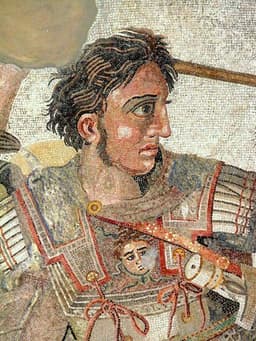
Alexander the Great
General · Ancient
85.2Total
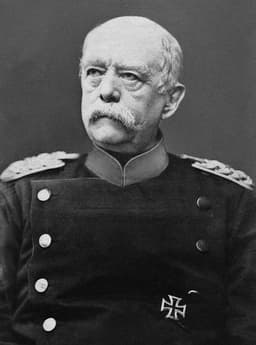
Otto von Bismarck
Politician · Modern
65.8Total
Basic Information
Born
-356
1815
Died
-323
1898
Era
Ancient
Modern
Nationality
Macedon
Germany
Occupation
General
Politician
Civilization
Western
Western
Score Comparison
Military (10%)
95.0
55.0
Political (20%)
60.0
85.0
Influence (20%)
92.0
82.0
Legacy (20%)
90.0
40.0
Leadership (15%)
80.0
80.0
Strategy (15%)
92.0
50.0
TOTAL
85.2
65.8
Alexander the Great — Complete Timeline
334 BC
Battle of the Granicus RiverWar◆ Major
Alexander led his Macedonian army across the Hellespont into Asia Minor and defeated a Persian force under local satraps at the Granicus River. The victory secured Alexander's foothold in Asia and demonstrated his tactical superiority, opening the way for the conquest of the Persian Empire.
Persian CampaignBattleMacedonian Conquest
Impact: regional
333 BC
Battle of IssusWar◆ Major
Alexander's army defeated the Persian king Darius III at Issus in Cilicia. Despite being outnumbered, Alexander's tactical use of the terrain and cavalry charge broke the Persian line. Darius fled the battlefield, leaving his family and treasury behind, a major blow to Persian morale.
Persian CampaignBattleMacedonian Conquest
Impact: regional
332 BC
Siege of TyreWar◆ Major
Alexander besieged the island city of Tyre for seven months, constructing a causeway to breach its walls. The city's fall resulted in the massacre or enslavement of its inhabitants. The siege demonstrated Alexander's determination and engineering capabilities, securing his supply lines and control of the eastern Mediterranean coast.
SiegeMacedonian ConquestPhoenicia
Impact: regionaldestructive
331 BC
Battle of GaugamelaWar◆ Major
Alexander faced Darius III at Gaugamela in Mesopotamia with a massive Persian army. Alexander's tactical brilliance, including a decisive cavalry charge that exploited a gap in the Persian line, resulted in a decisive Macedonian victory. Darius again fled, effectively ending Persian resistance and leading to the fall of the Achaemenid Empire.
Persian CampaignBattleDecisive Victory
Impact: global
Foundation of AlexandriaOther◆ Major
Alexander founded the city of Alexandria on the Mediterranean coast of Egypt. He personally selected the site and oversaw the initial planning. Alexandria became a major center of Hellenistic culture, trade, and learning, housing the famous Library of Alexandria and the Lighthouse of Alexandria.
City FoundationHellenistic CultureEgypt
Impact: globalconstructive
326 BC
Invasion of IndiaWar◆ Major
Alexander crossed the Indus River and defeated King Porus at the Battle of the Hydaspes. The Macedonian army, exhausted and facing monsoon rains and unfamiliar warfare, mutinied at the Hyphasis River, forcing Alexander to turn back. This campaign marked the easternmost extent of his conquests.
Indian CampaignBattleMutiny
Impact: regional
Otto von Bismarck — Complete Timeline
1870 AD
Franco-Prussian WarWar
Bismarck provoked France into declaring war by editing the Ems Dispatch to appear insulting. The resulting conflict saw Prussia and its allies decisively defeat France, leading to the fall of Napoleon III, the capture of Paris, and the annexation of Alsace-Lorraine.
WarProvocationAnnexation
Impact: globaldestructive
1871 AD
Unification of Germany ProclaimedPolitical Action
Following the Franco-Prussian War, Bismarck orchestrated the proclamation of the German Empire in the Hall of Mirrors at Versailles. King Wilhelm I of Prussia was declared German Emperor, uniting the German states under Prussian leadership and establishing the Second Reich.
UnificationGerman EmpireNationalism
Impact: globalconstructive
1878 AD
Enactment of the Anti-Socialist LawsPolitical Action◆ Major
After two assassination attempts on Kaiser Wilhelm I, Bismarck pushed through laws banning socialist organizations, publications, and meetings. The laws remained in force until 1890, suppressing the Social Democratic Party while Bismarck simultaneously introduced welfare reforms to undercut its appeal.
RepressionSocialismWelfare State
Impact: nationaldestructive
Congress of BerlinPolitical Action◆ Major
Bismarck hosted the Congress of Berlin to revise the Treaty of San Stefano and resolve the Eastern Crisis. He acted as 'honest broker,' reducing Russian gains, granting independence to Romania, Serbia, and Montenegro, and placing Bosnia-Herzegovina under Austro-Hungarian administration.
DiplomacyBalkansBalance of Power
Impact: global
1883 AD
Establishment of the Welfare StateReform◆ Major
Bismarck introduced the Health Insurance Bill (1883), Accident Insurance Bill (1884), and Old Age and Disability Insurance Bill (1889). These laws created the first modern welfare state, providing workers with social security and aiming to reduce support for socialist movements.
Social ReformWelfareInsurance
Impact: globalprogressive
1890 AD
Dismissal as ChancellorPolitical Action◆ Major
Emperor Wilhelm II forced Bismarck to resign due to policy disagreements, particularly over anti-socialist laws and foreign policy. Bismarck's departure marked the end of an era, leading to a more aggressive German foreign policy and the eventual unraveling of his alliance system.
ResignationWilhelm IIPolicy Shift
Impact: global
Expert Analysis
Alexander the Great vs Otto von Bismarck: Historical Comparison
Alexander the Great, the ancient Macedonian general who forged an empire from Greece to India, and Otto von Bismarck, the 19th-century Prussian statesman who unified Germany, represent two radically different archetypes of power: the conquering warrior versus the calculating diplomat.
Dimension Analysis
**Military: Alexander the Great 96 / Otto von Bismarck 55**
Alexander revolutionized ancient warfare with combined arms tactics and never lost a battle, while Bismarck’s military role was limited to strategic oversight during the Wars of Unification, relying on von Moltke’s generalship.
**Political: Alexander the Great 65 / Otto von Bismarck 88**
Bismarck mastered realpolitik, manipulating alliances and constitutions to unify Germany under Prussian hegemony; Alexander relied on personal charisma and conquest, but his political structures dissolved upon his death.
**Influence: Alexander the Great 90 / Otto von Bismarck 80**
Alexander’s conquests spread Hellenistic culture across three continents, shaping the Mediterranean and Middle East for centuries; Bismarck’s influence is confined to European statecraft and the creation of the German Empire.
**Legacy: Alexander the Great 90 / Otto von Bismarck 72**
Alexander remains a timeless symbol of martial ambition and cultural fusion, while Bismarck’s legacy is more contested—admired for unification but criticized for sowing the seeds of Prussian militarism and World War I.
**Leadership: Alexander the Great 82 / Otto von Bismarck 82**
Both were exceptional leaders: Alexander led from the front, inspiring loyalty through shared risk; Bismarck led from the chancellery, commanding respect through cunning and iron will. Their styles are incommensurable.
Verdict
Alexander the Great leads overall, due to his superior military genius, broader civilizational impact, and enduring legendary status.
FAQ
Q: Who ranks higher? A: Alexander the Great, with a composite score of 85 to Bismarck’s 74, driven by decisive advantages in military strategy and lasting influence.
Rankings
🥇
Alexander the GreatLeader
Mil: 95.0Pol: 60.0Inf: 92.0
85.2
🥈
Otto von Bismarck
Mil: 55.0Pol: 85.0Inf: 82.0
65.8
+19.4 behind
How This Comparison Works
Algorithm
Each figure is scored on 6 dimensions (0—100 scale) based on structured historical data: Military (10%), Political (20%), Influence (20%), Legacy (20%), Leadership (15%), Strategy (15%). The weighted total produces the final ranking.
Data Sources
Scores are computed from structured sub-indicators in the database. Scale factors adjust for era (Ancient ×0.85, Modern ×1.0) and civilization size (Eastern ×1.05, Other ×0.80) to account for differences in population and military scale.
Maximum 3 Figures
Comparisons are limited to 2—3 figures to ensure readability and statistical meaningfulness.
Error Margins
±5 points per dimension — Sub-scores are derived from historical records with inherent uncertainty. Two figures within 5 points on a dimension should be considered roughly equivalent in that area.
Total Score Accuracy
±3 points overall — The weighted combination of 6 dimensions produces a total score with approximately ±3 points of uncertainty. Differences of less than 3 points are not statistically significant— the figures are effectively tied.
Known Limitations
- Historical records are incomplete and uneven across civilizations
- Figures from oral-tradition societies may be underrepresented
- Occupation labels can misclassify multi-role figures
- Scores measure capability and impact, not moral character
- Quantitative scoring is a comparison tool, not absolute truth
Capability Radar
Military (10%) — Battles & Warfare
Battles
98
60
Win Rate
99
70
Expansion
99
80
Political (20%) — Governance & Reform
Reform
75
90
Diplomacy
80
95
Economy
70
80
Influence (20%) — Cultural & Global Reach
Cultural
95
65
Global
95
75
Legacy (20%) — Historical Impact
Historical
98
85
Longevity
95
70
Leadership (15%) — Power & Stability
Tenure
60
85
Stability
55
70
Strategy (15%) — Tactics & Innovation
Strategy
98
85
Tactics
99
55
Reform
85
75
Similar Comparisons
Comments & Discussion
Historian7216/16/2026
把亚历山大和俾斯麦放一起比,本身就像拿白起和商鞅比——一个靠战场征服,一个靠制度构建。亚历山大确实像我们汉朝的霍去病,封狼居胥何等威风,但他死后帝国分崩离析,而俾斯麦建立的德意志帝国框架至少撑到了1918年。在东方史学里,‘武功’和‘文治’从来是分开评价的,就像唐太宗既带兵打仗又开创贞观之治,单独偏废某一项都会失之偏颇。这个评分把军事权重抬得太高,忽略了俾斯麦通过外交手腕避免大规模战争统一德国的政治智慧。
ColdScribe116/16/2026
这个评分体系存在明显的维度偏差。亚历山大军事96分看似合理,但政治65分和‘制度崩溃’的关联缺乏量化论证。从中国历史角度看,秦始皇统一六国后政治结构也仅维持了14年,但他的政治评分绝不会只有65。另外,亚历山大影响力90分主要基于文化扩散,但若按人口覆盖和持续时间计算,忽必烈时期蒙古帝国的影响力可能更高。建议引入‘制度延续性’和‘行政效率’两个加权系数,否则这种打分容易陷入西方中心主义的短视。