Loading...
Cleopatra VII vs Maria Theresa
Maria Theresa leads by 20.8 pts · 2 figures compared
…
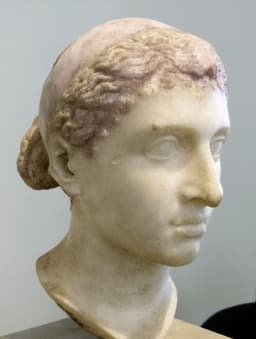
Cleopatra VII
Politician · Ancient
47.2Total

Maria Theresa
Emperor · Modern
68.0Total
Basic Information
Born
-69
1717
Died
-30
1780
Era
Ancient
Modern
Nationality
Egypt
Austria
Occupation
Politician
Emperor
Civilization
Middle Eastern
Western
Score Comparison
Military (10%)
20.0
50.0
Political (20%)
45.0
78.0
Influence (20%)
40.0
82.0
Legacy (20%)
80.0
55.0
Leadership (15%)
40.0
80.0
Strategy (15%)
25.0
50.0
TOTAL
47.2
68.0
Cleopatra VII — Complete Timeline
48 BC
Alliance with Julius CaesarPolitical Action◆ Major
Cleopatra allied with Julius Caesar during the Roman civil war. She had herself smuggled into his palace in Alexandria rolled in a carpet. Caesar supported her claim to the throne, defeating her brother Ptolemy XIII and restoring her as co-ruler of Egypt.
Impact: regional
47 BC
Birth of CaesarionPolitical Action◆ Major
Cleopatra gave birth to Ptolemy XV Caesar (Caesarion), claiming he was Julius Caesar's son. This birth strengthened her political position and provided a potential heir to both Egypt and Rome, though Caesar never officially acknowledged him as his heir.
Impact: regional
41 BC
Alliance with Mark AntonyPolitical Action◆ Major
Cleopatra formed a political and romantic alliance with Mark Antony, a Roman triumvir. She provided him with financial and military support for his campaigns in the East. Their relationship produced three children and solidified her control over Egypt.
Impact: regional
31 BC
Battle of ActiumWar
The combined naval forces of Cleopatra and Mark Antony were decisively defeated by Octavian's fleet under Agrippa at Actium in Greece. Cleopatra fled with her ships, and Antony followed, leading to their eventual downfall and Octavian's rise as Augustus.
Impact: globaltragic
30 BC
Death of CleopatraPolitical Action
After Octavian's forces captured Alexandria, Cleopatra died by suicide, traditionally said to be from the bite of an asp. Her death ended the Ptolemaic dynasty and Egypt became a Roman province, marking the end of Hellenistic Egypt's independence.
Impact: globaltragic
Maria Theresa — Complete Timeline
1713 AD
Pragmatic Sanction of 1713Political Action◆ Major
Maria Theresa's father, Emperor Charles VI, issued the Pragmatic Sanction to ensure Habsburg lands would pass intact to his daughter. This document became the legal basis for her succession and triggered the War of the Austrian Succession.
SuccessionHabsburg DynastyLegal Reform
Impact: regionalconstructive
1740 AD
War of the Austrian SuccessionWar
Upon Maria Theresa's accession, Frederick II of Prussia invaded Silesia, sparking a European war. Despite losing Silesia in the Treaty of Aix-la-Chapelle (1748), she retained the Habsburg throne and secured her dynasty's survival.
WarSuccessionPrussia
Impact: global
1749 AD
Theresian ReformsReform◆ Major
Maria Theresa initiated comprehensive administrative, fiscal, and military reforms in Austria. She centralized government, created a standing army, and improved tax collection, strengthening the Habsburg state after the losses of the war.
AdministrationMilitary ReformCentralization
Impact: nationalconstructive
1756 AD
Diplomatic RevolutionPolitical Action◆ Major
Maria Theresa orchestrated the reversal of traditional alliances, allying Austria with France and Russia against Prussia. This diplomatic shift led to the Seven Years' War, though Austria failed to recover Silesia.
DiplomacyAllianceSeven Years' War
Impact: global
1774 AD
Education ReformReform◆ Major
Maria Theresa introduced compulsory primary education for all children in the Habsburg monarchy. The General School Ordinance established state-run schools, increasing literacy and reducing Church control over education.
EducationSocial ReformEnlightenment
Impact: nationalprogressive
Expert Analysis
## Two Queens, Two Worlds
In the summer of 30 BCE, a woman dressed in the robes of Isis pressed an asp to her arm in a mausoleum in Alexandria. She was thirty-nine years old, the last of the Ptolemies, and with her died a kingdom that had endured for three centuries. Nearly eighteen centuries later and a continent away, a forty-year-old woman in Vienna, having just lost her husband and inherited an empire under attack from every direction, rode to the Hungarian Diet and pledged her children’s future to the Magyar nobility. One woman died with her kingdom; the other saved hers. Why?
The answer begins with the worlds that made them. Cleopatra VII was born in 69 BCE into the Ptolemaic dynasty, a Greek-speaking royal house ruling a native Egyptian population from Alexandria. Her kingdom was wealthy but shrinking, its independence increasingly a fiction maintained by Rome. She inherited a court steeped in intrigue — her own father had been deposed and restored by Roman arms, and her siblings were rivals as often as allies. Maria Theresa was born in 1717 to the Habsburg dynasty, a family whose possessions stretched from the Netherlands to Transylvania. Her father, Charles VI, had spent his reign securing the Pragmatic Sanction of 1713, a diplomatic agreement in which Europe’s powers promised to recognize his daughter’s inheritance. Unlike Cleopatra, Maria Theresa inherited a recognized legal claim to her lands. What she did not inherit was an army capable of defending it.
Their paths to power reveal the difference between personal cunning and institutional legitimacy. Cleopatra, at eighteen, became co-ruler with her brother Ptolemy XIII, was driven from the throne by court factions, and regained it only by having herself smuggled into Julius Caesar’s quarters rolled in a carpet. Her alliance with Caesar was a gamble on a foreign patron; her later partnership with Mark Antony was the same gamble repeated. She bore Caesar a son, Caesarion, and with Antony she built a Mediterranean power base that briefly seemed capable of challenging Rome itself. Maria Theresa’s accession in 1740 was, by contrast, a matter of law — but law meant little when Frederick II of Prussia invaded Silesia within months. She fought the War of the Austrian Succession largely alone, her allies unreliable, her treasury empty. Where Cleopatra sought protectors, Maria Theresa became one.
Their styles of rule diverged accordingly. Cleopatra’s political score of 45 reflects a reign built on relationships rather than institutions; her influence score of 40 suggests that her power depended on the men she allied with. She was a skilled diplomat and linguist — famously the first Ptolemy to learn Egyptian — but her military score of 20 and strategy score of 25 tell the story of Actium in 31 BCE, where she and Antony were decisively defeated by Octavian’s fleet. Maria Theresa’s political score of 78 and leadership score of 80 reflect a different approach. After losing Silesia, she rebuilt her state from the ground up: the Theresian Reforms of 1749 centralized administration, taxation, and military recruitment; the Diplomatic Revolution of 1756 reversed centuries of Habsburg policy by allying Austria with France and Russia against Prussia; and in 1774 she introduced compulsory primary education, a radical act for its time. Her military score of 50 is modest but honest — she lost Silesia permanently — yet her influence score of 82 and legacy score of 55 reflect reforms that outlasted her armies.
Triumph and tragedy arrived differently for each. Cleopatra’s greatest moment may have been the Donations of Alexandria in 34 BCE, when Antony divided Roman territories among her children — a spectacle of power that alarmed Rome and sealed her fate. Her tragedy was Actium and its aftermath: Octavian’s forces captured Alexandria in 30 BCE, and rather than be paraded in a Roman triumph, she chose suicide. Maria Theresa’s greatest triumph was survival itself. She lost Silesia but kept her throne, her dynasty, and her empire. She died in 1780, having ruled for forty years, leaving her son Joseph II a state far stronger than the one she inherited.
Character shaped these outcomes. Cleopatra was brilliant, adaptable, and willing to risk everything on the favor of powerful men — a strategy that worked twice and failed fatally. Maria Theresa was stubborn, pious, and institutionally minded; she distrusted brilliance and preferred slow, cumulative reform. Her total score of 68 against Cleopatra’s 47.2 reflects not superior intelligence but a different relationship to power: one woman borrowed it, the other built it.
Their legacies diverge accordingly. Cleopatra’s legacy score of 80, the highest single score either woman received, is a measure of cultural endurance — she became, in Shakespeare and in Hollywood, the archetype of the seductive, doomed queen. Maria Theresa’s legacy score of 55 is lower precisely because her achievements are less dramatic: compulsory schooling, a functioning bureaucracy, a dynasty that survived. She is remembered as a mother of Europe; Cleopatra as its most famous tragedy.
The contrast is not between success and failure but between two kinds of historical survival. Cleopatra lost her kingdom and became a myth. Maria Theresa kept her kingdom and became an institution. One is remembered in poetry; the other in the daily life of a continent. Which legacy matters more depends on whether you measure history in stories or in schools — and history, stubbornly, measures both.
Rankings
🥇
Maria TheresaLeader
Mil: 50.0Pol: 78.0Inf: 82.0
68.0
🥈
Cleopatra VII
Mil: 20.0Pol: 45.0Inf: 40.0
47.2
+20.8 behind
How This Comparison Works
Algorithm
Each figure is scored on 6 dimensions (0—100 scale) based on structured historical data: Military (10%), Political (20%), Influence (20%), Legacy (20%), Leadership (15%), Strategy (15%). The weighted total produces the final ranking.
Data Sources
Scores are computed from structured sub-indicators in the database. Scale factors adjust for era (Ancient ×0.85, Modern ×1.0) and civilization size (Eastern ×1.05, Other ×0.80) to account for differences in population and military scale.
Maximum 3 Figures
Comparisons are limited to 2—3 figures to ensure readability and statistical meaningfulness.
Error Margins
±5 points per dimension — Sub-scores are derived from historical records with inherent uncertainty. Two figures within 5 points on a dimension should be considered roughly equivalent in that area.
Total Score Accuracy
±3 points overall — The weighted combination of 6 dimensions produces a total score with approximately ±3 points of uncertainty. Differences of less than 3 points are not statistically significant— the figures are effectively tied.
Known Limitations
- Historical records are incomplete and uneven across civilizations
- Figures from oral-tradition societies may be underrepresented
- Occupation labels can misclassify multi-role figures
- Scores measure capability and impact, not moral character
- Quantitative scoring is a comparison tool, not absolute truth
Capability Radar
Military (10%) — Battles & Warfare
Battles
20
65
Win Rate
15
55
Expansion
10
40
Political (20%) — Governance & Reform
Reform
40
95
Diplomacy
85
80
Economy
55
90
Influence (20%) — Cultural & Global Reach
Cultural
80
70
Global
85
70
Legacy (20%) — Historical Impact
Historical
85
80
Longevity
90
75
Leadership (15%) — Power & Stability
Tenure
60
85
Stability
35
70
Strategy (15%) — Tactics & Innovation
Strategy
30
60
Tactics
25
50
Reform
10
75
Similar Comparisons
Comments & Discussion
EgyptianSunsetGazer9/21/2026
Cleopatra gets way too much credit for "saving Egypt" — she was a skilled political operator, sure, but she bet everything on two Roman generals and lost. Maria Theresa actually ruled for 40 years with real institutional power. The Pragmatic Sanction, losing Silesia to Prussia and still modernizing the Habsburg state — that's actual governance, not seduction diplomacy. Different leagues entirely.
SteelRainRealist9/21/2026
As a military historian, this isn't even close. Maria Theresa fought the Seven Years' War against Frederick the Great and held the empire together. Cleopatra's military record is basically proxy warfare through Antony. Actium was a catastrophe she co-authored. But the Classicists will crucify me for saying it, but the naval surrender at Actium was a disaster.
CuneiformSkeptic9/21/2026
Numbers keep getting thrown around here, and nobody's checking them. Maria Theresa's "40 years" included losing 90% of Silesia's population to war and famine. Cleopatra inherited a bankrupt Egypt and still left it solvent. What metrics are we actually using? Longevity isn't achievement. I'd like to see tax records before anyone crowns either of them.
LaurelCrownRevisionist9/21/2026
The mainstream take completely ignores context. Maria Theresa expelled Jews from Prague in 1745 and forced Protestant conversion in Austria. Cleopatra revived Egyptian religious tradition and at least tolerated diverse cults. If we're comparing "leadership," maybe stop worshipping the Habsburg propaganda machine and ask who actually governed better for whom.