Loading...
Cleopatra VII vs Joseph Stalin
Joseph Stalin leads by 21.6 pts · 2 figures compared
…
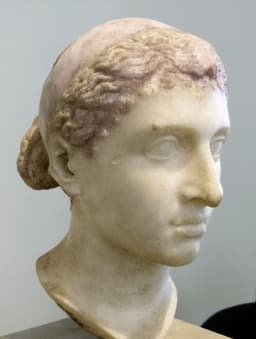
Cleopatra VII
Politician · Ancient
47.2Total
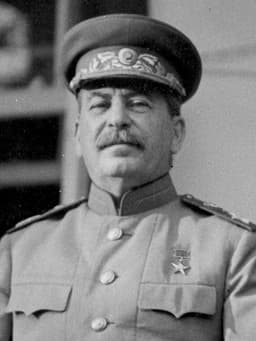
Joseph Stalin
Politician · Modern
68.8Total
Basic Information
Born
-69
1878
Died
-30
1953
Era
Ancient
Modern
Nationality
Egypt
Russia
Occupation
Politician
Politician
Civilization
Middle Eastern
Western
Score Comparison
Military (10%)
20.0
75.0
Political (20%)
45.0
70.0
Influence (20%)
40.0
72.0
Legacy (20%)
80.0
55.0
Leadership (15%)
40.0
80.0
Strategy (15%)
25.0
70.0
TOTAL
47.2
68.8
Cleopatra VII — Complete Timeline
48 BC
Alliance with Julius CaesarPolitical Action◆ Major
Cleopatra allied with Julius Caesar during the Roman civil war. She had herself smuggled into his palace in Alexandria rolled in a carpet. Caesar supported her claim to the throne, defeating her brother Ptolemy XIII and restoring her as co-ruler of Egypt.
Impact: regional
47 BC
Birth of CaesarionPolitical Action◆ Major
Cleopatra gave birth to Ptolemy XV Caesar (Caesarion), claiming he was Julius Caesar's son. This birth strengthened her political position and provided a potential heir to both Egypt and Rome, though Caesar never officially acknowledged him as his heir.
Impact: regional
41 BC
Alliance with Mark AntonyPolitical Action◆ Major
Cleopatra formed a political and romantic alliance with Mark Antony, a Roman triumvir. She provided him with financial and military support for his campaigns in the East. Their relationship produced three children and solidified her control over Egypt.
Impact: regional
31 BC
Battle of ActiumWar
The combined naval forces of Cleopatra and Mark Antony were decisively defeated by Octavian's fleet under Agrippa at Actium in Greece. Cleopatra fled with her ships, and Antony followed, leading to their eventual downfall and Octavian's rise as Augustus.
Impact: globaltragic
30 BC
Death of CleopatraPolitical Action
After Octavian's forces captured Alexandria, Cleopatra died by suicide, traditionally said to be from the bite of an asp. Her death ended the Ptolemaic dynasty and Egypt became a Roman province, marking the end of Hellenistic Egypt's independence.
Impact: globaltragic
Joseph Stalin — Complete Timeline
1928 AD
Launched the First Five-Year PlanReform
Stalin initiated a series of centralized economic plans aimed at rapid industrialization and collectivization of agriculture. The First Five-Year Plan set ambitious targets for heavy industry, leading to significant growth but also severe shortages and human cost.
Impact: global
1929 AD
Implemented forced collectivization of agricultureReform
Stalin ordered the consolidation of individual peasant farms into collective farms (kolkhozy). This was met with resistance, leading to the liquidation of kulaks (wealthy peasants) as a class. The policy caused a catastrophic famine, particularly in Ukraine (Holodomor), resulting in millions of deaths.
Impact: nationaldestructive
1937 AD
Conducted the Great Purge (Great Terror)Political Action
Stalin orchestrated a campaign of political repression against alleged enemies of the state. Millions were arrested, executed, or sent to the Gulag labor camps. The purges targeted the Communist Party, military leadership, intellectuals, and ordinary citizens, consolidating Stalin's absolute power.
Impact: nationaldestructive
1945 AD
Led the Soviet Union to victory in World War IIWar
Stalin served as Supreme Commander of the Soviet armed forces. The Soviet Union bore the brunt of the war against Nazi Germany, suffering immense casualties. The Red Army's victory at Stalingrad and the capture of Berlin were key turning points. The war ended with Soviet domination of Eastern Europe.
Impact: global
Established the Eastern Bloc and the Iron CurtainPolitical Action◆ Major
After WWII, Stalin imposed communist governments in Eastern European countries occupied by the Red Army, creating a buffer zone against the West. This division of Europe into Soviet and Western spheres of influence marked the beginning of the Cold War.
Impact: globaldestructive
Expert Analysis
Cleopatra VII vs Joseph Stalin
# The Queen and the Commissar: Cleopatra and Stalin, Architects of Power
History often pairs figures who, on the surface, share nothing but a thirst for control. Cleopatra VII, the last pharaoh of Ptolemaic Egypt, and Joseph Stalin, the iron-fisted Soviet dictator, seem to inhabit different galaxies—one a Hellenistic queen who charmed Roman generals, the other a Georgian revolutionary who terrorized his own people. Yet both faced the same fundamental question: how does a ruler preserve power when the world is collapsing around them? Their answers, separated by two millennia, reveal the terrifying gap between personal diplomacy and systematic terror.
Origins
Cleopatra was born into a dynasty already in decay. The Ptolemies, Greek successors of Alexander the Great, had ruled Egypt for nearly three centuries, but by 69 BCE, their kingdom was a client state of an expanding Rome. Cleopatra was educated in the Greek tradition—fluent in multiple languages, trained in rhetoric, astronomy, and diplomacy—but she was also the first Ptolemy to learn Egyptian, a gesture of cultural connection that her predecessors had scorned. Her world was one of fragile alliances, where a single Roman legion could determine a dynasty’s fate.
Stalin, born Ioseb Djugashvili in 1878 in the Georgian town of Gori, emerged from a different crucible. His father was a violent alcoholic, his mother a devoutly religious woman who wanted him to become a priest. Instead, he entered an Orthodox seminary, where he absorbed revolutionary literature and was eventually expelled. The Russian Empire of his youth was a vast, autocratic state cracking under industrialization and war. Where Cleopatra inherited a throne, Stalin inherited a world of underground conspiracy, exile, and the constant threat of the tsar’s secret police.
Rise to Power
Cleopatra’s path was one of calculated seduction—not merely of men, but of opportunity. When her father died in 51 BCE, she ascended the throne jointly with her younger brother Ptolemy XIII, but the boy’s advisors soon drove her into exile. She did not raise an army to retake Alexandria; she raised a rug. In 48 BCE, she had herself smuggled into the palace of Julius Caesar, who was then mediating the Egyptian civil war. Emerging from the carpet before the most powerful man in the Roman world, she gambled everything on her ability to fascinate. Caesar was captivated, and she regained her throne.
Stalin’s rise was more methodical, more brutal. He joined the Bolshevik faction of the Russian Social Democratic Labour Party, where he earned a reputation as a ruthless organizer. He was not a great speaker like Trotsky, nor a theoretician like Lenin. But he was a master of bureaucracy and patronage. After the 1917 Revolution, he accumulated positions—Commissar of Nationalities, General Secretary of the Communist Party—that others dismissed as administrative drudgery. From this seemingly minor post, he placed his allies in every key institution. By the time Lenin died in 1924, Stalin had already built a machine that could crush any rival.
Leadership & Governance
Cleopatra ruled through personal relationships. She understood that Egypt could not match Rome’s military might; instead, she wielded Egypt’s wealth—grain, gold, and the allure of its ancient civilization—as currency. Her alliance with Caesar produced a son, Caesarion, and secured her position. After Caesar’s assassination, she turned to Mark Antony, the Roman triumvir who controlled the eastern Mediterranean. Together, they formed a political and romantic partnership that challenged Octavian’s ambitions. Cleopatra provided Antony with ships, money, and legitimacy; Antony provided her with Roman protection. It was a partnership of equals, but it depended entirely on the personal bond between them.
Stalin governed through institutions and fear. His First Five-Year Plan, launched in 1928, transformed the Soviet Union from a peasant economy into an industrial superpower—but at a staggering human cost. Forced collectivization of agriculture led to famine that killed millions in Ukraine and Kazakhstan. The Great Purge of 1937 turned the Communist Party, the military, and the intelligentsia into targets of state terror. Stalin did not charm his enemies; he eliminated them. Where Cleopatra seduced, Stalin purged. One ruled by building relationships; the other by destroying them.
Triumph & Tragedy
Cleopatra’s greatest moment was also the prelude to her fall. At the Battle of Actium in 31 BCE, her fleet, combined with Antony’s, faced Octavian’s navy under Agrippa. The battle was a disaster. Cleopatra fled with her ships, and Antony followed, a decision that has been debated for two millennia. Was it cowardice? A calculated retreat? Or the collapse of a partnership under pressure? Whatever the reason, the defeat sealed their fate. Octavian invaded Egypt, and Cleopatra died by suicide in 30 BCE, traditionally said to be from the bite of an asp. She was thirty-nine years old.
Stalin’s triumph was World War II. As Supreme Commander of the Soviet armed forces, he led his nation through the deadliest conflict in history. The Soviet Union lost an estimated 27 million people, but it emerged as a superpower, occupying Eastern Europe and planting the seeds of the Cold War. Yet this victory was built on the same system of repression that had already killed millions of his own citizens. Stalin’s tragedy was that his legacy of victory is inseparable from his legacy of terror.
Character & Destiny
Cleopatra was a pragmatist who believed that power flowed through personal connections. She was intelligent, charismatic, and adaptable—but she lived in a world where Rome’s military dominance was absolute. Her strategy of alliance was logical, but it depended on the loyalty of men who were themselves fighting for control of an empire. When Octavian proved more ruthless and disciplined than Antony, her strategy collapsed. Her death was not a defeat of Egypt, but the end of a dynasty that had already lost its independence.
Stalin was a paranoid genius who believed that power flowed through control. He trusted no one, eliminated all rivals, and built a state that mirrored his own psychology: suspicious, violent, and utterly centralized. His strategy of industrialization and collectivization was brutally effective, but it created a society so traumatized that it could only function under absolute authority. When he died in 1953, his system did not collapse—it endured, because he had designed it to survive without him.
Legacy
Cleopatra is remembered as a romantic figure, the queen who seduced Caesar and Antony, the woman who died for love. This is a simplification, almost a distortion. She was a politician who used every tool available—her intelligence, her wealth, her sexuality—to preserve her kingdom. Her legacy is not her love affairs, but her failure. She is the last pharaoh, the symbol of a civilization that could not resist the rising tide of Rome.
Stalin is remembered as a monster, but also as the man who defeated Hitler. His legacy is deeply contested. In Russia, some view him as a strong leader who modernized the nation and won the war. In the former Soviet republics and Eastern Europe, he is the architect of famine, purges, and occupation. His monument is the Soviet Union itself—a superpower that rose from backwardness through unimaginable suffering.
Conclusion
Cleopatra and Stalin were both masters of their historical moments, but they played very different games. Cleopatra played chess with pieces that could be taken off the board; Stalin played a game where he could change the rules, eliminate the other players, and then rewrite the scorecard. One ruled through charm in a world of limited options; the other ruled through terror in a world of unlimited ambition. Their stories remind us that power is never just about personality—it is about the systems, the eras, and the choices that define what a leader can become. Cleopatra could not escape Rome; Stalin created his own Rome and called it the Soviet Union. The difference between them is the difference between diplomacy and dictatorship, between survival and domination.
Rankings
🥇
Joseph StalinLeader
Mil: 75.0Pol: 70.0Inf: 72.0
68.8
🥈
Cleopatra VII
Mil: 20.0Pol: 45.0Inf: 40.0
47.2
+21.6 behind
How This Comparison Works
Algorithm
Each figure is scored on 6 dimensions (0—100 scale) based on structured historical data: Military (10%), Political (20%), Influence (20%), Legacy (20%), Leadership (15%), Strategy (15%). The weighted total produces the final ranking.
Data Sources
Scores are computed from structured sub-indicators in the database. Scale factors adjust for era (Ancient ×0.85, Modern ×1.0) and civilization size (Eastern ×1.05, Other ×0.80) to account for differences in population and military scale.
Maximum 3 Figures
Comparisons are limited to 2—3 figures to ensure readability and statistical meaningfulness.
Error Margins
±5 points per dimension — Sub-scores are derived from historical records with inherent uncertainty. Two figures within 5 points on a dimension should be considered roughly equivalent in that area.
Total Score Accuracy
±3 points overall — The weighted combination of 6 dimensions produces a total score with approximately ±3 points of uncertainty. Differences of less than 3 points are not statistically significant— the figures are effectively tied.
Known Limitations
- Historical records are incomplete and uneven across civilizations
- Figures from oral-tradition societies may be underrepresented
- Occupation labels can misclassify multi-role figures
- Scores measure capability and impact, not moral character
- Quantitative scoring is a comparison tool, not absolute truth
Capability Radar
Military (10%) — Battles & Warfare
Battles
20
85
Win Rate
15
80
Expansion
10
85
Political (20%) — Governance & Reform
Reform
40
90
Diplomacy
85
70
Economy
55
85
Influence (20%) — Cultural & Global Reach
Cultural
80
70
Global
85
95
Legacy (20%) — Historical Impact
Historical
85
95
Longevity
90
80
Leadership (15%) — Power & Stability
Tenure
60
95
Stability
35
60
Strategy (15%) — Tactics & Innovation
Strategy
30
85
Tactics
25
60
Reform
10
90
Similar Comparisons
Comments & Discussion
【cleopatra's shadow strategist6/16/2026
Anyone comparing Cleopatra to Stalin is missing the point. She was a clever operator in a collapsing system, yes—but she never built a Gulag. The real comparison is between a *survivor* and a *system builder*. Cleopatra played the hand she was dealt, charming Caesar and Antony to delay Roman annexation. Stalin *dealt cards* to history, engineering famine in Ukraine (1932-33) and purging 1.2 million Party members. One slept with power; the other *institutionalized* it.
【斯大林的数据沉默】6/16/2026
拿克莱奥帕特拉跟斯大林比,纯粹是西方中心论者的修辞游戏。看看数字:她统治埃及22年,死了多少?顶多几百人——罗马征兵加上政治暗杀。斯大林呢?1937-38年大清洗处决至少68万,集体化饿死数百万。数据不会撒谎:一个靠丝绸和香膏维持权力,另一个靠恐惧和档案文件。说他们“共享对权力的渴望”?那是把选美皇后和杀人魔放在同一张桌上。
【hellenistic hawk eye】6/16/2026
Enough sentimentality about the "last pharaoh." Cleopatra's brilliance wasn't charm—it was *military logistics*. She rebuilt Egypt's navy after Caesar's civil war, mobilized 200 ships at Actium (31 BCE), and personally commanded supply lines through the Nile Delta. Stalin couldn't even manage a harvest without causing famine. The Queen understood *operational depth*—her troops had grain silos before battles. The Commissar shot his best generals in 1937 and then panicked during Operation Barbaros
【红场碑文】6/16/2026
历史学家的通病:拿“魅力”掩盖暴力本质。克娄巴特拉没折磨过敌人,斯大林却把布哈林拖到克里姆林宫当众羞辱——然后枪毙。看看《莫斯科审判》的速记记录:被告“认罪”时,斯大林在主席台上吸烟、剔牙、偶尔打断:“再说一遍,你不是间谍?”这种权力表演是法老绝不会采用的。一个用黄金酒杯,一个用带抽筋的茶壶。
【revisionist rubble】6/16/2026
Why always the "personal vs. systematic" cliché? Cleopatra didn't just charm—she *weaponized* her fertility, claiming Caesarion was divine heir to both Rome and Egypt. That's dynastic engineering on Stalin's scale—just with a different toolkit. Stalin used purges and five-year plans; Cleopatra used sex, propaganda, and assassination (remember her poisoning of Ptolemy XIV?). Both understood that power requires *eliminating alternatives*—she just did it with poison, not a list in a Lubyanka file.