Loading...
Alexander the Great vs Joseph Stalin
Alexander the Great leads by 16.4 pts · 2 figures compared
…
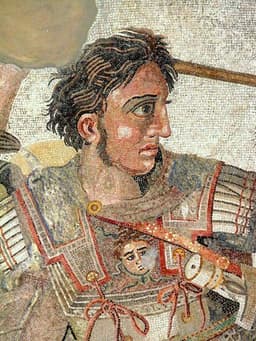
Alexander the Great
General · Ancient
85.2Total
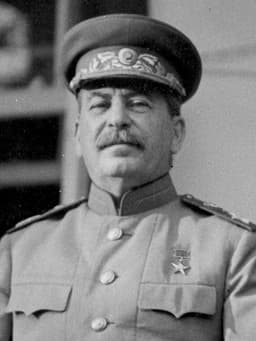
Joseph Stalin
Politician · Modern
68.8Total
Basic Information
Born
-356
1878
Died
-323
1953
Era
Ancient
Modern
Nationality
Macedon
Russia
Occupation
General
Politician
Civilization
Western
Western
Score Comparison
Military (10%)
95.0
75.0
Political (20%)
60.0
70.0
Influence (20%)
92.0
72.0
Legacy (20%)
90.0
55.0
Leadership (15%)
80.0
80.0
Strategy (15%)
92.0
70.0
TOTAL
85.2
68.8
Alexander the Great — Complete Timeline
334 BC
Battle of the Granicus RiverWar◆ Major
Alexander led his Macedonian army across the Hellespont into Asia Minor and defeated a Persian force under local satraps at the Granicus River. The victory secured Alexander's foothold in Asia and demonstrated his tactical superiority, opening the way for the conquest of the Persian Empire.
Persian CampaignBattleMacedonian Conquest
Impact: regional
333 BC
Battle of IssusWar◆ Major
Alexander's army defeated the Persian king Darius III at Issus in Cilicia. Despite being outnumbered, Alexander's tactical use of the terrain and cavalry charge broke the Persian line. Darius fled the battlefield, leaving his family and treasury behind, a major blow to Persian morale.
Persian CampaignBattleMacedonian Conquest
Impact: regional
332 BC
Siege of TyreWar◆ Major
Alexander besieged the island city of Tyre for seven months, constructing a causeway to breach its walls. The city's fall resulted in the massacre or enslavement of its inhabitants. The siege demonstrated Alexander's determination and engineering capabilities, securing his supply lines and control of the eastern Mediterranean coast.
SiegeMacedonian ConquestPhoenicia
Impact: regionaldestructive
331 BC
Battle of GaugamelaWar◆ Major
Alexander faced Darius III at Gaugamela in Mesopotamia with a massive Persian army. Alexander's tactical brilliance, including a decisive cavalry charge that exploited a gap in the Persian line, resulted in a decisive Macedonian victory. Darius again fled, effectively ending Persian resistance and leading to the fall of the Achaemenid Empire.
Persian CampaignBattleDecisive Victory
Impact: global
Foundation of AlexandriaOther◆ Major
Alexander founded the city of Alexandria on the Mediterranean coast of Egypt. He personally selected the site and oversaw the initial planning. Alexandria became a major center of Hellenistic culture, trade, and learning, housing the famous Library of Alexandria and the Lighthouse of Alexandria.
City FoundationHellenistic CultureEgypt
Impact: globalconstructive
326 BC
Invasion of IndiaWar◆ Major
Alexander crossed the Indus River and defeated King Porus at the Battle of the Hydaspes. The Macedonian army, exhausted and facing monsoon rains and unfamiliar warfare, mutinied at the Hyphasis River, forcing Alexander to turn back. This campaign marked the easternmost extent of his conquests.
Indian CampaignBattleMutiny
Impact: regional
Joseph Stalin — Complete Timeline
1928 AD
Launched the First Five-Year PlanReform
Stalin initiated a series of centralized economic plans aimed at rapid industrialization and collectivization of agriculture. The First Five-Year Plan set ambitious targets for heavy industry, leading to significant growth but also severe shortages and human cost.
Impact: global
1929 AD
Implemented forced collectivization of agricultureReform
Stalin ordered the consolidation of individual peasant farms into collective farms (kolkhozy). This was met with resistance, leading to the liquidation of kulaks (wealthy peasants) as a class. The policy caused a catastrophic famine, particularly in Ukraine (Holodomor), resulting in millions of deaths.
Impact: nationaldestructive
1937 AD
Conducted the Great Purge (Great Terror)Political Action
Stalin orchestrated a campaign of political repression against alleged enemies of the state. Millions were arrested, executed, or sent to the Gulag labor camps. The purges targeted the Communist Party, military leadership, intellectuals, and ordinary citizens, consolidating Stalin's absolute power.
Impact: nationaldestructive
1945 AD
Led the Soviet Union to victory in World War IIWar
Stalin served as Supreme Commander of the Soviet armed forces. The Soviet Union bore the brunt of the war against Nazi Germany, suffering immense casualties. The Red Army's victory at Stalingrad and the capture of Berlin were key turning points. The war ended with Soviet domination of Eastern Europe.
Impact: global
Established the Eastern Bloc and the Iron CurtainPolitical Action◆ Major
After WWII, Stalin imposed communist governments in Eastern European countries occupied by the Red Army, creating a buffer zone against the West. This division of Europe into Soviet and Western spheres of influence marked the beginning of the Cold War.
Impact: globaldestructive
Expert Analysis
Alexander the Great vs Joseph Stalin
# The Conqueror and the Commissar
In the summer of 324 BCE, Alexander the Great stood on the banks of the Indus River, his veterans weeping at his feet, begging him to turn back. He had marched them ten thousand miles, through deserts and mountains, against elephants and chariots, and he had never lost a single battle. Twenty-two centuries later, in the winter of 1941, Joseph Stalin sat in his Kremlin bunker as German panzers reached the outskirts of Moscow, his generals begging *him* to retreat. Stalin refused. He had purged his officer corps, starved his own peasants, and signed a pact with his mortal enemy—and he, too, would not lose. Two men, both absolute rulers, both forged in violence, both obsessed with immortality. Yet one built an empire that crumbled within a generation, while the other built a superpower that outlasted him by four decades. What explains the difference between the conqueror and the commissar?
Origins
Alexander was born in 356 BCE to King Philip II of Macedon and Queen Olympias, into a world of spear-wielding phalanxes and city-state rivalries. His father had unified Greece through war and diplomacy; his mother whispered that he was descended from Achilles. By age sixteen, Alexander was commanding cavalry charges. By twenty, he was king. His world was small—the Mediterranean, the Aegean, the dusty plains of Asia Minor—but his ambition was boundless.
Stalin was born in 1878 in the Georgian town of Gori, the son of a cobbler and a washerwoman. His childhood was marked by poverty, a deformed left arm, and a father who beat him. He entered a Russian Orthodox seminary but was expelled for revolutionary activity. His world was vast—the Russian Empire stretched from Poland to the Pacific—but his prospects were narrow. Where Alexander inherited a war machine, Stalin inherited nothing but resentment.
Rise to Power
Alexander’s path was straight and swift. In 336 BCE, after his father’s assassination, he crushed a rebellion in Thebes, razing the city to the ground as a warning. Then he turned east. At the Granicus River (334 BCE), he led the charge himself, nearly dying. At Issus (333 BCE), he outflanked a Persian army three times his size. At Gaugamela (331 BCE), he broke the Persian Empire forever. Each victory was a stepping stone, each battle a masterpiece of speed and audacity.
Stalin’s rise was crooked and slow. He joined the Bolsheviks, robbed banks to fund the party, and was exiled to Siberia multiple times. When Lenin died in 1924, Stalin was a gray bureaucrat, the man who controlled the party’s appointments. He outmaneuvered Trotsky, sidelined Zinoviev, and buried Kamenev—not through brilliance, but through patience, paranoia, and a genius for exploiting his enemies’ vanity. By 1928, he was the sole ruler of the largest country on earth.
Leadership & Governance
Alexander ruled through charisma and terror. He married a Bactrian princess, adopted Persian dress, and tried to fuse Greek and Oriental elites into a new ruling class. He founded dozens of cities, most named Alexandria, spreading Hellenistic culture from Egypt to Afghanistan. But he also murdered his closest friend, Cleitus, in a drunken rage; he tortured and executed the philosopher Callisthenes for opposing proskynesis (prostration before the king); he burned Persepolis, the Persian capital, in a fit of revenge. His military genius was absolute—his tactical innovations, from the oblique phalanx to the combined-arms hammer-and-anvil, are still studied at Sandhurst and West Point today—but his political wisdom was fragile. He had no plan for succession, no bureaucracy, no system.
Stalin ruled through ideology and bureaucracy. He launched the First Five-Year Plan in 1928, a crash program of industrialization that built steel mills, hydroelectric dams, and tractor factories from scratch. He forced collectivization in 1929, seizing grain from peasants to feed the cities, causing a famine that killed millions in Ukraine and Kazakhstan. He conducted the Great Purge in 1937, executing or imprisoning over a million people—including three of the five marshals of the Soviet Union, 13 of 15 army commanders, and 58 of 85 corps commanders. Yet he also built a state that could defeat Nazi Germany. The Red Army that crushed Hitler in 1945 was the same army Stalin had decimated in 1937. His leadership was a paradox: murderous, efficient, and ultimately victorious.
Triumph & Tragedy
Alexander’s greatest triumph was Gaugamela (331 BCE), where he defeated Darius III with a brilliant feint and a decisive cavalry charge. His greatest tragedy was his own death—at age thirty-two, in Babylon, possibly from malaria, typhoid, or poison. As he lay dying, his generals asked to whom he left his empire. “To the strongest,” he whispered. Within a generation, his domain was carved into warring kingdoms.
Stalin’s greatest triumph was the victory in World War II, the Great Patriotic War, where the Soviet Union lost 27 million people but shattered the Wehrmacht. His greatest tragedy was the war itself—a catastrophe he helped create by signing the Molotov–Ribbentrop Pact in 1939, which gave Hitler the green light to invade Poland. When Germany turned on the USSR in 1941, Stalin was paralyzed, refusing to believe intelligence reports for days. His paranoia nearly cost everything.
Character & Destiny
Alexander was driven by *pothos*—a Greek word meaning a yearning for what lies beyond. He wept when there were no more worlds to conquer. He believed he was divine, the son of Zeus, and his soldiers worshipped him as a god. His personality was a fusion of reckless courage and manic insecurity. He could not stop.
Stalin was driven by *podozrenie*—a Russian word meaning suspicion. He trusted no one, not his family, not his comrades, not his own shadow. He believed history was a struggle for survival, and he would do anything to survive. His personality was a fusion of cold calculation and volcanic rage. He could not yield.
Legacy
Alexander’s legacy is the Hellenistic world: the spread of Greek language, art, and philosophy across three continents. He is remembered as a demigod, a genius, a cautionary tale. His military score of 96.0 reflects his undefeated record; his political score of 65.0 reflects his failure to build institutions. His influence score of 90.0 and legacy score of 90.0 show that he shaped Western civilization itself.
Stalin’s legacy is the Soviet Union: industrialization, victory in war, and the Gulag. He is remembered as a monster, a tyrant, a necessary evil. His military score of 75.0 and political score of 72.0 reflect his brutal effectiveness; his legacy score of 55.0 reflects the moral catastrophe of his rule. His influence score of 72.0 shows that he reshaped the twentieth century, for better and worse.
Conclusion
Standing at the Indus, Alexander wept because he could go no further. Standing in the Kremlin, Stalin stared at a map and calculated how many more divisions he could sacrifice. Both men were architects of destruction and creation, but they built with different materials. Alexander used charisma and conquest; Stalin used fear and bureaucracy. One built an empire on sand, the other on steel. And perhaps that is the final lesson: that the conqueror dies young and is remembered forever, while the commissar dies old and is remembered with a shudder. History does not judge them equally—it judges them by what they left behind. And what Alexander left was a dream; what Stalin left was a machine. Both are gone now, but the dream and the machine still haunt us.
Rankings
🥇
Alexander the GreatLeader
Mil: 95.0Pol: 60.0Inf: 92.0
85.2
🥈
Joseph Stalin
Mil: 75.0Pol: 70.0Inf: 72.0
68.8
+16.4 behind
How This Comparison Works
Algorithm
Each figure is scored on 6 dimensions (0—100 scale) based on structured historical data: Military (10%), Political (20%), Influence (20%), Legacy (20%), Leadership (15%), Strategy (15%). The weighted total produces the final ranking.
Data Sources
Scores are computed from structured sub-indicators in the database. Scale factors adjust for era (Ancient ×0.85, Modern ×1.0) and civilization size (Eastern ×1.05, Other ×0.80) to account for differences in population and military scale.
Maximum 3 Figures
Comparisons are limited to 2—3 figures to ensure readability and statistical meaningfulness.
Error Margins
±5 points per dimension — Sub-scores are derived from historical records with inherent uncertainty. Two figures within 5 points on a dimension should be considered roughly equivalent in that area.
Total Score Accuracy
±3 points overall — The weighted combination of 6 dimensions produces a total score with approximately ±3 points of uncertainty. Differences of less than 3 points are not statistically significant— the figures are effectively tied.
Known Limitations
- Historical records are incomplete and uneven across civilizations
- Figures from oral-tradition societies may be underrepresented
- Occupation labels can misclassify multi-role figures
- Scores measure capability and impact, not moral character
- Quantitative scoring is a comparison tool, not absolute truth
Capability Radar
Military (10%) — Battles & Warfare
Battles
98
85
Win Rate
99
80
Expansion
99
85
Political (20%) — Governance & Reform
Reform
75
90
Diplomacy
80
70
Economy
70
85
Influence (20%) — Cultural & Global Reach
Cultural
95
70
Global
95
95
Legacy (20%) — Historical Impact
Historical
98
95
Longevity
95
80
Leadership (15%) — Power & Stability
Tenure
60
95
Stability
55
60
Strategy (15%) — Tactics & Innovation
Strategy
98
85
Tactics
99
60
Reform
85
90
Similar Comparisons
Comments & Discussion
古典学考据癖6/16/2026
亚历山大崇拜阿喀琉斯,推崇荷马史诗中的英雄主义;斯大林崇拜谁?他自己。亚历山大在印度河畔与士兵同哭,斯大林在莫斯科安全屋里隔着电话下令。一个是战场上的指挥官,一个是办公室里的屠夫。历史记住亚历山大的文明融合,而斯大林留下的只有古拉格和集体化饥荒。|zh
历史爱好者6/16/2026
两者都是暴君,但亚历山大的征服是开放式的——他娶波斯新娘、建希腊化城市。斯大林呢?他封闭边境、清洗异己。亚历山大穿过兴都库什山时主动学习当地文化;斯大林连乌克兰的粮食都要抢走。一个建立多元帝国,一个制造同质化恐怖。区别显而易见:一个是探险家,一个是狱警。|zh
修订派批判者6/16/2026
别美化亚历山大了。他屠杀了提尔城八千居民,在波斯波利斯烧毁了宫殿。斯大林干的坏事,亚历山大也做过,只是技术不够先进。两人都为了权力不择手段,区别在于时代和技术。说亚历山大比斯大林“高尚”的人,要么没读过历史,要么选择性失忆。都是独裁者,别分什么档次。|zh
Historian2976/16/2026
Comparing battle counts is silly. Alexander fought in an era of city-states and tribal armies—total opposing forces maybe 200,000 across his career. Stalin mobilized over 30 million troops in WWII alone. The Soviet Union’s survival came from industrial depth and manpower, not personal courage. Alexander’s “genius” is romanticized because he died young; Stalin’s brutality is understated because he won.|en
Historian1096/16/2026
Alexander was the real deal—never lost a battle, conquered from Greece to India in a decade. Stalin? He purged his own generals, signed a pact with Hitler, then panicked when Germany invaded. Alexander’s empire broke up after his death because he died young, not because it was weak. Stalin’s outlasted him due to sheer terror, not brilliance. Give me cavalry charges over show trials any day.|en