Loading...
Cleopatra VII vs Franklin D. Roosevelt
Franklin D. Roosevelt leads by 23.8 pts · 2 figures compared
…
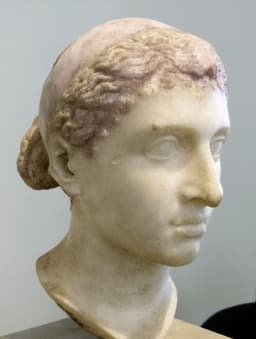
Cleopatra VII
Politician · Ancient
47.2Total
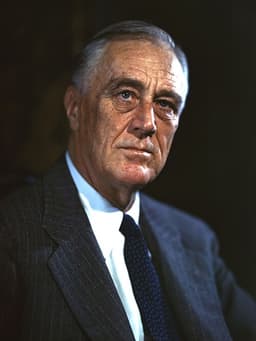
Franklin D. Roosevelt
Politician · Modern
71.0Total
Basic Information
Born
-69
1882
Died
-30
1945
Era
Ancient
Modern
Nationality
Egypt
United States
Occupation
Politician
Politician
Civilization
Middle Eastern
Western
Score Comparison
Military (10%)
20.0
45.0
Political (20%)
45.0
85.0
Influence (20%)
40.0
75.0
Legacy (20%)
80.0
65.0
Leadership (15%)
40.0
85.0
Strategy (15%)
25.0
60.0
TOTAL
47.2
71.0
Cleopatra VII — Complete Timeline
48 BC
Alliance with Julius CaesarPolitical Action◆ Major
Cleopatra allied with Julius Caesar during the Roman civil war. She had herself smuggled into his palace in Alexandria rolled in a carpet. Caesar supported her claim to the throne, defeating her brother Ptolemy XIII and restoring her as co-ruler of Egypt.
Impact: regional
47 BC
Birth of CaesarionPolitical Action◆ Major
Cleopatra gave birth to Ptolemy XV Caesar (Caesarion), claiming he was Julius Caesar's son. This birth strengthened her political position and provided a potential heir to both Egypt and Rome, though Caesar never officially acknowledged him as his heir.
Impact: regional
41 BC
Alliance with Mark AntonyPolitical Action◆ Major
Cleopatra formed a political and romantic alliance with Mark Antony, a Roman triumvir. She provided him with financial and military support for his campaigns in the East. Their relationship produced three children and solidified her control over Egypt.
Impact: regional
31 BC
Battle of ActiumWar
The combined naval forces of Cleopatra and Mark Antony were decisively defeated by Octavian's fleet under Agrippa at Actium in Greece. Cleopatra fled with her ships, and Antony followed, leading to their eventual downfall and Octavian's rise as Augustus.
Impact: globaltragic
30 BC
Death of CleopatraPolitical Action
After Octavian's forces captured Alexandria, Cleopatra died by suicide, traditionally said to be from the bite of an asp. Her death ended the Ptolemaic dynasty and Egypt became a Roman province, marking the end of Hellenistic Egypt's independence.
Impact: globaltragic
Franklin D. Roosevelt — Complete Timeline
1933 AD
Inaugurated as 32nd PresidentOther◆ Major
Franklin D. Roosevelt was inaugurated as President of the United States on March 4, 1933, during the Great Depression. His inaugural address declared 'the only thing we have to fear is fear itself,' and he immediately called Congress into special session to address the banking crisis.
Great DepressionPresidencyInauguration
Impact: national
Enacted the New DealOther◆ Major
Roosevelt launched the New Deal in 1933, a series of federal programs including the Civilian Conservation Corps, the Agricultural Adjustment Act, and the Tennessee Valley Authority. These measures aimed to provide relief, recovery, and reform during the Great Depression, fundamentally expanding the role of the federal government.
Great DepressionEconomic PolicySocial Reform
Impact: nationalconstructive
1935 AD
Signed the Social Security ActOther◆ Major
Roosevelt signed the Social Security Act into law on August 14, 1935, establishing a federal system of old-age pensions, unemployment insurance, and aid for dependent children. This created the modern American welfare state and provided a safety net for millions of citizens.
Social WelfareLegislationNew Deal
Impact: nationalconstructive
1941 AD
Lend-Lease ActOther◆ Major
Roosevelt signed the Lend-Lease Act on March 11, 1941, authorizing the transfer of military equipment and supplies to Allied nations, particularly Britain and the Soviet Union. This program provided critical material support to countries fighting the Axis powers before U.S. entry into World War II.
World War IIForeign PolicyMilitary Aid
Impact: globalconstructive
Declaration of War on JapanPolitical Action◆ Major
Following the Japanese attack on Pearl Harbor on December 7, 1941, Roosevelt delivered his 'Day of Infamy' speech to Congress the next day, requesting a declaration of war. Congress approved the declaration, bringing the United States into World War II.
World War IIPearl HarborDeclaration of War
Impact: globaldestructive
1942 AD
Executive Order 9066Other◆ Major
Roosevelt signed Executive Order 9066 on February 19, 1942, authorizing the forced relocation and internment of Japanese Americans living on the West Coast. Over 110,000 people, mostly U.S. citizens, were incarcerated in camps for the duration of the war, a decision later widely condemned as a violation of civil rights.
World War IICivil RightsInternment
Impact: nationaldestructive
1944 AD
Elected to Fourth TermOther◆ Major
Roosevelt was elected to an unprecedented fourth term as president in November 1944, defeating Republican Thomas E. Dewey. This election occurred during the final stages of World War II, and Roosevelt's continued leadership ensured stability in the war effort and post-war planning.
PresidencyElectionWorld War II
Impact: national
1945 AD
Yalta ConferenceOther◆ Major
Roosevelt met with Winston Churchill and Joseph Stalin at the Yalta Conference in February 1945 to discuss post-war Europe. Agreements included the division of Germany, Soviet entry into the war against Japan, and the creation of the United Nations, shaping the post-war world order.
World War IIDiplomacyPost-War Planning
Impact: global
Expert Analysis
Franklin D. Roosevelt vs Cleopatra VII
# The Scepter and the Ballot
In the winter of 1941, Franklin Delano Roosevelt sat in the White House, drafting a speech that would declare America the “arsenal of democracy.” Across the Atlantic, the world was burning. Nineteen centuries earlier, Cleopatra VII stood in her palace at Alexandria, watching Roman warships gather on the horizon. Both faced existential threats to their civilizations. One would reshape the modern world; the other would vanish into legend. What separates a leader who saves a nation from one who loses an empire? The answer lies not in their titles, but in the worlds they inherited and the choices they made.
Origins
Cleopatra was born into a dying dynasty. The Ptolemies had ruled Egypt for nearly three centuries, but by 69 BCE, the family was a wreck of assassinations, incest, and incompetence. Her father, Ptolemy XII, had been so despised that he fled to Rome, leaving Egypt to be governed by his daughter Berenice—whom he later executed. Cleopatra grew up in a court where poison was a tool of statecraft and survival depended on cunning. She was the first Ptolemy to actually learn Egyptian, mastering nine languages while her predecessors spoke only Greek. This was not mere curiosity; it was strategy. She understood that to rule Egypt, she had to *become* Egyptian.
Roosevelt, by contrast, was born into the American aristocracy in 1882. His family owned estates along the Hudson River, and his fifth cousin, Theodore Roosevelt, already occupied the White House. Young Franklin attended Groton, Harvard, and Columbia Law School—the conveyor belt of privilege. But privilege does not guarantee wisdom. What shaped Roosevelt was a crucible of a different kind: at age thirty-nine, a polio attack left him paralyzed from the waist down. He never walked again. That private catastrophe forced him to develop a patience and empathy he might never have found in a life of effortless ascent. He learned to read people, to wait, and to hide his suffering behind an unbreakable smile.
Rise to Power
Cleopatra’s path to power was a blood sport. When her father died in 51 BCE, she inherited the throne alongside her younger brother Ptolemy XIII—who was also her husband, as Egyptian tradition demanded. The brother-husband’s advisors quickly pushed her out, forcing Cleopatra to flee into Syria. She was twenty-one, exiled, and surrounded by enemies. What she did next defined her career: she raised an army and returned to Egypt, but she knew she could not win by force alone. So she had herself rolled up in a carpet—or perhaps a linen sack—and smuggled past her brother’s guards into the palace of Julius Caesar. When the carpet unrolled, the most powerful man in the world found himself face to face with a woman who spoke his language, matched his intellect, and offered him an alliance. In 48 BCE, she became Caesar’s lover and, more importantly, his political partner. Nine months later, she bore his son, Caesarion.
Roosevelt’s rise was less dramatic but no less improbable. He entered politics as a state senator in New York, then served as Assistant Secretary of the Navy—a job that taught him the machinery of government. In 1920, he ran for Vice President and lost. Then polio struck. For years, he seemed finished. But his wife Eleanor pushed him back into public life, and in 1928, he was elected Governor of New York. When the Great Depression crashed down in 1929, Roosevelt was already experimenting with relief programs in his state. By 1932, the nation was desperate, and Roosevelt offered something his opponent Herbert Hoover could not: action. He won in a landslide.
Leadership & Governance
The differences in their governance are stark. Cleopatra ruled as an absolute monarch in a world where personal relationships determined the fate of nations. She governed Egypt through a combination of traditional Pharaonic authority and Roman patronage. She stabilized the economy by devaluing currency and managing the grain supply. She presented herself as the living goddess Isis, but she also personally inspected troops, negotiated treaties, and managed a bureaucracy that had existed for millennia. Her greatest achievement was keeping Egypt independent for two decades while Rome tore itself apart. She did this by making herself indispensable to the men who held Rome’s power—first Caesar, then Mark Antony.
Roosevelt governed a democracy in crisis. He did not have the luxury of personal alliances with a single powerful patron; he had to persuade millions. His New Deal was a patchwork of experiments—the Civilian Conservation Corps, the Works Progress Administration, Social Security, the Tennessee Valley Authority—some successful, some failures. He embraced radio, speaking directly to Americans in his “Fireside Chats.” He was criticized from the left for not doing enough and from the right for doing too much. Yet he held together a coalition of farmers, laborers, African Americans, and urban immigrants that would define American politics for decades. His military score of 60 reflects a commander who never wore a uniform but who selected generals like George Marshall and Dwight Eisenhower and managed a global war from a wheelchair. His political score of 85 shows a master of the possible.
Triumph & Tragedy
Cleopatra’s triumph was the alliance with Mark Antony. After Caesar’s assassination in 44 BCE, she returned to Egypt and waited. In 41 BCE, she sailed to meet Antony at Tarsus in a barge so opulent that it became legend: purple sails, silver oars, perfumed air. She seduced him not just with beauty but with resources—Egypt’s grain and gold were essential to Antony’s war against Octavian. For a decade, she ruled as queen of Egypt and de facto partner of the most powerful Roman in the East. But the Battle of Actium in 31 BCE was her undoing. The combined fleet of Antony and Cleopatra was crushed by Octavian’s admiral Agrippa. Cleopatra fled, and Antony followed. Within a year, both were dead.
Roosevelt’s triumph was victory in World War II. He died on April 12, 1945, just weeks before Germany surrendered. He never saw the final peace. His tragedy was that he did not live to shape the postwar world he had helped create. The United Nations, the Marshall Plan, the Cold War—these were left to Harry Truman, a man Roosevelt had chosen as Vice President but barely consulted. Roosevelt’s death at sixty-three was the final cost of a life spent carrying the weight of a depression and a world war.
Character & Destiny
Cleopatra was brilliant, ruthless, and ultimately trapped by her own strategy. She bet everything on the personal loyalty of Roman leaders, and when Octavian proved more ruthless than Antony, she had no backup plan. Her suicide in 30 BCE—whether by asp or poison—was a final act of defiance. She refused to be paraded in Octavian’s triumph. She chose to die as queen rather than live as a trophy.
Roosevelt was pragmatic, secretive, and supremely confident. He was not a great intellectual, but he had a genius for timing. He knew when to act and when to wait. He also knew how to hide his paralysis from a public that might not have accepted a disabled president. He built a persona of invincible cheerfulness. His character was shaped by the polio that he never mentioned in public but that defined his private struggle.
Legacy
Cleopatra’s legacy is cultural, not political. She lost her kingdom, but she won immortality. She is remembered in Shakespeare, in Hollywood, in every painting of a beautiful queen with a snake. Her Egypt became a Roman province. Her son Caesarion was executed by Octavian. The dynasty ended.
Roosevelt’s legacy is institutional. The New Deal created the modern American welfare state. Social Security, the minimum wage, bank deposit insurance, the Securities and Exchange Commission—these survive today. He redefined the presidency as the center of American government. He also left a warning: the 22nd Amendment, limiting presidents to two terms, was a direct response to his four elections. Even his admirers feared the concentration of power he had embodied.
Conclusion
Cleopatra and Roosevelt both faced moments when history demanded everything of them. One failed, one succeeded—but the difference was not simply talent or will. Roosevelt inherited a stable democratic system with vast resources and a tradition of peaceful succession. Cleopatra inherited a crumbling dynasty squeezed between an expanding empire and internal decay. She navigated brilliantly, but she could not change the tides. Roosevelt could. In the end, the leader is never separate from the civilization they lead. Cleopatra was the last flame of an ancient world. Roosevelt was the first light of a new one. Both burned bright. Only one had fuel left to burn.
Rankings
🥇
Franklin D. RooseveltLeader
Mil: 45.0Pol: 85.0Inf: 75.0
71.0
🥈
Cleopatra VII
Mil: 20.0Pol: 45.0Inf: 40.0
47.2
+23.8 behind
How This Comparison Works
Algorithm
Each figure is scored on 6 dimensions (0—100 scale) based on structured historical data: Military (10%), Political (20%), Influence (20%), Legacy (20%), Leadership (15%), Strategy (15%). The weighted total produces the final ranking.
Data Sources
Scores are computed from structured sub-indicators in the database. Scale factors adjust for era (Ancient ×0.85, Modern ×1.0) and civilization size (Eastern ×1.05, Other ×0.80) to account for differences in population and military scale.
Maximum 3 Figures
Comparisons are limited to 2—3 figures to ensure readability and statistical meaningfulness.
Error Margins
±5 points per dimension — Sub-scores are derived from historical records with inherent uncertainty. Two figures within 5 points on a dimension should be considered roughly equivalent in that area.
Total Score Accuracy
±3 points overall — The weighted combination of 6 dimensions produces a total score with approximately ±3 points of uncertainty. Differences of less than 3 points are not statistically significant— the figures are effectively tied.
Known Limitations
- Historical records are incomplete and uneven across civilizations
- Figures from oral-tradition societies may be underrepresented
- Occupation labels can misclassify multi-role figures
- Scores measure capability and impact, not moral character
- Quantitative scoring is a comparison tool, not absolute truth
Capability Radar
Military (10%) — Battles & Warfare
Battles
20
10
Win Rate
15
10
Expansion
10
10
Political (20%) — Governance & Reform
Reform
40
95
Diplomacy
85
90
Economy
55
95
Influence (20%) — Cultural & Global Reach
Cultural
80
80
Global
85
90
Legacy (20%) — Historical Impact
Historical
85
90
Longevity
90
85
Leadership (15%) — Power & Stability
Tenure
60
90
Stability
35
75
Strategy (15%) — Tactics & Innovation
Strategy
30
65
Tactics
25
10
Reform
10
70
Similar Comparisons
Comments & Discussion
ArchimedesFan426/16/2026
Sure, Cleopatra spoke nine languages and charmed Caesar, but FDR actually saved capitalism from itself. The New Deal wasn't just welfare; it was a surgical strike to prevent a communist revolution in America. While Cleo gambled on personal alliances that collapsed with Antony's fleet, Roosevelt built institutions—the SEC, Social Security, the FDIC—that still hold today. She played the game of thrones; he rewrote the rulebook for modern governance.
空城计将军6/16/2026
把埃及艳后和罗斯福放一起比较,本身就是历史虚无主义。一个是靠美色和阴谋维系腐朽王朝的末代君主,一个是带领美国走出大萧条、打赢二战的划时代领袖。时代背景完全不同,统治逻辑也南辕北辙。Cleopatra的埃及连基本的官僚系统都崩溃了,而罗斯福接手的是一个已经工业化的超级大国。这不是一个量级的比较,说是"领袖对决",不如说是"幸存者"和"缔造者"对决。
SkepticalSocrates6/16/2026
This analysis romanticizes Cleopatra's "strategy" while downplaying FDR's ruthlessness. She didn't cleverly "become Egyptian"—she was a Ptolemaic Greek exploiting native symbolism to keep her throne. Meanwhile, FDR packed the Supreme Court and interned Japanese Americans. Both were power-first pragmatists. The only difference is that Rome was an expansionist empire set on annexing Egypt, while FDR had the luxury of facing a finite war. Remove the apples-to-oranges historical context, and what yo
西湖边的凯撒6/16/2026
作为一个业余历史爱好者,我觉得这个对比忽略了一个关键点:Cleopatra是真正的危机领导人,她接手的是一个正在被罗马蚕食的烂摊子;而罗斯福接手时美国虽然萧条,但国家主权完好。把她的失败归咎于"个人选择",未免太刻薄了。她试过联姻、联盟、甚至假装臣服,但面对的是一个超越时代的超级强权。换成罗斯福,面对罗马的军团,他怕是连"四大自由"都来不及念完就得跑路。历史是看实力的。