Loading...
Cleopatra VII vs Cyrus the Great
Cyrus the Great leads by 36.7 pts · 2 figures compared
…
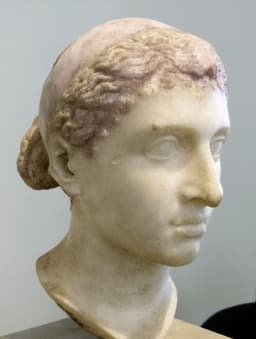
Cleopatra VII
Politician · Ancient
47.2Total
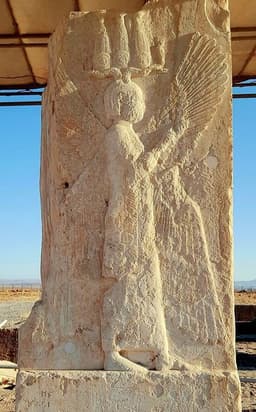
Cyrus the Great
Emperor · Ancient
83.9Total
Basic Information
Born
-69
-600
Died
-30
-530
Era
Ancient
Ancient
Nationality
Egypt
Persia
Occupation
Politician
Emperor
Civilization
Middle Eastern
Middle Eastern
Score Comparison
Military (10%)
20.0
82.0
Political (20%)
45.0
85.0
Influence (20%)
40.0
85.0
Legacy (20%)
80.0
90.0
Leadership (15%)
40.0
78.0
Strategy (15%)
25.0
75.0
TOTAL
47.2
83.9
Cleopatra VII — Complete Timeline
48 BC
Alliance with Julius CaesarPolitical Action◆ Major
Cleopatra allied with Julius Caesar during the Roman civil war. She had herself smuggled into his palace in Alexandria rolled in a carpet. Caesar supported her claim to the throne, defeating her brother Ptolemy XIII and restoring her as co-ruler of Egypt.
Impact: regional
47 BC
Birth of CaesarionPolitical Action◆ Major
Cleopatra gave birth to Ptolemy XV Caesar (Caesarion), claiming he was Julius Caesar's son. This birth strengthened her political position and provided a potential heir to both Egypt and Rome, though Caesar never officially acknowledged him as his heir.
Impact: regional
41 BC
Alliance with Mark AntonyPolitical Action◆ Major
Cleopatra formed a political and romantic alliance with Mark Antony, a Roman triumvir. She provided him with financial and military support for his campaigns in the East. Their relationship produced three children and solidified her control over Egypt.
Impact: regional
31 BC
Battle of ActiumWar
The combined naval forces of Cleopatra and Mark Antony were decisively defeated by Octavian's fleet under Agrippa at Actium in Greece. Cleopatra fled with her ships, and Antony followed, leading to their eventual downfall and Octavian's rise as Augustus.
Impact: globaltragic
30 BC
Death of CleopatraPolitical Action
After Octavian's forces captured Alexandria, Cleopatra died by suicide, traditionally said to be from the bite of an asp. Her death ended the Ptolemaic dynasty and Egypt became a Roman province, marking the end of Hellenistic Egypt's independence.
Impact: globaltragic
Cyrus the Great — Complete Timeline
550 BC
Founding of the Achaemenid EmpirePolitical Action
Cyrus led a rebellion against the Median Empire, defeating King Astyages and capturing Ecbatana. He then united the Persian and Median tribes, establishing the Achaemenid Empire, which became the largest empire the world had yet seen.
Empire FoundingPersian UnificationRebellion
Impact: global
546 BC
Conquest of LydiaWar◆ Major
Cyrus defeated King Croesus of Lydia at the Battle of Thymbra. The Lydian capital Sardis was captured, and Croesus was taken prisoner. This conquest brought Anatolia under Persian control and secured access to the Aegean coast.
Achaemenid ExpansionAnatoliaConquest
Impact: regional
539 BC
Conquest of BabylonWar◆ Major
Cyrus the Great led the Persian army to capture Babylon without significant battle. The city's gates were opened, and Cyrus entered peacefully. This conquest added Mesopotamia to the Achaemenid Empire and marked the end of the Neo-Babylonian Empire.
Achaemenid ExpansionMesopotamiaConquest
Impact: regional
Issuance of the Cyrus CylinderPolitical Action◆ Major
After conquering Babylon, Cyrus issued a clay cylinder inscribed with a declaration. It described his policy of restoring temples, repatriating displaced peoples, and allowing religious freedom. The cylinder is often cited as an early charter of human rights.
Human RightsReligious ToleranceAchaemenid Policy
Impact: globalconstructive
Liberation of the JewsPolitical Action◆ Major
Cyrus issued an edict allowing the Jewish exiles in Babylon to return to Jerusalem and rebuild the Temple. This event is recorded in the biblical Book of Ezra and is a key moment in Jewish history, ending the Babylonian captivity.
Jewish HistoryReligious FreedomReturn from Exile
Impact: regionalconstructive
Expert Analysis
Cyrus the Great vs Cleopatra VII
### Two Thrones, One World
In the spring of 30 BCE, as Roman legions closed in on Alexandria, Cleopatra VII retreated to her mausoleum, a woman who had gambled everything on the power of seduction and alliance. Nearly five centuries earlier, Cyrus the Great had entered Babylon to the cheers of liberated peoples, his conquest welcomed as a deliverance. Both ruled in the ancient Middle East, both faced the might of empires, and both left indelible marks on history. Yet one died a tragic failure, the other a triumphant founder. What explains the chasm between their fates?
### Origins
Cleopatra was born into a world of decay. The Ptolemaic dynasty, Greek-Macedonian rulers of Egypt, had long since lost the vigor of its founder, Alexander’s general. Her family was riven by incest, assassination, and intrigue. Cleopatra, however, was a rare scholar-queen: she spoke nine languages, studied philosophy, and understood that Egypt’s survival depended not on its own strength but on manipulating the Roman Republic, then tearing itself apart. Her era was one of civil war, ambition, and the death of old orders.
Cyrus emerged from a very different cradle. The Persians were a semi-nomadic people under the thumb of the Median Empire. Born around 600 BCE, Cyrus belonged to the Achaemenid clan, but his rise was not guaranteed. He grew up in a world of tribal loyalties, where a chieftain’s charisma could unite clans or shatter them. The ancient Near East was a patchwork of warring kingdoms—Media, Lydia, Babylon, Egypt—ripe for a unifier. Cyrus’s era was one of opportunity, not decay.
### Rise to Power
Cleopatra’s path was a desperate scramble. At 18, she became co-ruler with her younger brother Ptolemy XIII, but courtiers soon ousted her. Fleeing to Syria, she raised a mercenary army—a gamble that might have failed. Her breakthrough came in 48 BCE, when Julius Caesar arrived in Alexandria, chasing his rival Pompey. Cleopatra had herself smuggled into his palace, rolled in a carpet, and emerged as a 21-year-old queen. The alliance was sealed in her bed and at her table. Caesar restored her throne, and in 47 BCE she bore his son, Caesarion. She had not conquered but seduced her way to power.
Cyrus’s rise was a rebellion. In 550 BCE, he led the Persians against their Median overlords, defeating King Astyages at Ecbatana. This was no palace coup but a war of liberation, and Cyrus united the Persians and Medes into a single people. He then turned his gaze outward. In 546 BCE, he crushed the fabulously wealthy King Croesus of Lydia at the Battle of Thymbra, using innovative tactics—a hollow square formation that broke the Lydian chariots. Cyrus did not seduce; he conquered, and his victories were seen as divine favor.
### Leadership & Governance
Cleopatra ruled through personal diplomacy. She understood that Egypt’s military was no match for Rome’s legions, so she wielded her treasury, her intellect, and her charm. With Mark Antony after 41 BCE, she formed a partnership that was both romantic and political, funding his campaigns and dreaming of a Hellenistic-Roman empire. She was a master of propaganda, minting coins with her image as a goddess, and she governed Egypt efficiently, maintaining its prosperity even as Rome’s civil wars raged. But her leadership was reactive: she could only respond to Roman power, never control it.
Cyrus governed through vision. After conquering Babylon in 539 BCE, he issued the Cyrus Cylinder, a clay declaration that restored temples, repatriated displaced peoples, and respected local customs. He famously freed the Jewish exiles, allowing them to return to Jerusalem and rebuild the Temple—a policy that earned him eternal gratitude in the Hebrew Bible. His empire stretched from the Indus to the Aegean, yet he ruled through satraps (governors) who enjoyed autonomy. Cyrus built a multicultural state where loyalty was earned, not forced. His military genius lay in strategy: he preferred negotiation to battle, and when he fought, he used speed and surprise.
### Triumph & Tragedy
Cleopatra’s greatest moment was also her undoing. At the Battle of Actium in 31 BCE, her fleet, allied with Antony’s, faced Octavian’s navy. The battle was a disaster: Cleopatra fled with her ships, and Antony followed, leaving their forces to be destroyed. Whether this was panic or a calculated retreat is debated, but the result was the same. She returned to Alexandria, tried to negotiate with Octavian, and failed. In 30 BCE, as the Romans entered the city, she died by suicide—traditionally, from the bite of an asp. She was 39. Her tragedy was that she bet everything on two Roman men, and both lost.
Cyrus’s triumph was Babylon. In 539 BCE, his army marched to the city, but instead of a bloody siege, the gates were opened—perhaps by Persian sympathizers or a diverted river. He entered as a liberator, not a conqueror. His tragedy came later: he died in battle around 530 BCE, fighting a nomadic tribe on the empire’s eastern frontier. He was about 70. His death was a warrior’s end, but his empire survived, and his legacy grew.
### Character & Destiny
Cleopatra was brilliant, brave, and doomed by her context. She could not escape the gravitational pull of Rome. Her personality—intelligent, passionate, ruthless—made her a legendary figure, but it also tethered her to men who were themselves caught in history’s currents. She chose alliance over independence, and when her allies fell, she fell with them. Her destiny was shaped by a Roman world that allowed no room for a woman pharaoh.
Cyrus was a visionary who shaped his context. His personality—tolerant, ambitious, strategic—allowed him to build an empire that lasted for centuries. He understood that power rested not on fear but on legitimacy. The Cyrus Cylinder is often called the first charter of human rights, and his treatment of the Jews set a precedent for religious freedom. Cyrus was not perfect; he was a conqueror who killed and enslaved. But he conquered to unite, not to destroy.
### Legacy
Cleopatra is remembered as a romantic tragedy—Shakespeare’s “serpent of old Nile,” a symbol of beauty and ruin. Her legacy is cultural, not political. Egypt became a Roman province, and her dynasty ended. But she remains the most famous woman of antiquity, a testament to the power of personality in a world of empires.
Cyrus is remembered as a founder and a liberator. The Achaemenid Empire he built lasted over two centuries, and his administrative model influenced later empires, from Rome to the British. The Cyrus Cylinder is a symbol of tolerance, and his name is revered in Iran, in the Bible, and in the annals of human rights. He is Cyrus the Great.
### Conclusion
Cleopatra and Cyrus both faced the ancient world’s central question: how to survive and thrive in a time of empires. Cyrus answered by building an empire of his own, one that absorbed and respected its subjects. Cleopatra answered by attaching herself to an empire, hoping to steer it from within. One created a legacy of power and tolerance; the other, a legacy of passion and defeat. Their stories remind us that history rewards not just brilliance but the scale of one’s ambition—and that the difference between a founder and a survivor is often the courage to build, not just to endure.
Rankings
🥇
Cyrus the GreatLeader
Mil: 82.0Pol: 85.0Inf: 85.0
83.9
🥈
Cleopatra VII
Mil: 20.0Pol: 45.0Inf: 40.0
47.2
+36.7 behind
How This Comparison Works
Algorithm
Each figure is scored on 6 dimensions (0—100 scale) based on structured historical data: Military (10%), Political (20%), Influence (20%), Legacy (20%), Leadership (15%), Strategy (15%). The weighted total produces the final ranking.
Data Sources
Scores are computed from structured sub-indicators in the database. Scale factors adjust for era (Ancient ×0.85, Modern ×1.0) and civilization size (Eastern ×1.05, Other ×0.80) to account for differences in population and military scale.
Maximum 3 Figures
Comparisons are limited to 2—3 figures to ensure readability and statistical meaningfulness.
Error Margins
±5 points per dimension — Sub-scores are derived from historical records with inherent uncertainty. Two figures within 5 points on a dimension should be considered roughly equivalent in that area.
Total Score Accuracy
±3 points overall — The weighted combination of 6 dimensions produces a total score with approximately ±3 points of uncertainty. Differences of less than 3 points are not statistically significant— the figures are effectively tied.
Known Limitations
- Historical records are incomplete and uneven across civilizations
- Figures from oral-tradition societies may be underrepresented
- Occupation labels can misclassify multi-role figures
- Scores measure capability and impact, not moral character
- Quantitative scoring is a comparison tool, not absolute truth
Capability Radar
Military (10%) — Battles & Warfare
Battles
20
85
Win Rate
15
90
Expansion
10
92
Political (20%) — Governance & Reform
Reform
40
90
Diplomacy
85
95
Economy
55
80
Influence (20%) — Cultural & Global Reach
Cultural
80
90
Global
85
90
Legacy (20%) — Historical Impact
Historical
85
95
Longevity
90
95
Leadership (15%) — Power & Stability
Tenure
60
70
Stability
35
85
Strategy (15%) — Tactics & Innovation
Strategy
30
88
Tactics
25
80
Reform
10
75
Similar Comparisons
Comments & Discussion
THE_DECADENCE_DISECTOR6/16/2026
Cleopatra's "nine languages" shtick is overrated trivia for tourists, not a sign of real power. She inherited a Greek dynasty rotting from within for 250 years while Rome was already the final boss. Cyrus built an empire from nothing with battlefield brilliance (Opis, 539 BCE) and realpolitik that actually worked. Cleopatra's legacy is just Hollywood makeup and a snake bite she probably brought on herself.
王朝考古学家6/16/2026
拿克利奥帕特拉跟居鲁士比,就像拿晚清紫禁城跟秦帝国比。一个是被罗马内卷碾碎的末尾女王,靠魅力苟延残喘;另一个是从零起家、用宽容政策统治四方的真·奠基者。居鲁士在巴比伦解放了犹太人,克利奥帕特拉呢?她让安东尼输掉阿克提姆海战——31 BCE的惨败直接葬送了整个托勒密王朝。这不是悲剧,是必然。
THE_BATTLEFIELD_BUREAUCRAT6/16/2026
Military outcomes speak for themselves: Cyrus conquered the richest cities of his age without widespread destruction—Babylon fell with minimal resistance thanks to his canal tactic. Cleopatra lost Actium despite having superior naval numbers. You don't get to call yourself a "great" strategist when your fleet panics and your lover retreats mid-battle. Commanders who can't deliver wins get remembered as footnotes, not founders.
解构历史派6/16/2026
克利奥帕特拉最大的失败是活在了罗马霸权的顶点时代,但这不能掩盖她个人的选择错误。她本可以像她的父王一样跟罗马做交易,却非要押注安东尼对抗屋大维。居鲁士则懂得适时低调——他征服吕底亚后不搞霸权扩张,反而维持地方自治,让帝国活了二百年。一个玩的是激情牌,一个打的是结构牌,结局自然分高下。