Loading...
Cyrus the Great vs Winston Churchill
Cyrus the Great leads by 12.1 pts · 2 figures compared
…
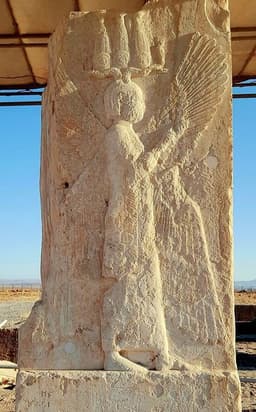
Cyrus the Great
Emperor · Ancient
83.9Total
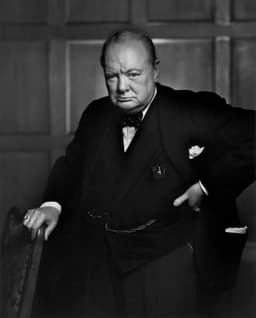
Winston Churchill
Politician · Modern
71.8Total
Basic Information
Born
-600
1874
Died
-530
1965
Era
Ancient
Modern
Nationality
Persia
United Kingdom
Occupation
Emperor
Politician
Civilization
Middle Eastern
Western
Score Comparison
Military (10%)
82.0
55.0
Political (20%)
85.0
78.0
Influence (20%)
85.0
75.0
Legacy (20%)
90.0
68.0
Leadership (15%)
78.0
82.0
Strategy (15%)
75.0
65.0
TOTAL
83.9
71.8
Cyrus the Great — Complete Timeline
550 BC
Founding of the Achaemenid EmpirePolitical Action
Cyrus led a rebellion against the Median Empire, defeating King Astyages and capturing Ecbatana. He then united the Persian and Median tribes, establishing the Achaemenid Empire, which became the largest empire the world had yet seen.
Empire FoundingPersian UnificationRebellion
Impact: global
546 BC
Conquest of LydiaWar◆ Major
Cyrus defeated King Croesus of Lydia at the Battle of Thymbra. The Lydian capital Sardis was captured, and Croesus was taken prisoner. This conquest brought Anatolia under Persian control and secured access to the Aegean coast.
Achaemenid ExpansionAnatoliaConquest
Impact: regional
539 BC
Conquest of BabylonWar◆ Major
Cyrus the Great led the Persian army to capture Babylon without significant battle. The city's gates were opened, and Cyrus entered peacefully. This conquest added Mesopotamia to the Achaemenid Empire and marked the end of the Neo-Babylonian Empire.
Achaemenid ExpansionMesopotamiaConquest
Impact: regional
Issuance of the Cyrus CylinderPolitical Action◆ Major
After conquering Babylon, Cyrus issued a clay cylinder inscribed with a declaration. It described his policy of restoring temples, repatriating displaced peoples, and allowing religious freedom. The cylinder is often cited as an early charter of human rights.
Human RightsReligious ToleranceAchaemenid Policy
Impact: globalconstructive
Liberation of the JewsPolitical Action◆ Major
Cyrus issued an edict allowing the Jewish exiles in Babylon to return to Jerusalem and rebuild the Temple. This event is recorded in the biblical Book of Ezra and is a key moment in Jewish history, ending the Babylonian captivity.
Jewish HistoryReligious FreedomReturn from Exile
Impact: regionalconstructive
Winston Churchill — Complete Timeline
1940 AD
Appointed Prime Minister of the United KingdomPolitical Action◆ Major
On May 10, 1940, Winston Churchill became Prime Minister of the United Kingdom, replacing Neville Chamberlain. His appointment came as Nazi Germany invaded France and the Low Countries, and Churchill formed a coalition government to lead Britain through World War II.
World War IILeadershipCoalition Government
Impact: globalconstructive
Delivered the 'We Shall Fight on the Beaches' SpeechOther◆ Major
On June 4, 1940, Churchill delivered a speech to the House of Commons following the evacuation of British forces from Dunkirk. He declared that Britain would fight on the beaches, landing grounds, fields, streets, and hills, and never surrender, rallying British morale during the darkest days of World War II.
World War IIOratoryMorale
Impact: nationalconstructive
1941 AD
Signed the Atlantic CharterOther◆ Major
On August 14, 1941, Churchill and U.S. President Franklin D. Roosevelt signed the Atlantic Charter aboard HMS Prince of Wales. This joint declaration outlined post-war goals including self-determination, disarmament, and free trade, and became a foundational document for the Allied war aims and the United Nations.
World War IIAllied CooperationPost-war Planning
Impact: globalconstructive
1945 AD
Attended the Yalta ConferenceOther◆ Major
In February 1945, Churchill attended the Yalta Conference with Roosevelt and Stalin to discuss the post-war reorganization of Europe. The conference agreed on the division of Germany, the establishment of the United Nations, and the fate of Eastern Europe, though Churchill later expressed regret over concessions to Stalin.
World War IIPost-war SettlementBig Three
Impact: global
1946 AD
Delivered the 'Iron Curtain' SpeechOther◆ Major
On March 5, 1946, Churchill delivered a speech at Westminster College in Fulton, Missouri, where he stated that an 'iron curtain' had descended across Europe from Stettin to Trieste. This speech is widely regarded as marking the beginning of the Cold War, as it highlighted the division between Soviet-controlled Eastern Europe and the West.
Cold WarSoviet UnionDivision of Europe
Impact: globaldestructive
1953 AD
Awarded the Nobel Prize in LiteratureOther◆ Major
In 1953, Churchill was awarded the Nobel Prize in Literature for his historical writings, particularly 'The Second World War' and 'A History of the English-Speaking Peoples'. The Nobel committee cited his mastery of historical and biographical description as well as his brilliant oratory in defending human values.
LiteratureNobel PrizeHistorical Writing
Impact: nationalconstructive
Expert Analysis
Cyrus the Great vs Winston Churchill
# The Lion and the King
In the winter of 1940, as German bombs rained down on London, a stout, cigar-chomping man stood before the House of Commons and declared that Britain would “never surrender.” Twenty-five centuries earlier, on the dusty plains of Mesopotamia, another leader entered Babylon not through conquest but through open gates, proclaiming that all peoples should worship their own gods in peace. Winston Churchill and Cyrus the Great: one forged in the crucible of modern industrial war, the other in the cradle of ancient empire. What drove these two titans to such radically different destinies?
Origins
Churchill was born into the British aristocracy in 1874, the son of a prominent politician and an American mother. His world was one of Victorian certainty, imperial ambition, and the rigid class structures of a global empire at its zenith. He was a poor student but a voracious reader, shaped by the military traditions of his family and the unshakeable belief that Britain stood for civilization itself. His era was one of rapid technological change—the machine gun, the tank, the airplane—and the slow, agonizing decline of British power.
Cyrus, by contrast, emerged from the shadows of ancient Iran around 600 BCE, a vassal king of the Persians under the Median Empire. His world was one of tribal loyalties, nomadic horsemanship, and the brutal realities of Near Eastern warfare. Unlike Churchill, who inherited his place in the world, Cyrus had to carve his own. The Persian plateau was a patchwork of warring clans, and the great empires of Assyria and Babylon had long treated conquered peoples as chattel. Cyrus’s upbringing in this harsh landscape taught him that survival depended not on rigid hierarchy but on adaptability and the art of alliance.
Rise to Power
Churchill’s path was a long, erratic climb. He entered politics as a young cavalry officer, seeking glory in colonial wars in India and Sudan. His early career was marked by restless ambition and frequent controversy—he switched political parties twice, alienating allies on both sides. His greatest opportunity came not through conquest but through catastrophe. In May 1940, as Nazi Germany swept across Europe, Britain turned to this aging, often-mocked figure, who at 65 had been written off by many as a relic. His moment arrived because the nation needed a voice, not a sword.
Cyrus’s rise was swifter and more deliberate. In 550 BCE, he led a rebellion against his Median overlord, King Astyages, and captured the capital Ecbatana. This was not a desperate gamble but a calculated act of statecraft: Cyrus had spent years building alliances among Persian and Median nobles, promising them a share of power. He then turned west, defeating the wealthy King Croesus of Lydia at the Battle of Thymbra in 546 BCE, a victory that showcased his tactical brilliance—using camels to spook Lydian cavalry—and his strategic patience. By 539 BCE, he stood before Babylon, the greatest city of the age, and took it without a siege, its gates opened by disaffected priests and officials.
Leadership & Governance
Here the two men diverged most profoundly. Churchill’s leadership was forged in the furnace of total war. He was a master of rhetoric, rallying a nation through radio broadcasts and parliamentary speeches that turned despair into defiance. His military strategy, however, was often erratic: he championed disastrous campaigns in Gallipoli (1915) and Greece (1941), and his micromanagement frustrated generals. His genius lay not in tactics but in will—he refused to negotiate with Hitler, even when Britain stood alone. His political wisdom was that of a wartime coalition builder, holding together a fragile alliance of Labour, Conservatives, and the Soviet Union.
Cyrus governed with a radically different philosophy. The Cyrus Cylinder, issued after the fall of Babylon, is not a boast of conquest but a declaration of restoration: he returned temple treasures, allowed exiled peoples—including the Jews—to return to their homelands, and respected local customs. He created a vast, multicultural empire where satraps (governors) ruled with considerable autonomy, and a postal system connected Susa to Sardis. Where Churchill centralized power to fight a war, Cyrus decentralized it to build a peace. His military scores (82) reflect his ability to conquer, but his political score (85) reveals a ruler who understood that empire is sustained not by fear but by consent.
Triumph & Tragedy
Churchill’s greatest triumph was 1940–41, when he held Britain together through the Blitz and secured American support. His greatest tragedy came immediately after: in July 1945, while he was at the Potsdam Conference shaping the postwar world, British voters ejected him from office. The man who saved his nation was rejected by it. He returned to power in 1951, but his second premiership was a sad coda—marked by imperial decline, economic stagnation, and failing health.
Cyrus’s triumph was the conquest of Babylon itself, a bloodless victory that reshaped the ancient world. His tragedy is less personal than historical: he died around 530 BCE, likely in battle against nomadic tribes on the eastern frontier, and his empire, though vast, would be conquered by Alexander the Great two centuries later. Yet his death was not a rejection but a fulfillment—he had built something that outlasted him.
Character & Destiny
Churchill was a man of immense ego, wit, and melancholy. He suffered from what he called the “black dog” of depression, and his drive for recognition often blinded him to reality. He believed in destiny—that he was chosen to lead Britain through its darkest hour. This conviction gave him courage but also made him reckless. He once said, “History will be kind to me, for I intend to write it.” And he did, in six volumes of memoirs.
Cyrus was, by all accounts, a man of magnanimity and pragmatism. The Greek historian Xenophon described him as a model ruler, and Jewish scripture calls him “the Lord’s anointed” (Isaiah 45:1). He had no need to write his own history—others did it for him. His character was not that of a driven egotist but of a patient architect. He understood that power is not a prize to be seized but a trust to be exercised.
Legacy
Churchill’s legacy is the survival of liberal democracy in Europe. He is remembered as the bulldog who defied the Nazis, his image immortalized in statues, cigars, and V-signs. Yet his legacy is also contested: his views on empire, race, and India’s famine are increasingly criticized. His total score of 72.3 reflects a figure of towering achievement but also profound flaws.
Cyrus’s legacy is more diffuse but perhaps deeper. The Cyrus Cylinder is often called the first human rights charter, and his edict for the Jews shaped the foundations of Judaism and, through it, Christianity and Islam. His model of multicultural governance influenced the Roman Empire and, later, the Enlightenment ideals of religious tolerance. His total score of 79.6 reflects a ruler who built not just an empire but a philosophy.
Conclusion
Churchill and Cyrus faced different worlds: one the industrial slaughter of modern war, the other the tribal chaos of ancient conquest. Churchill fought to preserve a dying order; Cyrus created a new one. Churchill’s weapons were words and will; Cyrus’s were patience and pluralism. One is remembered for how he resisted evil, the other for how he built good. In the end, both understood that leadership is not about power alone—it is about what you do with it. Churchill saved a nation; Cyrus shaped a civilization. The question for us is not which was greater, but which model speaks to our own age of division and change.
Rankings
🥇
Cyrus the GreatLeader
Mil: 82.0Pol: 85.0Inf: 85.0
83.9
🥈
Winston Churchill
Mil: 55.0Pol: 78.0Inf: 75.0
71.8
+12.1 behind
How This Comparison Works
Algorithm
Each figure is scored on 6 dimensions (0—100 scale) based on structured historical data: Military (10%), Political (20%), Influence (20%), Legacy (20%), Leadership (15%), Strategy (15%). The weighted total produces the final ranking.
Data Sources
Scores are computed from structured sub-indicators in the database. Scale factors adjust for era (Ancient ×0.85, Modern ×1.0) and civilization size (Eastern ×1.05, Other ×0.80) to account for differences in population and military scale.
Maximum 3 Figures
Comparisons are limited to 2—3 figures to ensure readability and statistical meaningfulness.
Error Margins
±5 points per dimension — Sub-scores are derived from historical records with inherent uncertainty. Two figures within 5 points on a dimension should be considered roughly equivalent in that area.
Total Score Accuracy
±3 points overall — The weighted combination of 6 dimensions produces a total score with approximately ±3 points of uncertainty. Differences of less than 3 points are not statistically significant— the figures are effectively tied.
Known Limitations
- Historical records are incomplete and uneven across civilizations
- Figures from oral-tradition societies may be underrepresented
- Occupation labels can misclassify multi-role figures
- Scores measure capability and impact, not moral character
- Quantitative scoring is a comparison tool, not absolute truth
Capability Radar
Military (10%) — Battles & Warfare
Battles
85
55
Win Rate
90
60
Expansion
92
40
Political (20%) — Governance & Reform
Reform
90
70
Diplomacy
95
85
Economy
80
60
Influence (20%) — Cultural & Global Reach
Cultural
90
85
Global
90
85
Legacy (20%) — Historical Impact
Historical
95
90
Longevity
95
80
Leadership (15%) — Power & Stability
Tenure
70
75
Stability
85
70
Strategy (15%) — Tactics & Innovation
Strategy
88
85
Tactics
80
65
Reform
75
70
Similar Comparisons
Comments & Discussion
THETANKOBSERVER6/16/2026
Churchill’s bulldog defiance in 1940 was born from desperate industrial siege, not wisdom. Cyrus took Babylon without a single street fight because he understood psychological warfare: open gates, respect local gods, out-administer your enemy. Churchill bombed German cities into rubble and starved India. Don’t romanticize the cigar. One built a multicultural empire that lasted two centuries; the other presided over the liquidation of his own.|
数字考古学家6/16/2026
说真的,把居鲁士和丘吉尔放在一起比较,唯一的共同点就是他们都留下了大量文字记录。居鲁士圆柱是真正的革命性文件——公元前539年就主张宗教自由和废除强迫劳动。而丘吉尔呢?1942年孟加拉饥荒时,他宁可把粮食运去欧洲战场,也不救自己的殖民地。一个写出了人类最早的人权宣言,一个写下了殖民暴政的最后一章。别骗自己了。|
THEFELLOWTRAVELER6/16/2026
You’re all missing the real point. Cyrus’s famous cylinder? Propaganda. Standard Babylonian ruler tropes copied from earlier kings. Churchill’s rhetoric was also propaganda—but at least he personally flew to France in 1940 to coordinate defense. Cyrus never once led his army in person after the conquest of Lydia; he let generals do the dying. Churchill had courage under fire. Cyrus had bureaucratic magnanimity. Different times, different virtues—but only one of them actually risked his own life.
政治哲学课代表6/16/2026
自由和法治。这才是真正的分水岭。居鲁士恢复各地神庙、尊重地方习惯,但他仍然是绝对君主——他的“宽容”随时可以收回。丘吉尔站在议会民主的基石上,无论他的个人权威多大,1940年的英国人民依然可以换掉他。居鲁士的帝国没有宪法、没有反对党、没有和平接班机制。一个开明专制者,和一个民主制度的捍卫者,根本不在同一层级。别被花瓶圆柱迷了眼。|
STRATEGOSFROMHELLAS6/16/2026
Xenophon wrote his *Cyropaedia* as a moral fable, not history. The real Cyrus was a ruthless horse lord who crucified rebel leaders and deported entire populations—look at the fall of Sardis. Churchill was equally cold: in 1915 he forced the Gallipoli landings knowing Greek civilian ships were in the strait. Both “liberators” unleashed mass slaughter. The only honest difference is that Churchill’s butcher’s bill is itemized in modern databases, while Cyrus’s victims left no census. Glory is just