Loading...
This comparison has not been analyzed yet.
One-time AI generation (~1 minute). Scores and timeline are already available below.
Christopher Loeak vs Neville Chamberlain
Neville Chamberlain leads by 10.0 pts · 2 figures compared
…
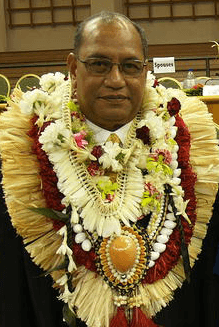
Christopher Loeak
Politician · Modern
47.2Total
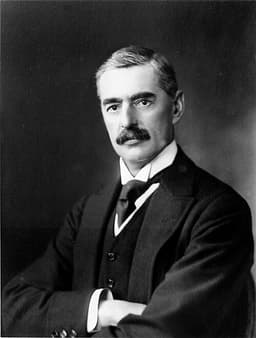
Neville Chamberlain
Politician · Modern
57.2Total
Basic Information
Born
1952
1869
Died
—
1940
Era
Modern
Modern
Nationality
Marshall Islands
United Kingdom
Occupation
Politician
Politician
Civilization
Other
Western
Score Comparison
Military (10%)
36.5
50.0
Political (20%)
43.7
68.0
Influence (20%)
52.5
60.0
Legacy (20%)
40.8
52.0
Leadership (15%)
62.2
65.0
Strategy (15%)
43.8
42.1
TOTAL
47.2
57.2
Christopher Loeak — Complete Timeline
2012 AD
Elected President of the Marshall IslandsPolitical Action◆ Major
Christopher Loeak was elected President by the Nitijela (parliament). His presidency focused on climate change advocacy and seeking compensation for nuclear testing impacts.
PresidencyNuclear Compensation
Impact: national
2013 AD
Advocated for Nuclear Test CompensationPolitical Action◆ Major
Loeak actively pursued compensation from the United States for the health and environmental effects of nuclear testing in the Marshall Islands. He raised the issue at international forums.
Nuclear TestingAdvocacy
Impact: regionalconstructive
2016 AD
Lost Re-election BidPolitical Action
Loeak was defeated in the presidential election by Casten Nemra. His loss marked a shift in Marshallese politics.
Election LossPolitical Transition
Impact: national
Neville Chamberlain — Complete Timeline
1938 AD
Munich AgreementPolitical Action
Chamberlain met Hitler in Munich and agreed to the cession of the Sudetenland from Czechoslovakia to Germany. Chamberlain returned to Britain claiming 'peace for our time'. The agreement was widely praised at first but later condemned as appeasement that encouraged Nazi aggression.
AppeasementNazi GermanyCzechoslovakia
Impact: global
1939 AD
Declaration of War on GermanyWar
Following the German invasion of Poland on 1 September 1939, Chamberlain issued an ultimatum to Germany. When no response came, Britain declared war on Germany on 3 September 1939, beginning the Second World War. Chamberlain announced the declaration in a radio broadcast.
World War IIDeclaration of WarPoland
Impact: global
British Guarantee to PolandPolitical Action◆ Major
After Germany occupied the rest of Czechoslovakia, Chamberlain's government issued a guarantee of Polish independence in March 1939. This marked a shift from appeasement to a policy of deterrence, committing Britain to defend Poland against German aggression.
PolandDeterrenceWorld War II
Impact: global
1940 AD
Resignation as Prime MinisterPolitical Action◆ Major
After the failure of the Norwegian campaign and a vote of confidence that saw his majority fall, Chamberlain resigned as Prime Minister in May 1940. He was succeeded by Winston Churchill, who formed a coalition government to lead Britain through the war.
ResignationWorld War IIChurchill
Impact: national
This comparison has not been analyzed yet.
One-time AI generation (~1 minute). Scores and timeline are already available below.
Rankings
🥇
Neville ChamberlainLeader
Mil: 50.0Pol: 68.0Inf: 60.0
57.2
🥈
Christopher Loeak
Mil: 36.5Pol: 43.7Inf: 52.5
47.2
+10.0 behind
How This Comparison Works
Algorithm
Each figure is scored on 6 dimensions (0—100 scale) based on structured historical data: Military (10%), Political (20%), Influence (20%), Legacy (20%), Leadership (15%), Strategy (15%). The weighted total produces the final ranking.
Data Sources
Scores are computed from structured sub-indicators in the database. Scale factors adjust for era (Ancient ×0.85, Modern ×1.0) and civilization size (Eastern ×1.05, Other ×0.80) to account for differences in population and military scale.
Maximum 3 Figures
Comparisons are limited to 2—3 figures to ensure readability and statistical meaningfulness.
Error Margins
±5 points per dimension — Sub-scores are derived from historical records with inherent uncertainty. Two figures within 5 points on a dimension should be considered roughly equivalent in that area.
Total Score Accuracy
±3 points overall — The weighted combination of 6 dimensions produces a total score with approximately ±3 points of uncertainty. Differences of less than 3 points are not statistically significant— the figures are effectively tied.
Known Limitations
- Historical records are incomplete and uneven across civilizations
- Figures from oral-tradition societies may be underrepresented
- Occupation labels can misclassify multi-role figures
- Scores measure capability and impact, not moral character
- Quantitative scoring is a comparison tool, not absolute truth
Capability Radar
Military (10%) — Battles & Warfare
Battles
23
27
Win Rate
23
30
Expansion
26
35
Political (20%) — Governance & Reform
Reform
35
40
Diplomacy
45
30
Economy
25
50
Influence (20%) — Cultural & Global Reach
Cultural
20
30
Global
25
60
Legacy (20%) — Historical Impact
Historical
30
70
Longevity
15
60
Leadership (15%) — Power & Stability
Tenure
30
60
Stability
30
20
Strategy (15%) — Tactics & Innovation
Strategy
31
39
Tactics
33
39
Reform
36
43
Similar Comparisons
Comments & Discussion
No comments yet. Be the first to share your thoughts!