Loading...
Christian V of Denmark vs Taimur bin Feisal
Christian V of Denmark leads by 15.5 pts · 2 figures compared
…

Christian V of Denmark
Emperor · Modern
53.7Total
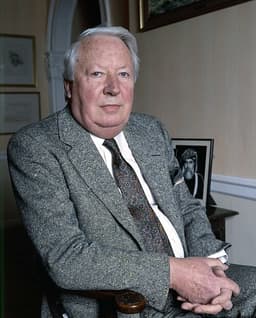
Taimur bin Feisal
Emperor · Modern
38.2Total
Basic Information
Born
1646
1886
Died
1699
1965
Era
Modern
Modern
Nationality
Denmark
Oman
Occupation
Emperor
Emperor
Civilization
Western
Middle Eastern
Score Comparison
Military (10%)
47.5
19.5
Political (20%)
62.7
33.6
Influence (20%)
51.8
46.3
Legacy (20%)
43.3
35.0
Leadership (15%)
72.0
51.9
Strategy (15%)
50.0
31.1
TOTAL
53.7
38.2
Christian V of Denmark — Complete Timeline
1660 AD
Introduction of Absolute MonarchyPolitical Action
Christian V oversaw the transition to absolute monarchy in Denmark, formalized by the King's Law of 1665. This made him the first hereditary absolute monarch, concentrating all power in the crown and ending the nobility's political influence.
Absolute MonarchyKing's LawConstitution
Impact: national
1671 AD
Establishment of the Danish West India CompanyPolitical Action◆ Major
Christian V chartered the Danish West India Company to colonize and trade in the Caribbean. This led to the acquisition of the islands of St. Thomas, St. John, and St. Croix, which became Danish colonies.
ColonizationCaribbeanTrade
Impact: global
1675 AD
Scanian WarWar◆ Major
Christian V led Denmark in the Scanian War against Sweden, attempting to reclaim lost territories. The war ended with the Treaty of Lund in 1679, which restored the status quo but failed to achieve Danish objectives.
WarSwedenScanian War
Impact: regional
1683 AD
Promulgation of the Danish Law (Danske Lov)Reform◆ Major
Christian V issued the Danish Law, a comprehensive legal code that unified and modernized Danish law. It replaced various regional laws and remained in force until 1900, shaping the Danish legal system.
Legal CodeReformDanske Lov
Impact: nationalconstructive
Taimur bin Feisal — Complete Timeline
1913 AD
Became Sultan of Muscat and OmanPolitical Action◆ Major
Taimur bin Feisal succeeded his father, Sultan Faisal bin Turki, as ruler of Muscat and Oman. His reign was marked by internal tribal conflicts and financial difficulties, as the sultanate struggled with debt and declining revenues.
SuccessionOman
Impact: national
1920 AD
Signed the Treaty of SibPolitical Action◆ Major
Taimur bin Feisal signed the Treaty of Sib with the Imam of Oman, effectively recognizing the autonomy of the interior region under the Imamate. This agreement divided Oman into coastal and interior zones, reducing the sultan's authority.
TreatyOman DivisionImamate
Impact: national
1932 AD
Abdicated due to financial difficultiesPolitical Action◆ Major
Facing mounting debts and unable to control the interior, Taimur bin Feisal abdicated in favor of his son, Said bin Taimur. He cited financial strain and the inability to modernize the state as reasons for stepping down.
AbdicationFinancial CrisisOman
Impact: nationaltragic
Expert Analysis
Origins
**Christian V of Denmark** (1646-1699) was born the first son of King Frederick III and Sophie Amalie of Brunswick-Lüneburg. He received a princely education, including languages, military training, and governance, preparing him for rule. His father had already laid the groundwork for absolutism, and Christian V ascended the throne in 1670.
**Taimur bin Feisal** (1886-1965) was born in Muscat, son of Sultan Faisal bin Turki. He was educated in Islamic law and traditional Omani governance. His early years were marked by the declining power of the sultanate, internal tribal strife, and British influence over Oman's foreign affairs.
Rise to Power
Christian V became king upon his father's death in 1670. His rise was smooth, as he inherited an absolute monarchy established by the King's Law of 1665. He quickly consolidated power, surrounding himself with advisors like Griffenfeld, though he later fell out with him.
Taimur bin Feisal became Sultan in 1913 after his father's death. His rise was immediate but challenged by tribal rebellions, particularly the Ibadi Imamate in the interior. He lacked the military and financial resources to assert full control, leading to a weak central authority.
Leadership & Governance
Christian V governed as an absolute monarch. He issued the Danish Law in 1683, a unified legal code that replaced regional laws and remained in force until 1866. He also chartered the Danish West India Company in 1671, expanding colonial ventures in the Caribbean (St. Thomas, St. John, St. Croix). His leadership score of 72.0 reflects his effective consolidation of power, though his political score of 62.7 shows limitations in foreign policy.
Taimur bin Feisal ruled with a more conciliatory approach, signing the Treaty of Sib in 1920, which recognized the autonomy of the interior Imamate. This was a pragmatic move to avoid civil war, but it weakened the sultanate's unified control. His political score of 33.6 indicates his inability to manage internal and external pressures effectively.
Triumph & Tragedy
Christian V's greatest triumph was the Danish Law, which standardized justice and administration. He also successfully established colonies in the Caribbean, boosting trade. His tragedy was the Scanian War (1675-1679) against Sweden, which ended with the Treaty of Lund, yielding no territorial gains despite high costs. His military score of 47.5 reflects this mixed outcome.
Taimur bin Feisal's triumph was the Treaty of Sib, which temporarily stabilized relations with the Imamate. His tragedy was his abdication in 1932 due to financial difficulties, leaving Oman in debt and with a fractured state. His military score of 19.5 shows his lack of force projection.
Character & Destiny
Christian V was determined to centralize authority, but his reliance on favorites and occasional indecisiveness hindered his effectiveness. He was more a consolidator than an innovator, content to build on his father's absolutist foundations.
Taimur bin Feisal was a reluctant ruler, more interested in personal life than governance. His abdication for financial reasons was seen as irresponsible, but it reflected the impossible situation of ruling a poor, divided state with little revenue.
Legacy
Christian V's legacy is the Danish Law and the establishment of absolute monarchy in Denmark, which lasted until 1848. His colonial ventures laid the foundation for Denmark's later Caribbean presence. He scored 43.3 in legacy, reflecting a lasting but limited impact.
Taimur bin Feisal is remembered as the sultan who abdicated, leaving his son Said to modernize Oman. The Treaty of Sib, however, set a precedent for divided rule that lasted until 1955. His legacy score of 35.0 reflects his negative or negligible impact.
Conclusion
Christian V of Denmark had a substantially greater impact than Taimur bin Feisal. With a total score of 53.7 compared to 38.2, Christian V's legal and colonial achievements shaped Denmark for centuries, while Taimur's reign was marked by decline and abdication. Christian V's establishment of absolute monarchy and unified law codes created a stable state, whereas Taimur's inability to assert control left Oman fragmented. The data supports Christian V as the more significant historical figure.
Rankings
🥇
Christian V of DenmarkLeader
Mil: 47.5Pol: 62.7Inf: 51.8
53.7
🥈
Taimur bin Feisal
Mil: 19.5Pol: 33.6Inf: 46.3
38.2
+15.5 behind
How This Comparison Works
Algorithm
Each figure is scored on 6 dimensions (0—100 scale) based on structured historical data: Military (10%), Political (20%), Influence (20%), Legacy (20%), Leadership (15%), Strategy (15%). The weighted total produces the final ranking.
Data Sources
Scores are computed from structured sub-indicators in the database. Scale factors adjust for era (Ancient ×0.85, Modern ×1.0) and civilization size (Eastern ×1.05, Other ×0.80) to account for differences in population and military scale.
Maximum 3 Figures
Comparisons are limited to 2—3 figures to ensure readability and statistical meaningfulness.
Error Margins
±5 points per dimension — Sub-scores are derived from historical records with inherent uncertainty. Two figures within 5 points on a dimension should be considered roughly equivalent in that area.
Total Score Accuracy
±3 points overall — The weighted combination of 6 dimensions produces a total score with approximately ±3 points of uncertainty. Differences of less than 3 points are not statistically significant— the figures are effectively tied.
Known Limitations
- Historical records are incomplete and uneven across civilizations
- Figures from oral-tradition societies may be underrepresented
- Occupation labels can misclassify multi-role figures
- Scores measure capability and impact, not moral character
- Quantitative scoring is a comparison tool, not absolute truth
Capability Radar
Military (10%) — Battles & Warfare
Battles
30
5
Win Rate
25
11
Expansion
15
13
Political (20%) — Governance & Reform
Reform
70
20
Diplomacy
40
25
Economy
45
10
Influence (20%) — Cultural & Global Reach
Cultural
30
10
Global
20
5
Legacy (20%) — Historical Impact
Historical
40
10
Longevity
30
10
Leadership (15%) — Power & Stability
Tenure
60
30
Stability
50
15
Strategy (15%) — Tactics & Innovation
Strategy
25
17
Tactics
20
15
Reform
40
23
Similar Comparisons
Comments & Discussion
No comments yet. Be the first to share your thoughts!