Loading...
Chulalongkorn vs Taimur bin Feisal
Chulalongkorn leads by 25.5 pts · 2 figures compared
…
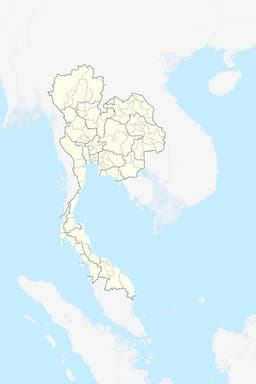
Chulalongkorn
Emperor · Modern
63.7Total
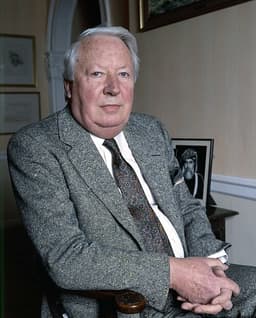
Taimur bin Feisal
Emperor · Modern
38.2Total
Basic Information
Born
1853
1886
Died
1910
1965
Era
Modern
Modern
Nationality
Thailand
Oman
Occupation
Emperor
Emperor
Civilization
Eastern
Middle Eastern
Score Comparison
Military (10%)
21.2
19.5
Political (20%)
78.0
33.6
Influence (20%)
72.0
46.3
Legacy (20%)
55.0
35.0
Leadership (15%)
80.7
51.9
Strategy (15%)
60.0
31.1
TOTAL
63.7
38.2
Chulalongkorn — Complete Timeline
1892 AD
Established modern administrative system (Thesaphiban)Reform◆ Major
Chulalongkorn reorganized Siam's provincial administration into a centralized system called Thesaphiban, replacing traditional semi-autonomous lords with appointed governors. This strengthened central control and modernized governance.
Administrative ReformCentralizationModernization
Impact: nationalconstructive
Created the Ministry of EducationReform◆ Major
Chulalongkorn established the Ministry of Education to oversee a national school system, replacing traditional temple-based education. This laid the foundation for modern secular education in Siam.
Education ReformModernizationState Building
Impact: nationalprogressive
1893 AD
Negotiated treaties to preserve Siamese independencePolitical Action◆ Major
Following the Franco-Siamese crisis, Chulalongkorn ceded Laos to France to avoid war. He later negotiated treaties with Britain and France that preserved Siam's independence by ceding peripheral territories.
DiplomacyTerritorial LossIndependence
Impact: regional
Introduced the first railway in SiamInvention
Chulalongkorn inaugurated the first railway line in Siam, connecting Bangkok to Ayutthaya. This began the expansion of a national railway network that facilitated trade and administrative control.
InfrastructureRailwayModernization
Impact: nationalconstructive
1905 AD
Abolished slavery in SiamReform◆ Major
King Chulalongkorn issued a decree abolishing slavery in Siam, freeing all slaves gradually over time. This reform ended centuries of bondage and aligned Siam with modern international norms.
Slavery AbolitionSocial ReformModernization
Impact: nationalprogressive
Taimur bin Feisal — Complete Timeline
1913 AD
Became Sultan of Muscat and OmanPolitical Action◆ Major
Taimur bin Feisal succeeded his father, Sultan Faisal bin Turki, as ruler of Muscat and Oman. His reign was marked by internal tribal conflicts and financial difficulties, as the sultanate struggled with debt and declining revenues.
SuccessionOman
Impact: national
1920 AD
Signed the Treaty of SibPolitical Action◆ Major
Taimur bin Feisal signed the Treaty of Sib with the Imam of Oman, effectively recognizing the autonomy of the interior region under the Imamate. This agreement divided Oman into coastal and interior zones, reducing the sultan's authority.
TreatyOman DivisionImamate
Impact: national
1932 AD
Abdicated due to financial difficultiesPolitical Action◆ Major
Facing mounting debts and unable to control the interior, Taimur bin Feisal abdicated in favor of his son, Said bin Taimur. He cited financial strain and the inability to modernize the state as reasons for stepping down.
AbdicationFinancial CrisisOman
Impact: nationaltragic
Expert Analysis
Origins
Chulalongkorn (Rama V) was born on September 20, 1853, in Bangkok, Siam, as the ninth child of King Mongkut (Rama IV) and Queen Debsirindra. He received a comprehensive education from Western tutors, including Anna Leonowens, and learned English, military science, and modern administration. His upbringing in a court exposed to Western ideas prepared him for reform.
Taimur bin Feisal was born in 1886 in Muscat, Oman, to Sultan Faisal bin Turki. He was educated in Islamic studies and traditional Omani governance. Unlike Chulalongkorn, he lacked exposure to Western education and modern statecraft. His early life was dominated by tribal loyalties and the declining influence of the Omani empire.
Rise to Power
Chulalongkorn ascended the throne at age 15 in 1868 after his father's death. Because of his youth, a regent held power until 1873. Upon assuming full authority, he immediately began centralizing power, reducing the influence of hereditary nobles. His first major reform was abolishing the practice of prostration before the king, signaling a shift toward equality.
Taimur bin Feisal became Sultan in 1913 after his father's death. His reign was immediately challenged by tribal rebellions and the powerful Imam of Oman, who controlled the interior. Unlike Chulalongkorn, Taimur had limited authority and faced financial insolvency from the start. He struggled to assert control beyond Muscat.
Leadership & Governance
Chulalongkorn's leadership was transformative. He implemented the Thesaphiban administrative system in 1892, appointing royal commissioners to govern provinces, replacing semi-autonomous lords. He abolished slavery gradually between 1874 and 1905, freeing over 200,000 slaves. He established the Ministry of Education in 1892 and built a national railway from Bangkok to Ayutthaya in 1896. His diplomatic strategy involved playing British and French interests against each other, ceding peripheral territories like Laos to France in 1893 and 1904 to preserve Siam's core independence. His political score of 78.0 reflects his skill in navigating colonialism.
Taimur bin Feisal's governance was reactive. Unable to suppress the Imamate, he signed the Treaty of Sib in 1920, recognizing Omani autonomy in the interior. This treaty effectively divided the country, weakening his authority. He failed to modernize the economy or military, relying on declining trade revenues. His abdication in 1932 due to financial difficulties (score 33.6 political) highlights his inability to reform.
Triumph & Tragedy
Chulalongkorn's greatest triumph was preserving Siam's independence when all neighbors fell to colonialism. His administrative reforms created a modern state that remains intact today. His tragedy was the loss of territory to France, particularly Laos, which he ceded to avoid war. However, this sacrifice ensured Siam's sovereignty.
Taimur's triumph was the peaceful resolution of the Treaty of Sib, which temporarily stabilized the interior. His tragedy was his abdication, leaving his son Said bin Taimur a fractured state. He failed to modernize or secure financial stability, scoring only 19.5 in military and 31.1 in strategy.
Character & Destiny
Chulalongkorn was pragmatic and visionary. He studied Western methods but adapted them to Siamese culture. His patience in abolishing slavery gradually shows his strategic thinking. He was determined to avoid colonization, using diplomacy as his weapon. His leadership score of 80.7 reflects his ability to inspire loyalty and drive change.
Taimur was cautious and overwhelmed. He lacked the will or resources to confront internal and external pressures. His abdication suggests a defeatist attitude. He scored 51.9 in leadership but was unable to translate that into effective governance.
Legacy
Chulalongkorn is revered as the father of modern Thailand. His reforms laid the foundation for Thailand's development and independence. The abolition of slavery, educational system, and administrative centralization endure. His influence score of 72.0 reflects his lasting impact.
Taimur is a minor figure in Omani history. His reign is seen as a period of stagnation. The Treaty of Sib is his main legacy, but it weakened the sultanate. His son Said bin Taimur later modernized Oman, overshadowing Taimur's contributions. His legacy score is 35.0.
Conclusion
Chulalongkorn clearly had greater impact, with a total score of 63.7 versus Taimur's 38.2. Chulalongkorn modernized Siam, preserved independence, and created lasting institutions. Taimur failed to address financial and political challenges, leading to abdication. While Taimur faced more adverse conditions, Chulalongkorn's proactive reforms and diplomatic acumen set him apart. The data supports that Chulalongkorn is among the most effective monarchs of his era, while Taimur ranks among the least effective.
Rankings
🥇
ChulalongkornLeader
Mil: 21.2Pol: 78.0Inf: 72.0
63.7
🥈
Taimur bin Feisal
Mil: 19.5Pol: 33.6Inf: 46.3
38.2
+25.5 behind
How This Comparison Works
Algorithm
Each figure is scored on 6 dimensions (0—100 scale) based on structured historical data: Military (10%), Political (20%), Influence (20%), Legacy (20%), Leadership (15%), Strategy (15%). The weighted total produces the final ranking.
Data Sources
Scores are computed from structured sub-indicators in the database. Scale factors adjust for era (Ancient ×0.85, Modern ×1.0) and civilization size (Eastern ×1.05, Other ×0.80) to account for differences in population and military scale.
Maximum 3 Figures
Comparisons are limited to 2—3 figures to ensure readability and statistical meaningfulness.
Error Margins
±5 points per dimension — Sub-scores are derived from historical records with inherent uncertainty. Two figures within 5 points on a dimension should be considered roughly equivalent in that area.
Total Score Accuracy
±3 points overall — The weighted combination of 6 dimensions produces a total score with approximately ±3 points of uncertainty. Differences of less than 3 points are not statistically significant— the figures are effectively tied.
Known Limitations
- Historical records are incomplete and uneven across civilizations
- Figures from oral-tradition societies may be underrepresented
- Occupation labels can misclassify multi-role figures
- Scores measure capability and impact, not moral character
- Quantitative scoring is a comparison tool, not absolute truth
Capability Radar
Military (10%) — Battles & Warfare
Battles
10
5
Win Rate
10
11
Expansion
10
13
Political (20%) — Governance & Reform
Reform
90
20
Diplomacy
95
25
Economy
80
10
Influence (20%) — Cultural & Global Reach
Cultural
70
10
Global
65
5
Legacy (20%) — Historical Impact
Historical
75
10
Longevity
70
10
Leadership (15%) — Power & Stability
Tenure
85
30
Stability
85
15
Strategy (15%) — Tactics & Innovation
Strategy
20
17
Tactics
15
15
Reform
60
23
Similar Comparisons
Comments & Discussion
No comments yet. Be the first to share your thoughts!