Loading...
Christian V of Denmark vs Zayed bin Sultan Al Nahyan
Zayed bin Sultan Al Nahyan leads by 10.1 pts · 2 figures compared
…

Christian V of Denmark
Emperor · Modern
53.7Total
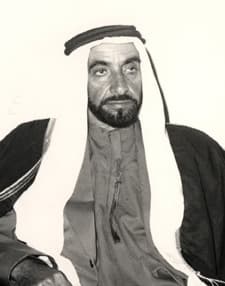
Zayed bin Sultan Al Nahyan
Emperor · Modern
63.8Total
Basic Information
Born
1646
1918
Died
1699
2004
Era
Modern
Modern
Nationality
Denmark
UAE
Occupation
Emperor
Emperor
Civilization
Western
Middle Eastern
Score Comparison
Military (10%)
47.5
11.3
Political (20%)
62.7
82.0
Influence (20%)
51.8
68.0
Legacy (20%)
43.3
72.0
Leadership (15%)
72.0
85.0
Strategy (15%)
50.0
25.7
TOTAL
53.7
63.8
Christian V of Denmark — Complete Timeline
1660 AD
Introduction of Absolute MonarchyPolitical Action
Christian V oversaw the transition to absolute monarchy in Denmark, formalized by the King's Law of 1665. This made him the first hereditary absolute monarch, concentrating all power in the crown and ending the nobility's political influence.
Absolute MonarchyKing's LawConstitution
Impact: national
1671 AD
Establishment of the Danish West India CompanyPolitical Action◆ Major
Christian V chartered the Danish West India Company to colonize and trade in the Caribbean. This led to the acquisition of the islands of St. Thomas, St. John, and St. Croix, which became Danish colonies.
ColonizationCaribbeanTrade
Impact: global
1675 AD
Scanian WarWar◆ Major
Christian V led Denmark in the Scanian War against Sweden, attempting to reclaim lost territories. The war ended with the Treaty of Lund in 1679, which restored the status quo but failed to achieve Danish objectives.
WarSwedenScanian War
Impact: regional
1683 AD
Promulgation of the Danish Law (Danske Lov)Reform◆ Major
Christian V issued the Danish Law, a comprehensive legal code that unified and modernized Danish law. It replaced various regional laws and remained in force until 1900, shaping the Danish legal system.
Legal CodeReformDanske Lov
Impact: nationalconstructive
Zayed bin Sultan Al Nahyan — Complete Timeline
1970 AD
Oil Revenue Investment in InfrastructureReform◆ Major
After the discovery of oil in Abu Dhabi in the 1950s, Zayed directed oil revenues toward building modern infrastructure: roads, hospitals, schools, and housing. This transformed Abu Dhabi from a poor region into a wealthy state.
OilDevelopmentInfrastructure
Impact: nationalconstructive
1971 AD
Formation of the United Arab EmiratesPolitical Action
Zayed bin Sultan Al Nahyan, as ruler of Abu Dhabi, played a key role in uniting seven emirates to form the United Arab Emirates on December 2, 1971. He became the first President, a position he held until his death.
UnificationUAEIndependence
Impact: regionalconstructive
1990 AD
Environmental Conservation InitiativesReform
Zayed established the Zayed International Prize for the Environment and implemented policies to protect wildlife and habitats, including the creation of nature reserves. He was a pioneer in environmentalism in the Gulf region.
EnvironmentConservationAwards
Impact: regionalconstructive
Women's Rights ReformsReform◆ Major
Zayed supported women's education and employment, appointing women to government positions and promoting their participation in the workforce. These reforms were progressive for the region at the time.
Women's RightsEducationReform
Impact: nationalprogressive
2004 AD
Death and LegacyOther◆ Major
Zayed died on November 2, 2004, after a long illness. His funeral drew massive crowds, and he was mourned as the founding father of the UAE. His legacy includes a stable, prosperous federation.
DeathLegacyFounding Father
Impact: nationaltragic
Expert Analysis
Origins
Christian V of Denmark (1646–1699) was born into the Oldenburg dynasty, the son of Frederick III and Sophie Amalie of Brunswick-Lüneburg. He received a princely education focusing on military and governance, but his father's centralization of power set the stage for his reign. Christian V ascended to the throne in 1670 at age 24, inheriting a kingdom transitioning to absolutism.
Zayed bin Sultan Al Nahyan (1918–2004) was born in Abu Dhabi, then a poor sheikhdom in the Trucial States. His father, Sultan bin Zayed, ruled Abu Dhabi until his death in 1926. Zayed grew up in the desert, learning traditional Bedouin skills and tribal leadership. His early life was marked by the decline of the pearl trade and economic hardship, shaping his pragmatic vision for development.
Rise to Power
Christian V became king upon his father's death in 1670. His reign was immediately defined by the King's Law of 1665, which had been drafted secretly by his father and was promulgated after his accession. This law made Denmark a hereditary absolute monarchy, with the king as the supreme authority. Christian V solidified this by centralizing administration and reducing the power of the nobility.
Zayed bin Sultan Al Nahyan became ruler of Abu Dhabi in 1966 after a bloodless coup that deposed his brother, Sheikh Shakhbut, who was resistant to modernization. Zayed's rise was fueled by his vision to use oil revenues for development. He quickly negotiated with British authorities and neighboring emirates to form a federation, leading to the creation of the United Arab Emirates on December 2, 1971, with Zayed as its first president.
Leadership & Governance
Christian V ruled as an absolute monarch, but his governance was marked by reliance on advisors and a bureaucratic system. He promulgated the Danish Law (Danske Lov) in 1683, a unified code that replaced regional laws and remained in force for over 200 years. His leadership score of 72.0 reflects effective consolidation of power, but his military ventures were less successful (military score 47.5). He chartered the Danish West India Company in 1671, establishing colonies in the Caribbean (St. Thomas, St. John, St. Croix). However, his foreign policy was often reactive, and the Scanian War (1675–1679) against Sweden ended with the Treaty of Lund, which failed to reclaim lost territories.
Zayed bin Sultan Al Nahyan governed as the president of the UAE and ruler of Abu Dhabi, with a political score of 82.0 and leadership score of 85.0. He directed oil revenues into massive infrastructure projects: roads, hospitals, schools, and housing. He also implemented women's rights reforms, appointing women to government positions and promoting education. His governance was consultative, incorporating tribal councils and federal institutions. He established the Abu Dhabi Investment Authority to manage oil wealth for future generations. His strategy score was low (25.7), but this reflects his focus on long-term development rather than military or tactical maneuvers.
Triumph & Tragedy
Christian V's greatest success was the Danish Law, which unified the legal system and strengthened royal authority. His colonization of the Caribbean brought economic benefits, though the Danish West India Company faced financial struggles. His tragedy was the Scanian War: despite initial gains, Denmark failed to defeat Sweden, and the war drained resources. His legacy score of 43.3 reflects limited long-term impact outside Denmark.
Zayed's greatest triumph was the formation of the UAE, uniting seven emirates into a stable federation. His investment in infrastructure and social services transformed a poor region into a wealthy state. Women's rights reforms were pioneering for the Gulf. His tragedy was the inability to fully diversify the economy away from oil before his death, and some critics point to limited political freedoms. His legacy score is 72.0, reflecting his role as founding father.
Character & Destiny
Christian V was described as dutiful but not brilliant; he relied on advisors like Peder Schumacher Griffenfeld. His character was influenced by his father's absolutist legacy, and he pursued a conservative path. His destiny was tied to the consolidation of absolute monarchy, which later proved unsustainable.
Zayed was known for his wisdom, generosity, and pragmatism. He was a unifier, using diplomacy and wealth to build consensus. His character shaped the UAE's federal structure and its focus on development. His destiny was to lead a transformation from desert poverty to global prominence.
Legacy
Christian V's Danish Law remained in effect until the 20th century, and his absolutist model influenced Danish governance until 1849. The Danish West India colonies were sold to the US in 1917. His overall impact is moderate, with a total score of 53.7.
Zayed bin Sultan Al Nahyan's legacy is immense: he is revered as the father of the UAE. His development model created one of the world's highest GDP per capita. His environmental initiatives, like the Zayed International Prize for the Environment, continue. His influence extends through the UAE's foreign aid and diplomacy. His total score of 63.8 reflects higher impact.
Conclusion
Zayed bin Sultan Al Nahyan had greater impact than Christian V of Denmark. Zayed's political and leadership scores (82.0 and 85.0) far exceed Christian V's (62.7 and 72.0). Zayed founded a nation that remains influential globally, while Christian V's legacy is largely confined to Danish legal history. The score gap of 10.1 points underscores this: Zayed's total of 63.8 vs Christian V's 53.7. Zayed's vision transformed millions of lives; Christian V's absolutism, while consolidating power, did not create lasting change beyond his era.
Rankings
🥇
Zayed bin Sultan Al NahyanLeader
Mil: 11.3Pol: 82.0Inf: 68.0
63.8
🥈
Christian V of Denmark
Mil: 47.5Pol: 62.7Inf: 51.8
53.7
+10.1 behind
How This Comparison Works
Algorithm
Each figure is scored on 6 dimensions (0—100 scale) based on structured historical data: Military (10%), Political (20%), Influence (20%), Legacy (20%), Leadership (15%), Strategy (15%). The weighted total produces the final ranking.
Data Sources
Scores are computed from structured sub-indicators in the database. Scale factors adjust for era (Ancient ×0.85, Modern ×1.0) and civilization size (Eastern ×1.05, Other ×0.80) to account for differences in population and military scale.
Maximum 3 Figures
Comparisons are limited to 2—3 figures to ensure readability and statistical meaningfulness.
Error Margins
±5 points per dimension — Sub-scores are derived from historical records with inherent uncertainty. Two figures within 5 points on a dimension should be considered roughly equivalent in that area.
Total Score Accuracy
±3 points overall — The weighted combination of 6 dimensions produces a total score with approximately ±3 points of uncertainty. Differences of less than 3 points are not statistically significant— the figures are effectively tied.
Known Limitations
- Historical records are incomplete and uneven across civilizations
- Figures from oral-tradition societies may be underrepresented
- Occupation labels can misclassify multi-role figures
- Scores measure capability and impact, not moral character
- Quantitative scoring is a comparison tool, not absolute truth
Capability Radar
Military (10%) — Battles & Warfare
Battles
30
4
Win Rate
25
9
Expansion
15
12
Political (20%) — Governance & Reform
Reform
70
90
Diplomacy
40
95
Economy
45
90
Influence (20%) — Cultural & Global Reach
Cultural
30
70
Global
20
70
Legacy (20%) — Historical Impact
Historical
40
75
Longevity
30
65
Leadership (15%) — Power & Stability
Tenure
60
85
Stability
50
85
Strategy (15%) — Tactics & Innovation
Strategy
25
16
Tactics
20
16
Reform
40
18
Similar Comparisons
Comments & Discussion
No comments yet. Be the first to share your thoughts!