Loading...
Christian III of Denmark vs Mustafa II
Christian III of Denmark leads by 7.7 pts · 2 figures compared
…

Christian III of Denmark
Emperor · Modern
55.0Total
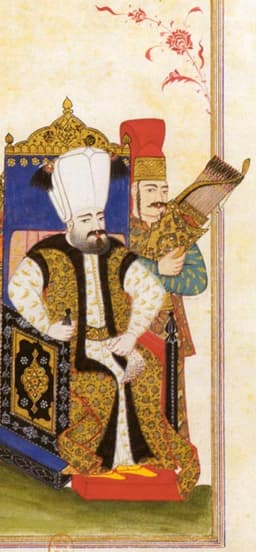
Mustafa II
Emperor · Modern
47.3Total
Basic Information
Born
1503
1664
Died
1559
1703
Era
Modern
Modern
Nationality
Denmark
Ottoman Empire
Occupation
Emperor
Emperor
Civilization
Western
Middle Eastern
Score Comparison
Military (10%)
50.0
38.3
Political (20%)
60.0
32.2
Influence (20%)
59.0
52.5
Legacy (20%)
54.0
42.5
Leadership (15%)
68.0
65.7
Strategy (15%)
25.0
50.0
TOTAL
55.0
47.3
Christian III of Denmark — Complete Timeline
1536 AD
Victory in the Count's FeudWar◆ Major
Christian III defeated the forces of the deposed Christian II and the Hanseatic League in the Count's Feud, a civil war. His victory secured his throne and allowed him to implement religious reforms without opposition.
Civil WarCount's Feud
Impact: national
Establishment of Lutheranism as State ReligionReform
Christian III issued a decree establishing the Lutheran Church as the state church of Denmark-Norway. Catholic bishops were imprisoned, church property was confiscated, and the Reformation was enforced throughout the realm.
ReformationLutheranismState Religion
Impact: nationalprogressive
Confiscation of Church LandsPolitical Action◆ Major
Christian III confiscated all Catholic church lands and wealth, transferring them to the crown. This greatly increased royal revenues and weakened the nobility's power, strengthening the monarchy's financial base.
SecularizationChurch Property
Impact: national
1537 AD
Ordinance of the Danish ChurchReform◆ Major
Christian III enacted the Church Ordinance, written by Johannes Bugenhagen, which organized the Lutheran Church in Denmark. It established bishops, liturgy, and education, creating a uniform state church system.
Church OrdinanceLutheranism
Impact: nationalconstructive
Mustafa II — Complete Timeline
1695 AD
Last Campaigning Ottoman SultanWar◆ Major
Mustafa II personally led the Ottoman army in campaigns against the Habsburgs, recapturing the island of Chios in 1695. He was the last Ottoman sultan to lead a military campaign in person, a tradition that ended after his reign.
Military CampaignChiosSultan
Impact: national
1697 AD
Battle of ZentaWar◆ Major
Mustafa II's army was decisively defeated by the Habsburg forces under Prince Eugene of Savoy at Zenta. The Ottoman army was caught crossing the Tisza River and suffered heavy losses. This defeat led to the Treaty of Karlowitz.
Great Turkish WarHabsburgsPrince Eugene
Impact: regionaltragic
1699 AD
Treaty of KarlowitzPolitical Action
Mustafa II signed the Treaty of Karlowitz with the Holy League, ending the Great Turkish War. The treaty ceded Hungary, Transylvania, and Podolia to the Habsburgs, Poland, and Venice. This marked the first major territorial loss for the Ottoman Empire.
Peace TreatyTerritorial LossHoly League
Impact: regionaltragic
1703 AD
Deposed by the Edirne EventPolitical Action◆ Major
Mustafa II was deposed by a Janissary revolt known as the Edirne Event. The rebels, angry over his reliance on the grand vizier and his stay in Edirne, marched on Istanbul. He was forced to abdicate in favor of his brother Ahmed III.
DepositionEdirne EventJanissaries
Impact: nationaltragic
Expert Analysis
Origins
Christian III of Denmark (born 1503) was the eldest son of King Frederick I and Anna of Brandenburg. Raised in the midst of the Protestant Reformation, he attended the Diet of Worms in 1521 and became a convinced Lutheran. His early education was under Lutheran tutors, and he served as governor of the Duchy of Schleswig and Holstein. Mustafa II (born 1664) was the son of Sultan Mehmed IV and Emetullah Rabia Gülnuş Sultan. He was raised in the Ottoman palace, receiving traditional Islamic education and military training. His upbringing was shaped by the declining power of the empire and the influence of the Köprülü family of grand viziers.
Rise to Power
Christian III's rise was marked by the Count's Feud (1534-1536), a civil war triggered by the death of his father. The deposed King Christian II, backed by the Hanseatic League and Catholic nobles, challenged Frederick I's succession. Christian III, then Duke of Schleswig-Holstein, led Protestant forces to victory. He was crowned king in 1534 after his father's death, but the war continued until 1536. His victory secured his throne and allowed him to impose Lutheranism. Mustafa II ascended the throne in 1695 after the deposition of his uncle Ahmed II. He inherited the Great Turkish War (1683-1699) against the Holy League. Mustafa II was the last Ottoman sultan to personally lead campaigns, recapturing Chios in 1695. However, his military leadership was undermined by the disastrous defeat at Zenta in 1697, leading to the Treaty of Karlowitz in 1699.
Leadership & Governance
Christian III's governance was defined by the establishment of Lutheranism as the state religion. In 1536, he imprisoned Catholic bishops and confiscated church lands, boosting crown revenues. The Church Ordinance of 1537, drafted by Johannes Bugenhagen, organized the Lutheran Church with superintendents (bishops) appointed by the king. This centralization strengthened royal authority. Christian III scored 68.0 in Leadership and 60.0 in Political, reflecting his decisive reorganization. Mustafa II, with a Leadership score of 65.7, relied heavily on his grand vizier, Amcazade Köprülü Hüseyin Pasha, who implemented reforms like tax adjustments and military reorganization. However, Mustafa II's preference for residing in Edirne rather than Constantinople alienated the Janissaries and the elite, contributing to his deposition.
Triumph & Tragedy
Christian III's greatest triumph was the successful imposition of Lutheranism, creating a unified state church that lasted for centuries. His confiscation of church lands (scoring 54.0 in Legacy) financially stabilized the monarchy. However, his rule saw the suppression of Catholic resistance, including the execution of Bishop Jørgen Jensen Friis. The Ordinance also limited the power of the nobility, causing tensions. Mustafa II's triumph was his personal campaign to recapture Chios in 1695, a rare Ottoman victory in a period of decline. His tragedy was the Treaty of Karlowitz, which ceded Hungary, Transylvania, and Podolia to the Habsburgs, marking the first major territorial loss. His deposition in 1703 (the Edirne Event) was a humiliating end, as Janissaries revolted and forced him to abdicate.
Character & Destiny
Christian III was a pragmatic and determined ruler, deeply committed to Lutheranism. His character was shaped by his religious conviction and his experiences in the Reformation. He made decisive moves, such as imprisoning bishops, which secured his legacy but created enemies. Mustafa II was more traditional, seeking to revive Ottoman military glory through personal leadership. However, his indecisiveness and reliance on favorites led to political instability. His character, marked by a desire to emulate earlier sultans, clashed with the realities of Ottoman decline. The Edirne Event was a direct result of his inability to balance the demands of the Janissaries and the court.
Legacy
Christian III's legacy is the establishment of Lutheranism in Denmark-Norway, which shaped the nation's identity for centuries. His Church Ordinance influenced Scandinavian Protestantism. In total, he scored 54.0 in Legacy. Mustafa II's legacy is the Treaty of Karlowitz, which ended Ottoman expansion and began a period of defensive modernization. He is remembered as the last campaigning sultan, but his deposition highlighted the weakening of the sultan's authority. His legacy score is 42.5.
Conclusion
Christian III had a greater impact than Mustafa II. His total score of 55.0 versus Mustafa II's 47.3 reflects his more enduring contributions. Christian III's religious reforms reshaped a kingdom for centuries, while Mustafa II's reign marked a defeat that accelerated Ottoman decline. Though Mustafa II's personal leadership was notable, his failures in governance and military strategy (scoring 38.3 Military and 32.2 Political) contrast with Christian III's effective consolidation of power. Christian III's stable legacy outweighs Mustafa II's fleeting campaigns.
Rankings
🥇
Christian III of DenmarkLeader
Mil: 50.0Pol: 60.0Inf: 59.0
55.0
🥈
Mustafa II
Mil: 38.3Pol: 32.2Inf: 52.5
47.3
+7.7 behind
How This Comparison Works
Algorithm
Each figure is scored on 6 dimensions (0—100 scale) based on structured historical data: Military (10%), Political (20%), Influence (20%), Legacy (20%), Leadership (15%), Strategy (15%). The weighted total produces the final ranking.
Data Sources
Scores are computed from structured sub-indicators in the database. Scale factors adjust for era (Ancient ×0.85, Modern ×1.0) and civilization size (Eastern ×1.05, Other ×0.80) to account for differences in population and military scale.
Maximum 3 Figures
Comparisons are limited to 2—3 figures to ensure readability and statistical meaningfulness.
Error Margins
±5 points per dimension — Sub-scores are derived from historical records with inherent uncertainty. Two figures within 5 points on a dimension should be considered roughly equivalent in that area.
Total Score Accuracy
±3 points overall — The weighted combination of 6 dimensions produces a total score with approximately ±3 points of uncertainty. Differences of less than 3 points are not statistically significant— the figures are effectively tied.
Known Limitations
- Historical records are incomplete and uneven across civilizations
- Figures from oral-tradition societies may be underrepresented
- Occupation labels can misclassify multi-role figures
- Scores measure capability and impact, not moral character
- Quantitative scoring is a comparison tool, not absolute truth
Capability Radar
Military (10%) — Battles & Warfare
Battles
15
45
Win Rate
20
40
Expansion
10
25
Political (20%) — Governance & Reform
Reform
75
15
Diplomacy
55
30
Economy
50
20
Influence (20%) — Cultural & Global Reach
Cultural
55
30
Global
40
25
Legacy (20%) — Historical Impact
Historical
60
35
Longevity
55
20
Leadership (15%) — Power & Stability
Tenure
60
40
Stability
45
25
Strategy (15%) — Tactics & Innovation
Strategy
15
30
Tactics
10
35
Reform
25
20
Similar Comparisons
Comments & Discussion
No comments yet. Be the first to share your thoughts!