Loading...
Christian III of Denmark vs Frederick the Great
Frederick the Great leads by 13.1 pts · 2 figures compared
…

Christian III of Denmark
Emperor · Modern
55.0Total
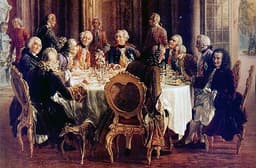
Frederick the Great
Emperor · Modern
68.1Total
Basic Information
Born
1503
1712
Died
1559
1786
Era
Modern
Modern
Nationality
Denmark
Prussia
Occupation
Emperor
Emperor
Civilization
Western
Western
Score Comparison
Military (10%)
50.0
90.0
Political (20%)
60.0
75.0
Influence (20%)
59.0
55.0
Legacy (20%)
54.0
52.0
Leadership (15%)
68.0
82.0
Strategy (15%)
25.0
88.0
TOTAL
55.0
68.1
Christian III of Denmark — Complete Timeline
1536 AD
Victory in the Count's FeudWar◆ Major
Christian III defeated the forces of the deposed Christian II and the Hanseatic League in the Count's Feud, a civil war. His victory secured his throne and allowed him to implement religious reforms without opposition.
Civil WarCount's Feud
Impact: national
Establishment of Lutheranism as State ReligionReform
Christian III issued a decree establishing the Lutheran Church as the state church of Denmark-Norway. Catholic bishops were imprisoned, church property was confiscated, and the Reformation was enforced throughout the realm.
ReformationLutheranismState Religion
Impact: nationalprogressive
Confiscation of Church LandsPolitical Action◆ Major
Christian III confiscated all Catholic church lands and wealth, transferring them to the crown. This greatly increased royal revenues and weakened the nobility's power, strengthening the monarchy's financial base.
SecularizationChurch Property
Impact: national
1537 AD
Ordinance of the Danish ChurchReform◆ Major
Christian III enacted the Church Ordinance, written by Johannes Bugenhagen, which organized the Lutheran Church in Denmark. It established bishops, liturgy, and education, creating a uniform state church system.
Church OrdinanceLutheranism
Impact: nationalconstructive
Frederick the Great — Complete Timeline
1723 AD
General Directory EstablishedReform◆ Major
Frederick the Great reorganized the Prussian government by establishing the General Directory, a centralized administrative body. This reform improved tax collection, military logistics, and state efficiency, strengthening Prussia's fiscal and military capacity.
AdministrationReformState Building
Impact: nationalconstructive
1757 AD
Battle of RossbachWar◆ Major
Frederick the Great's Prussian army defeated a larger Franco-Imperial force at Rossbach during the Seven Years' War. The victory showcased Prussian military discipline and Frederick's tactical genius, securing his reputation as a leading commander.
Seven Years' WarBattleMilitary Tactics
Impact: regional
Battle of LeuthenWar◆ Major
Frederick the Great led Prussian forces to a decisive victory over the Austrian army at Leuthen. The battle, fought in Silesia, demonstrated Frederick's use of oblique order tactics and helped Prussia retain control of Silesia during the Seven Years' War.
Seven Years' WarBattleSilesia
Impact: regional
1763 AD
Treaty of Hubertusburg SignedPolitical Action
Frederick the Great signed the Treaty of Hubertusburg with Austria, ending the Seven Years' War. The treaty confirmed Prussian possession of Silesia and established Prussia as a major European power, despite near-defeat earlier in the war.
TreatySeven Years' WarPrussia
Impact: regionalconstructive
1772 AD
First Partition of PolandPolitical Action◆ Major
Frederick the Great orchestrated the First Partition of Poland alongside Russia and Austria. Prussia gained West Prussia, connecting its territories and gaining control of the Vistula River trade, at the expense of Polish sovereignty.
PartitionPolandTerritorial Expansion
Impact: regionaldestructive
Expert Analysis
Origins
Christian III of Denmark was born in 1503, the son of King Frederick I and Anna of Brandenburg. His early life was shaped by the turbulent Reformation era. He was educated in Lutheran teachings, which influenced his later policies. Frederick the Great, born in 1712, was the son of King Frederick William I of Prussia, a strict Calvinist who despised his son's intellectual pursuits. Frederick's early life was marked by conflict with his father, leading to his attempted escape and subsequent imprisonment. Both rulers came from royal families but were shaped by different religious and intellectual currents: Christian by the Reformation, Frederick by the Enlightenment.
Rise to Power
Christian III rose to power after the death of his father in 1533, but his claim was contested by the deposed King Christian II. This led to the Count's Feud (1534-1536), a civil war where Christian III defeated Christian II's forces and the Hanseatic League. His victory in 1536 secured his throne. Frederick the Great ascended to the throne in 1740 upon his father's death. Immediately, he invaded Silesia, sparking the War of Austrian Succession. His military successes, particularly at Mollwitz in 1741, established him as a formidable leader. Both rulers had to fight for their positions, but Frederick's rise was more aggressive and expansionist.
Leadership & Governance
Christian III's leadership focused on religious reform. He established Lutheranism as the state religion through the Danish Church Ordinance of 1537, written by Johannes Bugenhagen. He confiscated Catholic church lands, boosting royal revenues. His governance was centralized and authoritarian, but aimed at unifying his kingdom under a single faith. Frederick the Great, in contrast, was an enlightened despot. He reformed the Prussian bureaucracy with the General Directory, promoted religious tolerance, and supported the arts and philosophy. However, his governance was also militaristic, with a focus on expanding Prussian territory. Christian's score in political leadership is 60.0, while Frederick scores 75.0, reflecting Frederick's broader administrative reforms.
Triumph & Tragedy
Christian III's greatest triumph was the successful establishment of Lutheranism, which shaped Danish identity for centuries. His confiscation of church lands enriched the crown. However, his reign saw the suppression of Catholic bishops and the confiscation of church property, which alienated some nobles and commoners. Frederick the Great's triumphs include his military victories at Rossbach and Leuthen, and the acquisition of Silesia, which made Prussia a great power. His tragedy was the near-defeat in the Seven Years' War, saved only by the death of Empress Elizabeth of Russia. Both leaders had significant successes, but Frederick's military score of 90.0 far exceeds Christian's 50.0.
Character & Destiny
Christian III was a devout Lutheran, determined and pragmatic. His character was shaped by religious conviction, leading him to impose Lutheranism despite opposition. His destiny was to be a reformer who consolidated royal power. Frederick the Great was an intellectual, a flautist, and a writer. His character was complex: he was both a ruthless conqueror and a patron of Enlightenment. His destiny was to elevate Prussia to a major European power. Both rulers had strong wills, but Frederick's character was more multifaceted, earning him a leadership score of 82.0 compared to Christian's 68.0.
Legacy
Christian III's legacy is the Lutheran state church of Denmark and Norway, which remains influential. His centralization of power and confiscation of church lands set a precedent for absolute monarchy. Frederick the Great's legacy includes the modernization of Prussia, the establishment of a professional army, and the promotion of Enlightenment ideals. He is remembered as a military genius and a reformer. Frederick's influence score of 55.0 is slightly lower than Christian's 59.0, but his overall impact on European history is arguably greater.
Conclusion
Frederick the Great had a greater impact than Christian III. While Christian's religious reforms were significant for Denmark, Frederick transformed Prussia into a European great power. Frederick's military achievements (90.0) and strategic vision (88.0) far surpass Christian's (50.0 and 25.0). Even though Christian's leadership and influence scores are comparable, Frederick's total score of 68.1 versus Christian's 55.0 reflects his broader and more lasting impact on history.
Rankings
🥇
Frederick the GreatLeader
Mil: 90.0Pol: 75.0Inf: 55.0
68.1
🥈
Christian III of Denmark
Mil: 50.0Pol: 60.0Inf: 59.0
55.0
+13.1 behind
How This Comparison Works
Algorithm
Each figure is scored on 6 dimensions (0—100 scale) based on structured historical data: Military (10%), Political (20%), Influence (20%), Legacy (20%), Leadership (15%), Strategy (15%). The weighted total produces the final ranking.
Data Sources
Scores are computed from structured sub-indicators in the database. Scale factors adjust for era (Ancient ×0.85, Modern ×1.0) and civilization size (Eastern ×1.05, Other ×0.80) to account for differences in population and military scale.
Maximum 3 Figures
Comparisons are limited to 2—3 figures to ensure readability and statistical meaningfulness.
Error Margins
±5 points per dimension — Sub-scores are derived from historical records with inherent uncertainty. Two figures within 5 points on a dimension should be considered roughly equivalent in that area.
Total Score Accuracy
±3 points overall — The weighted combination of 6 dimensions produces a total score with approximately ±3 points of uncertainty. Differences of less than 3 points are not statistically significant— the figures are effectively tied.
Known Limitations
- Historical records are incomplete and uneven across civilizations
- Figures from oral-tradition societies may be underrepresented
- Occupation labels can misclassify multi-role figures
- Scores measure capability and impact, not moral character
- Quantitative scoring is a comparison tool, not absolute truth
Capability Radar
Military (10%) — Battles & Warfare
Battles
15
85
Win Rate
20
80
Expansion
10
85
Political (20%) — Governance & Reform
Reform
75
90
Diplomacy
55
80
Economy
50
85
Influence (20%) — Cultural & Global Reach
Cultural
55
80
Global
40
75
Legacy (20%) — Historical Impact
Historical
60
85
Longevity
55
80
Leadership (15%) — Power & Stability
Tenure
60
85
Stability
45
75
Strategy (15%) — Tactics & Innovation
Strategy
15
90
Tactics
10
95
Reform
25
90
Similar Comparisons
Comments & Discussion
No comments yet. Be the first to share your thoughts!