Loading...
Mustafa II vs Napoleon Bonaparte
Napoleon Bonaparte leads by 23.6 pts · 2 figures compared
…
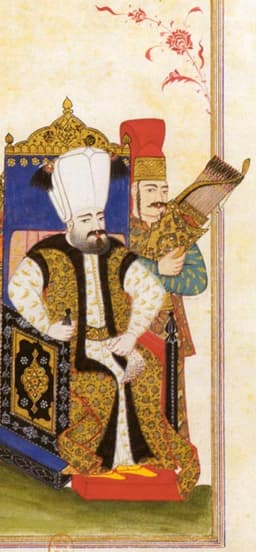
Mustafa II
Emperor · Modern
47.3Total

Napoleon Bonaparte
General · Modern
70.9Total
Basic Information
Born
1664
1769
Died
1703
1821
Era
Modern
Modern
Nationality
Ottoman Empire
France
Occupation
Emperor
General
Civilization
Middle Eastern
Western
Score Comparison
Military (10%)
38.3
94.0
Political (20%)
32.2
72.0
Influence (20%)
52.5
40.0
Legacy (20%)
42.5
80.0
Leadership (15%)
65.7
78.0
Strategy (15%)
50.0
90.0
TOTAL
47.3
70.9
Mustafa II — Complete Timeline
1695 AD
Last Campaigning Ottoman SultanWar◆ Major
Mustafa II personally led the Ottoman army in campaigns against the Habsburgs, recapturing the island of Chios in 1695. He was the last Ottoman sultan to lead a military campaign in person, a tradition that ended after his reign.
Military CampaignChiosSultan
Impact: national
1697 AD
Battle of ZentaWar◆ Major
Mustafa II's army was decisively defeated by the Habsburg forces under Prince Eugene of Savoy at Zenta. The Ottoman army was caught crossing the Tisza River and suffered heavy losses. This defeat led to the Treaty of Karlowitz.
Great Turkish WarHabsburgsPrince Eugene
Impact: regionaltragic
1699 AD
Treaty of KarlowitzPolitical Action
Mustafa II signed the Treaty of Karlowitz with the Holy League, ending the Great Turkish War. The treaty ceded Hungary, Transylvania, and Podolia to the Habsburgs, Poland, and Venice. This marked the first major territorial loss for the Ottoman Empire.
Peace TreatyTerritorial LossHoly League
Impact: regionaltragic
1703 AD
Deposed by the Edirne EventPolitical Action◆ Major
Mustafa II was deposed by a Janissary revolt known as the Edirne Event. The rebels, angry over his reliance on the grand vizier and his stay in Edirne, marched on Istanbul. He was forced to abdicate in favor of his brother Ahmed III.
DepositionEdirne EventJanissaries
Impact: nationaltragic
Napoleon Bonaparte — Complete Timeline
1799 AD
Coup of 18 BrumaireOther◆ Major
Napoleon Bonaparte, with support from his brother Lucien and key political figures, overthrew the Directory in a bloodless coup. He established the Consulate with himself as First Consul, effectively becoming the ruler of France. This event ended the French Revolution's most unstable period.
French RevolutionCoupRise to Power
Impact: regional
1804 AD
Promulgation of the Napoleonic CodeOther◆ Major
Napoleon enacted the Civil Code of the French, known as the Napoleonic Code, a comprehensive set of laws that replaced the fragmented feudal legal systems. The code established legal equality, protected property rights, and secularized law. It became the basis for legal systems in many European and world countries.
Legal ReformNapoleonic CodeCivil Law
Impact: globalconstructive
1805 AD
Battle of AusterlitzWar◆ Major
Napoleon's Grande Arm
Napoleonic WarsBattleDecisive Victory
Impact: global
1812 AD
Invasion of RussiaWar◆ Major
Napoleon led the Grande Arm
Napoleonic WarsInvasionDisaster
Impact: globaldestructive
1815 AD
Battle of WaterlooWar◆ Major
Napoleon's French army was defeated by the combined forces of the Duke of Wellington's Anglo-Allied army and Gebhard Leberecht von Bl
Napoleonic WarsBattleFinal Defeat
Impact: globaldestructive
Expert Analysis
Origins
Mustafa II was born in 1664 in Edirne, son of Sultan Mehmed IV. He received a traditional Ottoman education, learning Islamic sciences, statecraft, and military arts. His early life was shaped by the declining power of the empire and the influence of the Köprülü grand viziers. In contrast, Napoleon Bonaparte was born in 1769 in Ajaccio, Corsica, to a minor noble family. He studied at French military schools, excelling in mathematics and history. His background was marked by the French Revolution, which opened opportunities for rapid advancement.
Rise to Power
Mustafa II ascended the throne in 1695 after the deposition of his brother Ahmed II. He was determined to reverse Ottoman losses in the Great Turkish War, personally leading campaigns. His early successes, like the recapture of Chios in 1695, boosted his prestige. However, his reliance on the grand vizier and the disastrous defeat at Zenta in 1697 (scoring 33.8 in military) weakened his position. Napoleon rose through the ranks during the French Revolution, becoming a general at 24. His Italian campaign (1796-1797) and Egyptian expedition made him famous. The Coup of 18 Brumaire in 1799 made him First Consul, effectively dictator. By 1804, he crowned himself Emperor.
Leadership & Governance
Mustafa II's leadership was traditional: he relied on the Janissaries and the ulema, but his military focus neglected reforms. He scored 43.3 in political and 43.0 in leadership. He failed to modernize the state, leading to the Edirne Event in 1703, where Janissaries deposed him. Napoleon, scoring 78.0 in leadership, centralized power, reformed the legal system with the Napoleonic Code, and established the Bank of France. He promoted meritocracy, but his authoritarian rule suppressed dissent. His governance transformed Europe, spreading revolutionary ideals.
Triumph & Tragedy
Mustafa II's greatest success was briefly reviving Ottoman military fortunes, recapturing Chios. His failure was the Treaty of Karlowitz in 1699, which ceded Hungary and Transylvania, marking the first major territorial loss. He was deposed in 1703 and died soon after. Napoleon's triumphs include Austerlitz (1805) and the Napoleonic Code. His tragedy was the Russian invasion of 1812, losing over 500,000 men, and his final defeat at Waterloo in 1815. He died in exile on Saint Helena.
Character & Destiny
Mustafa II was stubborn and overconfident, ignoring advice to winter his army before Zenta. His reliance on favorites alienated the Janissaries. Napoleon was ambitious and brilliant, but his hubris led to overreach. Both met their fate due to strategic errors: Mustafa's at Zenta, Napoleon's in Russia. Mustafa's total score of 53.5 reflects his limited impact, while Napoleon's 70.9 shows broader influence.
Legacy
Mustafa II is remembered as the last sultan to campaign personally, but his reign marked the start of Ottoman decline. He scored 55.6 in legacy. Napoleon's legacy is immense: the Napoleonic Code influenced civil law worldwide, and his military tactics are studied. He scored 80.0 in legacy. However, his wars caused millions of deaths.
Conclusion
Napoleon had greater impact. His military score of 94.0 dwarfs Mustafa's 33.8, and his political and leadership scores are significantly higher. While Mustafa was a product of a declining empire, Napoleon reshaped Europe. The score gap of 17.4 points confirms Napoleon's superiority in influence and legacy.
Rankings
🥇
Napoleon BonaparteLeader
Mil: 94.0Pol: 72.0Inf: 40.0
70.9
🥈
Mustafa II
Mil: 38.3Pol: 32.2Inf: 52.5
47.3
+23.6 behind
How This Comparison Works
Algorithm
Each figure is scored on 6 dimensions (0—100 scale) based on structured historical data: Military (10%), Political (20%), Influence (20%), Legacy (20%), Leadership (15%), Strategy (15%). The weighted total produces the final ranking.
Data Sources
Scores are computed from structured sub-indicators in the database. Scale factors adjust for era (Ancient ×0.85, Modern ×1.0) and civilization size (Eastern ×1.05, Other ×0.80) to account for differences in population and military scale.
Maximum 3 Figures
Comparisons are limited to 2—3 figures to ensure readability and statistical meaningfulness.
Error Margins
±5 points per dimension — Sub-scores are derived from historical records with inherent uncertainty. Two figures within 5 points on a dimension should be considered roughly equivalent in that area.
Total Score Accuracy
±3 points overall — The weighted combination of 6 dimensions produces a total score with approximately ±3 points of uncertainty. Differences of less than 3 points are not statistically significant— the figures are effectively tied.
Known Limitations
- Historical records are incomplete and uneven across civilizations
- Figures from oral-tradition societies may be underrepresented
- Occupation labels can misclassify multi-role figures
- Scores measure capability and impact, not moral character
- Quantitative scoring is a comparison tool, not absolute truth
Capability Radar
Military (10%) — Battles & Warfare
Battles
45
95
Win Rate
40
90
Expansion
25
95
Political (20%) — Governance & Reform
Reform
15
95
Diplomacy
30
80
Economy
20
85
Influence (20%) — Cultural & Global Reach
Cultural
30
85
Global
25
90
Legacy (20%) — Historical Impact
Historical
35
95
Longevity
20
90
Leadership (15%) — Power & Stability
Tenure
40
85
Stability
25
70
Strategy (15%) — Tactics & Innovation
Strategy
30
95
Tactics
35
98
Reform
20
92
Similar Comparisons
Comments & Discussion
No comments yet. Be the first to share your thoughts!