Loading...
Alexis of Russia vs Mustafa II
Alexis of Russia leads by 13.3 pts · 2 figures compared
…

Alexis of Russia
Emperor · Modern
60.6Total
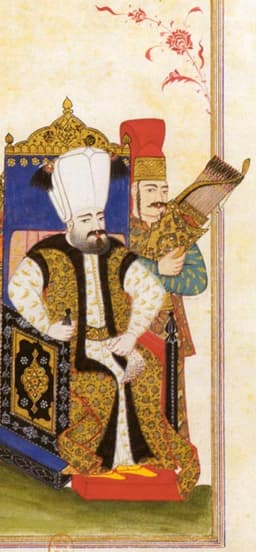
Mustafa II
Emperor · Modern
47.3Total
Basic Information
Born
1629
1664
Died
1676
1703
Era
Modern
Modern
Nationality
Russia
Ottoman Empire
Occupation
Emperor
Emperor
Civilization
Western
Middle Eastern
Score Comparison
Military (10%)
72.5
38.3
Political (20%)
68.0
32.2
Influence (20%)
56.4
52.5
Legacy (20%)
49.2
42.5
Leadership (15%)
72.0
65.7
Strategy (15%)
60.0
50.0
TOTAL
60.6
47.3
Alexis of Russia — Complete Timeline
1649 AD
Promulgation of the Sobornoye UlozheniyeReform
Alexis issued the Sobornoye Ulozheniye (Council Code), a comprehensive legal code that codified serfdom by eliminating the statute of limitations for the return of fugitive peasants. This code remained in effect until 1832.
Legal CodeSerfdomReform
Impact: national
1654 AD
Russo-Polish War (1654-1667)War◆ Major
Alexis launched a war against Poland-Lithuania to claim Ukraine. Russian forces captured Smolensk, Vilnius, and much of Lithuania. The war ended with the Truce of Andrusovo in 1667, which ceded Smolensk and left-bank Ukraine to Russia.
PolandUkraineWar
Impact: regional
Pereyaslavl Agreement with UkrainePolitical Action
Alexis agreed to the Pereyaslavl Agreement, placing the Zaporozhian Cossack Hetmanate under Russian protection. This led to the Russo-Polish War and eventually brought left-bank Ukraine and Kiev under Russian control.
UkraineCossacksPoland
Impact: regional
1662 AD
Copper Riot in MoscowPolitical Action
Alexis's government issued copper coins to replace silver, causing inflation and economic crisis. A mob of thousands marched on Moscow demanding punishment of officials. The uprising was brutally suppressed, with hundreds killed.
RiotEconomyInflation
Impact: nationaltragic
1666 AD
Raskol (Schism) in the Russian Orthodox ChurchCultural◆ Major
Alexis supported Patriarch Nikon's liturgical reforms, which aimed to correct Russian Orthodox practices to align with Greek traditions. The reforms caused a schism, with Old Believers rejecting the changes and facing persecution.
ChurchSchismOld Believers
Impact: national
1670 AD
Razin RebellionWar◆ Major
Cossack leader Stenka Razin led a major uprising of peasants, Cossacks, and non-Russian peoples along the Volga River. The rebellion captured several cities before being crushed by Alexis's army. Razin was executed in 1671.
RebellionRazinVolga
Impact: regional
Mustafa II — Complete Timeline
1695 AD
Last Campaigning Ottoman SultanWar◆ Major
Mustafa II personally led the Ottoman army in campaigns against the Habsburgs, recapturing the island of Chios in 1695. He was the last Ottoman sultan to lead a military campaign in person, a tradition that ended after his reign.
Military CampaignChiosSultan
Impact: national
1697 AD
Battle of ZentaWar◆ Major
Mustafa II's army was decisively defeated by the Habsburg forces under Prince Eugene of Savoy at Zenta. The Ottoman army was caught crossing the Tisza River and suffered heavy losses. This defeat led to the Treaty of Karlowitz.
Great Turkish WarHabsburgsPrince Eugene
Impact: regionaltragic
1699 AD
Treaty of KarlowitzPolitical Action
Mustafa II signed the Treaty of Karlowitz with the Holy League, ending the Great Turkish War. The treaty ceded Hungary, Transylvania, and Podolia to the Habsburgs, Poland, and Venice. This marked the first major territorial loss for the Ottoman Empire.
Peace TreatyTerritorial LossHoly League
Impact: regionaltragic
1703 AD
Deposed by the Edirne EventPolitical Action◆ Major
Mustafa II was deposed by a Janissary revolt known as the Edirne Event. The rebels, angry over his reliance on the grand vizier and his stay in Edirne, marched on Istanbul. He was forced to abdicate in favor of his brother Ahmed III.
DepositionEdirne EventJanissaries
Impact: nationaltragic
Expert Analysis
Origins
Alexis of Russia was born in 1629, the son of Tsar Michael I, the first Romanov ruler. His education was shaped by the Orthodox Church and boyar advisors, instilling a sense of divine right and duty. He ascended the throne at age 16 in 1645, inheriting a state recovering from the Time of Troubles. His early exposure to court intrigues and the need for legal consolidation set the stage for his reforms.
Mustafa II was born in 1664, the son of Sultan Mehmed IV. He grew up in the Topkapi Palace, receiving a traditional Islamic education focused on military and administrative skills. His early years were marked by the declining power of the Ottoman Empire, with his father deposed in 1687. Mustafa's upbringing emphasized personal military leadership, a rarity among later sultans.
Rise to Power
Alexis's rise was straightforward as the eldest surviving son of Michael I. He was crowned in 1645 without significant opposition. His early reign was dominated by the influence of his tutor, Boris Morozov, who implemented tax policies leading to the Moscow Uprising of 1648. Alexis responded by dismissing Morozov and issuing the Sobornoye Ulozheniye in 1649, a comprehensive legal code that solidified his authority and codified serfdom.
Mustafa II became sultan in 1695 after his uncle Ahmed II died. He was the first Ottoman sultan in decades to personally lead military campaigns, aiming to reverse territorial losses. His rise was supported by the ulema and Janissaries who sought a strong leader to counter the Habsburgs. He immediately took the field, recapturing Chios in 1695.
Leadership & Governance
Alexis governed through a combination of traditional autocracy and legal reform. The Sobornoye Ulozheniye, scoring 68.0 in political, standardized laws and tied peasants to the land, strengthening the state's control over the nobility. He supported Patriarch Nikon's ecclesiastical reforms, which centralized religious authority but caused the Raskol (schism), alienating Old Believers. His military campaigns, though costly, expanded Russian territory into Ukraine via the Pereyaslavl Agreement of 1654, leading to the Russo-Polish War (1654-1667).
Mustafa II's leadership style was hands-on militarily but weak in governance. He scored 65.7 in leadership for personal bravery but 38.3 in military and 32.2 in political due to poor strategy and administration. He relied heavily on grand viziers like Amcazade Köprülü Hüseyin Pasha, but his insistence on staying in Edirne rather than Istanbul alienated the Janissaries. The Battle of Zenta in 1697 was a disaster: Mustafa's army was caught crossing the Tisza River by Prince Eugene of Savoy, resulting in a decisive defeat. This forced him to sign the Treaty of Karlowitz in 1699, ceding Hungary, Transylvania, and Podolia.
Triumph & Tragedy
Alexis's greatest triumph was the territorial expansion into Ukraine and the legal codification that strengthened autocracy. The Pereyaslavl Agreement brought the Cossack Hetmanate under Russian protection, a key step in Russia's rise as a major power. However, his tragedy was the Raskol; the religious schism created lasting divisions in Russian society, with thousands of Old Believers persecuted. Additionally, the Razin Rebellion (1670-1671) exposed social tensions exacerbated by serfdom, though it was crushed.
Mustafa II's triumph was his personal military leadership, recapturing Chios in 1695 and briefly reviving Ottoman morale. He was the last sultan to lead campaigns personally. His tragedy was the Treaty of Karlowitz, which marked the first major territorial loss of Ottoman Europe and signaled irreversible decline. His deposition in the Edirne Event of 1703, triggered by Janissary revolt, underscored his failure to adapt to changing military and political realities.
Character & Destiny
Alexis was cautious and devout, often seeking consensus among boyars and clergy. His nickname "the Quietest" reflects his preference for gradual reform rather than radical change. This character allowed him to consolidate power but also led to indecisiveness during crises like the Razin Rebellion. His support for Nikon's reforms demonstrated a willingness to centralize, but the resulting schism revealed unintended consequences.
Mustafa II was proud and determined, believing in the sultan's duty to lead from the front. His personal bravery was admired, but his strategic naivete and reliance on outdated military tactics doomed his campaigns. His refusal to stay in Istanbul undermined his political authority, leading to his deposition. Historian Caroline Finkel notes that Mustafa's reign exposed the Ottoman state's inability to reform its military and administrative structures.
Legacy
Alexis's legacy is mixed. The Sobornoye Ulozheniye remained in effect until 1832, cementing serfdom for centuries, which hindered Russia's social development. His expansion into Ukraine set the stage for Peter the Great's reforms and Russia's emergence as an empire. However, the Raskol created a permanent religious divide. His total score of 60.6 reflects significant but flawed achievements.
Mustafa II is remembered as the last campaigning sultan, but his reign accelerated Ottoman decline. The Treaty of Karlowitz established a new balance of power in Europe, with the Habsburgs dominant. His deposition highlighted the Janissaries' increasing political influence, a problem that plagued the empire until their abolition in 1826. His score of 47.3 reflects his limited impact and failures.
Conclusion
Alexis of Russia had greater impact than Mustafa II. Alexis's legal codification and territorial expansion laid foundations for Russia's rise as a European power, despite the negative legacy of serfdom. Mustafa II's personal bravery could not halt the Ottoman decline; his reign was a footnote in the empire's long retreat. With a total score of 60.6 against 47.3, Alexis's influence on state-building and territorial growth outweighs Mustafa's brief military revival. The comparison demonstrates that structural reforms, even with flaws, outlast personal heroism in shaping history.
Rankings
🥇
Alexis of RussiaLeader
Mil: 72.5Pol: 68.0Inf: 56.4
60.6
🥈
Mustafa II
Mil: 38.3Pol: 32.2Inf: 52.5
47.3
+13.3 behind
How This Comparison Works
Algorithm
Each figure is scored on 6 dimensions (0—100 scale) based on structured historical data: Military (10%), Political (20%), Influence (20%), Legacy (20%), Leadership (15%), Strategy (15%). The weighted total produces the final ranking.
Data Sources
Scores are computed from structured sub-indicators in the database. Scale factors adjust for era (Ancient ×0.85, Modern ×1.0) and civilization size (Eastern ×1.05, Other ×0.80) to account for differences in population and military scale.
Maximum 3 Figures
Comparisons are limited to 2—3 figures to ensure readability and statistical meaningfulness.
Error Margins
±5 points per dimension — Sub-scores are derived from historical records with inherent uncertainty. Two figures within 5 points on a dimension should be considered roughly equivalent in that area.
Total Score Accuracy
±3 points overall — The weighted combination of 6 dimensions produces a total score with approximately ±3 points of uncertainty. Differences of less than 3 points are not statistically significant— the figures are effectively tied.
Known Limitations
- Historical records are incomplete and uneven across civilizations
- Figures from oral-tradition societies may be underrepresented
- Occupation labels can misclassify multi-role figures
- Scores measure capability and impact, not moral character
- Quantitative scoring is a comparison tool, not absolute truth
Capability Radar
Military (10%) — Battles & Warfare
Battles
55
45
Win Rate
60
40
Expansion
65
25
Political (20%) — Governance & Reform
Reform
55
15
Diplomacy
50
30
Economy
45
20
Influence (20%) — Cultural & Global Reach
Cultural
40
30
Global
40
25
Legacy (20%) — Historical Impact
Historical
55
35
Longevity
50
20
Leadership (15%) — Power & Stability
Tenure
60
40
Stability
50
25
Strategy (15%) — Tactics & Innovation
Strategy
55
30
Tactics
40
35
Reform
50
20
Similar Comparisons
Comments & Discussion
No comments yet. Be the first to share your thoughts!