Loading...
Frederick I Barbarossa vs Jayavarman II
Frederick I Barbarossa leads by 1.1 pts · 2 figures compared
…
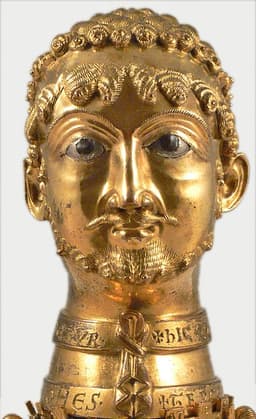
Frederick I Barbarossa
Emperor · Medieval
60.3Total
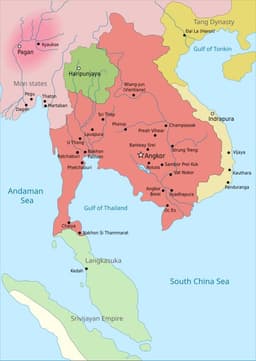
Jayavarman II
Emperor · Medieval
59.2Total
Basic Information
Born
1122
770
Died
1190
835
Era
Medieval
Medieval
Nationality
Holy Roman Empire
Cambodia
Occupation
Emperor
Emperor
Civilization
Western
Eastern
Score Comparison
Military (10%)
67.3
60.0
Political (20%)
55.0
72.0
Influence (20%)
56.7
68.0
Legacy (20%)
55.0
40.0
Leadership (15%)
72.0
66.0
Strategy (15%)
66.3
55.0
TOTAL
60.3
59.2
Frederick I Barbarossa — Complete Timeline
1158 AD
Diet of RoncagliaPolitical Action◆ Major
Frederick I convened a diet at Roncaglia in northern Italy. He proclaimed the Regalian Rights, asserting imperial authority over Italian cities. The diet declared that all public authority derived from the emperor, leading to conflict with the Lombard League.
Imperial AuthorityItalyLegislation
Impact: regional
1176 AD
Battle of LegnanoWar
Frederick I Barbarossa was defeated by the Lombard League at Legnano in northern Italy. The League's infantry used a carroccio (war wagon) as a rallying point. This defeat forced Frederick to recognize the autonomy of Italian communes in the Peace of Venice.
Lombard LeagueItalian CampaignsDefeat
Impact: regional
1177 AD
Peace of VenicePolitical Action◆ Major
Frederick I signed a treaty with Pope Alexander III and the Lombard League in Venice. He recognized Alexander III as pope and agreed to a six-year truce with the Italian communes. The peace ended the schism in the Church and temporarily halted imperial campaigns in Italy.
TreatyPapacyLombard League
Impact: regionalconstructive
1190 AD
Death on the Third CrusadeWar◆ Major
Frederick I drowned in the Saleph River in Cilicia while leading the Third Crusade. His death caused the German contingent to largely return home, weakening the crusade. He was buried in Antioch, and his body later moved to Tyre.
CrusadeDeathAccident
Impact: globaltragic
Jayavarman II — Complete Timeline
802 AD
Proclaimed Devaraja CultCultural
Jayavarman II performed a ritual on Mount Mahendraparvata proclaiming himself a 'devaraja' (god-king), establishing the cult of the divine ruler. This act unified the Khmer principalities and founded the Khmer Empire, legitimizing his rule through Hindu cosmology.
Khmer EmpireDevarajaFounding
Impact: regionalconstructive
Founded the Khmer EmpirePolitical Action
Jayavarman II unified the warring Khmer states under his rule, establishing the Khmer Empire with its capital at Mahendraparvata. This marked the beginning of a powerful empire that would dominate Southeast Asia for centuries.
Khmer EmpireUnificationFounding
Impact: regionalconstructive
Established Capital at MahendraparvataPolitical Action◆ Major
Jayavarman II established his capital at Mahendraparvata, a mountain temple complex in the Kulen Hills. This site became the ceremonial and political center of the early Khmer Empire.
Khmer EmpireCapitalMahendraparvata
Impact: regionalconstructive
Expert Analysis
Origins
Frederick I Barbarossa was born in 1122 to the Hohenstaufen family, rulers of Swabia. His father was Duke Frederick II of Swabia, and his mother was Judith of Bavaria. He was raised in the court of his uncle, King Conrad III of Germany, and received a knightly education. He participated in the Second Crusade in 1147, gaining military experience. His early life was marked by the conflict between the Hohenstaufens and the Welfs, which shaped his political ambitions.
Jayavarman II, born around 770, likely came from a noble family in the region that is now Cambodia. Little is known of his early life, but he was probably educated in the courts of the Javanese Sailendra dynasty or in the Khmer region. He spent time in Java, possibly as a hostage or exile, where he was exposed to Hindu and Buddhist concepts of divine kingship. This period influenced his later establishment of the devaraja cult. He returned to the Khmer region around 790 to unify the fragmented states.
Rise to Power
Frederick I became Duke of Swabia in 1147 upon his father's death. He was elected King of Germany in 1152, succeeding his uncle Conrad III. His election was supported by the princes due to his reputation as a strong leader. He was crowned Holy Roman Emperor in 1155 by Pope Adrian IV. He immediately asserted imperial authority, convening the Diet of Roncaglia in 1158 to proclaim Regalian Rights over Italian cities, demanding taxes and military service. This led to conflict with the Lombard League, an alliance of northern Italian cities.
Jayavarman II returned to the Khmer region around 790 and began consolidating power. He first established control over the city of Indrapura, then moved to the Kulen Hills. In 802, he performed a ritual on Mount Mahendraparvata proclaiming himself a 'devaraja', or god-king, which united the Khmer states under a single divine mandate. This act marked the founding of the Khmer Empire. He established his capital at Mahendraparvata and expanded his territory through military campaigns.
Leadership & Governance
Frederick I ruled as a feudal monarch, relying on the support of German princes and the Church. He sought to restore imperial authority in Italy, which led to prolonged conflicts. He appointed loyal bishops and used legal reforms to centralize power. At the Diet of Roncaglia, he asserted imperial rights over Italian communes, but his heavy-handed approach provoked resistance. He was a capable military commander but often underestimated the resolve of his opponents. His political score of 55.0 reflects mixed success in diplomacy.
Jayavarman II established a centralized state based on the devaraja cult, which combined Hindu and indigenous beliefs. He used religion to legitimize his rule, constructing temple-mountains as symbols of divine kingship. His governance relied on a network of local rulers who paid tribute. He focused on territorial expansion and consolidation, but left few written records. His political score of 72.0 indicates effective state-building, though his legacy was later overshadowed by successors like Suryavarman II.
Triumph & Tragedy
Frederick I's greatest success was the Peace of Venice in 1177, where he reconciled with Pope Alexander III and the Lombard League after the Battle of Legnano in 1176, where he was defeated. The peace allowed him to retain nominal authority over Italy while granting autonomy to the cities. His greatest failure was his death on the Third Crusade in 1190, drowning in the Saleph River. This ended the German crusade and weakened the Hohenstaufen dynasty. He scored 67.3 in military, reflecting his battlefield acumen but also his ultimate defeat.
Jayavarman II's triumph was founding the Khmer Empire and establishing the devaraja cult, which provided ideological unity for centuries. He successfully unified warring states and expanded territory. His failure was the lack of enduring institutions; the empire's stability depended on strong rulers, and his death led to succession struggles. He scored 60.0 in military, indicating competent but not exceptional campaigns. His influence score of 68.0 reflects his religious innovation.
Character & Destiny
Frederick I was ambitious, determined, and proud. His nickname Barbarossa (red beard) suggests a fiery temperament. He was a skilled knight but sometimes inflexible, leading to prolonged conflicts. His character drove him to pursue imperial glory in Italy and the Crusades, but his death in a minor river was an anticlimax. Historian Otto of Freising noted his piety and courage. His leadership score of 72.0 reflects his ability to command loyalty, but his political score of 55.0 shows his struggles with diplomacy.
Jayavarman II was visionary and pragmatic. He adopted the devaraja cult to centralize power, showing strategic thinking. He was likely a charismatic leader who inspired loyalty. His decision to perform the ritual on a mountain mirrored Javanese practices, indicating cultural borrowing. His character combined religious fervor with political calculation. His legacy score of 40.0 is low because his achievements were built upon by later kings, but his founding role is undeniable.
Legacy
Frederick I's legacy is mixed. He strengthened the Holy Roman Empire's claim to Italy but also exposed its limitations. The Peace of Venice established a precedent for imperial-papal relations. His death on crusade became legendary, and later German nationalism mythologized him as a sleeping hero. His military campaigns influenced medieval warfare, particularly the use of heavy cavalry. He scored 56.7 in influence and 55.0 in legacy, reflecting his impact on European politics.
Jayavarman II's legacy is foundational. He created the Khmer Empire, which lasted for over 600 years and produced Angkor Wat. The devaraja cult persisted, legitimizing rulers and shaping Khmer art and architecture. However, his personal achievements are less documented than those of later kings. His influence score of 68.0 is high due to the cult's significance. His legacy score of 40.0 is lower because his empire's peak came after him.
Conclusion
Frederick I Barbarossa and Jayavarman II both founded empires, but their impacts differ. Frederick I's military score of 67.3 and leadership of 72.0 are higher than Jayavarman II's 60.0 and 66.0. However, Jayavarman II's political score of 72.0 and influence of 68.0 exceed Frederick's 55.0 and 56.7. The total scores are close: Frederick 60.3 vs Jayavarman 59.2. Taking a clear position: Frederick I had greater immediate impact on European history, but Jayavarman II's founding of the Khmer Empire had longer-lasting cultural influence. Frederick's failures in Italy and death on crusade diminish his legacy, while Jayavarman's devaraja cult endured for centuries. Therefore, Jayavarman II is more significant for establishing a lasting civilization.
Rankings
🥇
Frederick I BarbarossaLeader
Mil: 67.3Pol: 55.0Inf: 56.7
60.3
🥈
Jayavarman II
Mil: 60.0Pol: 72.0Inf: 68.0
59.2
+1.1 behind
How This Comparison Works
Algorithm
Each figure is scored on 6 dimensions (0—100 scale) based on structured historical data: Military (10%), Political (20%), Influence (20%), Legacy (20%), Leadership (15%), Strategy (15%). The weighted total produces the final ranking.
Data Sources
Scores are computed from structured sub-indicators in the database. Scale factors adjust for era (Ancient ×0.85, Modern ×1.0) and civilization size (Eastern ×1.05, Other ×0.80) to account for differences in population and military scale.
Maximum 3 Figures
Comparisons are limited to 2—3 figures to ensure readability and statistical meaningfulness.
Error Margins
±5 points per dimension — Sub-scores are derived from historical records with inherent uncertainty. Two figures within 5 points on a dimension should be considered roughly equivalent in that area.
Total Score Accuracy
±3 points overall — The weighted combination of 6 dimensions produces a total score with approximately ±3 points of uncertainty. Differences of less than 3 points are not statistically significant— the figures are effectively tied.
Known Limitations
- Historical records are incomplete and uneven across civilizations
- Figures from oral-tradition societies may be underrepresented
- Occupation labels can misclassify multi-role figures
- Scores measure capability and impact, not moral character
- Quantitative scoring is a comparison tool, not absolute truth
Capability Radar
Military (10%) — Battles & Warfare
Battles
75
45
Win Rate
70
60
Expansion
70
65
Political (20%) — Governance & Reform
Reform
75
80
Diplomacy
72
65
Economy
68
60
Influence (20%) — Cultural & Global Reach
Cultural
65
75
Global
60
60
Legacy (20%) — Historical Impact
Historical
75
80
Longevity
70
75
Leadership (15%) — Power & Stability
Tenure
80
70
Stability
60
65
Strategy (15%) — Tactics & Innovation
Strategy
78
60
Tactics
72
55
Reform
65
70
Similar Comparisons
Comments & Discussion
No comments yet. Be the first to share your thoughts!