Loading...
Christian I of Denmark vs Mehmed II
Mehmed II leads by 13.0 pts · 2 figures compared
…
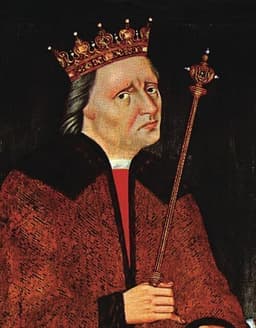
Christian I of Denmark
Emperor · Medieval
53.8Total
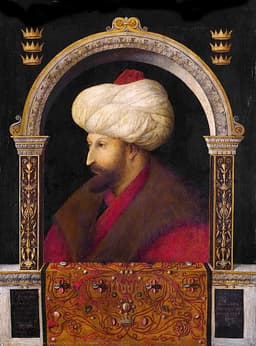
Mehmed II
Emperor · Medieval
66.8Total
Basic Information
Born
1426
1432
Died
1481
1481
Era
Medieval
Medieval
Nationality
Denmark
Ottoman Empire
Occupation
Emperor
Emperor
Civilization
Western
Middle Eastern
Score Comparison
Military (10%)
55.0
77.5
Political (20%)
54.7
70.3
Influence (20%)
55.7
40.0
Legacy (20%)
49.2
75.0
Leadership (15%)
67.0
78.0
Strategy (15%)
38.6
80.3
TOTAL
53.8
66.8
Christian I of Denmark — Complete Timeline
1448 AD
Election as King of DenmarkPolitical Action◆ Major
Following the death of King Christopher III, the Danish Council elected Christian of Oldenburg as king. This established the Oldenburg dynasty, which would rule Denmark for over four centuries.
AccessionDynasty Foundation
Impact: nationalconstructive
1450 AD
Union of Norway with DenmarkPolitical Action◆ Major
Christian I was crowned King of Norway in Trondheim, formalizing the union between Denmark and Norway. This union lasted until 1814, making Norway a Danish dominion for centuries.
UnionScandinavia
Impact: regional
1457 AD
Election as King of SwedenPolitical Action◆ Major
Christian I was elected King of Sweden, briefly restoring the Kalmar Union. His rule in Sweden was contested, leading to rebellion and his eventual deposition in 1464.
Kalmar UnionSweden
Impact: regional
1468 AD
Pledge of Orkney and ShetlandPolitical Action◆ Major
To secure a dowry for his daughter Margaret's marriage to James III of Scotland, Christian I pledged the Orkney and Shetland islands. The pledge was never redeemed, and the islands became permanently part of Scotland.
Territorial LossScotland
Impact: regionaltragic
1479 AD
Foundation of the University of CopenhagenCultural◆ Major
Christian I issued a charter establishing the University of Copenhagen, the first university in Denmark. Modeled on the University of Cologne, it became a center of learning and the oldest university in the country.
EducationUniversity
Impact: nationalconstructive
Mehmed II — Complete Timeline
1453 AD
Siege of ConstantinopleWar
Mehmed II led the Ottoman army in a 53-day siege of Constantinople, the capital of the Byzantine Empire. The city fell on May 29, 1453, after Ottoman forces breached the walls. This conquest ended the Byzantine Empire and established Constantinople as the Ottoman capital, later renamed Istanbul.
ConquestByzantine EmpireOttoman Expansion
Impact: global
1456 AD
Siege of BelgradeWar◆ Major
Mehmed II led a large Ottoman army to besiege Belgrade, a key Hungarian fortress. The siege was broken by a Christian relief force led by John Hunyadi. The Ottoman army suffered heavy losses and was forced to retreat. This defeat halted Ottoman expansion into Hungary for decades.
SiegeDefeatHungary
Impact: regional
1461 AD
Conquest of the Empire of TrebizondWar◆ Major
Mehmed II led a military campaign against the Empire of Trebizond, the last major Byzantine Greek successor state. After a siege of the capital, Emperor David Megas Komnenos surrendered. This conquest eliminated the final remnant of Byzantine authority in Anatolia.
ConquestAnatoliaByzantine Successor
Impact: regional
1478 AD
Codification of Ottoman Law (Kanunname)Reform◆ Major
Mehmed II issued the Kanunname, a comprehensive legal code that systematized Ottoman criminal, administrative, and land law. This code defined the powers of the sultan, the structure of the bureaucracy, and the rights of subjects. It provided a legal framework for the expanding empire.
Legal ReformOttoman LawAdministration
Impact: nationalconstructive
1480 AD
Invasion of OtrantoWar
Mehmed II ordered an Ottoman fleet to invade the Italian city of Otranto. Ottoman forces captured the city and massacred many inhabitants. This invasion established a temporary Ottoman foothold in Italy, causing alarm among Italian states. The occupation ended after Mehmed's death.
InvasionItalyOttoman Expansion
Impact: regionaldestructive
Expert Analysis
Origins
Christian I of Denmark (born 1426) was the first Oldenburg king, elected to the Danish throne in 1448 after the death of Christopher III. He was the son of Count Theodoric of Oldenburg and Hedwig of Holstein, a descendant of Danish kings. His family background was minor German nobility, but through inheritance and marriage, he became a candidate for the Scandinavian thrones. Mehmed II (born 1432) was the son of Sultan Murad II and a slave concubine, Hüma Hatun. He received a rigorous education in Islamic sciences, languages, and military strategy, studying under prominent scholars. From an early age, he was exposed to the complexities of empire and the dream of conquering Constantinople.
Rise to Power
Christian I's rise came through election: in 1448, the Danish Council elected him king, and he was crowned in Copenhagen. He then secured the Norwegian throne in 1450, and in 1457, he was elected King of Sweden, briefly restoring the Kalmar Union. However, his Swedish rule was contested, leading to rebellion and his eventual deposition in 1464. Mehmed II ascended the throne at age 12 after his father abdicated, but a Janissary revolt forced him to step down in favor of his father. He reclaimed power in 1451 upon Murad's death. His defining moment came in 1453 when he led the 53-day siege of Constantinople, capturing the city on May 29, 1453, at age 21. This triumph solidified his authority and earned him the title "the Conqueror."
Leadership & Governance
Christian I's leadership score of 67.0 reflects his ability to maintain the union of Denmark and Norway, but his political score of 54.7 indicates struggles with Swedish nobles. He founded the University of Copenhagen in 1479, modeled on the University of Cologne, which became a center of learning. However, his financial mismanagement forced him to pledge the Orkney and Shetland islands to Scotland in 1468 as a dowry for his daughter's marriage—a pledge never redeemed, losing the islands permanently. Mehmed II's leadership score of 78.0 and strategy of 80.3 highlight his military acumen and administrative reforms. He issued the Kanunname, a comprehensive legal code that systematized Ottoman law, defining the powers of the sultan and the state. He also promoted religious tolerance, allowing the Orthodox Church to operate freely and appointing a new patriarch. His governance transformed the Ottoman state into a centralized empire.
Triumph & Tragedy
Christian I's greatest triumph was establishing the Oldenburg dynasty, which ruled Denmark until 1863, and the union with Norway that lasted until 1814. His foundation of the University of Copenhagen was a lasting cultural achievement. His greatest failure was the loss of Orkney and Shetland, which remain part of Scotland today. His military score of 55.0 reflects his inability to secure Sweden, where he was deposed after a short reign. Mehmed II's triumph was the conquest of Constantinople, a feat that reshaped geopolitics and ended the Byzantine Empire. He also conquered the Empire of Trebizond in 1461 and expanded Ottoman control over the Balkans and Anatolia. His tragedies include the failed siege of Belgrade in 1456, where John Hunyadi repelled his forces, and the brutal invasion of Otranto in 1480, which sparked fear in Italy but was not sustained. His military score of 77.5 and strategy of 80.3 underscore his effectiveness, but his influence score of 40.0 is lower due to his reign's focus on conquest rather than long-term cultural integration.
Character & Destiny
Christian I was a pragmatic ruler, willing to compromise with nobles and foreign powers. His character was cautious, often prioritizing stability over expansion. This led to the loss of territories but ensured the survival of his dynasty. Mehmed II was ambitious, ruthless, and intellectually curious. He was known for his interest in philosophy, science, and the arts, even inviting Italian artists to his court. His determination to capture Constantinople drove him to overcome setbacks, such as the failure of his first siege attempt. His character shaped his destiny as a conqueror, but his early death in 1481 at age 49 left many plans unfulfilled.
Legacy
Christian I's legacy is the Oldenburg dynasty and the long-lasting union of Denmark and Norway. The University of Copenhagen remains a prestigious institution. However, his military and political scores (55.0 and 54.7) indicate a limited impact compared to contemporaries. Mehmed II's legacy is immense: he transformed Constantinople into Istanbul, the Ottoman capital, and his conquest marked the end of the Middle Ages. His legal code influenced Ottoman governance for centuries. His total score of 66.8 is higher than Christian I's 53.8, reflecting his greater impact on world history.
Conclusion
Mehmed II had a far greater impact on history than Christian I. While Christian I founded a dynasty and maintained a union, his achievements were regional and his failures cost territories. Mehmed II's conquest of Constantinople changed the balance of power in Europe and Asia, and his administrative reforms shaped the Ottoman Empire for centuries. The score gap of 13.0 points reflects this disparity. Christian I's legacy is confined to Scandinavia; Mehmed II's echoes across continents.
Rankings
🥇
Mehmed IILeader
Mil: 77.5Pol: 70.3Inf: 40.0
66.8
🥈
Christian I of Denmark
Mil: 55.0Pol: 54.7Inf: 55.7
53.8
+13.0 behind
How This Comparison Works
Algorithm
Each figure is scored on 6 dimensions (0—100 scale) based on structured historical data: Military (10%), Political (20%), Influence (20%), Legacy (20%), Leadership (15%), Strategy (15%). The weighted total produces the final ranking.
Data Sources
Scores are computed from structured sub-indicators in the database. Scale factors adjust for era (Ancient ×0.85, Modern ×1.0) and civilization size (Eastern ×1.05, Other ×0.80) to account for differences in population and military scale.
Maximum 3 Figures
Comparisons are limited to 2—3 figures to ensure readability and statistical meaningfulness.
Error Margins
±5 points per dimension — Sub-scores are derived from historical records with inherent uncertainty. Two figures within 5 points on a dimension should be considered roughly equivalent in that area.
Total Score Accuracy
±3 points overall — The weighted combination of 6 dimensions produces a total score with approximately ±3 points of uncertainty. Differences of less than 3 points are not statistically significant— the figures are effectively tied.
Known Limitations
- Historical records are incomplete and uneven across civilizations
- Figures from oral-tradition societies may be underrepresented
- Occupation labels can misclassify multi-role figures
- Scores measure capability and impact, not moral character
- Quantitative scoring is a comparison tool, not absolute truth
Capability Radar
Military (10%) — Battles & Warfare
Battles
25
95
Win Rate
30
90
Expansion
35
95
Political (20%) — Governance & Reform
Reform
40
90
Diplomacy
55
85
Economy
45
80
Influence (20%) — Cultural & Global Reach
Cultural
40
85
Global
35
90
Legacy (20%) — Historical Impact
Historical
50
95
Longevity
45
90
Leadership (15%) — Power & Stability
Tenure
60
85
Stability
30
75
Strategy (15%) — Tactics & Innovation
Strategy
25
95
Tactics
20
95
Reform
15
85
Similar Comparisons
Comments & Discussion
No comments yet. Be the first to share your thoughts!