Loading...
Mehmed II vs Qin Shi Huang
Qin Shi Huang leads by 18.4 pts · 2 figures compared
…
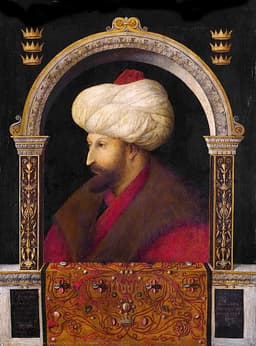
Mehmed II
Emperor · Medieval
66.8Total
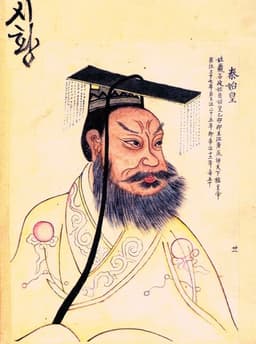
Qin Shi Huang
Emperor · Ancient
85.2Total
Basic Information
Born
1432
-259
Died
1481
-210
Era
Medieval
Ancient
Nationality
Ottoman Empire
China
Occupation
Emperor
Emperor
Civilization
Middle Eastern
Eastern
Score Comparison
Military (10%)
77.5
80.0
Political (20%)
70.3
90.0
Influence (20%)
40.0
85.0
Legacy (20%)
75.0
90.0
Leadership (15%)
78.0
78.0
Strategy (15%)
80.3
82.0
TOTAL
66.8
85.2
Mehmed II — Complete Timeline
1453 AD
Siege of ConstantinopleWar
Mehmed II led the Ottoman army in a 53-day siege of Constantinople, the capital of the Byzantine Empire. The city fell on May 29, 1453, after Ottoman forces breached the walls. This conquest ended the Byzantine Empire and established Constantinople as the Ottoman capital, later renamed Istanbul.
ConquestByzantine EmpireOttoman Expansion
Impact: global
1456 AD
Siege of BelgradeWar◆ Major
Mehmed II led a large Ottoman army to besiege Belgrade, a key Hungarian fortress. The siege was broken by a Christian relief force led by John Hunyadi. The Ottoman army suffered heavy losses and was forced to retreat. This defeat halted Ottoman expansion into Hungary for decades.
SiegeDefeatHungary
Impact: regional
1461 AD
Conquest of the Empire of TrebizondWar◆ Major
Mehmed II led a military campaign against the Empire of Trebizond, the last major Byzantine Greek successor state. After a siege of the capital, Emperor David Megas Komnenos surrendered. This conquest eliminated the final remnant of Byzantine authority in Anatolia.
ConquestAnatoliaByzantine Successor
Impact: regional
1478 AD
Codification of Ottoman Law (Kanunname)Reform◆ Major
Mehmed II issued the Kanunname, a comprehensive legal code that systematized Ottoman criminal, administrative, and land law. This code defined the powers of the sultan, the structure of the bureaucracy, and the rights of subjects. It provided a legal framework for the expanding empire.
Legal ReformOttoman LawAdministration
Impact: nationalconstructive
1480 AD
Invasion of OtrantoWar
Mehmed II ordered an Ottoman fleet to invade the Italian city of Otranto. Ottoman forces captured the city and massacred many inhabitants. This invasion established a temporary Ottoman foothold in Italy, causing alarm among Italian states. The occupation ended after Mehmed's death.
InvasionItalyOttoman Expansion
Impact: regionaldestructive
Qin Shi Huang — Complete Timeline
246 BC
Construction of the Mausoleum and Terracotta ArmyOther◆ Major
Qin Shi Huang commissioned a vast mausoleum complex near Xi'an, guarded by thousands of life-sized terracotta soldiers, horses, and chariots. The project employed hundreds of thousands of workers and reflected his obsession with immortality and imperial power.
Impact: global
230 BC
Conquest of the Six Warring StatesWar
From 230 to 221 BCE, Ying Zheng led the Qin state in a series of campaigns that conquered the Han, Zhao, Wei, Chu, Yan, and Qi states. This unified China under a single ruler for the first time, ending the Warring States period.
Impact: global
221 BC
Standardization of Writing, Currency, and MeasurementsReform◆ Major
Qin Shi Huang ordered the standardization of Chinese script, currency, and weights and measures across the unified empire. This facilitated administration, trade, and cultural integration, laying a foundation for future dynasties.
Impact: globalconstructive
Proclamation of the Qin DynastyPolitical Action
After conquering the last independent state, Ying Zheng declared himself Shi Huangdi (First Emperor), founding the Qin Dynasty. He adopted a new title to signify his supreme authority and initiated centralized imperial rule.
Impact: global
214 BC
Initiation of the Great Wall ConstructionOther◆ Major
Qin Shi Huang ordered the connection and extension of existing northern fortifications to create a unified defensive wall against nomadic Xiongnu raids. This project involved massive conscripted labor and became the precursor to the later Great Wall.
Impact: regional
213 BC
Burning of Books and Burying of ScholarsPolitical Action◆ Major
On the advice of Li Si, Qin Shi Huang ordered the burning of historical records and philosophical texts not aligned with Legalist doctrine. He also had 460 Confucian scholars buried alive to suppress dissent and consolidate ideological control.
Impact: nationaldestructive
Expert Analysis
mehmed-ii-vs-qin-shi-huang
# The First Emperor and the Conqueror: Two Visions of Empire
In the spring of 1453, as Mehmed II’s cannon shattered the walls of Constantinople, a young sultan watched from his command tent, calculating the precise moment to unleash his elite Janissaries. Fifteen centuries earlier and half a world away, another young ruler—Ying Zheng of Qin—had stared across the battlefields of ancient China, methodically dismantling kingdom after kingdom. Both men sought to forge empires from fragments, yet their paths diverged in ways that would echo through millennia. What drove these two titans—one who unified a civilization, the other who conquered a world—to such different fates?
Origins
Qin Shi Huang was born in 259 BC into a world of ceaseless war. The Warring States period had torn China apart for two centuries, and young Ying Zheng grew up in a kingdom that valued ruthless efficiency above all else. His father, King Zhuangxiang, ruled a state that had already embraced Legalist philosophy—a doctrine that prized order over morality, law over tradition. The boy king ascended the throne at thirteen, surrounded by court intrigue and the constant threat of assassination. His mother’s lover, Lao Ai, even attempted a coup. This crucible forged a ruler who trusted no one and believed that unity could only be imposed through absolute control.
Mehmed II entered the world in 1432, the son of Sultan Murad II, in a different kind of chaos. The Ottoman Empire was still consolidating its hold on the Balkans and Anatolia, surrounded by hostile Christian kingdoms and rival Turkish beyliks. Mehmed’s father abdicated twice, forcing the young prince to seize the throne at twelve, lose it, then reclaim it at nineteen. He studied philosophy, science, and military strategy under the finest scholars of the age, including the Greek humanist George Amiroutzes. Unlike Qin Shi Huang, who was shaped by Legalist ministers, Mehmed absorbed both Islamic and European thought—he could read Latin and Greek, debated Christian theology, and even commissioned Renaissance-style paintings. His vision was not merely to conquer, but to synthesize.
Rise to Power
Qin Shi Huang’s ascent was a masterpiece of calculated aggression. Between 230 and 221 BC, he unleashed a series of campaigns that devoured the six rival kingdoms one by one. The conquest of Han came first, then Zhao, Wei, Chu, Yan, and finally Qi. Each victory was methodical—he used bribery to weaken enemies, spies to sow discord, and overwhelming force to crush resistance. When he declared himself Shi Huangdi—First Emperor—in 221 BC, he had not merely won a war; he had ended an era. The old feudal order lay in ruins, and he intended to build something entirely new.
Mehmed II’s rise was more dramatic, centered on a single, world-altering event. When he besieged Constantinople in 1453, the Byzantine capital had withstood countless assaults for over a thousand years. Mehmed brought something unprecedented: a massive bombard forged by the Hungarian engineer Urban, capable of hurling stone balls weighing 600 kilograms. For 53 days, the walls crumbled. On May 29, 1453, his forces breached the defenses, and the last Roman emperor died fighting in the streets. Mehmed rode into the Hagia Sophia, converted it to a mosque, and declared himself the rightful heir to both Caesar and Caliph.
Leadership & Governance
Here the two emperors diverged most sharply. Qin Shi Huang governed through terror and uniformity. He standardized writing, currency, and measurements across his empire—a monumental achievement that allowed China to function as a single entity. But he also burned books that contradicted his ideology and buried 460 Confucian scholars alive. His Legalist system demanded total obedience; officials who failed were executed, and commoners were conscripted for endless projects. The Great Wall, begun in 214 BC, consumed hundreds of thousands of lives. His mausoleum, guarded by the Terracotta Army, was a monument to his obsession with immortality.
Mehmed II governed through synthesis and pragmatism. He issued the Kanunname in 1478, a legal code that systematized Ottoman law while incorporating elements from Byzantine, Islamic, and Mongol traditions. He allowed Christians and Jews to practice their religions, appointing a Greek Orthodox patriarch and an Armenian patriarch to govern their communities. He repopulated Constantinople with Muslims, Christians, and Jews from across his empire, creating a cosmopolitan capital. His military campaigns were brutal—the siege of Belgrade in 1456 failed, but the conquest of Trebizond in 1461 succeeded—yet he always left room for negotiation. He understood that an empire of many peoples required flexibility, not uniformity.
Triumph & Tragedy
Qin Shi Huang’s greatest triumph was unification itself. He created the template for Imperial China—a centralized bureaucracy, a standardized script, a single legal code—that would endure for two thousand years. But his tragedy was equally profound. He became obsessed with elixirs of immortality, consuming mercury pills that likely hastened his death in 210 BC at age 49. His empire collapsed within four years of his death, torn apart by rebellions that his brutal system had provoked. The Qin Dynasty lasted only fifteen years—a flash of lightning that illuminated the path for future dynasties.
Mehmed II’s triumph was Constantinople. He transformed a dying city into the heart of a world empire, and his conquest reshaped global power for centuries. His tragedy was overreach. The invasion of Otranto in 1480, intended as a springboard for the conquest of Italy, ended in failure after his death. And his own legacy was complicated—his son Bayezid II would later reverse some of his father’s more tolerant policies. Yet the Ottoman Empire endured for over four centuries after him, a testament to the foundations he laid.
Character & Destiny
Qin Shi Huang was a man of iron will and paranoia. He believed that history began with him—he ordered all previous records burned, so that only his version of events would survive. He traveled constantly, inspecting his empire, never sleeping in the same place twice for fear of assassination. His personality was the engine of his achievements and the seed of his destruction. He could not delegate, could not trust, and could not imagine a world where his authority was questioned.
Mehmed II was a man of immense intellect and calculation. He could recite the Quran from memory, but also debated Aristotle with Greek philosophers. He was ruthless when necessary—he ordered the execution of his own grand vizier—but also generous to defeated enemies who submitted. His personality allowed him to build a multi-ethnic empire that could survive his death. He understood that power, to be lasting, must be shared.
Legacy
Qin Shi Huang’s legacy is paradoxical. He is remembered as a tyrant who burned books and buried scholars, yet every Chinese emperor who followed ruled through the administrative system he created. The Great Wall, the Terracotta Army, the standardized script—these endure as symbols of Chinese civilization. His name became synonymous with unity itself. When Mao Zedong declared the People’s Republic in 1949, he compared himself to the First Emperor.
Mehmed II is remembered as Fatih—the Conqueror. Istanbul bears his imprint in its mosques, its palaces, its very soul. The legal system he codified influenced Ottoman governance for centuries. But his legacy is also contested: for Greeks, he remains the man who ended a thousand-year civilization; for Turks, the founder of a golden age. Like Qin Shi Huang, he was both destroyer and creator, a figure too vast for simple judgment.
Conclusion
Standing at the edge of the Terracotta Army, one feels the weight of Qin Shi Huang’s ambition—an emperor who tried to conquer death itself. Standing in the courtyard of the Topkapi Palace, one feels Mehmed II’s cosmopolitan vision—a sultan who built a bridge between worlds. Both men sought to impose order on chaos, but they understood order differently. Qin Shi Huang saw it as uniformity, enforced by fear. Mehmed II saw it as harmony, achieved through synthesis. One created a civilization; the other, an empire. One’s work collapsed with him; the other’s endured for centuries. In their differences lies a profound lesson: that the most powerful rulers are not those who command the most fear, but those who build systems that outlast their own ambition.
Rankings
🥇
Qin Shi HuangLeader
Mil: 80.0Pol: 90.0Inf: 85.0
85.2
🥈
Mehmed II
Mil: 77.5Pol: 70.3Inf: 40.0
66.8
+18.4 behind
How This Comparison Works
Algorithm
Each figure is scored on 6 dimensions (0—100 scale) based on structured historical data: Military (10%), Political (20%), Influence (20%), Legacy (20%), Leadership (15%), Strategy (15%). The weighted total produces the final ranking.
Data Sources
Scores are computed from structured sub-indicators in the database. Scale factors adjust for era (Ancient ×0.85, Modern ×1.0) and civilization size (Eastern ×1.05, Other ×0.80) to account for differences in population and military scale.
Maximum 3 Figures
Comparisons are limited to 2—3 figures to ensure readability and statistical meaningfulness.
Error Margins
±5 points per dimension — Sub-scores are derived from historical records with inherent uncertainty. Two figures within 5 points on a dimension should be considered roughly equivalent in that area.
Total Score Accuracy
±3 points overall — The weighted combination of 6 dimensions produces a total score with approximately ±3 points of uncertainty. Differences of less than 3 points are not statistically significant— the figures are effectively tied.
Known Limitations
- Historical records are incomplete and uneven across civilizations
- Figures from oral-tradition societies may be underrepresented
- Occupation labels can misclassify multi-role figures
- Scores measure capability and impact, not moral character
- Quantitative scoring is a comparison tool, not absolute truth
Capability Radar
Military (10%) — Battles & Warfare
Battles
95
85
Win Rate
90
90
Expansion
95
90
Political (20%) — Governance & Reform
Reform
90
95
Diplomacy
85
75
Economy
80
90
Influence (20%) — Cultural & Global Reach
Cultural
85
95
Global
90
85
Legacy (20%) — Historical Impact
Historical
95
95
Longevity
90
95
Leadership (15%) — Power & Stability
Tenure
85
70
Stability
75
65
Strategy (15%) — Tactics & Innovation
Strategy
95
85
Tactics
95
80
Reform
85
95
Similar Comparisons
Comments & Discussion
SultanSmacker6/17/2026
Mehmed II was a military genius who conquered what others called impossible. Constantinople’s walls had stood for 1,000 years—until his 70-day siege and that 27-foot cannon named "Basilica" shattered them. Qin Shi Huang? He inherited a Qin war machine already crushing states with iron weapons way ahead of their time. Mehmed rebuilt a city into capital; Qin buried scholars alive. One built, one burned. Easy choice.
数字暴君6/17/2026
秦始皇根本不是什么圣人统一者,而是靠恐怖控制的暴君。他焚书坑儒、连坐法压垮百姓,说他是“书同文”的功臣?那是血写的历史。真正服众的征服者像穆罕默德二世,在征服君士坦丁堡后允许宗教自由、重建城市。一个用铁血毁文明,一个用铁血建文明。别拿暴君当英主。
火药先驱6/17/2026
论军事转型,穆罕默德二世才是真革命家。他雇用乌尔班造超级火炮,打开了中世纪城堡的末日。秦始皇的弩机和青铜剑再厉害,也是旧时代的绝唱。1453年不是简单地换了个皇帝,而是火药取代城墙的时代转折点。如果比谁改写了战争规则,答案只有“法提赫”。
BoldEye806/17/2026
Qin Shi Huang unified Chinese script—that’s a legacy Mehmed can’t touch. The small seal script standardized 3,000 characters across warring states. Mehmed’s empire used Arabic script for Ottoman Turkish, a patchwork of Persian, Arabic, and Turkic. No script unity, no lasting linguistic foundation. Qin gave China a tool that outlasted his dynasty by millennia. Mehmed’s reforms were impressive, but script is civilization’s backbone.
Chronicler26356/17/2026
Both men unified fragments into empires, but Mehmed’s Istanbul was a metropolis of coexistence—Jews, Orthodox, Muslims, all under his court. Qin Shi Huang’s capital Xianyang? He forced mass migrations, burned books, buried scholars alive for ideological purity. One built a city that thrived as a crossroads of three continents; the other built a tomb with terracotta soldiers—magnificent, but sterile. Empire is about people living, not just dying for you.