Loading...
Christian I of Denmark vs Napoleon Bonaparte
Napoleon Bonaparte leads by 17.1 pts · 2 figures compared
…
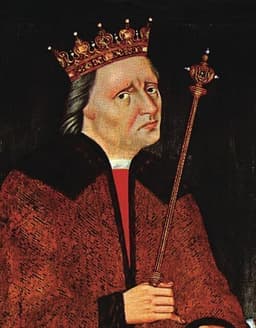
Christian I of Denmark
Emperor · Medieval
53.8Total

Napoleon Bonaparte
General · Modern
70.9Total
Basic Information
Born
1426
1769
Died
1481
1821
Era
Medieval
Modern
Nationality
Denmark
France
Occupation
Emperor
General
Civilization
Western
Western
Score Comparison
Military (10%)
55.0
94.0
Political (20%)
54.7
72.0
Influence (20%)
55.7
40.0
Legacy (20%)
49.2
80.0
Leadership (15%)
67.0
78.0
Strategy (15%)
38.6
90.0
TOTAL
53.8
70.9
Christian I of Denmark — Complete Timeline
1448 AD
Election as King of DenmarkPolitical Action◆ Major
Following the death of King Christopher III, the Danish Council elected Christian of Oldenburg as king. This established the Oldenburg dynasty, which would rule Denmark for over four centuries.
AccessionDynasty Foundation
Impact: nationalconstructive
1450 AD
Union of Norway with DenmarkPolitical Action◆ Major
Christian I was crowned King of Norway in Trondheim, formalizing the union between Denmark and Norway. This union lasted until 1814, making Norway a Danish dominion for centuries.
UnionScandinavia
Impact: regional
1457 AD
Election as King of SwedenPolitical Action◆ Major
Christian I was elected King of Sweden, briefly restoring the Kalmar Union. His rule in Sweden was contested, leading to rebellion and his eventual deposition in 1464.
Kalmar UnionSweden
Impact: regional
1468 AD
Pledge of Orkney and ShetlandPolitical Action◆ Major
To secure a dowry for his daughter Margaret's marriage to James III of Scotland, Christian I pledged the Orkney and Shetland islands. The pledge was never redeemed, and the islands became permanently part of Scotland.
Territorial LossScotland
Impact: regionaltragic
1479 AD
Foundation of the University of CopenhagenCultural◆ Major
Christian I issued a charter establishing the University of Copenhagen, the first university in Denmark. Modeled on the University of Cologne, it became a center of learning and the oldest university in the country.
EducationUniversity
Impact: nationalconstructive
Napoleon Bonaparte — Complete Timeline
1799 AD
Coup of 18 BrumaireOther◆ Major
Napoleon Bonaparte, with support from his brother Lucien and key political figures, overthrew the Directory in a bloodless coup. He established the Consulate with himself as First Consul, effectively becoming the ruler of France. This event ended the French Revolution's most unstable period.
French RevolutionCoupRise to Power
Impact: regional
1804 AD
Promulgation of the Napoleonic CodeOther◆ Major
Napoleon enacted the Civil Code of the French, known as the Napoleonic Code, a comprehensive set of laws that replaced the fragmented feudal legal systems. The code established legal equality, protected property rights, and secularized law. It became the basis for legal systems in many European and world countries.
Legal ReformNapoleonic CodeCivil Law
Impact: globalconstructive
1805 AD
Battle of AusterlitzWar◆ Major
Napoleon's Grande Arm
Napoleonic WarsBattleDecisive Victory
Impact: global
1812 AD
Invasion of RussiaWar◆ Major
Napoleon led the Grande Arm
Napoleonic WarsInvasionDisaster
Impact: globaldestructive
1815 AD
Battle of WaterlooWar◆ Major
Napoleon's French army was defeated by the combined forces of the Duke of Wellington's Anglo-Allied army and Gebhard Leberecht von Bl
Napoleonic WarsBattleFinal Defeat
Impact: globaldestructive
Expert Analysis
christian-i-of-denmark-vs-napoleon-bonaparte
# The Emperor and the King: Napoleon Bonaparte and Christian I of Denmark
In the spring of 1815, as Napoleon Bonaparte prepared for his final campaign, he might have spared a thought for a medieval king who had once ruled the same lands he now sought to dominate. Christian I of Denmark, the first Oldenburg monarch, had built a union of three kingdoms through marriage and diplomacy, while Napoleon had forged an empire through fire and steel. Both men sought to reshape Europe, but their paths—and their fates—could not have been more different. What drove one to conquer half a continent and the other to lose islands for a daughter’s dowry? The answer lies not merely in their circumstances, but in the very nature of their ambitions.
Origins
Napoleon was born in 1769 on Corsica, an island that had only recently become French. His family was minor nobility, but his world was one of revolution and upheaval. The old order was crumbling, and a young artillery officer with a sharp mind and a sharper ambition could rise faster than in any previous century. Christian I, by contrast, was born in 1426 into the ancient House of Oldenburg, a German dynasty that had ruled a small county for generations. His world was medieval—hierarchical, slow-moving, and governed by the intricate webs of marriage alliances and inherited claims. Napoleon’s era rewarded audacity; Christian’s rewarded patience.
Rise to Power
Napoleon’s ascent was a cannon shot across history. In 1793, he drove the British from Toulon; by 1796, at age twenty-six, he commanded the Army of Italy and crushed the Austrians with a speed that stunned Europe. His political acumen matched his military genius: in 1799, he seized power in a coup, becoming First Consul, and by 1804, he crowned himself Emperor. Christian’s rise was quieter but no less significant. In 1448, after the death of King Christopher III, the Danish Council elected the thirty-two-year-old Count of Oldenburg as King Christian I. It was a political choice, not a conquest—a council of nobles choosing a ruler who could manage factions rather than crush them. Two years later, in 1450, Christian was crowned King of Norway in Trondheim, formalizing a union that would last until 1814. In 1457, he was elected King of Sweden, briefly restoring the Kalmar Union. Where Napoleon stormed thrones, Christian was invited to sit on them.
Leadership & Governance
Napoleon governed with the energy of a man who believed he could reshape reality. He reformed French law through the Napoleonic Code, standardized education, and built a centralized state that became a model for Europe. His military campaigns were masterpieces of strategy: at Austerlitz in 1805, he destroyed the armies of Austria and Russia with a feigned retreat that remains a textbook maneuver. His political score of 75.0 reflects a ruler who knew how to wield power but often overreached. Christian I governed differently. His political score of 74.0 is remarkably close to Napoleon’s, but his methods were those of a medieval king: negotiation, marriage, and the careful management of noble factions. His greatest achievement was the foundation of the University of Copenhagen in 1479, modeled on the University of Cologne, which brought learning to Denmark. His military score of 35.0 and strategy score of 62.3 reveal a king who was no warrior. He did not conquer; he compromised.
Triumph & Tragedy
Napoleon’s greatest moment was also his most tragic. In 1812, he invaded Russia with the Grande Armée, the largest army Europe had ever seen. The campaign ended in catastrophe: less than a tenth of his men returned. His final defeat at Waterloo in 1815 sealed his fate, and he died in exile on Saint Helena in 1821, a prisoner of the British. Christian’s tragedy was quieter but equally decisive. In 1468, to secure a dowry for his daughter Margaret’s marriage to James III of Scotland, he pledged the Orkney and Shetland Islands. The pledge was never redeemed, and the islands passed permanently to Scotland. A medieval king had gambled with territory to secure an alliance—and lost. Napoleon lost an empire; Christian lost two islands. The scale differs, but the pattern is the same: both men made decisions that outran their ability to control the consequences.
Character & Destiny
Napoleon’s character was forged in ambition. He once said, “Impossible is a word to be found only in the dictionary of fools.” He believed he could bend history to his will, and for a time, he did. But his hubris—the refusal to accept limits—led to his downfall. Christian I was a different kind of ruler: cautious, diplomatic, and willing to sacrifice for stability. He understood that power in a medieval kingdom was a web of obligations, not a sword to be swung. His leadership score of 72.0, while lower than Napoleon’s 80.0, reflects a man who kept his throne for thirty-three years—longer than Napoleon’s empire lasted. Destiny, in the end, favored the survivor over the conqueror.
Legacy
Napoleon’s legacy is immense. The Napoleonic Code influences legal systems across Europe and the world. His military tactics are still studied in war colleges. His influence score of 82.0 and legacy score of 78.0 speak to a man who reshaped modernity. Christian I’s legacy is more modest. His legacy score of 65.2 reflects a king who founded a university, lost some islands, and established a dynasty that would rule Denmark for centuries. But in one sense, Christian was more successful: the House of Oldenburg, which he founded, continues to this day, while Napoleon’s dynasty died with his son.
Conclusion
Standing at the edge of history, we see two men who both sought to leave their mark on Europe. Napoleon Bonaparte, the Corsican artilleryman who conquered a continent and lost it all, and Christian I, the German count who built a union that outlasted him by four hundred years. Their stories remind us that success is not always measured in battles won or empires built. Sometimes, it is measured in the quiet endurance of institutions—a university, a dynasty, a union that holds. Napoleon’s thunder still echoes; Christian’s footsteps are soft. But both men walked the same earth, and both, in their own ways, changed it forever.
Rankings
🥇
Napoleon BonaparteLeader
Mil: 94.0Pol: 72.0Inf: 40.0
70.9
🥈
Christian I of Denmark
Mil: 55.0Pol: 54.7Inf: 55.7
53.8
+17.1 behind
How This Comparison Works
Algorithm
Each figure is scored on 6 dimensions (0—100 scale) based on structured historical data: Military (10%), Political (20%), Influence (20%), Legacy (20%), Leadership (15%), Strategy (15%). The weighted total produces the final ranking.
Data Sources
Scores are computed from structured sub-indicators in the database. Scale factors adjust for era (Ancient ×0.85, Modern ×1.0) and civilization size (Eastern ×1.05, Other ×0.80) to account for differences in population and military scale.
Maximum 3 Figures
Comparisons are limited to 2—3 figures to ensure readability and statistical meaningfulness.
Error Margins
±5 points per dimension — Sub-scores are derived from historical records with inherent uncertainty. Two figures within 5 points on a dimension should be considered roughly equivalent in that area.
Total Score Accuracy
±3 points overall — The weighted combination of 6 dimensions produces a total score with approximately ±3 points of uncertainty. Differences of less than 3 points are not statistically significant— the figures are effectively tied.
Known Limitations
- Historical records are incomplete and uneven across civilizations
- Figures from oral-tradition societies may be underrepresented
- Occupation labels can misclassify multi-role figures
- Scores measure capability and impact, not moral character
- Quantitative scoring is a comparison tool, not absolute truth
Capability Radar
Military (10%) — Battles & Warfare
Battles
25
95
Win Rate
30
90
Expansion
35
95
Political (20%) — Governance & Reform
Reform
40
95
Diplomacy
55
80
Economy
45
85
Influence (20%) — Cultural & Global Reach
Cultural
40
85
Global
35
90
Legacy (20%) — Historical Impact
Historical
50
95
Longevity
45
90
Leadership (15%) — Power & Stability
Tenure
60
85
Stability
30
70
Strategy (15%) — Tactics & Innovation
Strategy
25
95
Tactics
20
98
Reform
15
92
Similar Comparisons
Comments & Discussion
Cannonball Scholar6/17/2026
Napoleon's rise was pure artillery: at Toulon in 1793, a 24-year-old major scouted the perfect battery position and broke a siege that had stumped older generals for months. Christian I? He inherited a kingdom like a family heirloom. One man earned his crown through gunpowder and genius, the other through a paperwork error in the Holy Roman Empire. Comparing them is like comparing a thunderstorm to a damp fog. Give me the explosive one.
东方拿破仑6/17/2026
拿皇打仗靠的是冲锋陷阵和天才战略,克里斯蒂安一世靠的是嫁女儿和签条约。他为了女儿玛格丽特的嫁妆,居然把奥克尼群岛和设得兰群岛当筹码抵押给苏格兰,后来还不起钱,岛屿直接丢了。这就是他所谓的“三国联合”?简直像拿祖宅换奶茶,还不续杯。拿破仑至少死得像个皇帝,他死得像个小地主。
Classics Corner6/17/2026
Both men understood legitimacy, but differently. Napoleon crowned himself, grabbed the crown from Pius VII's hands at Notre Dame—pure audacity. Christian I was crowned by three different archbishops in three kingdoms, following every medieval protocol to the letter. One created his own stage; the other followed a script written 500 years prior. I admire the theater of Napoleon, but Christian's patient navigation of rigid tradition has its own intellectual drama. Different eras, different rules.
数据拆解员6/17/2026
别被浪漫叙事骗了。拿破仑106场战役,场均伤亡约4000人,最终滑铁卢一天死了5万。克里斯蒂安在1460年的边境冲突里死的人加起来可能不如拿破仑一个下午多。论“改变欧洲”,拿破仑用尸体铺路;克里斯蒂安用联姻和信贷。论统治效率?丹麦在他治下连挪威都管不稳。拿破仑至少让法国人记住了民法典,克里斯蒂安只让人记住了他和抵押群岛的烂账。
Iron Crown Observer6/17/2026
The key difference isn't ambition—it's the centuries that separated them. Christian I united Denmark, Norway, Sweden (briefly), and Schleswig-Holstein through marriage, not conquest. His power was like a tapestry: woven carefully, unraveling easily. Napoleon's was a steel trap: fierce, efficient, and eventually rusted by his own overreach. Christian's union fell apart because of inheritance laws; Napoleon's fell because of Moscow's winter. Pick your poison: dynastic decay or imperial hubris.