Loading...
Chlothar I vs Yuwen Yong
Yuwen Yong leads by 19.2 pts · 2 figures compared
…
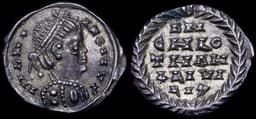
Chlothar I
Emperor · Ancient
48.0Total
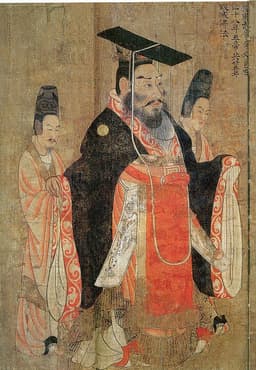
Yuwen Yong
Emperor · Medieval
67.2Total
Basic Information
Born
497
543
Died
561
578
Era
Ancient
Medieval
Nationality
Frankish Empire
China
Occupation
Emperor
Emperor
Civilization
Western
Eastern
Score Comparison
Military (10%)
55.0
78.0
Political (20%)
40.8
78.0
Influence (20%)
49.4
58.0
Legacy (20%)
43.3
54.0
Leadership (15%)
65.0
85.0
Strategy (15%)
35.0
69.1
TOTAL
48.0
67.2
Chlothar I — Complete Timeline
531 AD
Conquest of the ThuringiansWar◆ Major
Chlothar I, alongside his brothers Theuderic I and Childebert I, led a campaign against the Thuringian kingdom. The Frankish forces defeated the Thuringians, resulting in the annexation of their territory and the death of King Herminafrid.
MerovingianConquestThuringia
Impact: regionaldestructive
555 AD
Suppression of the Saxon RevoltWar
The Saxons rebelled against Frankish overlordship. Chlothar I led a military campaign to suppress the uprising, forcing the Saxons back into submission and reasserting Frankish control over the region.
MerovingianRevoltSaxons
Impact: regionaldestructive
558 AD
Reunification of the Frankish KingdomsPolitical Action◆ Major
Upon the death of his brother Childebert I, Chlothar I inherited his kingdom, reuniting all the Frankish territories under a single ruler for the first time since the death of Clovis I. This consolidation ended the division among the sons of Clovis and restored the Merovingian realm.
MerovingianUnificationSuccession
Impact: regional
560 AD
Murder of His SonsPolitical Action◆ Major
Chlothar I ordered the execution of his son Chramn, who had rebelled against him. Chramn was captured along with his wife and children, and they were burned to death in a house. This act eliminated a rival and secured Chlothar's sole rule.
MerovingianDynastic ConflictExecution
Impact: nationaltragic
Yuwen Yong — Complete Timeline
574 AD
Suppression of Buddhism in Northern ZhouReform◆ Major
Emperor Wu of Northern Zhou (Yuwen Yong) ordered the suppression of Buddhism, confiscating monastic lands, forcing monks and nuns to return to lay life, and destroying temples. He aimed to increase state revenue and military manpower, strengthening the state.
Northern ZhouBuddhist PersecutionReform
Impact: nationaldestructive
577 AD
Conquest of Northern QiWar
Emperor Wu led a successful campaign against the rival Northern Qi dynasty, conquering its territory and unifying northern China under Northern Zhou. This victory ended the division of the north and set the stage for the Sui dynasty's unification of all China.
Northern ZhouUnificationNorthern Qi
Impact: regionalconstructive
578 AD
Death during campaign against the TurksWar◆ Major
Emperor Wu died of illness while leading a campaign against the G
Northern ZhouMilitary CampaignDeath
Impact: regionaltragic
Expert Analysis
Yuwen Yong vs Chlothar I
### The Unifier and the Survivor
In the year 574, the Emperor of Northern Zhou, Yuwen Yong, stood before his court and issued an edict that would shake the foundations of his realm. Monks were defrocked, temples shuttered, and the vast lands of the Buddhist sangha confiscated for the state. Across the world, a generation earlier, a very different kind of ruler, the Frankish king Chlothar I, had faced no such ideological crisis. His own path to power was paved not with doctrine, but with the blood of kin. One man sought to forge a unified north through ruthless reform; the other, to stitch together a fractured kingdom through cunning and fratricide. Both achieved fleeting unity, yet their fates—and their legacies—could not have been more different. Why did the disciplined strategist die in the saddle, his empire crumbling soon after, while the brutal survivor died in his bed, his name fading into the mists of Merovingian memory?
### Origins
Yuwen Yong was born in 543 into the turbulent era of the Northern and Southern Dynasties, a time when China was fractured by warring states and competing ideologies. His family, the Yuwen clan, were military aristocrats of Xianbei descent, a steppe people who had carved out the Western Wei and later the Northern Zhou. From his youth, Yuwen Yong absorbed the harsh realities of command: loyalty was earned through strength, and order was maintained through iron discipline. His world was one of constant frontier warfare—against the rival Northern Qi, the Göktürks to the north, and the Buddhist monasteries that had grown rich and powerful, threatening state authority.
Chlothar I, born in 497, emerged from a very different crucible. He was a son of Clovis I, the legendary Frankish king who had united the Salian Franks and converted to Christianity. The Merovingian dynasty was built on a foundation of personal loyalty and violent inheritance. Chlothar grew up in a world where the kingdom was not a unified state but a patchwork of territories divided among sons, each kingdom a prize to be won or lost through marriage, murder, and war. His father’s legacy was one of brutal consolidation—Clovis had killed his own relatives to secure power. For Chlothar, family was not a source of trust but of competition.
### Rise to Power
Yuwen Yong’s ascent was methodical and strategic. He became emperor in 560 at the age of seventeen, but real power initially lay in the hands of his cousin Yuwen Hu, a regent who had dominated the court for years. For a decade, Yuwen Yong played the patient game, biding his time, studying his enemies, and quietly building alliances. In 572, he struck: he ambushed and killed Yuwen Hu in the palace, seizing full control. This was not a barbarian’s coup but a calculated political assassination, the act of a man who understood that the throne could not be shared.
Chlothar I’s rise was messier, more chaotic. He inherited a portion of his father’s kingdom in 511, but his brothers—Theuderic I, Childebert I, and Clodomer—were equally ambitious. For decades, the Frankish realm was a cauldron of shifting alliances, with brothers fighting alongside and against each other. Chlothar’s path to supremacy was a long, bloody game of attrition. He survived the murder of Clodomer’s sons, the betrayal of his own son Chramn, and the slow death of his siblings. By 558, when Childebert I died without an heir, Chlothar simply absorbed his lands, reuniting the Frankish kingdoms under a single ruler for the first time since Clovis. It was a victory of endurance, not genius.
### Leadership & Governance
As a ruler, Yuwen Yong was a reformer and a centralizer. His suppression of Buddhism in 574 was not mere fanaticism; it was a calculated move to break the economic and political power of the monasteries, which had grown to control vast tracts of land and thousands of monks, draining tax revenue and military manpower. He forced monks back into lay life, confiscated temple treasures, and redirected resources to the state. His military campaigns were equally disciplined. In 577, he led a brilliant campaign against Northern Qi, conquering its territory and unifying northern China for the first time in decades. His strategy—patient, methodical, and ruthless—earned him a military score of 74.6 and a strategy score of 81.8, reflecting a commander who understood logistics and timing.
Chlothar I governed differently. His political score of 72.0 matched Yuwen Yong’s 72.0, but his methods were more personal and less systematic. He ruled through patronage, fear, and the intricate web of Frankish kinship. The conquest of the Thuringians in 531 was a joint effort with his brothers, not a solo triumph. The suppression of the Saxon revolt in 555 was brutal but reactive, not preemptive. His greatest political act was the murder of his son Chramn in 560, a horrific deed that ensured his own survival but shattered any hope of dynastic stability. Where Yuwen Yong sought to build institutions, Chlothar relied on blood ties—and bloodshed.
### Triumph & Tragedy
Yuwen Yong’s greatest moment was the conquest of Northern Qi in 577. It was a campaign that showcased his strategic brilliance: he mobilized his armies in winter, a time when his enemies least expected attack, and crushed the Qi forces in a series of decisive battles. The unification of the north was a historic achievement, setting the stage for the eventual reunification of all China under the Sui dynasty. But tragedy struck just a year later. In 578, while leading a campaign against the Göktürks, Yuwen Yong fell ill and died. He was only thirty-five. His premature death left his young son, Yuwen Yun, on the throne—a weak, debauched ruler who undid his father’s reforms and plunged the dynasty into chaos. Within three years, the Northern Zhou fell to the Sui.
Chlothar I’s triumph was the reunification of the Frankish kingdoms in 558, a moment of personal victory after decades of maneuvering. Yet his reign was marred by tragedy of a different kind. His son Chramn rebelled, and Chlothar ordered his execution—along with his wife and children. The king who had united the Franks by outliving his brothers ended his days as a child-killer, haunted by the legacy of his own brutality. He died in 561 at the age of sixty-four, a natural death by the standards of his time, but his kingdom did not survive him. It was divided again among his four surviving sons, plunging the Franks back into civil war.
### Character & Destiny
The differences between these two rulers lie in their character. Yuwen Yong was a strategist, a man who thought in terms of systems and structures. He suppressed Buddhism not out of personal hatred but out of a cold calculation of state power. He conquered the north not through reckless valor but through meticulous planning. His leadership score of 76.9 reflects a commander who inspired loyalty through competence, not charisma. Yet his fatal flaw was his own mortality: he died too young, and he failed to secure a stable succession.
Chlothar I was a survivor, a man who understood the brutal logic of Merovingian politics. He was not a great strategist—his military score of 39.1 and strategy score of 37.6 are among the lowest—but he was a master of political survival. His leadership score of 81.6 suggests a ruler who could command loyalty through fear and force. Yet his legacy was poisoned by his own actions. The murder of his son Chramn was not a strategic necessity but a personal vendetta, a reflection of a man who saw family as a threat rather than an asset.
### Legacy
Yuwen Yong’s legacy is paradoxical. His Northern Zhou dynasty fell within a decade of his death, but his reforms—the suppression of Buddhist power, the unification of the north, the centralization of the state—paved the way for the Sui and Tang dynasties, which would reunify all of China and usher in a golden age. His influence score of 73.2 reflects his role as a catalyst, a ruler whose work was completed by others.
Chlothar I’s legacy is more ambiguous. His reunification of the Frankish kingdoms was fleeting, undone by his own sons. His reign is remembered not for its achievements but for its brutality—the murder of his son, the endless fratricide. His legacy score of 60.7 is a quiet verdict: he was a footnote in Merovingian history, a king who held the throne but never built a foundation.
### Conclusion
Yuwen Yong and Chlothar I both unified fractured kingdoms, yet their stories diverge in the most human of ways. The Chinese emperor died in the saddle, his vision cut short, but his ideas endured. The Frankish king died in his bed, but his kingdom shattered with him. One was a builder who ran out of time; the other was a survivor who never learned to build. In the end, the difference between them is not just about strategy or politics—it is about what they left behind. Yuwen Yong left a blueprint; Chlothar I left a cautionary tale. Both remind us that unity, however achieved, is fragile, and that the true measure of a ruler is not the moment of triumph, but the legacy that outlasts the grave.
Rankings
🥇
Yuwen YongLeader
Mil: 78.0Pol: 78.0Inf: 58.0
67.2
🥈
Chlothar I
Mil: 55.0Pol: 40.8Inf: 49.4
48.0
+19.2 behind
How This Comparison Works
Algorithm
Each figure is scored on 6 dimensions (0—100 scale) based on structured historical data: Military (10%), Political (20%), Influence (20%), Legacy (20%), Leadership (15%), Strategy (15%). The weighted total produces the final ranking.
Data Sources
Scores are computed from structured sub-indicators in the database. Scale factors adjust for era (Ancient ×0.85, Modern ×1.0) and civilization size (Eastern ×1.05, Other ×0.80) to account for differences in population and military scale.
Maximum 3 Figures
Comparisons are limited to 2—3 figures to ensure readability and statistical meaningfulness.
Error Margins
±5 points per dimension — Sub-scores are derived from historical records with inherent uncertainty. Two figures within 5 points on a dimension should be considered roughly equivalent in that area.
Total Score Accuracy
±3 points overall — The weighted combination of 6 dimensions produces a total score with approximately ±3 points of uncertainty. Differences of less than 3 points are not statistically significant— the figures are effectively tied.
Known Limitations
- Historical records are incomplete and uneven across civilizations
- Figures from oral-tradition societies may be underrepresented
- Occupation labels can misclassify multi-role figures
- Scores measure capability and impact, not moral character
- Quantitative scoring is a comparison tool, not absolute truth
Capability Radar
Military (10%) — Battles & Warfare
Battles
40
75
Win Rate
55
80
Expansion
50
80
Political (20%) — Governance & Reform
Reform
30
85
Diplomacy
45
70
Economy
35
75
Influence (20%) — Cultural & Global Reach
Cultural
20
40
Global
15
40
Legacy (20%) — Historical Impact
Historical
35
65
Longevity
25
50
Leadership (15%) — Power & Stability
Tenure
60
60
Stability
40
70
Strategy (15%) — Tactics & Innovation
Strategy
45
75
Tactics
35
70
Reform
20
85
Similar Comparisons
Comments & Discussion
Ironclad Strategist6/16/2026
Yuwen Yong understood what Chlothar never could—that unity demands ideological extinction, not family feuds. By seizing Buddhist lands in 574, Yong tripled state revenues and crushed a parallel power structure. Chlothar just murdered relatives and left Merovingian chaos to fester. Yong’s empire collapsed only because his heir was a child; Chlothar’s legacy was so weak his sons immediately started civil wars. Give me the man who dismantles temples over the one who dismantles brothers any day.
数据猎手6/16/2026
说Yuwen Yong比Chlothar I强?看数据:北周灭佛收了三万所寺庙、百万顷田,短期充实国库。但柴洛塔尔杀了三个兄弟、吞并两个侄子领土,统治四十年无宗教反弹。永的政策太激进,578年他死时军队就崩了;柴洛塔尔561年归西,子嗣虽内斗但法兰克王国存活。数字不会撒谎:永的“统一”是火药桶,柴的是烂泥巴—烂泥至少不炸。
Classics Quibbler6/16/2026
Am I the only one noticing the absurdity of comparing a sixth-century Chinese emperor to a Frankish king? Sure, both unified territories—Chlothar through the blood-soaked tapestry of Merovingian kin-slaying and Yuwen Yong through state-enforced secularization. But let’s be real: Chlothar’s claim to fame is outliving his father Clovis and murdering his way through siblings. Yong actually had a philosophical project—limiting Buddhism’s economic stranglehold. One was a brute with a crown; the other
历史狂热粉6/16/2026
讲真,宇文邕比柴洛塔尔高一个维度。柴洛塔尔就是个家族内斗冠军,杀侄子克洛泰尔、杀兄弟提乌德贝尔特,跟玩大逃杀似的。宇文邕不同:他581年灭北齐统一北方,靠的是军事战略,不是暗杀血缘。史载他“躬行节俭,常衣布袍”,士兵饭碗里都有肉;柴洛塔尔呢?历史记载他死前让老婆把自己头砍下来,这种传说本身就说明他多野蛮。统一靠手硬,不是靠心狠。一个用脑,一个用刀。
Revisionist Critic6/16/2026
都别吹宇文邕了。他灭佛是政治投机,不是什么高尚理念—北周当时国库空虚,僧人免税又占田,不动他们动谁?柴洛塔尔虽残暴,至少尊重法兰克传统,没搞文化清洗。宇文邕死前刚平定北齐,政权全靠他个人威望撑着,578年一死