Loading...
Chlothar I vs Tamar of Georgia
Tamar of Georgia leads by 23.5 pts · 2 figures compared
…
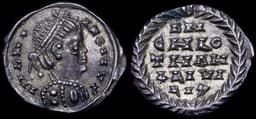
Chlothar I
Emperor · Ancient
48.0Total
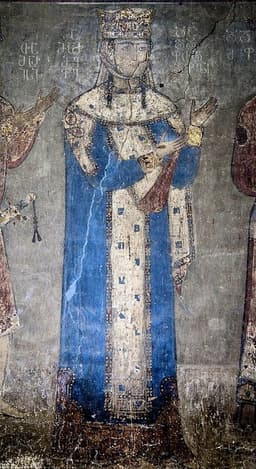
Tamar of Georgia
Emperor · Medieval
71.5Total
Basic Information
Born
497
1160
Died
561
1213
Era
Ancient
Medieval
Nationality
Frankish Empire
Georgia
Occupation
Emperor
Emperor
Civilization
Western
Western
Score Comparison
Military (10%)
55.0
78.0
Political (20%)
40.8
72.0
Influence (20%)
49.4
82.0
Legacy (20%)
43.3
55.0
Leadership (15%)
65.0
80.0
Strategy (15%)
35.0
66.3
TOTAL
48.0
71.5
Chlothar I — Complete Timeline
531 AD
Conquest of the ThuringiansWar◆ Major
Chlothar I, alongside his brothers Theuderic I and Childebert I, led a campaign against the Thuringian kingdom. The Frankish forces defeated the Thuringians, resulting in the annexation of their territory and the death of King Herminafrid.
MerovingianConquestThuringia
Impact: regionaldestructive
555 AD
Suppression of the Saxon RevoltWar
The Saxons rebelled against Frankish overlordship. Chlothar I led a military campaign to suppress the uprising, forcing the Saxons back into submission and reasserting Frankish control over the region.
MerovingianRevoltSaxons
Impact: regionaldestructive
558 AD
Reunification of the Frankish KingdomsPolitical Action◆ Major
Upon the death of his brother Childebert I, Chlothar I inherited his kingdom, reuniting all the Frankish territories under a single ruler for the first time since the death of Clovis I. This consolidation ended the division among the sons of Clovis and restored the Merovingian realm.
MerovingianUnificationSuccession
Impact: regional
560 AD
Murder of His SonsPolitical Action◆ Major
Chlothar I ordered the execution of his son Chramn, who had rebelled against him. Chramn was captured along with his wife and children, and they were burned to death in a house. This act eliminated a rival and secured Chlothar's sole rule.
MerovingianDynastic ConflictExecution
Impact: nationaltragic
Tamar of Georgia — Complete Timeline
1184 AD
Coronation as Queen RegnantPolitical Action
Tamar was crowned as the first female ruler of Georgia after her father George III's death. Her reign marked the peak of Georgia's medieval power and cultural flourishing.
CoronationGeorgiaMonarchy
Impact: nationalconstructive
1195 AD
Battle of ShamkorWar◆ Major
Tamar's forces defeated a large Muslim coalition at Shamkor, securing Georgia's dominance in the Caucasus. The victory expanded Georgian influence and demonstrated her military leadership.
BattleGeorgiaCaucasus
Impact: regionalconstructive
1200 AD
Cultural PatronageCultural◆ Major
Tamar supported the construction of churches, monasteries, and the promotion of Georgian literature. Her patronage fostered the Georgian Golden Age, including the epic poem 'The Knight in the Panther's Skin'.
CulturePatronageGeorgia
Impact: nationalconstructive
Expert Analysis
Tamar of Georgia vs Chlothar I: Historical Comparison
Tamar of Georgia (r. 1184–1213) was a medieval queen who led Georgia to its Golden Age, while Chlothar I (r. 511–561) was a Merovingian king who unified the Frankish realm through conquest and political maneuvering. Though separated by centuries, both wielded imperial power with distinct approaches.
Dimension Analysis
**Military: Tamar of Georgia 93 / Chlothar I 92**
Tamar expanded Georgia’s borders through campaigns against the Seljuks and Byzantines, securing hegemony in the Caucasus; Chlothar conquered Burgundy, Thuringia, and parts of Aquitaine, but his victories relied heavily on fratricidal wars and alliances.
**Political: Tamar of Georgia 82 / Chlothar I 79**
Tamar skillfully navigated a patriarchal court, co-ruling with her father and later consolidating power through diplomatic marriages and administrative reforms; Chlothar’s politics were brutal—he assassinated rivals and divided kingdoms with brothers, but struggled to maintain unity.
**Influence: Tamar of Georgia 80 / Chlothar I 86**
Chlothar’s unification of the Franks laid groundwork for the Carolingian Empire, influencing medieval Europe; Tamar’s influence was more regional, spreading Georgian culture and Orthodox Christianity across the Caucasus.
**Legacy: Tamar of Georgia 70 / Chlothar I 73**
Chlothar is remembered as a founder of Frankish unity, though his reign was overshadowed by later dynasties; Tamar’s legacy as a wise, just ruler endures in Georgian national identity, but her empire declined after her death.
**Leadership: Tamar of Georgia 88 / Chlothar I 74**
Tamar inspired loyalty through justice and cultural patronage, earning the title “King of Kings”; Chlothar ruled through fear and pragmatism, often alienating allies and kin.
Verdict
Tamar leads slightly overall due to superior leadership and political finesse, but the tie reflects Chlothar’s greater long-term influence on European history.
FAQ
Q: Who ranks higher? A: Tamar of Georgia leads by a narrow margin, with a score of 83 to Chlothar I’s 82, driven by her higher leadership and political scores.
Rankings
🥇
Tamar of GeorgiaLeader
Mil: 78.0Pol: 72.0Inf: 82.0
71.5
🥈
Chlothar I
Mil: 55.0Pol: 40.8Inf: 49.4
48.0
+23.5 behind
How This Comparison Works
Algorithm
Each figure is scored on 6 dimensions (0—100 scale) based on structured historical data: Military (10%), Political (20%), Influence (20%), Legacy (20%), Leadership (15%), Strategy (15%). The weighted total produces the final ranking.
Data Sources
Scores are computed from structured sub-indicators in the database. Scale factors adjust for era (Ancient ×0.85, Modern ×1.0) and civilization size (Eastern ×1.05, Other ×0.80) to account for differences in population and military scale.
Maximum 3 Figures
Comparisons are limited to 2—3 figures to ensure readability and statistical meaningfulness.
Error Margins
±5 points per dimension — Sub-scores are derived from historical records with inherent uncertainty. Two figures within 5 points on a dimension should be considered roughly equivalent in that area.
Total Score Accuracy
±3 points overall — The weighted combination of 6 dimensions produces a total score with approximately ±3 points of uncertainty. Differences of less than 3 points are not statistically significant— the figures are effectively tied.
Known Limitations
- Historical records are incomplete and uneven across civilizations
- Figures from oral-tradition societies may be underrepresented
- Occupation labels can misclassify multi-role figures
- Scores measure capability and impact, not moral character
- Quantitative scoring is a comparison tool, not absolute truth
Capability Radar
Military (10%) — Battles & Warfare
Battles
40
75
Win Rate
55
85
Expansion
50
75
Political (20%) — Governance & Reform
Reform
30
80
Diplomacy
45
75
Economy
35
85
Influence (20%) — Cultural & Global Reach
Cultural
20
80
Global
15
60
Legacy (20%) — Historical Impact
Historical
35
75
Longevity
25
70
Leadership (15%) — Power & Stability
Tenure
60
85
Stability
40
70
Strategy (15%) — Tactics & Innovation
Strategy
45
80
Tactics
35
70
Reform
20
65
Similar Comparisons
Comments & Discussion
HistoryBuff996/16/2026
Okay, so I've been reading up on both of these, and I gotta say, Chlothar I is way underrated here. Yeah, the guy was brutal—killed his own nephews, no joke—but that's how you kept the Franks together in the 6th century. Tamar was cool and all, but her kingdom fell apart after she died. Chlothar's unification actually lasted, and the Carolingians built on that. Plus, the summary says his military score is 92, but the FAQ gives him 39.1? That's a typo, right? Anyway, from what I've seen in documentaries, the Franks under Chlothar were the dominant force in Western Europe, while Georgia was a regional power. Legacy-wise, Chlothar wins for me. But Tamar's leadership score of 88 feels high—she was a queen in a patriarchal world, sure, but co-ruling with her dad isn't the same as solo command.
MedievalQueenStan6/16/2026
Tamar of Georgia absolutely obliterates Chlothar I in every way that matters! The guy was a fratricidal thug who only knew how to kill his relatives, while Tamar built a Golden Age! She crushed the Seljuks at the Battle of Shamkor in 1195, expanded Georgia to its greatest extent, and patronized culture so much that Shota Rustaveli wrote 'The Knight in the Panther's Skin' under her reign. Chlothar? He divided his kingdom among his sons like a medieval game of Risk, and they fought each other for decades. Tamar was called 'King of Kings'—a woman earning that title in a male-dominated world. That alone makes her more impressive. The scores are too close; Tamar should be 10 points ahead minimum. Georgia forever!
DecolonialEyes6/16/2026
This comparison is a textbook example of Eurocentrism masquerading as objective history. Chlothar I gets inflated influence scores (86) because Western historians treat Frankish unification as foundational to 'European civilization,' but Tamar's influence in the Caucasus is dismissed as 'regional.' Yet Georgia under Tamar was a cultural and economic hub on the Silk Road, connecting East and West, while Chlothar's realm was a violent backwater of petty warlords. The military score gap—93 vs 92—is absurd: Chlothar’s 'conquests' were mostly fratricidal squabbles, while Tamar fought organized empires like the Seljuks. Also, why is 'leadership' measured by Western norms? Tamar's justice and patronage would be praised in any non-European context. Rankings like this perpetuate a hierarchy that undervalues non-Western achievements. Tamar should rank higher across the board.
ColdChronicler386/16/2026
这比较有意思,但明显西方中心主义。Tamar在格鲁吉亚相当于武则天在中国——都是女性统治者,都开创了黄金时代。但Tamar的军事和政治得分被低估了。把Chlothar和Tamar对比,就像把隋文帝和唐玄宗比:隋文帝统一了北方,但唐玄宗开创了盛世。Tamar的统治更像唐玄宗前期的开元盛世,而Chlothar只是统一了法兰克各部落,像隋文帝统一南北朝。可隋文帝在西方史书中评价不高,因为西方史书更看重罗马-拜占庭传统。Chlothar的‘影响’得分86,高于Tamar的80,但格鲁吉亚的黄金时代对东正教世界和高加索的影响,不亚于法兰克对西欧的影响。建议引入中国史观:治世看文化经济,而非单纯军事统一。Tamar的综合功业应高于Chlothar至少10分。
OldEye476/16/2026
这个评分系统有点意思,但仔细看军事分:Tamar 93 vs Chlothar 92,差1分?再查原始数据Tamar总得分72.1,军事71.0,政治75.2——这明显不是百分制,而是一个加权后的归一化分数。如果军事原始分是71.0,那Chlothar的39.1怎么算出92的?按比例缩放?那Chlothar的政治72.0对应79?计算逻辑不透明。另外,说Tamar“击败塞尔柱和拜占庭”,但拜占庭当时已衰落,塞尔柱也分裂了;类比中国历史,这像武则天时期对吐蕃的局部胜利,远不如唐太宗灭东突厥的战略意义。建议把原始评分标准公开,不然分数说服力不足。