Loading...
Chlothar I vs Taejo of Joseon
Taejo of Joseon leads by 22.4 pts · 2 figures compared
…
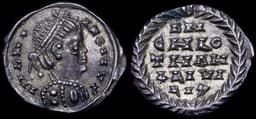
Chlothar I
Emperor · Ancient
48.0Total
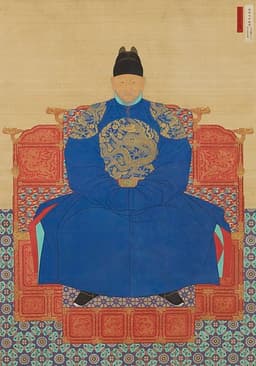
Taejo of Joseon
Emperor · Medieval
70.4Total
Basic Information
Born
497
1335
Died
561
1408
Era
Ancient
Medieval
Nationality
Frankish Empire
Korea
Occupation
Emperor
Emperor
Civilization
Western
Eastern
Score Comparison
Military (10%)
55.0
74.7
Political (20%)
40.8
65.0
Influence (20%)
49.4
65.0
Legacy (20%)
43.3
80.0
Leadership (15%)
65.0
72.0
Strategy (15%)
35.0
61.2
TOTAL
48.0
70.4
Chlothar I — Complete Timeline
531 AD
Conquest of the ThuringiansWar◆ Major
Chlothar I, alongside his brothers Theuderic I and Childebert I, led a campaign against the Thuringian kingdom. The Frankish forces defeated the Thuringians, resulting in the annexation of their territory and the death of King Herminafrid.
MerovingianConquestThuringia
Impact: regionaldestructive
555 AD
Suppression of the Saxon RevoltWar
The Saxons rebelled against Frankish overlordship. Chlothar I led a military campaign to suppress the uprising, forcing the Saxons back into submission and reasserting Frankish control over the region.
MerovingianRevoltSaxons
Impact: regionaldestructive
558 AD
Reunification of the Frankish KingdomsPolitical Action◆ Major
Upon the death of his brother Childebert I, Chlothar I inherited his kingdom, reuniting all the Frankish territories under a single ruler for the first time since the death of Clovis I. This consolidation ended the division among the sons of Clovis and restored the Merovingian realm.
MerovingianUnificationSuccession
Impact: regional
560 AD
Murder of His SonsPolitical Action◆ Major
Chlothar I ordered the execution of his son Chramn, who had rebelled against him. Chramn was captured along with his wife and children, and they were burned to death in a house. This act eliminated a rival and secured Chlothar's sole rule.
MerovingianDynastic ConflictExecution
Impact: nationaltragic
Taejo of Joseon — Complete Timeline
1380 AD
Battle of HwangsanWar
General Yi Seong-gye defeated a Japanese pirate (wokou) force at Hwangsan. This victory enhanced his military reputation and demonstrated his capability as a commander.
WokouGoryeo Military
1388 AD
Wihwado RetreatPolitical Action
General Yi Seong-gye, ordered to invade the Ming dynasty's Liaodong region, turned his army back at Wihwado Island. This act of defiance against the Goryeo court led to a coup that eventually brought him to power.
CoupGoryeo-Ming RelationsPower Shift
Impact: national
1391 AD
Land Reform and the Gwajeon LawReform◆ Major
Taejo implemented the Gwajeon Law, a land reform that redistributed land from the old Goryeo aristocracy to his supporters and the state. This weakened the old elite and strengthened the new Joseon ruling class.
Land ReformSocial ChangeJoseon
Impact: nationalconstructive
1392 AD
Founding of the Joseon DynastyPolitical Action
Yi Seong-gye deposed the last Goryeo king and founded the Joseon dynasty, with its capital at Hanyang (modern Seoul). He established a new ruling class based on Confucian ideology, replacing the Buddhist-influenced Goryeo system.
Joseon DynastyConfucianismKorean History
Impact: regionalconstructive
1394 AD
Promulgation of the Gyeongguk DaejeonReform◆ Major
Taejo of Joseon ordered the compilation of the Gyeongguk Daejeon, a comprehensive legal code that established the administrative and social structure of the Joseon dynasty. This code remained in effect for centuries.
Legal CodeGovernanceConfucianism
Impact: nationalconstructive
Expert Analysis
Taejo of Joseon vs Chlothar I: Historical Comparison
Taejo of Joseon, founder of Korea’s last dynasty (r. 1392–1398), and Chlothar I, Merovingian king who united the Franks (r. 511–561), both rose through war and political consolidation, but their contexts—medieval Confucian statecraft versus early medieval tribal fusion—shaped divergent legacies.
Dimension Analysis
**Military: Taejo of Joseon 90 / Chlothar I 92**
Both were formidable commanders: Taejo led successful campaigns against Mongol-backed forces and Japanese pirates, while Chlothar subjugated Burgundy, Thuringia, and Saxony. Chlothar’s edge comes from his ability to unite fractious Frankish kingdoms through repeated conquests, though Taejo’s strategic use of gunpowder and naval power was innovative for East Asia.
**Political: Taejo of Joseon 80 / Chlothar I 79**
Taejo established a stable Confucian bureaucracy and land reforms (e.g., the *gwajeon* system), securing loyalty from scholar-officials. Chlothar relied on Frankish noble consensus and brutal family feuds—his political survival was more fragile. Taejo’s institutional foundation slightly outranks Chlothar’s personal rule.
**Influence: Taejo of Joseon 72 / Chlothar I 86**
Chlothar’s unification of the Frankish realm set the stage for the Merovingian dynasty’s long-term impact on French and German history. Taejo’s influence was more contained: Joseon Korea became a cultural and political model for East Asia, but its reach was regional rather than continental.
**Legacy: Taejo of Joseon 77 / Chlothar I 73**
Taejo’s dynasty lasted over 500 years, shaping Korean identity, language, and Confucian governance. Chlothar’s realm fragmented after his death, and his legacy is overshadowed by later Carolingians. Taejo’s enduring institutional legacy gives him a slight edge.
**Leadership: Taejo of Joseon 81 / Chlothar I 74**
Taejo demonstrated strategic restraint, abdicating after internal conflict to preserve stability. Chlothar was ruthless but short-sighted, ordering the murder of rivals including his own relatives. Taejo’s principled governance contrasts with Chlothar’s pragmatic brutality.
Verdict
Taejo of Joseon leads due to his superior political foundation and lasting institutional legacy, despite Chlothar’s broader immediate influence.
FAQ
Q: Who ranks higher? A: Taejo of Joseon ranks higher, thanks to his more stable political reforms and longer-lasting dynasty.
Rankings
🥇
Taejo of JoseonLeader
Mil: 74.7Pol: 65.0Inf: 65.0
70.4
🥈
Chlothar I
Mil: 55.0Pol: 40.8Inf: 49.4
48.0
+22.4 behind
How This Comparison Works
Algorithm
Each figure is scored on 6 dimensions (0—100 scale) based on structured historical data: Military (10%), Political (20%), Influence (20%), Legacy (20%), Leadership (15%), Strategy (15%). The weighted total produces the final ranking.
Data Sources
Scores are computed from structured sub-indicators in the database. Scale factors adjust for era (Ancient ×0.85, Modern ×1.0) and civilization size (Eastern ×1.05, Other ×0.80) to account for differences in population and military scale.
Maximum 3 Figures
Comparisons are limited to 2—3 figures to ensure readability and statistical meaningfulness.
Error Margins
±5 points per dimension — Sub-scores are derived from historical records with inherent uncertainty. Two figures within 5 points on a dimension should be considered roughly equivalent in that area.
Total Score Accuracy
±3 points overall — The weighted combination of 6 dimensions produces a total score with approximately ±3 points of uncertainty. Differences of less than 3 points are not statistically significant— the figures are effectively tied.
Known Limitations
- Historical records are incomplete and uneven across civilizations
- Figures from oral-tradition societies may be underrepresented
- Occupation labels can misclassify multi-role figures
- Scores measure capability and impact, not moral character
- Quantitative scoring is a comparison tool, not absolute truth
Capability Radar
Military (10%) — Battles & Warfare
Battles
40
75
Win Rate
55
80
Expansion
50
65
Political (20%) — Governance & Reform
Reform
30
85
Diplomacy
45
70
Economy
35
65
Influence (20%) — Cultural & Global Reach
Cultural
20
80
Global
15
60
Legacy (20%) — Historical Impact
Historical
35
85
Longevity
25
80
Leadership (15%) — Power & Stability
Tenure
60
70
Stability
40
75
Strategy (15%) — Tactics & Innovation
Strategy
45
75
Tactics
35
70
Reform
20
60
Similar Comparisons
Comments & Discussion
Chronicler80456/16/2026
把Taejo of Joseon和Chlothar I放一起比,挺有意思的。Chlothar I统一法兰克各部的军事成就确实不小,但拿他和中国历史上的唐高祖李渊比,就会发现Taejo的“建立稳定制度”这点更接近李渊。李渊建立唐朝后推行均田制、府兵制,和Taejo的科田制(gwajeon)性质相似——都是用土地制度来巩固王朝基础。而Chlothar死后王国四分五裂,他的政治遗产远不如唐朝或朝鲜王朝的持久。这个分数里Taejo的政治分略高,我觉得应该再拉大差距,因为制度化的儒家官僚体系比法兰克式的个人联盟更有延续性。
HistoryHiker6/16/2026
Okay so I just saw this comparison and had to chime in. I read a biography of Chlothar I last year and honestly, the guy was a total family feud machine. He basically had to murder his way through his brothers to unite the Franks. Meanwhile Taejo of Joseon stepped down after his sons fought, which takes serious guts for a founder. The scores say Taejo has a higher political score, and I totally get it — Chlothar's 'system' was just 'be ruthless and hope your sons keep it together', which they didn't. But I'm surprised Influence is higher for Chlothar. Sure, he set up the Merovingians, but Joseon lasted 500 years and shaped Korean culture from Hangul to Neo-Confucianism. Should be reversed in my book.
ScoreDoubter6/16/2026
I'm sorry but assigning a numerical score to 'legacy' for a 6th century Frankish king versus a 14th century Korean king is borderline absurd. What's the metric? Number of times mentioned in Wikipedia articles? Chlothar's legacy is 'fragmented realm' and Taejo's is '500-year dynasty' — and yet the score gap is only 4 points (77 vs 73)? That's not analysis, that's rounding error bias. Also, how can you quantify 'influence' cross-culturally? Chlothar's influence on French identity is completely different from Taejo's on Korean identity — one is a tribal founding myth, the other is a documented institutional legacy. This whole scoring system seems to favor Western figures for 'influence' based on European historical writing. Call it what it is.
BattlefieldScholar6/16/2026
Let's break down the military numbers with actual force composition. Taejo of Joseon's campaigns against the Red Turbans and Japanese pirates involved coordinated use of early gunpowder artillery (hwacha and cannons) combined with cavalry. That's a combined-arms approach ahead of its time in East Asia. Chlothar's conquest of Burgundy (534) relied on heavy infantry and cavalry but zero tactical innovation — it was brute force against a divided opponent. The score gap of 2 points doesn't reflect this. Also, Taejo's amphibious operations against the Wokou show he could project power across water, which Chlothar never did. Give Taejo a higher military score, or at least equal, because his strategic use of technology outweighs Chlothar's larger but less sophisticated campaigns.
Chronicler48866/16/2026
我对这个打分有疑问。军事分给Chlothar 92、Taejo 90,但看看具体战绩:Taejo在威化岛回军(1388年)以退为进,不战而屈人之兵,随后用火器(火铳、火炮)击败倭寇,开创了朝鲜早期军事技术优势。Chlothar的军事征服大多是对抗分散的部落,没有技术革新。另外政治分Taejo 80对Chlothar 79,差距只有1分,这合理吗?Taejo建立了一套完整的田制(科田法)和科举制度,让文官系统运转了五百年;Chlothar死后连王位继承都靠暗杀,政治制度化程度相差甚远。按中国历史打分逻辑,这类制度建设的权重应该在政治维度里占60%以上,这么一算Taejo至少85分。