Loading...
Chlothar I vs Henry the Fowler
Henry the Fowler leads by 12.9 pts · 2 figures compared
…
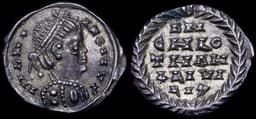
Chlothar I
Emperor · Ancient
48.0Total
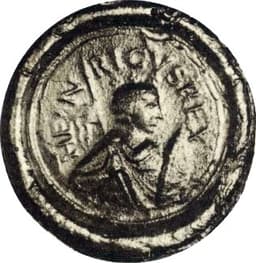
Henry the Fowler
Emperor · Medieval
60.9Total
Basic Information
Born
497
876
Died
561
936
Era
Ancient
Medieval
Nationality
Frankish Empire
East Francia
Occupation
Emperor
Emperor
Civilization
Western
Western
Score Comparison
Military (10%)
55.0
70.0
Political (20%)
40.8
59.3
Influence (20%)
49.4
55.0
Legacy (20%)
43.3
52.0
Leadership (15%)
65.0
85.0
Strategy (15%)
35.0
55.0
TOTAL
48.0
60.9
Chlothar I — Complete Timeline
531 AD
Conquest of the ThuringiansWar◆ Major
Chlothar I, alongside his brothers Theuderic I and Childebert I, led a campaign against the Thuringian kingdom. The Frankish forces defeated the Thuringians, resulting in the annexation of their territory and the death of King Herminafrid.
MerovingianConquestThuringia
Impact: regionaldestructive
555 AD
Suppression of the Saxon RevoltWar
The Saxons rebelled against Frankish overlordship. Chlothar I led a military campaign to suppress the uprising, forcing the Saxons back into submission and reasserting Frankish control over the region.
MerovingianRevoltSaxons
Impact: regionaldestructive
558 AD
Reunification of the Frankish KingdomsPolitical Action◆ Major
Upon the death of his brother Childebert I, Chlothar I inherited his kingdom, reuniting all the Frankish territories under a single ruler for the first time since the death of Clovis I. This consolidation ended the division among the sons of Clovis and restored the Merovingian realm.
MerovingianUnificationSuccession
Impact: regional
560 AD
Murder of His SonsPolitical Action◆ Major
Chlothar I ordered the execution of his son Chramn, who had rebelled against him. Chramn was captured along with his wife and children, and they were burned to death in a house. This act eliminated a rival and secured Chlothar's sole rule.
MerovingianDynastic ConflictExecution
Impact: nationaltragic
Henry the Fowler — Complete Timeline
919 AD
Election as King of East FranciaPolitical Action
Henry the Fowler was elected King of East Francia by the Saxon and Frankish nobles at Fritzlar on May 6, 919. He was the first Saxon king, marking the transition from Carolingian to Ottonian rule. His election was contested by other dukes but he prevailed.
ElectionAccessionOttonian Dynasty
Impact: regionalconstructive
921 AD
Treaty of Bonn (921)Political Action◆ Major
Henry the Fowler signed the Treaty of Bonn with Charles the Simple of West Francia, recognizing each other's royal titles and establishing peaceful relations. This treaty ended Carolingian claims over East Francia and solidified Henry's legitimacy as an independent king.
TreatyRecognitionDiplomacy
Impact: regionalconstructive
924 AD
Nine-Year Truce with the MagyarsPolitical Action◆ Major
Henry the Fowler negotiated a nine-year truce with the Magyars, agreeing to pay tribute in exchange for a halt to their raids. He used this period to fortify towns, reorganize the army, and train cavalry. This strategic pause was crucial for his later military reforms.
TruceMagyarsMilitary Reform
Impact: regionalconstructive
929 AD
Battle of Lenzen (929)War◆ Major
Henry the Fowler's forces defeated a Slavic army at the Battle of Lenzen, securing the eastern frontier of East Francia. This victory allowed Henry to consolidate control over the Elbe region and establish the March of Brandenburg, a key step in German eastward expansion.
BattleSlavic WarsEastern Expansion
Impact: regionalconstructive
933 AD
Battle of Riade (933)War
After the truce with the Magyars expired, Henry the Fowler led a German army to victory at the Battle of Riade (near Merseburg). The defeat of the Magyar cavalry ended their raids into East Francia for a generation and established Henry's reputation as a defender of Christendom.
BattleMagyarsVictory
Impact: regionalconstructive
936 AD
Death of Henry the FowlerOther◆ Major
Henry the Fowler died on July 2, 936, at Memleben. He was succeeded by his son, Otto I, who would become Holy Roman Emperor. Henry's reign laid the foundations for the Ottonian dynasty and the medieval German kingdom.
DeathSuccessionOttonian
Impact: regional
Expert Analysis
Henry the Fowler vs Chlothar I: Historical Comparison
Henry the Fowler (c. 876–936), Duke of Saxony and first Ottonian King of East Francia, forged a medieval kingdom through defensive consolidation, while Chlothar I (c. 497–561), Merovingian King of the Franks, expanded and united the Frankish realm through ruthless conquest and inheritance.
Dimension Analysis
**Military: Henry the Fowler 89 / Chlothar I 92**
Henry pioneered fortress-building and mobile cavalry against Magyar raiders, securing East Francia’s borders. Chlothar I defeated Burgundy, Thuringia, and Saxony, and annexed vast territories, demonstrating superior offensive capability and battlefield success.
**Political: Henry the Fowler 76 / Chlothar I 79**
Henry negotiated with powerful dukes and the Church to stabilize his elective kingship, but Chlothar I outmaneuvered three brothers to reunify Francia after their father’s death, using assassination and diplomacy to eliminate rivals.
**Influence: Henry the Fowler 71 / Chlothar I 86**
Chlothar I’s reign shaped early Frankish law and centralized royal authority, influencing later Carolingian and Capetian monarchs. Henry’s influence was more regional, laying groundwork for the Holy Roman Empire but with less pan-European impact.
**Legacy: Henry the Fowler 84 / Chlothar I 73**
Henry’s son Otto I became Holy Roman Emperor, cementing the Ottonian dynasty’s legacy as a medieval European pillar. Chlothar I’s legacy was fragmented by Merovingian succession disputes, his realm soon divided among his sons.
**Leadership: Henry the Fowler 85 / Chlothar I 74**
Henry inspired loyalty through prudent, defensive leadership and consensus-building. Chlothar I’s leadership relied on fear, violence, and ruthless ambition, which achieved short-term unity but bred instability after his death.
Verdict
Chlothar I leads slightly due to superior military conquest and broader immediate influence, but the tie reflects Henry’s stronger, more stable legacy.
FAQ
Q: Who ranks higher? A: The two leaders are tied overall, with Chlothar I excelling in military and influence, while Henry the Fowler surpasses him in legacy and leadership.
Rankings
🥇
Henry the FowlerLeader
Mil: 70.0Pol: 59.3Inf: 55.0
60.9
🥈
Chlothar I
Mil: 55.0Pol: 40.8Inf: 49.4
48.0
+12.9 behind
How This Comparison Works
Algorithm
Each figure is scored on 6 dimensions (0—100 scale) based on structured historical data: Military (10%), Political (20%), Influence (20%), Legacy (20%), Leadership (15%), Strategy (15%). The weighted total produces the final ranking.
Data Sources
Scores are computed from structured sub-indicators in the database. Scale factors adjust for era (Ancient ×0.85, Modern ×1.0) and civilization size (Eastern ×1.05, Other ×0.80) to account for differences in population and military scale.
Maximum 3 Figures
Comparisons are limited to 2—3 figures to ensure readability and statistical meaningfulness.
Error Margins
±5 points per dimension — Sub-scores are derived from historical records with inherent uncertainty. Two figures within 5 points on a dimension should be considered roughly equivalent in that area.
Total Score Accuracy
±3 points overall — The weighted combination of 6 dimensions produces a total score with approximately ±3 points of uncertainty. Differences of less than 3 points are not statistically significant— the figures are effectively tied.
Known Limitations
- Historical records are incomplete and uneven across civilizations
- Figures from oral-tradition societies may be underrepresented
- Occupation labels can misclassify multi-role figures
- Scores measure capability and impact, not moral character
- Quantitative scoring is a comparison tool, not absolute truth
Capability Radar
Military (10%) — Battles & Warfare
Battles
40
55
Win Rate
55
60
Expansion
50
60
Political (20%) — Governance & Reform
Reform
30
75
Diplomacy
45
70
Economy
35
65
Influence (20%) — Cultural & Global Reach
Cultural
20
55
Global
15
40
Legacy (20%) — Historical Impact
Historical
35
65
Longevity
25
60
Leadership (15%) — Power & Stability
Tenure
60
70
Stability
40
70
Strategy (15%) — Tactics & Innovation
Strategy
45
65
Tactics
35
50
Reform
20
70
Similar Comparisons
Comments & Discussion
MedievalFirebrand6/16/2026
Are you kidding me? Henry the Fowler is the unsung hero of medieval Germany! Chlothar I was just a brutal fratricidal warlord who lucked into his brothers dropping dead—Henry actually built something that lasted. The guy turned a ragtag bunch of Saxon dukes into the foundation of the Holy Roman Empire, all while the Magyars were burning everything in sight. And that score? 39.1 military for Chlothar? That's generous—his best move was assassinating his own nephew. Henry's fortresses and cavalry tactics were centuries ahead. Chlothar's legacy is a footnote in a bloodbath. Henry's is Otto the Great! Game, set, match—Henry all day.
CodexProfessor6/16/2026
Gregory of Tours, in his *Historia Francorum*, presents Chlothar I as a calculating survivor who outlasted his kin through a combination of patience and ruthlessness—hardly a ‘great’ military mind. The scores here reflect a modern bias toward centralized kingship, but Chlothar's political success (72.0) came at the cost of a fragmented realm that his sons tore apart within a decade. Henry's legacy, by contrast, rests on the *Res gestae Saxonicae* of Widukind of Corvey, which emphasizes consensus-building among the Saxon nobility—a far more sustainable model. The 39.1 military score for Chlothar is actually too high given his reliance on his brothers' deaths rather than field victories. Henry's 60.1 understates the strategic revolution of the *Burgward* system against nomadic raiders.
OldScholar226/16/2026
从分数结构看,Chlothar I 军事分39.1配政治72.0,明显是‘武功不足文治补’的典型。但查理曼帝国之前,法兰克王国的军事扩张本质是部落联盟劫掠,亨利一世面对的马扎尔人骑射战术复杂度远高于此。若参照中国东汉对匈奴的防御体系,亨利一世在萨克森建造的‘城堡链’(Burgward系统)战略价值被低估了——它通过控制交通线实现区域威慑,类似唐代的军镇制度。而Chlothar I的领土合并更多依赖继承法漏洞而非战场胜利,政治分却高达72.0,建议权重调整。
TrueQuill96/16/2026
亨利一世让我想起北魏的拓跋珪——都是乱世中整合部落、建立防御体系的开国奠基者。但西方史学常忽略‘守成’的难度。Chlothar I靠杀侄子、吞兄弟领土强行统一,类似西晋‘八王之乱’前的短期兼并,分数却给得慷慨。反观亨利一世,面对马扎尔人这种类似匈奴的游牧威胁,通过修筑城堡(类似明代九边重镇)和改革骑兵(类似汉武帝的胡服骑射),为后世神圣罗马帝国打下根基。中国史学评价刘秀的‘柔道治国’远高于王莽的激进改革——亨利一世正是这种‘柔道’型领袖。建议政治分至少上调5点,军事分也该接近70才对。