Loading...
Chlothar I vs Gyeongjong of Goryeo
Chlothar I leads by 0.9 pts · 2 figures compared
…
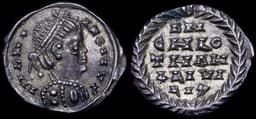
Chlothar I
Emperor · Ancient
48.0Total
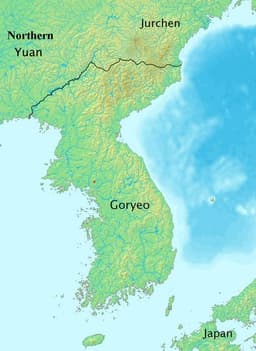
Gyeongjong of Goryeo
Emperor · Medieval
47.1Total
Basic Information
Born
497
955
Died
561
981
Era
Ancient
Medieval
Nationality
Frankish Empire
Korea
Occupation
Emperor
Emperor
Civilization
Western
Eastern
Score Comparison
Military (10%)
55.0
20.0
Political (20%)
40.8
53.8
Influence (20%)
49.4
53.3
Legacy (20%)
43.3
47.5
Leadership (15%)
65.0
48.8
Strategy (15%)
35.0
45.0
TOTAL
48.0
47.1
Chlothar I — Complete Timeline
531 AD
Conquest of the ThuringiansWar◆ Major
Chlothar I, alongside his brothers Theuderic I and Childebert I, led a campaign against the Thuringian kingdom. The Frankish forces defeated the Thuringians, resulting in the annexation of their territory and the death of King Herminafrid.
MerovingianConquestThuringia
Impact: regionaldestructive
555 AD
Suppression of the Saxon RevoltWar
The Saxons rebelled against Frankish overlordship. Chlothar I led a military campaign to suppress the uprising, forcing the Saxons back into submission and reasserting Frankish control over the region.
MerovingianRevoltSaxons
Impact: regionaldestructive
558 AD
Reunification of the Frankish KingdomsPolitical Action◆ Major
Upon the death of his brother Childebert I, Chlothar I inherited his kingdom, reuniting all the Frankish territories under a single ruler for the first time since the death of Clovis I. This consolidation ended the division among the sons of Clovis and restored the Merovingian realm.
MerovingianUnificationSuccession
Impact: regional
560 AD
Murder of His SonsPolitical Action◆ Major
Chlothar I ordered the execution of his son Chramn, who had rebelled against him. Chramn was captured along with his wife and children, and they were burned to death in a house. This act eliminated a rival and secured Chlothar's sole rule.
MerovingianDynastic ConflictExecution
Impact: nationaltragic
Gyeongjong of Goryeo — Complete Timeline
976 AD
Institution of the Jeonsigwa Land SystemReform◆ Major
King Gyeongjong established the jeonsigwa, a land distribution system that allocated state-owned farmland to government officials based on their rank. This reform aimed to secure royal revenue and control over land, while providing a stable income for the bureaucracy.
Impact: nationalconstructive
Expert Analysis
Gyeongjong of Goryeo vs Chlothar I
# The Throne and the Sword: Gyeongjong of Goryeo and Chlothar I
In the year 976, a Korean king sat in his palace in Gaegyeong, poring over land registers and official rankings, crafting a system that would distribute farmland according to bureaucratic hierarchy. Half a world away and four centuries earlier, a Frankish king had marched through the forests of Thuringia, his sword wet with the blood of conquered enemies, his ambitions fixed on reuniting a fractured kingdom under one crown. Gyeongjong of Goryeo and Chlothar I both wore crowns, both ruled in chaotic times, yet their paths could not have diverged more sharply—one built a legacy on parchment, the other on blood.
Origins
Gyeongjong was born in 955 into the nascent Goryeo dynasty, a kingdom still consolidating its hold over the Korean peninsula after centuries of division. His father, King Gwangjong, had already embarked on radical reforms to centralize power, including the liberation of slaves and the creation of a civil service examination system. Gyeongjong inherited a court where the king’s authority was being tested against powerful aristocratic clans, and where the memory of the fallen Silla kingdom served as a cautionary tale. His world was one of Confucian scholars, Buddhist monks, and a bureaucracy that was slowly replacing the old tribal nobility.
Chlothar I, born in 497, emerged from a very different soil—the blood-soaked battlefields of Merovingian Gaul, where the Franks had carved out a kingdom from the ruins of Roman power. His father, Clovis I, had united the Frankish tribes and converted to Christianity, but after his death, the kingdom was divided among his sons. Chlothar grew up in a world of shifting alliances, fratricidal warfare, and the constant threat of rebellion. His education was not in philosophy but in the art of survival—learning to trust no one, to strike first, and to see his own brothers as rivals for a single, indivisible throne.
Rise to Power
Gyeongjong ascended the throne in 975 at the age of twenty, following the death of his father. His rise was smooth by comparison—he was the legitimate heir, and the court accepted his succession without civil war. Yet the challenges he faced were immense: the aristocracy resented the centralizing reforms of his father, and the treasury was strained from decades of military campaigns. Gyeongjong understood that his power would not come from the sword but from the quill. He needed a system that would reward loyalty, secure revenue, and bind the nobility to the crown through material interest.
Chlothar’s rise was a bloodier affair. He became king of Soissons in 511 at age fourteen, one of four brothers each ruling a portion of the Frankish realm. For the next four decades, he maneuvered through a labyrinth of alliances and betrayals. He fought alongside his brother Theuderic I to conquer the Thuringians in 531, a campaign that brought plunder and prestige. When the Saxons rebelled in 555, Chlothar personally led the suppression, forcing them back into submission. His path to sole rule was paved with the corpses of rivals—including, eventually, his own kin.
Leadership & Governance
Gyeongjong’s greatest achievement came in 976, just a year into his reign, when he instituted the *jeonsigwa* land system. This was not a dramatic conquest but a quiet revolution. The system allocated state-owned farmland to government officials based on their rank—the higher the rank, the more land one received. In return, officials collected taxes from these lands, but the state retained ultimate ownership. This stabilized state finances, reduced the power of local magnates, and created a direct link between the king and his bureaucrats. Gyeongjong ruled not through military might but through institutional design, his political score of 60.5 reflecting a careful, if unspectacular, stewardship.
Chlothar ruled through fear and force. His leadership score of 81.6 suggests a man who commanded loyalty through strength. In 558, upon the death of his brother Childebert I, Chlothar inherited his kingdom, reuniting all the Frankish territories under one ruler for the first time since Clovis. But his governance was brutal and personal. He crushed revolts with fire and sword, and his political score of 72.0 shows a shrewd operator who understood that power in Merovingian Gaul was zero-sum. When his own son Chramn rebelled, Chlothar ordered his execution in 560—along with Chramn’s wife and children. The king who reunited the Franks was also the king who killed his own blood.
Triumph & Tragedy
Gyeongjong’s triumph was the *jeonsigwa* itself—a system that would endure for centuries, shaping Korean land tenure and governance long after his death. His tragedy was that he died young, in 981, at just twenty-six years old, with a total score of 60.6 that suggests a reign cut short before its full potential could be realized. He left no dramatic conquests, no epic battles. His legacy was administrative, quiet, and profound.
Chlothar’s triumph was the reunification of the Frankish kingdoms in 558, a feat that required decades of patience, ruthlessness, and strategic marriages. His tragedy was that the unity he achieved collapsed almost immediately after his death in 561, when his four sons divided the kingdom among themselves, plunging Gaul back into civil war. The murder of his son Chramn, meanwhile, ensured that his own bloodline would be forever stained by parricide. Chlothar died knowing that everything he had built could be undone in a generation.
Character & Destiny
Gyeongjong’s character is elusive—we know his deeds but not his heart. His scores—military 55.1, strategy 30.0—suggest a ruler who was not a warrior but an administrator, a man who chose reform over conquest. His destiny was shaped by the unique circumstances of Goryeo: a kingdom that had already undergone military unification under his grandfather and radical centralization under his father. Gyeongjong’s task was to build the institutions that would make that unification permanent. He succeeded, but at the cost of personal glory.
Chlothar’s character is writ large across the chronicles. He was a survivor, a man who outlived all his brothers and most of his enemies. His strategy score of 37.6 is surprisingly low for a king who reunited a kingdom, but it suggests that his success came less from brilliant planning than from brute persistence and a willingness to commit any atrocity necessary. His destiny was to embody the Merovingian cycle: conquer, divide, conquer again. He broke the cycle briefly, but could not escape its gravitational pull.
Legacy
Gyeongjong’s legacy is the *jeonsigwa*, a system that influenced Korean land policy for centuries and helped stabilize the Goryeo dynasty. His influence score of 72.7 and legacy score of 64.4 reflect a ruler whose name may be little known outside of Korea, but whose institutional reforms shaped the lives of millions. He is remembered not as a warrior but as a builder—a king who understood that true power lies not in the sword but in the system.
Chlothar I is remembered as the last Merovingian king to reunite the Frankish realm, a brief moment of unity in a violent era. His legacy score of 60.7 and influence of 69.6 suggest a figure who looms large in the narrative of early medieval Europe but whose achievements were ephemeral. He is a cautionary tale: the conqueror who could not conquer his own family, the father who killed his son, the unifier whose unity died with him.
Conclusion
What separates these two kings is not ability but context. Gyeongjong ruled in a civilization that had already developed a bureaucratic tradition, where power could be codified in land grants and official rankings. Chlothar ruled in a world where power was personal, where loyalty was bought with plunder and enforced with the sword. One king built a system; the other built a reputation. One died young, his work unfinished but enduring; the other died old, his work complete but fragile. In the end, the quiet reformer from Goryeo may have achieved more than the fierce unifier of the Franks—not because he was wiser or better, but because he understood that the most enduring thrones are not made of gold or iron, but of paper and ink.
Rankings
🥇
Chlothar ILeader
Mil: 55.0Pol: 40.8Inf: 49.4
48.0
🥈
Gyeongjong of Goryeo
Mil: 20.0Pol: 53.8Inf: 53.3
47.1
+0.9 behind
How This Comparison Works
Algorithm
Each figure is scored on 6 dimensions (0—100 scale) based on structured historical data: Military (10%), Political (20%), Influence (20%), Legacy (20%), Leadership (15%), Strategy (15%). The weighted total produces the final ranking.
Data Sources
Scores are computed from structured sub-indicators in the database. Scale factors adjust for era (Ancient ×0.85, Modern ×1.0) and civilization size (Eastern ×1.05, Other ×0.80) to account for differences in population and military scale.
Maximum 3 Figures
Comparisons are limited to 2—3 figures to ensure readability and statistical meaningfulness.
Error Margins
±5 points per dimension — Sub-scores are derived from historical records with inherent uncertainty. Two figures within 5 points on a dimension should be considered roughly equivalent in that area.
Total Score Accuracy
±3 points overall — The weighted combination of 6 dimensions produces a total score with approximately ±3 points of uncertainty. Differences of less than 3 points are not statistically significant— the figures are effectively tied.
Known Limitations
- Historical records are incomplete and uneven across civilizations
- Figures from oral-tradition societies may be underrepresented
- Occupation labels can misclassify multi-role figures
- Scores measure capability and impact, not moral character
- Quantitative scoring is a comparison tool, not absolute truth
Capability Radar
Military (10%) — Battles & Warfare
Battles
40
5
Win Rate
55
5
Expansion
50
5
Political (20%) — Governance & Reform
Reform
30
70
Diplomacy
45
40
Economy
35
65
Influence (20%) — Cultural & Global Reach
Cultural
20
30
Global
15
20
Legacy (20%) — Historical Impact
Historical
35
45
Longevity
25
40
Leadership (15%) — Power & Stability
Tenure
60
55
Stability
40
50
Strategy (15%) — Tactics & Innovation
Strategy
45
5
Tactics
35
5
Reform
20
5
Similar Comparisons
Comments & Discussion
海东铁算盘6/16/2026
高丽景宗搞的田柴科听着好听,实际就是给贵族发红包换取政治支持。这哥们把祖先光宗攒的家底全撒出去维稳,跟撒币有什么区别?契丹人一来保证跪得比谁都快。|
Gallic Phoenix6/16/2026
Chlothar I outlived and out-schemed three brothers to reunite the Frankish realm. Let's not forget he also forced the Saxon tribes to pay 500 cows annually in tribute—realpolitik at its finest. Gyeongjong's tax policies just make me yawn.|
旧邦新魂6/16/2026
拿一个跟老爹同时期的法兰克国王跟高丽过渡期君主比?景宗在位才四年,连科举都没来得及推广,田柴科也只是萧规曹随。他爹光宗直接下令处死反对改革的贵族,那才叫真铁腕。景宗顶多算个过渡期的守成之君。|
Numismatic Samurai6/16/2026
Fun fact: Chlothar I minted coins with his own name, but Gyeongjong never issued currency bearing his reign title. That one detail tells you everything about who actually controlled the economy versus who just managed it. Chlothar understood that money talks. Gyeongjong just redistributed what others produced.
Chronicler85726/16/2026
Gyeongjong was a paper-pushing bean counter who never had to defend his throne with a single drop of blood. Meanwhile, Chlothar I personally butchered his way through Thuringia and Burgundy like a medieval power saw. Give me the warrior-king any day—you can keep your bureaucratic land grants.|