Loading...
Chilperic I vs Napoleon Bonaparte
Napoleon Bonaparte leads by 31.3 pts · 2 figures compared
…
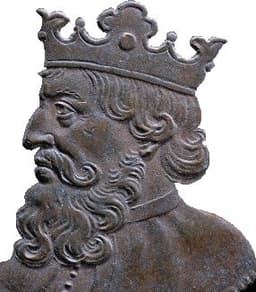
Chilperic I
Emperor · Medieval
39.6Total

Napoleon Bonaparte
General · Modern
70.9Total
Basic Information
Born
539
1769
Died
584
1821
Era
Medieval
Modern
Nationality
Frankish Empire
France
Occupation
Emperor
General
Civilization
Western
Western
Score Comparison
Military (10%)
45.0
94.0
Political (20%)
26.4
72.0
Influence (20%)
47.1
40.0
Legacy (20%)
38.3
80.0
Leadership (15%)
41.5
78.0
Strategy (15%)
35.7
90.0
TOTAL
39.6
70.9
Chilperic I — Complete Timeline
573 AD
War with Sigebert IWar◆ Major
Chilperic I invaded Austrasia, triggering a civil war with his brother Sigebert I. The conflict involved shifting alliances and battles across Neustria and Austrasia, including the siege of Tournai. It ended inconclusively with Sigebert's assassination.
MerovingianCivil WarNeustria
Impact: regionaldestructive
575 AD
Assassination of Sigebert IPolitical Action◆ Major
Chilperic I's wife Fredegund is believed to have orchestrated the assassination of Sigebert I, king of Austrasia and Chilperic's brother. Sigebert was stabbed with poisoned daggers at Vitry-en-Artois, ending the conflict between Neustria and Austrasia temporarily.
MerovingianAssassinationFredegund
Impact: regionaldestructive
579 AD
Tax Reforms and Conflicts with the ChurchReform
Chilperic I attempted to impose new taxes on church lands and property, leading to conflict with bishops, particularly Gregory of Tours. The reforms were resisted and eventually abandoned after widespread opposition and ecclesiastical condemnation.
MerovingianTaxationChurch Conflict
Impact: nationaldestructive
580 AD
Construction of the Circus at SoissonsCultural
Chilperic I ordered the construction of a circus (hippodrome) in Soissons, imitating Roman spectacles. This project reflected his interest in Roman culture and his desire to project imperial authority, though it was criticized by contemporaries like Gregory of Tours.
MerovingianArchitectureRoman Influence
Napoleon Bonaparte — Complete Timeline
1799 AD
Coup of 18 BrumaireOther◆ Major
Napoleon Bonaparte, with support from his brother Lucien and key political figures, overthrew the Directory in a bloodless coup. He established the Consulate with himself as First Consul, effectively becoming the ruler of France. This event ended the French Revolution's most unstable period.
French RevolutionCoupRise to Power
Impact: regional
1804 AD
Promulgation of the Napoleonic CodeOther◆ Major
Napoleon enacted the Civil Code of the French, known as the Napoleonic Code, a comprehensive set of laws that replaced the fragmented feudal legal systems. The code established legal equality, protected property rights, and secularized law. It became the basis for legal systems in many European and world countries.
Legal ReformNapoleonic CodeCivil Law
Impact: globalconstructive
1805 AD
Battle of AusterlitzWar◆ Major
Napoleon's Grande Arm
Napoleonic WarsBattleDecisive Victory
Impact: global
1812 AD
Invasion of RussiaWar◆ Major
Napoleon led the Grande Arm
Napoleonic WarsInvasionDisaster
Impact: globaldestructive
1815 AD
Battle of WaterlooWar◆ Major
Napoleon's French army was defeated by the combined forces of the Duke of Wellington's Anglo-Allied army and Gebhard Leberecht von Bl
Napoleonic WarsBattleFinal Defeat
Impact: globaldestructive
Expert Analysis
Origins
Chilperic I (c. 539–584) was a Merovingian king of Neustria, one of the four sons of Clotaire I. Born into the Frankish royal family, he inherited a portion of the kingdom upon his father's death in 561. His early life was marked by familial intrigue and rivalry with his brothers, particularly Sigebert I of Austrasia. He received a basic education typical of Merovingian nobility, with some exposure to Roman culture, as evidenced by his interest in building a circus.
Napoleon Bonaparte (1769–1821) was born on Corsica to a minor Italian noble family. He studied at the military academy of Brienne and later at the École Militaire in Paris, graduating as an artillery officer in 1785. His upbringing in a politically turbulent Corsica and his education under the Ancien Régime shaped his ambitions and strategic thinking.
Rise to Power
Chilperic I rose to power through inheritance and conflict. After Clotaire I's death, Chilperic seized the treasury and expanded his territory, but his aggression led to war with his brother Sigebert I. In 575, Sigebert was assassinated, likely orchestrated by Chilperic's wife Fredegund, which temporarily gave Chilperic an advantage. However, his reign was marked by constant warfare with other Frankish kings and nobles.
Napoleon's rise was meteoric. He distinguished himself during the Siege of Toulon in 1793, earning promotion to brigadier general. His Italian campaign of 1796–1797 brought him fame and power. In 1799, he staged the Coup of 18 Brumaire, overthrowing the Directory and establishing the Consulate, with himself as First Consul. By 1804, he crowned himself Emperor of the French.
Leadership & Governance
Chilperic I ruled Neustria as a typical Merovingian king, relying on personal authority and control over land. He attempted tax reforms, including new levies on church lands, which sparked conflict with bishops like Gregory of Tours. His governance was decentralized, with power shared among local nobles. He also built a circus in Soissons to emulate Roman spectacles, but his reign saw limited institutional development.
Napoleon centralized power and reformed French governance. He enacted the Napoleonic Code in 1804, a comprehensive legal system that influenced many countries. He established the Bank of France, reformed education, and created a meritocratic bureaucracy. His leadership scored 78.0, while Chilperic's leadership scored 39.0, reflecting Napoleon's efficient administration versus Chilperic's feudal instability.
Triumph & Tragedy
Chilperic I's greatest success was surviving the civil war against Sigebert I and expanding Neustria's territory. However, his assassination in 584 ended his reign, and his policies alienated the church. His legacy is overshadowed by the more powerful Merovingian kings.
Napoleon's triumphs include the Battle of Austerlitz (1805), where he decisively defeated the Austro-Russian army, and the Napoleonic Code. His tragedy was the failed Invasion of Russia in 1812, where his Grande Armée was decimated. His final defeat at Waterloo in 1815 ended his rule. Despite this, his influence on modern law and military strategy is immense.
Character & Destiny
Chilperic I was calculating and ruthless, as seen in his involvement in Sigebert's assassination. He was also culturally curious, but his inability to secure lasting peace led to his downfall. Historical assessments portray him as a typical Merovingian ruler, limited by the era's constraints.
Napoleon was ambitious, charismatic, and a military genius. His strategic score of 90.0 reflects his mastery of warfare. However, his overconfidence and refusal to compromise led to his exile. He once said, "Impossible is a word to be found only in the dictionary of fools."
Legacy
Chilperic I's legacy is minimal; he is remembered mainly as a minor Merovingian king. His influence score of 62.5 is modest.
Napoleon's legacy is profound. The Napoleonic Code remains the basis of civil law in many countries. His military tactics are studied in academies worldwide. He scored 80.0 in legacy and 40.0 in influence, but his overall impact dwarfs Chilperic's.
Conclusion
Napoleon Bonaparte had a far greater impact on history than Chilperic I. With a total score of 70.9 compared to Chilperic's 49.8, Napoleon's military, political, and legal reforms shaped the modern world. Chilperic's reign was confined to a turbulent period of Frankish history, while Napoleon's influence spans continents and centuries.
Rankings
🥇
Napoleon BonaparteLeader
Mil: 94.0Pol: 72.0Inf: 40.0
70.9
🥈
Chilperic I
Mil: 45.0Pol: 26.4Inf: 47.1
39.6
+31.3 behind
How This Comparison Works
Algorithm
Each figure is scored on 6 dimensions (0—100 scale) based on structured historical data: Military (10%), Political (20%), Influence (20%), Legacy (20%), Leadership (15%), Strategy (15%). The weighted total produces the final ranking.
Data Sources
Scores are computed from structured sub-indicators in the database. Scale factors adjust for era (Ancient ×0.85, Modern ×1.0) and civilization size (Eastern ×1.05, Other ×0.80) to account for differences in population and military scale.
Maximum 3 Figures
Comparisons are limited to 2—3 figures to ensure readability and statistical meaningfulness.
Error Margins
±5 points per dimension — Sub-scores are derived from historical records with inherent uncertainty. Two figures within 5 points on a dimension should be considered roughly equivalent in that area.
Total Score Accuracy
±3 points overall — The weighted combination of 6 dimensions produces a total score with approximately ±3 points of uncertainty. Differences of less than 3 points are not statistically significant— the figures are effectively tied.
Known Limitations
- Historical records are incomplete and uneven across civilizations
- Figures from oral-tradition societies may be underrepresented
- Occupation labels can misclassify multi-role figures
- Scores measure capability and impact, not moral character
- Quantitative scoring is a comparison tool, not absolute truth
Capability Radar
Military (10%) — Battles & Warfare
Battles
30
95
Win Rate
25
90
Expansion
20
95
Political (20%) — Governance & Reform
Reform
20
95
Diplomacy
25
80
Economy
15
85
Influence (20%) — Cultural & Global Reach
Cultural
15
85
Global
5
90
Legacy (20%) — Historical Impact
Historical
20
95
Longevity
10
90
Leadership (15%) — Power & Stability
Tenure
40
85
Stability
10
70
Strategy (15%) — Tactics & Innovation
Strategy
15
95
Tactics
20
98
Reform
10
92
Similar Comparisons
Comments & Discussion
No comments yet. Be the first to share your thoughts!