Loading...
Chilperic I vs Julius Caesar
Julius Caesar leads by 43.2 pts · 2 figures compared
…
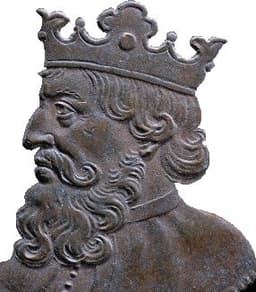
Chilperic I
Emperor · Medieval
39.6Total

Julius Caesar
General · Ancient
82.8Total
Basic Information
Born
539
-100
Died
584
-44
Era
Medieval
Ancient
Nationality
Frankish Empire
Roman Republic
Occupation
Emperor
General
Civilization
Western
Western
Score Comparison
Military (10%)
45.0
88.0
Political (20%)
26.4
78.0
Influence (20%)
47.1
85.0
Legacy (20%)
38.3
82.0
Leadership (15%)
41.5
80.0
Strategy (15%)
35.7
85.0
TOTAL
39.6
82.8
Chilperic I — Complete Timeline
573 AD
War with Sigebert IWar◆ Major
Chilperic I invaded Austrasia, triggering a civil war with his brother Sigebert I. The conflict involved shifting alliances and battles across Neustria and Austrasia, including the siege of Tournai. It ended inconclusively with Sigebert's assassination.
MerovingianCivil WarNeustria
Impact: regionaldestructive
575 AD
Assassination of Sigebert IPolitical Action◆ Major
Chilperic I's wife Fredegund is believed to have orchestrated the assassination of Sigebert I, king of Austrasia and Chilperic's brother. Sigebert was stabbed with poisoned daggers at Vitry-en-Artois, ending the conflict between Neustria and Austrasia temporarily.
MerovingianAssassinationFredegund
Impact: regionaldestructive
579 AD
Tax Reforms and Conflicts with the ChurchReform
Chilperic I attempted to impose new taxes on church lands and property, leading to conflict with bishops, particularly Gregory of Tours. The reforms were resisted and eventually abandoned after widespread opposition and ecclesiastical condemnation.
MerovingianTaxationChurch Conflict
Impact: nationaldestructive
580 AD
Construction of the Circus at SoissonsCultural
Chilperic I ordered the construction of a circus (hippodrome) in Soissons, imitating Roman spectacles. This project reflected his interest in Roman culture and his desire to project imperial authority, though it was criticized by contemporaries like Gregory of Tours.
MerovingianArchitectureRoman Influence
Julius Caesar — Complete Timeline
58 BC
Gallic WarsWar◆ Major
Caesar, as proconsul of Gaul, launched a series of campaigns that conquered all of Gaul (modern France, Belgium, and parts of Switzerland). He fought numerous battles, including against the Helvetii, the Belgae, and the Gallic chieftain Vercingetorix. The wars brought immense wealth and a loyal army to Caesar.
Gallic WarsConquestRoman Expansion
Impact: regional
49 BC
Crossing the RubiconPolitical Action◆ Major
Caesar led Legio XIII across the Rubicon River into Italy, defying the Roman Senate's order to disband his army. This act triggered a civil war against Pompey and the Optimates, ultimately leading to Caesar's dictatorship and the end of the Roman Republic.
Roman Civil WarEnd of RepublicPower Struggle
Impact: global
48 BC
Battle of PharsalusWar◆ Major
Caesar's outnumbered army defeated the larger forces of Pompey the Great at Pharsalus in Greece. Caesar's tactical use of a reserve line to counter Pompey's cavalry charge proved decisive. Pompey fled to Egypt, where he was assassinated, leaving Caesar as the undisputed master of the Roman world.
Roman Civil WarBattleDecisive Victory
Impact: regional
44 BC
Appointment as Dictator for LifePolitical Action◆ Major
The Roman Senate appointed Caesar dictator perpetuo (dictator for life), granting him unprecedented personal power. This move concentrated military, legislative, and judicial authority in one person, effectively ending the Roman Republic's traditional system of checks and balances and alarming many senators.
DictatorshipEnd of RepublicPower Consolidation
Impact: regionaldestructive
Assassination on the Ides of MarchPolitical Action◆ Major
A group of Roman senators, led by Marcus Junius Brutus and Gaius Cassius Longinus, stabbed Caesar to death at a meeting of the Senate in the Theatre of Pompey. The assassination was intended to restore the Republic, but instead triggered another civil war that led to the rise of the Roman Empire.
AssassinationRoman PoliticsEnd of Republic
Impact: globaldestructive
Expert Analysis
chilperic-i-vs-julius-caesar
# The Ides of Two Kings
On March 15, 44 BCE, a group of Roman senators surrounded Gaius Julius Caesar in the Theatre of Pompey and stabbed him twenty-three times. He fell at the feet of a statue of his rival Pompey, blood pooling on the marble floor. Nearly 630 years later, in 584 CE, another king met his end by the blade: Chilperic I of Neustria, returning from a hunt near his villa at Chelles, was stabbed by an unknown assassin—perhaps, as rumors had it, at the instigation of his own queen, Fredegund, or a bishop he had wronged. Both rulers died by violence. But the worlds they left behind could not have been more different. What separates Caesar, the architect of an empire that would shape Western civilization for millennia, from Chilperic, a Merovingian king whose name barely registers outside specialist histories? The answer lies not in their deaths, but in how they lived.
Origins
Caesar was born into the patrician Julian clan, one of Rome’s oldest families, but his branch had lost political influence. His youth unfolded against the backdrop of the Republic's death throes: civil wars, the conspiracy of Catiline, the rise of populist generals. From the start, Caesar understood that in Rome, power came not from birth alone but from ambition, charm, and the willingness to break rules. He learned to read crowds, to borrow money he could not repay, and to cultivate an image of invincibility.
Chilperic, by contrast, was born into a different kind of crisis. The Merovingian dynasty, founded by Clovis I, had carved out a Frankish kingdom from the ruins of Roman Gaul. But by Chilperic’s time, the kingdom had been divided among heirs—a custom that bred endless fraternal war. Chilperic’s father, Clotaire I, had reunited the realm through murder and conquest, but upon his death in 561, the kingdom split again. Chilperic received Neustria, the northwestern portion, a land of fertile fields and Roman ruins. He was not a visionary. He was a king by accident of birth, in a world where kingship meant little more than the ability to hold onto what your father gave you.
Rise to Power
Caesar’s rise was a masterclass in calculated risk. He climbed the Roman political ladder—quaestor, aedile, praetor—but his true ascent began in 58 BCE, when he secured command of Gaul. Over eight years, he conquered a vast territory, built a loyal army, and amassed wealth that made him a threat to the Senate. When ordered to disband his forces, he crossed the Rubicon River in 49 BCE, a line no Roman general was permitted to cross with an army. "The die is cast," he reportedly said. Civil war followed. Within three years, Caesar stood alone.
Chilperic’s rise was less a climb than a scramble. He became king of Neustria in 561, but his reign was immediately contested by his brothers: Sigebert I of Austrasia, Guntram of Burgundy, and Charibert of Paris. Chilperic was the youngest, the most aggressive, and the least secure. In 573, he invaded Austrasia, launching a war that would drag on for years. He was not a conqueror of worlds; he was a man fighting for scraps.
Leadership & Governance
Caesar governed with audacity and vision. As dictator, he reformed the calendar, granted citizenship to provincials, launched public works projects, and centralized authority in his own hands. He understood that the Republic could not survive without transformation—and he was willing to destroy it to save it. His military genius was undeniable: at Alesia, he besieged 80,000 Gauls while simultaneously fending off a relief army, a feat of logistics and nerve that remains a textbook example of strategic brilliance.
Chilperic’s governance was reactive and petty. In 579, he attempted to impose new taxes on church lands, sparking open conflict with bishops like Gregory of Tours. Gregory recorded that Chilperic once complained, "No one is more clever than I am... I have written two books of poetry." The king fancied himself a theologian, adding a letter to the alphabet and insisting that the Trinity be described in unorthodox terms. His circus at Soissons, built in 580 to imitate Roman spectacles, was less a cultural revival than a desperate attempt to borrow glory he could not earn. His wars were not campaigns of conquest but cycles of raid and counter-raid, fueled by personal vendettas and the machinations of his wife, Fredegund.
Triumph & Tragedy
Caesar’s greatest triumph was his conquest of Gaul, which doubled Rome’s territory and brought him legendary status. His tragedy was the Ides of March: having achieved total power, he failed to anticipate the hatred of those he had sidelined. He died not in battle, but in betrayal—a reminder that in politics, victory is never final.
Chilperic’s moment of triumph came in 575, when his wife Fredegund allegedly orchestrated the assassination of his brother Sigebert I. For a brief time, Chilperic seemed ascendant. But his tragedy was that he never truly rose. His kingdom remained unstable, his authority contested, his name forgotten outside a handful of chronicles. His death in 584—stabbed by a stranger—was less a political earthquake than a footnote.
Character & Destiny
Caesar was restless, brilliant, and ruthless. He forgave enemies but never forgot them. He gambled everything on his own talent and won—until he lost. His personality shaped history because he believed he could reshape the world. He was wrong only about the timing of his own fall.
Chilperic was paranoid, vain, and cruel. He burned tax records, tortured his enemies, and quarreled with bishops. His personality shaped nothing beyond the borders of his small kingdom. He was a product of his era—the brutal, fragmented world of Merovingian Gaul—but he never transcended it. Where Caesar saw a continent to conquer, Chilperic saw only his brothers.
Legacy
Caesar’s legacy is immeasurable. He gave his name to emperors (Caesar, Kaiser, Tsar), to a month (July), and to a model of leadership that echoes through the ages. The Roman Empire he set in motion lasted another five centuries in the West, and a thousand more in the East. His writings, particularly the *Commentaries on the Gallic War*, remain classics of military literature.
Chilperic’s legacy is a few lines in Gregory of Tours’ *History of the Franks*, a mention of his circus, and the faint echo of a king who tried to play at empire but lacked the stage. He is remembered, if at all, as a cautionary tale: that power without vision is merely violence.
Conclusion
The difference between Caesar and Chilperic is not merely one of scale, but of imagination. Caesar understood that history belonged to those who dared to write it. Chilperic, trapped in a world of petty feuds and inherited thrones, could see no further than his own borders. Both were assassinated. But one shaped the future; the other was swallowed by the past. The Ides of March gave us a martyr and a legend. The hunt at Chelles gave us a corpse and a footnote. In the end, what separates a titan from a footnote is not luck, but the ability to dream beyond the moment—and the will to make that dream real, whatever the cost.
Rankings
🥇
Julius CaesarLeader
Mil: 88.0Pol: 78.0Inf: 85.0
82.8
🥈
Chilperic I
Mil: 45.0Pol: 26.4Inf: 47.1
39.6
+43.2 behind
How This Comparison Works
Algorithm
Each figure is scored on 6 dimensions (0—100 scale) based on structured historical data: Military (10%), Political (20%), Influence (20%), Legacy (20%), Leadership (15%), Strategy (15%). The weighted total produces the final ranking.
Data Sources
Scores are computed from structured sub-indicators in the database. Scale factors adjust for era (Ancient ×0.85, Modern ×1.0) and civilization size (Eastern ×1.05, Other ×0.80) to account for differences in population and military scale.
Maximum 3 Figures
Comparisons are limited to 2—3 figures to ensure readability and statistical meaningfulness.
Error Margins
±5 points per dimension — Sub-scores are derived from historical records with inherent uncertainty. Two figures within 5 points on a dimension should be considered roughly equivalent in that area.
Total Score Accuracy
±3 points overall — The weighted combination of 6 dimensions produces a total score with approximately ±3 points of uncertainty. Differences of less than 3 points are not statistically significant— the figures are effectively tied.
Known Limitations
- Historical records are incomplete and uneven across civilizations
- Figures from oral-tradition societies may be underrepresented
- Occupation labels can misclassify multi-role figures
- Scores measure capability and impact, not moral character
- Quantitative scoring is a comparison tool, not absolute truth
Capability Radar
Military (10%) — Battles & Warfare
Battles
30
95
Win Rate
25
92
Expansion
20
97
Political (20%) — Governance & Reform
Reform
20
90
Diplomacy
25
85
Economy
15
82
Influence (20%) — Cultural & Global Reach
Cultural
15
88
Global
5
94
Legacy (20%) — Historical Impact
Historical
20
95
Longevity
10
96
Leadership (15%) — Power & Stability
Tenure
40
75
Stability
10
60
Strategy (15%) — Tactics & Innovation
Strategy
15
94
Tactics
20
96
Reform
10
88
Similar Comparisons
Comments & Discussion
GallicGhost6/17/2026
Forget Caesar’s dramatic Senate murder—Chilperic’s assassination while hunting is the real historical gem. He was a Merovingian nobody who tried to mimic Roman grandeur by writing bad poetry and persecuting bishops. Caesar reshaped history; Chilperic’s biggest claim is maybe getting offed by his own wife Fredegund. One built an empire, the other ruined a kingdom. Case closed.
法兰克草根6/17/2026
别拿凯撒的元老院刺杀说事,希尔佩里克打猎时被暗杀才更有历史味道。这个法兰克乡下王模仿罗马派头,写烂诗、欺负主教,结果被自己王后搞死。凯撒改变了整个西方文明,希尔佩里克连百科词条都没几个人读。死法相似,分量天差地别。
StatsAxe6/17/2026
Objectively, the comparison is skewed by survivorship bias. We have mountains of Caesar’s own writings, political propaganda, and later Roman historians; for Chilperic, we get Gregory of Tours’ hostile chronicle and a few Merovingian charters. Adjust for source quality and Chilperic looks less pathetic—he consolidated Neustrian power, clashed with bishops, and left a son, Clotaire II. Caesar’s grand narrative is partly self-crafted. Don’t let literary bias fool you.
数据利刃6/17/2026
客观说,这对比有幸存者偏差。凯撒留下了大量自述、宣传和罗马史料;希尔佩里克只有图尔主教格里高利的敌对记录和几份法兰克文书。考虑史料质量,希尔佩里克并不差——他统一了纽斯特里亚王权,跟主教斗争,还留个儿子克洛泰尔二世。凯撒的宏伟大叙事多半是自吹自擂。别文学偏见蒙蔽双眼。
LiteratusLeo6/17/2026
Caesar was a decisive political and military genius who dismantled a republic and created an imperial template that defined Europe for centuries. Chilperic I was a Merovingian footnote, famous mostly for quarrels with bishops and a messy domestic life—his queen Fredegund allegedly killed his previous wife. One reached for eternity; the other barely outran his own court gossip. The difference isn’t just scale; it’s ambition.
文献之狮6/17/2026
凯撒是政治与军事的天才,亲手拆掉共和制,构建了影响欧洲千年的帝国模板。希尔佩里克一世不过是法兰克边角料,以跟主教吵架和为情杀出名——他王后弗里德贡德可能杀了他前妻。一个追求永恒,一个连宫廷八卦都逃不掉。差别不在规模,在野心。
OldWorldCritic6/17/2026
Modern readers romanticize Caesar, forgetting his genocidal campaigns in Gaul, his debt-fueled rise, and his seizure of