Loading...
This comparison has not been analyzed yet.
One-time AI generation (~1 minute). Scores and timeline are already available below.
Chiang Ching-kuo vs Wang Yi
Chiang Ching-kuo leads by 9.0 pts · 2 figures compared
…
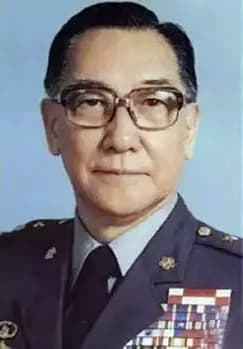
Chiang Ching-kuo
Politician · Modern
58.9Total

Wang Yi
Politician · Modern
49.9Total
Basic Information
Born
1910
1953
Died
1988
—
Era
Modern
Modern
Nationality
China
China
Occupation
Politician
Politician
Civilization
Eastern
Eastern
Score Comparison
Military (10%)
36.6
14.6
Political (20%)
72.0
68.0
Influence (20%)
56.7
56.4
Legacy (20%)
52.0
42.5
Leadership (15%)
80.0
66.0
Strategy (15%)
52.8
36.5
TOTAL
58.9
49.9
Chiang Ching-kuo — Complete Timeline
1972 AD
Formation of the Kuomintang ReformPolitical Action
Chiang Ching-kuo initiated reforms within the Kuomintang to reduce corruption and increase Taiwanese representation. He promoted younger, technocratic leaders and implemented policies to integrate native Taiwanese into the party and government, strengthening the KMT's legitimacy.
KMTPolitical ReformTaiwan
Impact: nationalconstructive
1973 AD
Ten Major Construction ProjectsReform◆ Major
As Premier, Chiang Ching-kuo launched the Ten Major Construction Projects, including highways, railways, airports, and a steel mill. These infrastructure investments modernized Taiwan's economy, improved transportation, and laid the foundation for its export-oriented industrialization.
InfrastructureEconomic DevelopmentTaiwan
Impact: nationalconstructive
1987 AD
Lifting of Martial LawPolitical Action
Chiang Ching-kuo lifted martial law in Taiwan, ending 38 years of military rule. This decision allowed the formation of new political parties, restored civil liberties, and initiated a democratic transition, including the legalization of the Democratic Progressive Party.
DemocratizationMartial LawTaiwan
Impact: nationalprogressive
Opening of Family Visits to Mainland ChinaPolitical Action◆ Major
Chiang Ching-kuo allowed Taiwanese civilians to visit relatives in mainland China for the first time since 1949. This policy ended decades of separation for many families and initiated a gradual thaw in cross-strait relations, though official contacts remained limited.
Cross-Strait RelationsFamily ReunificationTaiwan
Impact: regionalconstructive
Wang Yi — Complete Timeline
2013 AD
Appointed Foreign Minister of ChinaPolitical Action◆ Major
Wang Yi was appointed as the Minister of Foreign Affairs of the People's Republic of China, succeeding Yang Jiechi. He became the chief diplomat responsible for implementing China's foreign policy, including its assertive stance in the South China Sea and Belt and Road Initiative.
DiplomacyChinese Foreign PolicyAppointment
Impact: global
Belt and Road Initiative DiplomacyPolitical Action◆ Major
As foreign minister, Wang Yi promoted the Belt and Road Initiative globally, securing participation from over 140 countries. He negotiated infrastructure and investment agreements, expanding China's economic influence across Asia, Africa, and Europe.
Belt and RoadEconomic DiplomacyInfrastructure
Impact: globalconstructive
2016 AD
South China Sea Arbitration Ruling ResponsePolitical Action◆ Major
Wang Yi led China's diplomatic rejection of the Permanent Court of Arbitration's ruling on the South China Sea dispute, which invalidated China's historical claims. He maintained China's position of non-acceptance and non-participation, escalating tensions with neighboring countries and the United States.
South China SeaInternational LawDiplomatic Conflict
Impact: regionaldestructive
2020 AD
COVID-19 Diplomatic ResponsePolitical Action◆ Major
Wang Yi managed China's diplomatic response to the COVID-19 pandemic, including mask diplomacy and vaccine distribution. He faced criticism for China's initial handling of the outbreak and engaged in disputes with the United States over the virus's origin.
COVID-19Pandemic DiplomacyChina-US Relations
Impact: global
This comparison has not been analyzed yet.
One-time AI generation (~1 minute). Scores and timeline are already available below.
Rankings
🥇
Chiang Ching-kuoLeader
Mil: 36.6Pol: 72.0Inf: 56.7
58.9
🥈
Wang Yi
Mil: 14.6Pol: 68.0Inf: 56.4
49.9
+9.0 behind
How This Comparison Works
Algorithm
Each figure is scored on 6 dimensions (0—100 scale) based on structured historical data: Military (10%), Political (20%), Influence (20%), Legacy (20%), Leadership (15%), Strategy (15%). The weighted total produces the final ranking.
Data Sources
Scores are computed from structured sub-indicators in the database. Scale factors adjust for era (Ancient ×0.85, Modern ×1.0) and civilization size (Eastern ×1.05, Other ×0.80) to account for differences in population and military scale.
Maximum 3 Figures
Comparisons are limited to 2—3 figures to ensure readability and statistical meaningfulness.
Error Margins
±5 points per dimension — Sub-scores are derived from historical records with inherent uncertainty. Two figures within 5 points on a dimension should be considered roughly equivalent in that area.
Total Score Accuracy
±3 points overall — The weighted combination of 6 dimensions produces a total score with approximately ±3 points of uncertainty. Differences of less than 3 points are not statistically significant— the figures are effectively tied.
Known Limitations
- Historical records are incomplete and uneven across civilizations
- Figures from oral-tradition societies may be underrepresented
- Occupation labels can misclassify multi-role figures
- Scores measure capability and impact, not moral character
- Quantitative scoring is a comparison tool, not absolute truth
Capability Radar
Military (10%) — Battles & Warfare
Battles
5
12
Win Rate
5
20
Expansion
5
19
Political (20%) — Governance & Reform
Reform
85
40
Diplomacy
70
75
Economy
90
30
Influence (20%) — Cultural & Global Reach
Cultural
60
20
Global
55
50
Legacy (20%) — Historical Impact
Historical
70
30
Longevity
60
25
Leadership (15%) — Power & Stability
Tenure
75
60
Stability
80
55
Strategy (15%) — Tactics & Innovation
Strategy
5
24
Tactics
5
25
Reform
5
27
Similar Comparisons
Comments & Discussion
No comments yet. Be the first to share your thoughts!