Loading...
Chiang Ching-kuo vs Punsalmaagiin Ochirbat
Chiang Ching-kuo leads by 12.7 pts · 2 figures compared
…
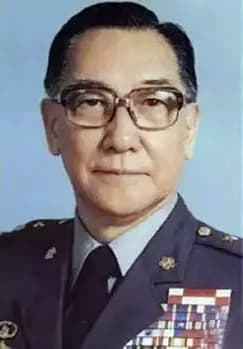
Chiang Ching-kuo
Politician · Modern
58.9Total

Punsalmaagiin Ochirbat
Politician · Modern
46.2Total
Basic Information
Born
1910
1942
Died
1988
—
Era
Modern
Modern
Nationality
China
Mongolia
Occupation
Politician
Politician
Civilization
Eastern
Eastern
Score Comparison
Military (10%)
36.6
10.6
Political (20%)
72.0
53.8
Influence (20%)
56.7
52.5
Legacy (20%)
52.0
45.0
Leadership (15%)
80.0
68.0
Strategy (15%)
52.8
25.2
TOTAL
58.9
46.2
Chiang Ching-kuo — Complete Timeline
1972 AD
Formation of the Kuomintang ReformPolitical Action
Chiang Ching-kuo initiated reforms within the Kuomintang to reduce corruption and increase Taiwanese representation. He promoted younger, technocratic leaders and implemented policies to integrate native Taiwanese into the party and government, strengthening the KMT's legitimacy.
KMTPolitical ReformTaiwan
Impact: nationalconstructive
1973 AD
Ten Major Construction ProjectsReform◆ Major
As Premier, Chiang Ching-kuo launched the Ten Major Construction Projects, including highways, railways, airports, and a steel mill. These infrastructure investments modernized Taiwan's economy, improved transportation, and laid the foundation for its export-oriented industrialization.
InfrastructureEconomic DevelopmentTaiwan
Impact: nationalconstructive
1987 AD
Lifting of Martial LawPolitical Action
Chiang Ching-kuo lifted martial law in Taiwan, ending 38 years of military rule. This decision allowed the formation of new political parties, restored civil liberties, and initiated a democratic transition, including the legalization of the Democratic Progressive Party.
DemocratizationMartial LawTaiwan
Impact: nationalprogressive
Opening of Family Visits to Mainland ChinaPolitical Action◆ Major
Chiang Ching-kuo allowed Taiwanese civilians to visit relatives in mainland China for the first time since 1949. This policy ended decades of separation for many families and initiated a gradual thaw in cross-strait relations, though official contacts remained limited.
Cross-Strait RelationsFamily ReunificationTaiwan
Impact: regionalconstructive
Punsalmaagiin Ochirbat — Complete Timeline
1990 AD
Election as First President of MongoliaPolitical Action
Punsalmaagiin Ochirbat was elected as the first president of Mongolia following the peaceful democratic revolution. His election marked the end of communist rule and the transition to a multi-party democracy.
Democratic RevolutionPresidencyMongolia
Impact: nationalprogressive
1991 AD
Economic Reforms and PrivatizationReform◆ Major
Ochirbat initiated economic reforms, including privatization of state-owned enterprises and transition to a market economy. These reforms faced challenges but laid the foundation for Mongolia's economic development.
Economic ReformPrivatizationMarket Economy
Impact: nationalconstructive
1992 AD
Adoption of New ConstitutionPolitical Action◆ Major
Under Ochirbat's presidency, Mongolia adopted a new constitution that established a parliamentary system and guaranteed human rights. This constitution replaced the communist-era constitution and solidified democratic reforms.
ConstitutionDemocratic ReformsHuman Rights
Impact: nationalprogressive
Expert Analysis
Origins
Chiang Ching-kuo was born on March 18, 1910, in Fenghua, Zhejiang, China, as the eldest son of Chiang Kai-shek. He spent his formative years in the Soviet Union from 1925 to 1937, where he studied at Sun Yat-sen University and worked in factories, gaining firsthand experience of communism. This period shaped his pragmatic approach to governance. After returning to China, he held various positions in the Kuomintang (KMT) government.
Punsalmaagiin Ochirbat was born on January 26, 1942, in Töv Province, Mongolia. He studied geology at the Irkutsk Polytechnic Institute in the Soviet Union and later worked as a mining engineer. He joined the Mongolian People's Revolutionary Party (MPRP) and rose through the ranks of the communist bureaucracy, serving as Minister of Mineral Resources and later as Chairman of the Council of Ministers (Premier) from 1988 to 1990.
Rise to Power
Chiang Ching-kuo's rise was tied to his father's regime. After the KMT retreated to Taiwan in 1949, he took on key roles, including head of the secret police and later Premier. He gained popularity by rooting out corruption and promoting Taiwanese locals within the KMT. In 1978, he became President of the Republic of China (Taiwan), a position he held until his death in 1988.
Ochirbat's rise came during Mongolia's democratic revolution. As Premier in 1990, he supported pro-democracy protests and resigned from the Politburo to run for president in the first direct presidential election. He won with 61.5% of the vote in September 1990, becoming Mongolia's first democratically elected head of state.
Leadership & Governance
Chiang Ching-kuo's leadership was characterized by pragmatic authoritarianism. He oversaw the Ten Major Construction Projects (1974-1979), which included highways, railways, airports, and a steel mill, transforming Taiwan's infrastructure. Politically, he lifted martial law in 1987, allowing the formation of opposition parties and restoring civil liberties. His governance score is 80.0, reflecting strong leadership but limited democratic reform.
Ochirbat's leadership focused on democratic consolidation. He presided over the adoption of a new constitution in 1992, which established a parliamentary system with a directly elected president. He initiated economic reforms, including privatization of state enterprises, but faced resistance from former communists. His political score is 53.8, reflecting his role as a transitional figure.
Triumph & Tragedy
Chiang Ching-kuo's greatest success was the peaceful democratization of Taiwan, lifting martial law and allowing free elections. His infrastructure projects boosted economic growth, with Taiwan's GDP per capita rising from $1,500 in 1970 to $8,000 by 1988. However, his legacy is marred by his early involvement in the White Terror, where thousands were executed or imprisoned for political dissent. He scored 36.6 in military, reflecting his security background.
Ochirbat's triumph was guiding Mongolia's bloodless transition to democracy, earning him the title 'Father of Mongolian Democracy.' He signed the new constitution and promoted human rights. However, his economic reforms led to hyperinflation and hardship, with poverty rates rising. His strategy score is 25.2, indicating limited effectiveness in policy implementation.
Character & Destiny
Chiang Ching-kuo was known for his frugal lifestyle and hands-on approach, often visiting rural areas. His Soviet experience made him distrustful of both communism and pure capitalism, leading to a mixed economy. His decision to lift martial law was influenced by the 1986 Formosa Incident and pressure from the US. He scored 72.0 in political influence, reflecting his ability to navigate between factions.
Ochirbat was a cautious reformer, often described as a consensus-builder. He prioritized stability over rapid change, which helped avoid violence but slowed economic transformation. His influence score is 52.5, indicating moderate impact beyond Mongolia.
Legacy
Chiang Ching-kuo's legacy endures in Taiwan's democratic institutions and economic prosperity. The KMT continues to invoke his memory, though his authoritarian past remains controversial. His total score is 58.9, with legacy at 52.0.
Ochirbat's legacy is mixed. He is credited with founding Mongolia's democracy, but his economic policies are criticized. Mongolia remains a stable democracy, but poverty persists. His total score is 46.2, with legacy at 45.0.
Conclusion
Chiang Ching-kuo had greater impact, scoring 12.7 points higher overall (58.9 vs 46.2). His decisions shaped Taiwan's destiny, lifting martial law and building infrastructure that fueled decades of growth. While Ochirbat's role in Mongolia's democratization was crucial, his influence was more limited in scope and duration. Chiang's leadership score of 80.0 and political score of 72.0 underscore his effectiveness compared to Ochirbat's 68.0 and 53.8. Thus, Chiang Ching-kuo's reforms had a more profound and lasting effect on his country's trajectory.
Rankings
🥇
Chiang Ching-kuoLeader
Mil: 36.6Pol: 72.0Inf: 56.7
58.9
🥈
Punsalmaagiin Ochirbat
Mil: 10.6Pol: 53.8Inf: 52.5
46.2
+12.7 behind
How This Comparison Works
Algorithm
Each figure is scored on 6 dimensions (0—100 scale) based on structured historical data: Military (10%), Political (20%), Influence (20%), Legacy (20%), Leadership (15%), Strategy (15%). The weighted total produces the final ranking.
Data Sources
Scores are computed from structured sub-indicators in the database. Scale factors adjust for era (Ancient ×0.85, Modern ×1.0) and civilization size (Eastern ×1.05, Other ×0.80) to account for differences in population and military scale.
Maximum 3 Figures
Comparisons are limited to 2—3 figures to ensure readability and statistical meaningfulness.
Error Margins
±5 points per dimension — Sub-scores are derived from historical records with inherent uncertainty. Two figures within 5 points on a dimension should be considered roughly equivalent in that area.
Total Score Accuracy
±3 points overall — The weighted combination of 6 dimensions produces a total score with approximately ±3 points of uncertainty. Differences of less than 3 points are not statistically significant— the figures are effectively tied.
Known Limitations
- Historical records are incomplete and uneven across civilizations
- Figures from oral-tradition societies may be underrepresented
- Occupation labels can misclassify multi-role figures
- Scores measure capability and impact, not moral character
- Quantitative scoring is a comparison tool, not absolute truth
Capability Radar
Military (10%) — Battles & Warfare
Battles
5
14
Win Rate
5
18
Expansion
5
23
Political (20%) — Governance & Reform
Reform
85
70
Diplomacy
70
60
Economy
90
45
Influence (20%) — Cultural & Global Reach
Cultural
60
30
Global
55
25
Legacy (20%) — Historical Impact
Historical
70
40
Longevity
60
30
Leadership (15%) — Power & Stability
Tenure
75
55
Stability
80
50
Strategy (15%) — Tactics & Innovation
Strategy
5
21
Tactics
5
28
Reform
5
31
Similar Comparisons
Comments & Discussion
No comments yet. Be the first to share your thoughts!