Loading...
Chiang Ching-kuo vs Napoleon Bonaparte
Napoleon Bonaparte leads by 12.0 pts · 2 figures compared
…
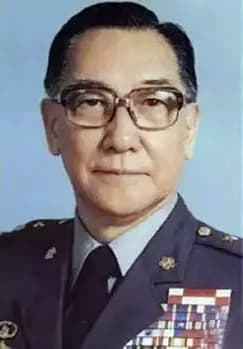
Chiang Ching-kuo
Politician · Modern
58.9Total

Napoleon Bonaparte
General · Modern
70.9Total
Basic Information
Born
1910
1769
Died
1988
1821
Era
Modern
Modern
Nationality
China
France
Occupation
Politician
General
Civilization
Eastern
Western
Score Comparison
Military (10%)
36.6
94.0
Political (20%)
72.0
72.0
Influence (20%)
56.7
40.0
Legacy (20%)
52.0
80.0
Leadership (15%)
80.0
78.0
Strategy (15%)
52.8
90.0
TOTAL
58.9
70.9
Chiang Ching-kuo — Complete Timeline
1972 AD
Formation of the Kuomintang ReformPolitical Action
Chiang Ching-kuo initiated reforms within the Kuomintang to reduce corruption and increase Taiwanese representation. He promoted younger, technocratic leaders and implemented policies to integrate native Taiwanese into the party and government, strengthening the KMT's legitimacy.
KMTPolitical ReformTaiwan
Impact: nationalconstructive
1973 AD
Ten Major Construction ProjectsReform◆ Major
As Premier, Chiang Ching-kuo launched the Ten Major Construction Projects, including highways, railways, airports, and a steel mill. These infrastructure investments modernized Taiwan's economy, improved transportation, and laid the foundation for its export-oriented industrialization.
InfrastructureEconomic DevelopmentTaiwan
Impact: nationalconstructive
1987 AD
Lifting of Martial LawPolitical Action
Chiang Ching-kuo lifted martial law in Taiwan, ending 38 years of military rule. This decision allowed the formation of new political parties, restored civil liberties, and initiated a democratic transition, including the legalization of the Democratic Progressive Party.
DemocratizationMartial LawTaiwan
Impact: nationalprogressive
Opening of Family Visits to Mainland ChinaPolitical Action◆ Major
Chiang Ching-kuo allowed Taiwanese civilians to visit relatives in mainland China for the first time since 1949. This policy ended decades of separation for many families and initiated a gradual thaw in cross-strait relations, though official contacts remained limited.
Cross-Strait RelationsFamily ReunificationTaiwan
Impact: regionalconstructive
Napoleon Bonaparte — Complete Timeline
1799 AD
Coup of 18 BrumaireOther◆ Major
Napoleon Bonaparte, with support from his brother Lucien and key political figures, overthrew the Directory in a bloodless coup. He established the Consulate with himself as First Consul, effectively becoming the ruler of France. This event ended the French Revolution's most unstable period.
French RevolutionCoupRise to Power
Impact: regional
1804 AD
Promulgation of the Napoleonic CodeOther◆ Major
Napoleon enacted the Civil Code of the French, known as the Napoleonic Code, a comprehensive set of laws that replaced the fragmented feudal legal systems. The code established legal equality, protected property rights, and secularized law. It became the basis for legal systems in many European and world countries.
Legal ReformNapoleonic CodeCivil Law
Impact: globalconstructive
1805 AD
Battle of AusterlitzWar◆ Major
Napoleon's Grande Arm
Napoleonic WarsBattleDecisive Victory
Impact: global
1812 AD
Invasion of RussiaWar◆ Major
Napoleon led the Grande Arm
Napoleonic WarsInvasionDisaster
Impact: globaldestructive
1815 AD
Battle of WaterlooWar◆ Major
Napoleon's French army was defeated by the combined forces of the Duke of Wellington's Anglo-Allied army and Gebhard Leberecht von Bl
Napoleonic WarsBattleFinal Defeat
Impact: globaldestructive
Expert Analysis
Origins
Chiang Ching-kuo was born on March 18, 1910, in Fenghua, Zhejiang, China, as the eldest son of Chiang Kai-shek, the future leader of the Republic of China. His early life was shaped by political turmoil and his father's rising influence. At age 15, he was sent to the Soviet Union for education, where he studied at Sun Yat-sen University in Moscow and later worked in factories and collective farms. This exposure to communism profoundly influenced his later policies. He returned to China in 1937 after 12 years abroad, having been held as a hostage during Stalin's purges.
Napoleon Bonaparte was born on August 15, 1769, in Ajaccio, Corsica, to a minor noble family. His father, Carlo Buonaparte, secured a scholarship for Napoleon to study at the Brienne Military Academy in mainland France. He later attended the École Militaire in Paris, graduating as a second lieutenant in artillery. His Corsican origins made him an outsider, but his mathematical aptitude and tactical brilliance set him apart. The French Revolution opened opportunities for rapid advancement.
Rise to Power
Chiang Ching-kuo's rise was gradual and overshadowed by his father. After returning to China, he held minor administrative posts, including a role in Jiangxi province where he suppressed banditry and implemented land reforms. In 1949, following the Communist victory, he fled with his father to Taiwan. There, he led secret police and security forces, consolidating power. In 1972, he became Premier, implementing the Ten Major Construction Projects that modernized Taiwan's infrastructure. After his father's death in 1975, he assumed leadership of the Kuomintang, becoming President in 1978. His power base was built on technocratic competence and gradual reform.
Napoleon's rise was meteoric. He came to prominence during the Siege of Toulon in 1793, where his artillery tactics forced the British fleet to withdraw. Promoted to brigadier general at age 24, he later suppressed a royalist uprising in Paris in 1795. In 1796, he was given command of the French army in Italy, where he won a series of stunning victories against the Austrians. His Italian campaign made him a national hero. In 1799, he returned from Egypt and staged the Coup of 18 Brumaire, overthrowing the Directory and establishing the Consulate with himself as First Consul. By 1804, he crowned himself Emperor of the French.
Leadership & Governance
Chiang Ching-kuo's leadership style was pragmatic and reformist. As President, he emphasized economic development, launching the Ten Major Construction Projects (1974-1979) that included the Sun Yat-sen Freeway, Taoyuan International Airport, and the China Steel Corporation. These projects transformed Taiwan into an export-oriented industrial economy. He also initiated political reforms, culminating in the lifting of martial law in 1987, which allowed the formation of opposition parties and restored civil liberties. His governance score of 80.0 reflects his effective, if gradual, democratization. However, his political score of 72.0 is tempered by his earlier role in authoritarian repression.
Napoleon's leadership was centralized and autocratic. He consolidated power by appointing prefects to govern departments, ensuring loyalty to Paris. His major domestic achievement was the Napoleonic Code (1804), which standardized French law, abolished feudalism, and enshrined equality before the law. He also reformed education, established the Bank of France, and negotiated the Concordat of 1801 with the Catholic Church, stabilizing religious relations. His political score of 72.0 matches Chiang's, but his military score of 94.0 and strategy score of 90.0 far exceed his rival's.
Triumph & Tragedy
Chiang Ching-kuo's greatest triumph was the peaceful transition to democracy. By lifting martial law and allowing family visits to mainland China in 1987, he ended decades of isolation and set Taiwan on a path to democratization. His economic reforms raised Taiwan's GDP per capita from $1,500 in 1970 to over $6,000 by 1988. His failures include the Kaohsiung Incident of 1979, where the government cracked down on pro-democracy activists, and his inability to resolve Taiwan's international status. His legacy score of 52.0 reflects mixed historical assessments.
Napoleon's triumphs are legion: the Battle of Austerlitz (1805) where he defeated the Russian and Austrian armies; the creation of the Confederation of the Rhine; and the spread of the Napoleonic Code across Europe. His tragedies include the disastrous Invasion of Russia (1812), where his Grande Armée of over 600,000 men was reduced to fewer than 100,000 due to scorched-earth tactics and winter; the defeat at Waterloo (1815); and his final exile to Saint Helena. His influence score of 40.0 is surprisingly low, but his legacy score of 80.0 is high due to his legal and administrative reforms.
Character & Destiny
Chiang Ching-kuo was pragmatic, patient, and reform-minded. He learned from his Soviet experience and applied technocratic solutions to Taiwan's development. His character shaped his destiny: he avoided the extremes of his father's authoritarianism and instead chose gradual liberalization. He is often remembered as the 'father of Taiwan's democracy'. However, his early involvement in secret police activities tarnishes his image.
Napoleon was ambitious, brilliant, and ruthless. His strategic genius was matched by an insatiable desire for power, which led to overreach. His character drove him to conquer Europe, but also to make fatal errors, such as the invasion of Russia and the Peninsular War. Historians often cite his inability to compromise as a key flaw. His total score of 70.9 reflects his immense but flawed impact.
Legacy
Chiang Ching-kuo's legacy is primarily in Taiwan: he is credited with transforming the island into a prosperous democracy. The Ten Major Construction Projects remain foundational to Taiwan's infrastructure. His policy of allowing family visits to mainland China eased cross-strait tensions. However, his legacy is contested: some criticize his slow pace of reform and his authoritarian past. His total score of 58.9 places him below Napoleon.
Napoleon's legacy is global. The Napoleonic Code influenced legal systems in Europe, Latin America, and parts of Asia. His military tactics are studied in war colleges worldwide. He reshaped European borders and spread nationalism. However, his wars caused millions of deaths, and his imperial ambitions ultimately failed. His total score of 70.9 reflects his broader but more destructive impact.
Conclusion
Napoleon Bonaparte had a greater impact on world history than Chiang Ching-kuo. While Chiang's democratization of Taiwan was significant, Napoleon's military campaigns and legal reforms reshaped Europe and beyond. Napoleon's total score of 70.9 versus Chiang's 58.9 reflects this disparity. However, Chiang's legacy of peaceful democratic transition offers a model for authoritarian societies, a contrast to Napoleon's violent upheaval. On balance, Napoleon's influence on law, warfare, and national borders is more profound and enduring.
Rankings
🥇
Napoleon BonaparteLeader
Mil: 94.0Pol: 72.0Inf: 40.0
70.9
🥈
Chiang Ching-kuo
Mil: 36.6Pol: 72.0Inf: 56.7
58.9
+12.0 behind
How This Comparison Works
Algorithm
Each figure is scored on 6 dimensions (0—100 scale) based on structured historical data: Military (10%), Political (20%), Influence (20%), Legacy (20%), Leadership (15%), Strategy (15%). The weighted total produces the final ranking.
Data Sources
Scores are computed from structured sub-indicators in the database. Scale factors adjust for era (Ancient ×0.85, Modern ×1.0) and civilization size (Eastern ×1.05, Other ×0.80) to account for differences in population and military scale.
Maximum 3 Figures
Comparisons are limited to 2—3 figures to ensure readability and statistical meaningfulness.
Error Margins
±5 points per dimension — Sub-scores are derived from historical records with inherent uncertainty. Two figures within 5 points on a dimension should be considered roughly equivalent in that area.
Total Score Accuracy
±3 points overall — The weighted combination of 6 dimensions produces a total score with approximately ±3 points of uncertainty. Differences of less than 3 points are not statistically significant— the figures are effectively tied.
Known Limitations
- Historical records are incomplete and uneven across civilizations
- Figures from oral-tradition societies may be underrepresented
- Occupation labels can misclassify multi-role figures
- Scores measure capability and impact, not moral character
- Quantitative scoring is a comparison tool, not absolute truth
Capability Radar
Military (10%) — Battles & Warfare
Battles
5
95
Win Rate
5
90
Expansion
5
95
Political (20%) — Governance & Reform
Reform
85
95
Diplomacy
70
80
Economy
90
85
Influence (20%) — Cultural & Global Reach
Cultural
60
85
Global
55
90
Legacy (20%) — Historical Impact
Historical
70
95
Longevity
60
90
Leadership (15%) — Power & Stability
Tenure
75
85
Stability
80
70
Strategy (15%) — Tactics & Innovation
Strategy
5
95
Tactics
5
98
Reform
5
92
Similar Comparisons
Comments & Discussion
No comments yet. Be the first to share your thoughts!