Loading...
Chiang Ching-kuo vs Julius Caesar
Julius Caesar leads by 23.9 pts · 2 figures compared
…
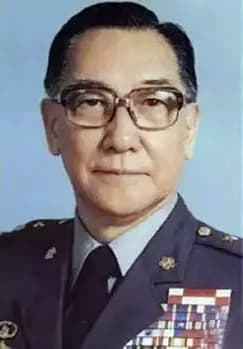
Chiang Ching-kuo
Politician · Modern
58.9Total

Julius Caesar
General · Ancient
82.8Total
Basic Information
Born
1910
-100
Died
1988
-44
Era
Modern
Ancient
Nationality
China
Roman Republic
Occupation
Politician
General
Civilization
Eastern
Western
Score Comparison
Military (10%)
36.6
88.0
Political (20%)
72.0
78.0
Influence (20%)
56.7
85.0
Legacy (20%)
52.0
82.0
Leadership (15%)
80.0
80.0
Strategy (15%)
52.8
85.0
TOTAL
58.9
82.8
Chiang Ching-kuo — Complete Timeline
1972 AD
Formation of the Kuomintang ReformPolitical Action
Chiang Ching-kuo initiated reforms within the Kuomintang to reduce corruption and increase Taiwanese representation. He promoted younger, technocratic leaders and implemented policies to integrate native Taiwanese into the party and government, strengthening the KMT's legitimacy.
KMTPolitical ReformTaiwan
Impact: nationalconstructive
1973 AD
Ten Major Construction ProjectsReform◆ Major
As Premier, Chiang Ching-kuo launched the Ten Major Construction Projects, including highways, railways, airports, and a steel mill. These infrastructure investments modernized Taiwan's economy, improved transportation, and laid the foundation for its export-oriented industrialization.
InfrastructureEconomic DevelopmentTaiwan
Impact: nationalconstructive
1987 AD
Lifting of Martial LawPolitical Action
Chiang Ching-kuo lifted martial law in Taiwan, ending 38 years of military rule. This decision allowed the formation of new political parties, restored civil liberties, and initiated a democratic transition, including the legalization of the Democratic Progressive Party.
DemocratizationMartial LawTaiwan
Impact: nationalprogressive
Opening of Family Visits to Mainland ChinaPolitical Action◆ Major
Chiang Ching-kuo allowed Taiwanese civilians to visit relatives in mainland China for the first time since 1949. This policy ended decades of separation for many families and initiated a gradual thaw in cross-strait relations, though official contacts remained limited.
Cross-Strait RelationsFamily ReunificationTaiwan
Impact: regionalconstructive
Julius Caesar — Complete Timeline
58 BC
Gallic WarsWar◆ Major
Caesar, as proconsul of Gaul, launched a series of campaigns that conquered all of Gaul (modern France, Belgium, and parts of Switzerland). He fought numerous battles, including against the Helvetii, the Belgae, and the Gallic chieftain Vercingetorix. The wars brought immense wealth and a loyal army to Caesar.
Gallic WarsConquestRoman Expansion
Impact: regional
49 BC
Crossing the RubiconPolitical Action◆ Major
Caesar led Legio XIII across the Rubicon River into Italy, defying the Roman Senate's order to disband his army. This act triggered a civil war against Pompey and the Optimates, ultimately leading to Caesar's dictatorship and the end of the Roman Republic.
Roman Civil WarEnd of RepublicPower Struggle
Impact: global
48 BC
Battle of PharsalusWar◆ Major
Caesar's outnumbered army defeated the larger forces of Pompey the Great at Pharsalus in Greece. Caesar's tactical use of a reserve line to counter Pompey's cavalry charge proved decisive. Pompey fled to Egypt, where he was assassinated, leaving Caesar as the undisputed master of the Roman world.
Roman Civil WarBattleDecisive Victory
Impact: regional
44 BC
Appointment as Dictator for LifePolitical Action◆ Major
The Roman Senate appointed Caesar dictator perpetuo (dictator for life), granting him unprecedented personal power. This move concentrated military, legislative, and judicial authority in one person, effectively ending the Roman Republic's traditional system of checks and balances and alarming many senators.
DictatorshipEnd of RepublicPower Consolidation
Impact: regionaldestructive
Assassination on the Ides of MarchPolitical Action◆ Major
A group of Roman senators, led by Marcus Junius Brutus and Gaius Cassius Longinus, stabbed Caesar to death at a meeting of the Senate in the Theatre of Pompey. The assassination was intended to restore the Republic, but instead triggered another civil war that led to the rise of the Roman Empire.
AssassinationRoman PoliticsEnd of Republic
Impact: globaldestructive
Expert Analysis
chiang-ching-kuo-vs-julius-caesar
### The General and the Reformer: Two Paths to Power
On a winter day in 49 BCE, a Roman general stood at the edge of a small, muddy river in northern Italy. The Rubicon was a boundary—a line no commander could cross with his army without declaring war on the Republic itself. Julius Caesar paused, then gave the order. History would never be the same. Two thousand years later, on an island off the coast of China, another leader faced a different kind of crossing. Chiang Ching-kuo, the son of a dictator, had spent decades consolidating power in Taiwan. In 1987, he lifted martial law, ending 38 years of military rule and opening the door to democracy. One man built an empire; the other dismantled a fortress. Both transformed their worlds, but the forces that drove them—and the outcomes they achieved—could not have been more different.
### Origins
Caesar was born into the twilight of the Roman Republic, a world of aristocratic competition and civil strife. His family, the Julii, claimed descent from the goddess Venus, but they were not among the wealthiest or most powerful. From childhood, Caesar learned that in Rome, glory and survival demanded ambition, charm, and a willingness to take risks. He was a product of a culture that worshipped military victory and political cunning—a world where a man’s worth was measured in conquests and laws.
Chiang Ching-kuo’s origins were shaped by a different kind of storm. Born in 1910 in China, he was the son of Chiang Kai-shek, the nationalist leader who would later retreat to Taiwan after losing the Chinese Civil War to Mao Zedong’s Communists. Young Chiang was sent to the Soviet Union as a teenager, where he lived for 12 years, studied Marxism, and even worked in a factory. He returned to China a changed man—pragmatic, disciplined, and deeply aware of the dangers of ideology. While Caesar was forged in the crucible of Roman politics, Chiang was tempered in the furnace of revolution and exile.
### Rise to Power
Caesar’s path to power was a masterclass in audacity. He climbed the Roman political ladder—quaestor, aedile, praetor—but his true breakthrough came in Gaul. From 58 to 50 BCE, he led a series of campaigns that conquered modern-day France and Belgium, amassing a loyal army and immense wealth. His Commentaries on the Gallic Wars were not just a record of battles but a propaganda tool, broadcasting his genius to Rome. When the Senate ordered him to disband his army, he refused. Crossing the Rubicon was not just a military act; it was a declaration that the old rules no longer applied.
Chiang Ching-kuo’s rise was slower, quieter, and more bureaucratic. After returning to China, he worked in local government, learning the gritty details of administration. In Taiwan, he took over the secret police and intelligence services, earning a reputation for ruthlessness. But by the 1970s, he had shifted course. As premier, he launched the Ten Major Construction Projects in 1973—highways, railways, airports, and steel mills that modernized Taiwan’s economy. Unlike Caesar, who seized power through war, Chiang built his authority through infrastructure and reform.
### Leadership & Governance
Caesar ruled as a dictator, but he was no mere tyrant. He reformed the calendar, granted citizenship to provincials, and initiated public works that employed the poor. He centralized power, but he also tried to heal a fractured Republic. His military genius was undeniable—he defeated Pompey’s larger forces at Pharsalus and crushed the last remnants of opposition in Spain and Egypt. Yet his governance was fragile. He relied on personal loyalty, not institutions, and his reforms alienated the aristocracy.
Chiang Ching-kuo governed with a different philosophy. He was a technocrat who believed in results, not glory. He reduced corruption within the Kuomintang, promoted Taiwanese-born officials, and quietly laid the groundwork for democracy. His leadership was marked by patience. He did not crush dissent; he allowed it to grow, then channeled it into institutions. When he lifted martial law in 1987, he also allowed Taiwanese civilians to visit relatives in mainland China for the first time since 1949—a policy that thawed decades of hostility. Where Caesar commanded armies, Chiang built consensus.
### Triumph & Tragedy
Caesar’s greatest triumph was his conquest of Gaul, which doubled the size of Roman territory and made him the most powerful man in the Mediterranean. His greatest tragedy came on the Ides of March in 44 BCE, when a group of senators, led by Brutus and Cassius, stabbed him to death in the Senate chamber. He had achieved everything, but his success had created enemies who feared his ambition.
Chiang Ching-kuo’s triumph was quieter but no less profound. He transformed Taiwan from a poor, authoritarian island into a prosperous, democratic society. His tragedy was that he never saw the full fruits of his labor. He died in 1988, just as Taiwan’s democracy was taking root. His legacy was secure, but he left behind a nation still grappling with its identity—and a son, Chiang Hsiao-wu, who never rose to his father’s stature.
### Character & Destiny
Caesar was a man of boundless energy and ego. He was charming, ruthless, and endlessly calculating. His personality drove him to take risks that others would not—crossing the Rubicon, pardoning his enemies, and accepting the title of dictator for life. That same personality, however, blinded him to the hatred he inspired. He believed his charisma could overcome any obstacle, but it could not overcome a dagger.
Chiang Ching-kuo was introverted and disciplined. He had seen the horrors of Stalin’s Soviet Union and the chaos of China’s civil war. Those experiences made him wary of ideology and committed to pragmatism. He did not seek glory; he sought stability. His destiny was to be a reformer in a family of dictators, a man who used his inherited power to give it away.
### Legacy
Caesar’s legacy is the Roman Empire. His conquests and reforms destroyed the Republic, but they created the framework for centuries of imperial rule. His name became synonymous with power—a title, “Caesar,” that would be used by emperors for millennia. He is remembered as a military genius, a political visionary, and a cautionary tale about ambition.
Chiang Ching-kuo’s legacy is modern Taiwan. He is revered there as the father of democracy and economic development. His scores—military: 27.4, political: 81.3—reflect a leader who chose peace over war, reform over revolution. He is less known in the West, but in East Asia, his story is a rare example of authoritarian rule ending peacefully.
### Conclusion
Caesar and Chiang Ching-kuo both stood at the edge of history, but they looked in opposite directions. Caesar saw a world to conquer; Chiang saw a world to build. One died by the sword; the other died in his bed. Their differences are not just about time or place—they are about the very nature of power. Caesar believed power was something to seize. Chiang believed it was something to use, then release. In the end, both left their marks, but only one left a world that could survive without him.
Rankings
🥇
Julius CaesarLeader
Mil: 88.0Pol: 78.0Inf: 85.0
82.8
🥈
Chiang Ching-kuo
Mil: 36.6Pol: 72.0Inf: 56.7
58.9
+23.9 behind
How This Comparison Works
Algorithm
Each figure is scored on 6 dimensions (0—100 scale) based on structured historical data: Military (10%), Political (20%), Influence (20%), Legacy (20%), Leadership (15%), Strategy (15%). The weighted total produces the final ranking.
Data Sources
Scores are computed from structured sub-indicators in the database. Scale factors adjust for era (Ancient ×0.85, Modern ×1.0) and civilization size (Eastern ×1.05, Other ×0.80) to account for differences in population and military scale.
Maximum 3 Figures
Comparisons are limited to 2—3 figures to ensure readability and statistical meaningfulness.
Error Margins
±5 points per dimension — Sub-scores are derived from historical records with inherent uncertainty. Two figures within 5 points on a dimension should be considered roughly equivalent in that area.
Total Score Accuracy
±3 points overall — The weighted combination of 6 dimensions produces a total score with approximately ±3 points of uncertainty. Differences of less than 3 points are not statistically significant— the figures are effectively tied.
Known Limitations
- Historical records are incomplete and uneven across civilizations
- Figures from oral-tradition societies may be underrepresented
- Occupation labels can misclassify multi-role figures
- Scores measure capability and impact, not moral character
- Quantitative scoring is a comparison tool, not absolute truth
Capability Radar
Military (10%) — Battles & Warfare
Battles
5
95
Win Rate
5
92
Expansion
5
97
Political (20%) — Governance & Reform
Reform
85
90
Diplomacy
70
85
Economy
90
82
Influence (20%) — Cultural & Global Reach
Cultural
60
88
Global
55
94
Legacy (20%) — Historical Impact
Historical
70
95
Longevity
60
96
Leadership (15%) — Power & Stability
Tenure
75
75
Stability
80
60
Strategy (15%) — Tactics & Innovation
Strategy
5
94
Tactics
5
96
Reform
5
88
Similar Comparisons
Comments & Discussion
PaterPatriae6/17/2026
Caesar was adopted into a political dynasty; CCK inherited a blood one. Yet CCK was the one who voluntarily gave up absolute power. Caesar centralized to the point of dictatorship; CCK decentralized to the point of democratic transition. Which is more revolutionary? A man who conquered Gaul, or a man who conquered the temptation to keep conquering?
祖国之父6/17/2026
凯撒是被收养进入政治王朝;蒋经国继承的是血统王朝。可主动放弃绝对权力的是后者。凯撒集权至独裁程度;蒋经国分权至民主转型程度。哪个更具革命性?征服高卢的人,还是征服了统治欲的人?
RubiconPaladin6/17/2026
Crossing the Rubicon built an empire; lifting martial law built a democracy. Caesar gambled everything on personal glory and nearly destroyed a republic. CCK gambled on his people's maturity and saved one. One is a cautionary tale about ambition; the other is a lesson in restraint. Rome got civil war; Taiwan got the Asian Tiger.
Rubicon骑士6/17/2026
跨越卢比孔河缔造了帝国,解除戒严却缔造了民主。凯撒为个人荣耀豪赌,几乎摧毁了共和国;蒋经国赌的是人民的成熟,反而拯救了一个政权。一个是野心家的警示录,另一个是克己者的教科书。罗马得到的是内战,台湾得到的是亚洲之虎。
DataDrill6/17/2026
Comparing apples to interplanetary warfare: Caesar's Rome had GDP roughly equal to modern Sudan, while 1980s Taiwan was a semiconductor powerhouse. CCK inherited a technocratic island with 70% literacy; Caesar inherited an agrarian backwater. The outcomes are determined by material conditions, not leadership genius. Show me the fiscal data, not the hero worship.
数据之钻6/17/2026
拿苹果比星际战争:凯撒的罗马GDP约等于现代苏丹,而1980年代的台湾已是半导体强国。蒋经国接手的是识字率70%的技术官僚岛屿;凯撒接手的是农业化后进地区。结果取决于物质条件,而非领袖天才。给我看财政数据,别搞英雄崇拜。
LictorBones6/17/2026
The real comparison is legacies: Caesar's assassins traded one tyranny for another – Augustus. CCK's reforms enabled a peaceful transfer of power in 2000 – Chen Shui-bian. One death led to a principate; one retirement led to a free election. For all Caesar's genius, his political architecture collapsed. CCK built something that outlasted his own party.
束棒骨6/17/2026
真正的对比在于遗泽:凯撒的刺客换来的是奥古斯都——另一种暴政;蒋经国的改革换来的是2000年的政权和平转移——陈水扁。一个死亡导致元首制,一个退休导致自由选举。凯撒虽有天才,