Loading...
Chiang Ching-kuo vs Mahinda Rajapaksa
Chiang Ching-kuo leads by 2.3 pts · 2 figures compared
…
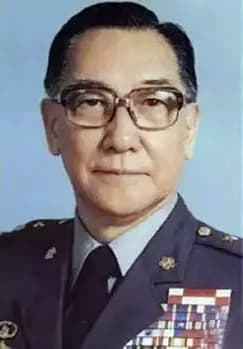
Chiang Ching-kuo
Politician · Modern
58.9Total

Mahinda Rajapaksa
Politician · Modern
56.6Total
Basic Information
Born
1910
1945
Died
1988
—
Era
Modern
Modern
Nationality
China
Sri Lanka
Occupation
Politician
Politician
Civilization
Eastern
Indian
Score Comparison
Military (10%)
36.6
40.0
Political (20%)
72.0
68.0
Influence (20%)
56.7
57.2
Legacy (20%)
52.0
49.2
Leadership (15%)
80.0
72.0
Strategy (15%)
52.8
50.0
TOTAL
58.9
56.6
Chiang Ching-kuo — Complete Timeline
1972 AD
Formation of the Kuomintang ReformPolitical Action
Chiang Ching-kuo initiated reforms within the Kuomintang to reduce corruption and increase Taiwanese representation. He promoted younger, technocratic leaders and implemented policies to integrate native Taiwanese into the party and government, strengthening the KMT's legitimacy.
KMTPolitical ReformTaiwan
Impact: nationalconstructive
1973 AD
Ten Major Construction ProjectsReform◆ Major
As Premier, Chiang Ching-kuo launched the Ten Major Construction Projects, including highways, railways, airports, and a steel mill. These infrastructure investments modernized Taiwan's economy, improved transportation, and laid the foundation for its export-oriented industrialization.
InfrastructureEconomic DevelopmentTaiwan
Impact: nationalconstructive
1987 AD
Lifting of Martial LawPolitical Action
Chiang Ching-kuo lifted martial law in Taiwan, ending 38 years of military rule. This decision allowed the formation of new political parties, restored civil liberties, and initiated a democratic transition, including the legalization of the Democratic Progressive Party.
DemocratizationMartial LawTaiwan
Impact: nationalprogressive
Opening of Family Visits to Mainland ChinaPolitical Action◆ Major
Chiang Ching-kuo allowed Taiwanese civilians to visit relatives in mainland China for the first time since 1949. This policy ended decades of separation for many families and initiated a gradual thaw in cross-strait relations, though official contacts remained limited.
Cross-Strait RelationsFamily ReunificationTaiwan
Impact: regionalconstructive
Mahinda Rajapaksa — Complete Timeline
2005 AD
Elected President of Sri LankaPolitical Action◆ Major
Mahinda Rajapaksa won the presidential election, defeating Ranil Wickremesinghe. His victory was fueled by a hardline stance against the Tamil Tigers and promises of a strong military campaign to end the civil war.
PresidencyElectionCivil war
Impact: national
2008 AD
Launched the final military offensive against the Tamil TigersWar
Rajapaksa's government launched a massive military offensive to defeat the Liberation Tigers of Tamil Eelam (LTTE). The campaign involved intense fighting, civilian casualties, and allegations of war crimes, but ultimately led to the military defeat of the LTTE in 2009.
Civil warMilitary offensiveLTTE
Impact: nationaldestructive
2009 AD
Declared victory over the Tamil TigersWar
Rajapaksa announced the end of the 26-year Sri Lankan Civil War after the death of LTTE leader Velupillai Prabhakaran. The victory was celebrated by many Sinhalese but left deep scars among Tamils, with thousands killed and displaced in the final months.
Civil war endVictoryLTTE
Impact: national
2010 AD
Abolished the executive presidency's term limitsReform◆ Major
Rajapaksa's government passed the 18th Amendment to the constitution, removing the two-term limit on the presidency. This allowed him to run for a third term and consolidated his power, drawing criticism for undermining democratic institutions.
Constitutional amendmentPower consolidationDemocracy
Impact: nationaldestructive
2015 AD
Lost the 2015 presidential electionPolitical Action◆ Major
Rajapaksa was defeated in his bid for a third term by Maithripala Sirisena, a former ally. The loss was attributed to corruption allegations, authoritarianism, and a united opposition. He accepted defeat peacefully, a rare event in Sri Lankan politics.
Election lossDemocracyTransition
Impact: national
Expert Analysis
Origins
Chiang Ching-kuo was born on March 18, 1910, in Fenghua, Zhejiang, China, as the eldest son of Chiang Kai-shek, the leader of the Kuomintang (KMT). He studied in the Soviet Union from 1925 to 1937, where he was exposed to communist ideology and even worked at a tractor factory. This experience shaped his pragmatic approach later. After returning to China, he held various positions in the KMT government, including governor of Taiwan Province.
Mahinda Rajapaksa was born on November 18, 1945, in Weeraketiya, Sri Lanka, into a political family. His father was a prominent lawyer and politician. Rajapaksa studied law at the Sri Lanka Law College and became a lawyer. He entered politics early, winning a parliamentary seat in 1970 at age 24. His background was rooted in Sinhalese nationalism and socialist policies.
Rise to Power
Chiang Ching-kuo's rise was gradual within the KMT. He became premier in 1972 and launched the Ten Major Construction Projects, which modernized Taiwan's infrastructure. After his father's death in 1975, he assumed leadership of the KMT and became president in 1978. His turning point was the lifting of martial law in 1987, which allowed political opposition and led to democratization.
Rajapaksa rose to prominence as a hardliner on the Tamil issue. He was elected president in 2005, defeating Ranil Wickremesinghe, by appealing to Sinhalese nationalism. His turning point was launching the final military offensive against the Liberation Tigers of Tamil Eelam (LTTE) in 2008, which ended in 2009 with the death of LTTE leader Velupillai Prabhakaran. This victory solidified his power.
Leadership & Governance
Chiang Ching-kuo's leadership was characterized by gradual reform and economic development. He scored 80.0 in leadership and 52.8 in strategy. He promoted Taiwanese technocrats, reduced corruption in the KMT, and opened family visits to mainland China in 1987, ending decades of separation. His governance focused on infrastructure and economic growth, with GDP per capita rising from $1,000 in 1970 to over $5,000 by 1988.
Rajapaksa's leadership was more authoritarian. He scored 72.0 in leadership and 50.0 in strategy. He centralized power, abolished term limits via the 18th Amendment in 2010, and suppressed dissent. His governance prioritized military victory over the LTTE, which came at a cost of thousands of civilian casualties. He also pursued infrastructure projects but faced corruption allegations.
Triumph & Tragedy
Chiang Ching-kuo's greatest success was the peaceful transition to democracy. He lifted martial law, allowed new parties, and paved the way for the first direct presidential election in 1996. His Ten Major Construction Projects transformed Taiwan's economy. However, his failure was the continuation of the KMT's authoritarian legacy under his father, and he did not fully address human rights abuses during the White Terror period.
Rajapaksa's triumph was ending the 26-year civil war in 2009, a feat his predecessors failed to achieve. He also boosted economic growth post-war. However, his tragedy was the authoritarian turn: he curtailed press freedom, imprisoned critics, and was accused of war crimes. He lost the 2015 election due to corruption and authoritarianism, and his brother was convicted for corruption.
Character & Destiny
Chiang Ching-kuo was pragmatic and cautious. His Soviet experience made him distrustful of communism but also open to reform. He was known for his simple lifestyle and direct engagement with citizens. His character shaped a gradual transition that avoided violence. Historians assess him as a reformer who balanced stability with change.
Rajapaksa was determined and ruthless. He was willing to use military force to achieve his goals, even at high human cost. His personality led to a decisive victory but also to isolation and eventual downfall. He is seen as a strong leader but also as a polarizing figure who undermined democratic institutions.
Legacy
Chiang Ching-kuo's legacy is Taiwan's democratization and economic prosperity. He is remembered as the "father of Taiwan's democracy." His policies created a foundation for a vibrant civil society. However, his legacy is also tied to the KMT's authoritarian past. He scores 52.0 in legacy.
Rajapaksa's legacy is mixed. He ended the war but at the cost of democratic norms. His family's corruption and his authoritarianism tarnish his achievements. He remains popular among Sinhalese nationalists but is criticized internationally. He scores 49.2 in legacy.
Conclusion
Chiang Ching-kuo had greater impact due to his peaceful democratization and economic transformation, which created lasting institutions. His total score of 58.9 surpasses Rajapaksa's 56.6. While Rajapaksa's military victory was decisive, his authoritarian legacy and failure to sustain democratic governance limit his long-term influence. Chiang's reforms set Taiwan on a path of freedom and prosperity, making him the more consequential leader.
Rankings
🥇
Chiang Ching-kuoLeader
Mil: 36.6Pol: 72.0Inf: 56.7
58.9
🥈
Mahinda Rajapaksa
Mil: 40.0Pol: 68.0Inf: 57.2
56.6
+2.3 behind
How This Comparison Works
Algorithm
Each figure is scored on 6 dimensions (0—100 scale) based on structured historical data: Military (10%), Political (20%), Influence (20%), Legacy (20%), Leadership (15%), Strategy (15%). The weighted total produces the final ranking.
Data Sources
Scores are computed from structured sub-indicators in the database. Scale factors adjust for era (Ancient ×0.85, Modern ×1.0) and civilization size (Eastern ×1.05, Other ×0.80) to account for differences in population and military scale.
Maximum 3 Figures
Comparisons are limited to 2—3 figures to ensure readability and statistical meaningfulness.
Error Margins
±5 points per dimension — Sub-scores are derived from historical records with inherent uncertainty. Two figures within 5 points on a dimension should be considered roughly equivalent in that area.
Total Score Accuracy
±3 points overall — The weighted combination of 6 dimensions produces a total score with approximately ±3 points of uncertainty. Differences of less than 3 points are not statistically significant— the figures are effectively tied.
Known Limitations
- Historical records are incomplete and uneven across civilizations
- Figures from oral-tradition societies may be underrepresented
- Occupation labels can misclassify multi-role figures
- Scores measure capability and impact, not moral character
- Quantitative scoring is a comparison tool, not absolute truth
Capability Radar
Military (10%) — Battles & Warfare
Battles
5
65
Win Rate
5
70
Expansion
5
30
Political (20%) — Governance & Reform
Reform
85
55
Diplomacy
70
50
Economy
90
45
Influence (20%) — Cultural & Global Reach
Cultural
60
40
Global
55
45
Legacy (20%) — Historical Impact
Historical
70
65
Longevity
60
30
Leadership (15%) — Power & Stability
Tenure
75
70
Stability
80
40
Strategy (15%) — Tactics & Innovation
Strategy
5
75
Tactics
5
60
Reform
5
55
Similar Comparisons
Comments & Discussion
No comments yet. Be the first to share your thoughts!