Loading...
Chen Yun vs Julius Caesar
Julius Caesar leads by 27.6 pts · 2 figures compared
…
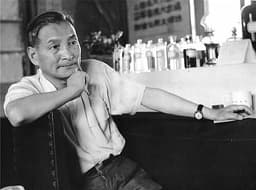
Chen Yun
Politician · Modern
55.2Total

Julius Caesar
General · Ancient
82.8Total
Basic Information
Born
1905
-100
Died
1995
-44
Era
Modern
Ancient
Nationality
China
Roman Republic
Occupation
Politician
General
Civilization
Eastern
Western
Score Comparison
Military (10%)
11.7
88.0
Political (20%)
70.3
78.0
Influence (20%)
62.0
85.0
Legacy (20%)
55.0
82.0
Leadership (15%)
78.0
80.0
Strategy (15%)
25.6
85.0
TOTAL
55.2
82.8
Chen Yun — Complete Timeline
1925 AD
Joined the Chinese Communist PartyPolitical Action◆ Major
Chen Yun joined the Chinese Communist Party during the May Thirtieth Movement. He began his career as a labor organizer in Shanghai, rising through the ranks of the party's underground apparatus.
CCP MembershipLabor MovementShanghai
Impact: nationalconstructive
1961 AD
Led economic reconstruction after the Great Leap ForwardReform◆ Major
Chen Yun was appointed to lead economic recovery efforts after the disastrous Great Leap Forward. He implemented policies that reduced central planning, allowed private plots, and stabilized the economy, saving millions from famine.
Economic ReformGreat Leap ForwardFamine Relief
Impact: nationalconstructive
1966 AD
Purged during the Cultural RevolutionPolitical Action◆ Major
Chen Yun was purged from his leadership positions during the Cultural Revolution, accused of being a capitalist roader. He was sent to work in a factory in Jiangxi, but survived the period without being killed.
Cultural RevolutionPurgeEconomic Planning
Impact: nationaldestructive
1978 AD
Advocated for market reforms under Deng XiaopingReform◆ Major
Chen Yun supported Deng Xiaoping's economic reforms, advocating for a 'birdcage economy' that combined state planning with market mechanisms. He helped design the Special Economic Zones and agricultural decollectivization.
Deng XiaopingEconomic ReformMarket Economy
Impact: nationalconstructive
1987 AD
Served as Chairman of the Central Advisory CommissionPolitical Action
Chen Yun became Chairman of the Central Advisory Commission, a body of retired senior leaders. He used this position to influence economic policy, often cautioning against excessive market liberalization.
Advisory CommissionEconomic PolicyElder Statesman
Impact: national
Julius Caesar — Complete Timeline
58 BC
Gallic WarsWar◆ Major
Caesar, as proconsul of Gaul, launched a series of campaigns that conquered all of Gaul (modern France, Belgium, and parts of Switzerland). He fought numerous battles, including against the Helvetii, the Belgae, and the Gallic chieftain Vercingetorix. The wars brought immense wealth and a loyal army to Caesar.
Gallic WarsConquestRoman Expansion
Impact: regional
49 BC
Crossing the RubiconPolitical Action◆ Major
Caesar led Legio XIII across the Rubicon River into Italy, defying the Roman Senate's order to disband his army. This act triggered a civil war against Pompey and the Optimates, ultimately leading to Caesar's dictatorship and the end of the Roman Republic.
Roman Civil WarEnd of RepublicPower Struggle
Impact: global
48 BC
Battle of PharsalusWar◆ Major
Caesar's outnumbered army defeated the larger forces of Pompey the Great at Pharsalus in Greece. Caesar's tactical use of a reserve line to counter Pompey's cavalry charge proved decisive. Pompey fled to Egypt, where he was assassinated, leaving Caesar as the undisputed master of the Roman world.
Roman Civil WarBattleDecisive Victory
Impact: regional
44 BC
Appointment as Dictator for LifePolitical Action◆ Major
The Roman Senate appointed Caesar dictator perpetuo (dictator for life), granting him unprecedented personal power. This move concentrated military, legislative, and judicial authority in one person, effectively ending the Roman Republic's traditional system of checks and balances and alarming many senators.
DictatorshipEnd of RepublicPower Consolidation
Impact: regionaldestructive
Assassination on the Ides of MarchPolitical Action◆ Major
A group of Roman senators, led by Marcus Junius Brutus and Gaius Cassius Longinus, stabbed Caesar to death at a meeting of the Senate in the Theatre of Pompey. The assassination was intended to restore the Republic, but instead triggered another civil war that led to the rise of the Roman Empire.
AssassinationRoman PoliticsEnd of Republic
Impact: globaldestructive
Expert Analysis
chen-yun-vs-julius-caesar
# The Dictator and the Planner: Two Paths to Power
On the Ides of March in 44 BCE, a stunned Roman Senate watched as Julius Caesar crumpled beneath a cascade of dagger blows, his blood pooling on the marble floor of the Curia. Nearly two thousand years later and half a world away, Chen Yun, an economic planner who had survived the Cultural Revolution, sat in a Beijing office and calmly advised Deng Xiaoping on how to pry open China's command economy without shattering the state. One man died at the height of his power; the other died in his bed at ninety, having outlasted the very revolutionaries who had tried to destroy him. What separates a conqueror from a fixer? What makes one man’s ambition end in assassination, another’s patience end in quiet influence?
Origins
Julius Caesar was born into the chaos of a dying republic, a patrician family fallen on hard times. His Rome was a city of endless civil wars, where generals like Marius and Sulla had shown that loyalty to a man could outweigh loyalty to the state. Caesar grew up watching the old order crumble—and learning that the only law that mattered was the one a man could enforce with a legion. He was a gambler from the start, once captured by pirates and, after his ransom was paid, returning to crucify them all.
Chen Yun emerged from a different kind of chaos. Born in 1905 in Qingpu, Jiangsu, he came of age in a China shattered by foreign invasion and warlord violence. While Caesar learned rhetoric and military command, Chen Yun learned the gritty mechanics of labor organizing. He joined the Chinese Communist Party in 1925 during the May Thirtieth Movement, a wave of anti-imperialist strikes. His classroom was the factory floor, his textbooks the ledgers of supply and survival. Where Caesar’s world was one of glory and spectacle, Chen Yun’s was one of scarcity and discipline.
Rise to Power
Caesar rose through audacity. He borrowed fortunes to bribe his way into high priesthood, seduced the wives of his enemies, and forged the First Triumvirate with Pompey and Crassus. His conquest of Gaul between 58 and 50 BCE was not merely a military campaign—it was a political machine. He wrote his own dispatches, making himself the hero of a story that Rome devoured. When the Senate ordered him to disband his army, he crossed the Rubicon River in 49 BCE, a decision that meant civil war or death. He chose war.
Chen Yun rose through competence. He was not a charismatic speaker or a battlefield commander; his military score of 22.8 reflects a man who never led troops. Instead, he became the Communist Party’s expert on economic reality. During the Yan’an years, he managed the party’s finances with such precision that Mao Zedong trusted him with the economy of the entire liberated zone. While Caesar conquered provinces, Chen Yun conquered budgets.
Leadership & Governance
Caesar ruled like a storm. As dictator, he reformed the calendar, granted citizenship to Gauls, and initiated massive public works. But his style was personal and absolute. He centralized power, packed the Senate with his supporters, and accepted the title “dictator for life.” His political score of 78.0 reflects a man who understood power but not compromise—he never built institutions that could outlast him.
Chen Yun governed like a river. After the Great Leap Forward caused a famine that killed tens of millions, Mao turned to Chen Yun in 1961 to lead economic reconstruction. Chen Yun implemented policies that quietly reversed collectivization, allowing private plots and free markets in agriculture. His “birdcage economy” concept—letting markets fly but keeping them within the cage of state planning—became the foundation of China’s post-1978 reforms. His leadership score of 78.4 reflects a man who wielded influence through expertise, not force.
Triumph & Tragedy
Caesar’s greatest triumph was Gaul—a decade of conquest that made him the richest man in Rome and gave him an army that worshipped him. His greatest tragedy was his own success. By destroying the Republic, he made himself a target. On the Ides of March, sixty senators stabbed him to death, believing they were saving Rome. Instead, they launched a civil war that ended the Republic forever.
Chen Yun’s greatest triumph was surviving. Purged during the Cultural Revolution in 1966—accused of being a “capitalist roader”—he was stripped of power and sent into obscurity. But unlike Caesar, he waited. When Mao died and Deng Xiaoping took control, Chen Yun emerged in 1978 as the architect of China’s economic miracle. His greatest tragedy was that he never saw his full vision realized. He advocated for cautious, balanced reforms, warning against the social chaos of rapid capitalism. He died in 1995, watching China sprint toward a future he helped create but could not control.
Character & Destiny
Caesar was driven by *ambitio*—the Latin word for a relentless, almost pathological desire for honor and glory. He believed his destiny was to rule Rome, and he was right. But that belief also blinded him to the hatred he inspired. He dismissed warnings, walked unarmed into the Senate, and died because he could not imagine a world where he was not the protagonist.
Chen Yun was driven by *pragmatism*. He once said, “We must seek truth from facts.” He understood that in a Communist system, the most dangerous thing was to be too visible. He built his power not on charisma but on indispensability. While Caesar’s personality demanded the center stage, Chen Yun’s personality allowed him to work from the wings—and that is why he outlived every rival who tried to destroy him.
Legacy
Caesar’s legacy is the Roman Empire. Every emperor after him traced their legitimacy to his name. His reforms—the Julian calendar, Roman citizenship, the reorganization of government—shaped Western civilization for two millennia. But his legacy is also a warning: absolute power, untempered by law, ends in blood.
Chen Yun’s legacy is modern China. The economic reforms he championed lifted hundreds of millions from poverty. His “birdcage economy” gave Deng the theoretical framework to open China to the world without losing Communist control. But his legacy is also a paradox: the man who believed in planning helped create the most dynamic market economy in history.
Conclusion
Caesar and Chen Yun never met, but they share a strange kinship. Both men lived in times of collapse—one of a republic, the other of a revolutionary utopia. Both understood that power flows not from offices or titles, but from the ability to solve problems that no one else can. Caesar solved the problem of a stagnant Republic by destroying it; Chen Yun solved the problem of a broken economy by rebuilding it. One died for his ambition; the other lived because he knew how to hide it. In the end, the conqueror and the planner teach the same lesson: history belongs to those who see the world as it is, and act accordingly—but only those who see the future as it might be, and act carefully, survive to shape it.
Rankings
🥇
Julius CaesarLeader
Mil: 88.0Pol: 78.0Inf: 85.0
82.8
🥈
Chen Yun
Mil: 11.7Pol: 70.3Inf: 62.0
55.2
+27.6 behind
How This Comparison Works
Algorithm
Each figure is scored on 6 dimensions (0—100 scale) based on structured historical data: Military (10%), Political (20%), Influence (20%), Legacy (20%), Leadership (15%), Strategy (15%). The weighted total produces the final ranking.
Data Sources
Scores are computed from structured sub-indicators in the database. Scale factors adjust for era (Ancient ×0.85, Modern ×1.0) and civilization size (Eastern ×1.05, Other ×0.80) to account for differences in population and military scale.
Maximum 3 Figures
Comparisons are limited to 2—3 figures to ensure readability and statistical meaningfulness.
Error Margins
±5 points per dimension — Sub-scores are derived from historical records with inherent uncertainty. Two figures within 5 points on a dimension should be considered roughly equivalent in that area.
Total Score Accuracy
±3 points overall — The weighted combination of 6 dimensions produces a total score with approximately ±3 points of uncertainty. Differences of less than 3 points are not statistically significant— the figures are effectively tied.
Known Limitations
- Historical records are incomplete and uneven across civilizations
- Figures from oral-tradition societies may be underrepresented
- Occupation labels can misclassify multi-role figures
- Scores measure capability and impact, not moral character
- Quantitative scoring is a comparison tool, not absolute truth
Capability Radar
Military (10%) — Battles & Warfare
Battles
16
95
Win Rate
17
92
Expansion
20
97
Political (20%) — Governance & Reform
Reform
80
90
Diplomacy
70
85
Economy
90
82
Influence (20%) — Cultural & Global Reach
Cultural
40
88
Global
60
94
Legacy (20%) — Historical Impact
Historical
75
95
Longevity
65
96
Leadership (15%) — Power & Stability
Tenure
75
75
Stability
85
60
Strategy (15%) — Tactics & Innovation
Strategy
26
94
Tactics
27
96
Reform
28
88
Similar Comparisons
Comments & Discussion
No comments yet. Be the first to share your thoughts!