Loading...
Che Guevara vs Sakamoto Ryoma
Sakamoto Ryoma leads by 8.6 pts · 2 figures compared
…
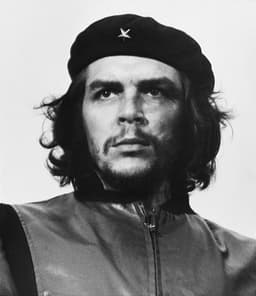
Che Guevara
Revolutionary · Modern
41.5Total
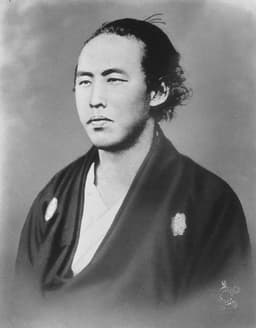
Sakamoto Ryoma
Revolutionary · Modern
50.1Total
Basic Information
Born
1928
1836
Died
—
1867
Era
Modern
Modern
Nationality
Argentina
Japan
Occupation
Revolutionary
Revolutionary
Civilization
Western
Eastern
Score Comparison
Military (10%)
35.0
41.6
Political (20%)
25.0
68.0
Influence (20%)
55.0
58.0
Legacy (20%)
50.0
50.0
Leadership (15%)
30.0
38.1
Strategy (15%)
35.0
30.3
TOTAL
41.5
50.1
Che Guevara — Complete Timeline
1956 AD
Participation in the Cuban RevolutionWar
Guevara joined Fidel Castro's 26th of July Movement, landing in Cuba aboard the Granma. He became a key guerrilla commander, leading troops in the Battle of Santa Clara, which helped overthrow Fulgencio Batista's regime.
Cuban RevolutionGuerrilla WarfareCastro
Impact: regional
1961 AD
Appointment as Minister of IndustriesPolitical Action◆ Major
Guevara was appointed Minister of Industries in Cuba, where he implemented radical economic policies, including nationalization and central planning. His efforts to diversify the economy and reduce dependence on sugar largely failed.
Economic PolicyNationalizationCuba
Impact: national
1965 AD
Guerrilla Campaign in the CongoWar◆ Major
Guevara led a small Cuban force to support the Simba rebellion in the Democratic Republic of the Congo. The campaign was unsuccessful due to poor logistics, lack of local support, and superior opposition forces, leading to his withdrawal.
CongoGuerrillaFailed Revolution
Impact: regionaldestructive
1967 AD
Capture and Execution in BoliviaPolitical Action
Guevara was captured by Bolivian forces, trained and advised by the CIA, while leading a guerrilla insurgency. He was executed the next day in La Higuera. His death turned him into a global icon of revolutionary struggle.
ExecutionBoliviaMartyrdom
Impact: globaltragic
Sakamoto Ryoma — Complete Timeline
1865 AD
Founded the Kameyama Shachu (Trading Company)Political Action
Ryoma established a trading company in Nagasaki with the goal of modernizing Japan's economy and military. The company imported Western weapons and ships, and served as a base for anti-shogunate activities.
Economic ReformModernizationTrade
Impact: nationalconstructive
1866 AD
Brokered the Satsuma-Choshu AlliancePolitical Action
Ryoma mediated between the Satsuma and Choshu domains, which had been hostile to each other. Through his negotiations, the two domains agreed to cooperate against the Tokugawa shogunate, forming a key alliance that enabled the Meiji Restoration.
Meiji RestorationAlliancePolitical Reform
Impact: nationalconstructive
1867 AD
Formulated the Eight-Point Plan (Senchu Hassaku)Reform◆ Major
Ryoma drafted a political reform plan proposing a new government structure for Japan, including a bicameral legislature, a constitution, and the return of power to the imperial court. The plan influenced the Meiji government's early policies.
Political ReformConstitutionMeiji Restoration
Impact: nationalprogressive
Assassinated at OmiyaPolitical Action◆ Major
Ryoma was assassinated at the Omiya inn in Kyoto by agents of the shogunate. His death at age 31 cut short his political influence, but his ideas continued to shape the Meiji Restoration.
AssassinationMeiji RestorationPolitical Violence
Impact: nationaltragic
Expert Analysis
Origins
**Che Guevara** (1928–1967) was born in Rosario, Argentina, into a middle-class family with leftist leanings. His father, Ernesto Guevara Lynch, was a civil engineer, and his mother, Celia de la Serna, came from a wealthy family. Che suffered from severe asthma from childhood, which shaped his resilience. He studied medicine at the University of Buenos Aires, graduating in 1953. His travels across Latin America exposed him to poverty and imperialism, radicalizing his worldview.
**Sakamoto Ryoma** (1836–1867) was born into a lower-ranking samurai family in the Tosa domain (modern Kōchi Prefecture). His father, Sakamoto Hachihei, was a low-level samurai. Ryoma received a traditional education in swordsmanship and Confucian classics. He studied swordsmanship under Chiba Shusaku in Edo, but his exposure to Western ideas through the Black Ships' arrival in 1853 shifted his focus to political reform.
Rise to Power
Che Guevara's rise began in Mexico City in 1955, where he met Fidel Castro. He joined Castro's 26th of July Movement and participated in the Granma expedition in 1956. As a guerrilla commander, he led troops in the Battle of Santa Clara in 1958, a turning point that forced Batista to flee. His military success made him a key figure in the new Cuban government.
Sakamoto Ryoma's ascent came through his role as a mediator. In 1866, he brokered the Satsuma-Choshu Alliance, uniting two rival domains against the Tokugawa shogunate. His Eight-Point Plan (Senchu Hassaku) in 1867 proposed a democratic government and influenced the Meiji Restoration. He founded the Kameyama Shachu, a trading company that modernized Japan's economy and military.
Leadership & Governance
Che Guevara's leadership style was ideological and centralized. As Minister of Industries (1961–1965), he implemented rapid nationalization and central planning, aiming to create a 'new man' motivated by moral incentives. His policies led to economic inefficiencies, with sugar production dropping by 20% in 1963. He scored 30.0 in leadership and 25.0 in political acumen, reflecting his rigidity.
Sakamoto Ryoma's leadership was collaborative and pragmatic. He used negotiation and consensus-building, bringing together enemies like Satsuma and Choshu. His political score of 68.0 reflects his effectiveness in forging alliances. He advocated for a constitutional monarchy and modernization, but his assassination in 1867 prevented him from implementing his full vision.
Triumph & Tragedy
Che Guevara's greatest triumph was the success of the Cuban Revolution, which toppled a U.S.-backed dictator. His influence spread globally, inspiring revolutionary movements in Africa and Latin America. However, his greatest failure was the Bolivian campaign (1966–1967), where he was captured and executed. The guerrilla movement failed due to poor local support and logistical challenges. His military score of 35.0 reflects mixed results.
Sakamoto Ryoma's triumph was the Satsuma-Choshu Alliance, which enabled the Meiji Restoration and Japan's transformation into a modern state. His Eight-Point Plan laid the groundwork for Japan's constitution. His tragedy was his assassination at age 31, cut short before he could see his reforms enacted. His military score of 41.6 reflects his lack of direct combat, but his political influence was high.
Character & Destiny
Che Guevara was a determined, ascetic figure. His asthma did not deter him from combat; he was known for his ruthlessness and ideological purity. He resigned from his government posts to pursue revolution abroad, believing in global insurrection. This idealism led to his death in Bolivia, as he underestimated the challenges of a foreign environment.
Sakamoto Ryoma was charismatic and open-minded. He abandoned his samurai status to work with merchants and commoners. His willingness to compromise and build bridges made him effective but also vulnerable. His assassination by shogunate loyalists ended his life, but his ideas survived through the Meiji leaders he influenced.
Legacy
Che Guevara's legacy is iconic but contested. His image symbolizes rebellion and anti-imperialism, but his economic policies in Cuba are criticized. He scored 55.0 in influence and 50.0 in legacy, reflecting his enduring cultural impact. However, his practical achievements in governance are limited.
Sakamoto Ryoma's legacy is foundational to modern Japan. He is celebrated as a visionary reformer who paved the way for Japan's rapid modernization. His influence score of 58.0 and legacy score of 50.0 show his lasting impact, though his direct contributions were cut short. Japan's Meiji Constitution and political structure owe much to his ideas.
Conclusion
Sakamoto Ryoma had a greater impact due to his successful political integration and lasting influence on Japan's modernization. While Che Guevara's revolutionary zeal inspired many, his practical results were mixed. Ryoma's total score of 50.1 versus Che's 41.5 reflects this. Che's legacy is more symbolic, while Ryoma's is substantive. Therefore, Sakamoto Ryoma emerges as the more effective revolutionary.
Rankings
🥇
Sakamoto RyomaLeader
Mil: 41.6Pol: 68.0Inf: 58.0
50.1
🥈
Che Guevara
Mil: 35.0Pol: 25.0Inf: 55.0
41.5
+8.6 behind
How This Comparison Works
Algorithm
Each figure is scored on 6 dimensions (0—100 scale) based on structured historical data: Military (10%), Political (20%), Influence (20%), Legacy (20%), Leadership (15%), Strategy (15%). The weighted total produces the final ranking.
Data Sources
Scores are computed from structured sub-indicators in the database. Scale factors adjust for era (Ancient ×0.85, Modern ×1.0) and civilization size (Eastern ×1.05, Other ×0.80) to account for differences in population and military scale.
Maximum 3 Figures
Comparisons are limited to 2—3 figures to ensure readability and statistical meaningfulness.
Error Margins
±5 points per dimension — Sub-scores are derived from historical records with inherent uncertainty. Two figures within 5 points on a dimension should be considered roughly equivalent in that area.
Total Score Accuracy
±3 points overall — The weighted combination of 6 dimensions produces a total score with approximately ±3 points of uncertainty. Differences of less than 3 points are not statistically significant— the figures are effectively tied.
Known Limitations
- Historical records are incomplete and uneven across civilizations
- Figures from oral-tradition societies may be underrepresented
- Occupation labels can misclassify multi-role figures
- Scores measure capability and impact, not moral character
- Quantitative scoring is a comparison tool, not absolute truth
Capability Radar
Military (10%) — Battles & Warfare
Battles
35
5
Win Rate
40
5
Expansion
25
10
Political (20%) — Governance & Reform
Reform
35
60
Diplomacy
20
75
Economy
15
30
Influence (20%) — Cultural & Global Reach
Cultural
75
65
Global
70
55
Legacy (20%) — Historical Impact
Historical
70
70
Longevity
65
65
Leadership (15%) — Power & Stability
Tenure
30
20
Stability
10
25
Strategy (15%) — Tactics & Innovation
Strategy
45
20
Tactics
55
10
Reform
30
40
Similar Comparisons
Comments & Discussion
No comments yet. Be the first to share your thoughts!