Loading...
Che Guevara vs Qin Shi Huang
Qin Shi Huang leads by 43.7 pts · 2 figures compared
…
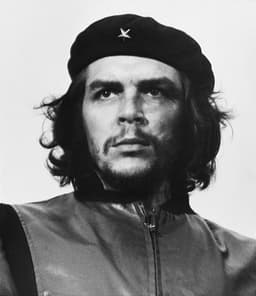
Che Guevara
Revolutionary · Modern
41.5Total
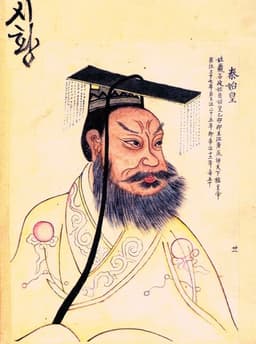
Qin Shi Huang
Emperor · Ancient
85.2Total
Basic Information
Born
1928
-259
Died
—
-210
Era
Modern
Ancient
Nationality
Argentina
China
Occupation
Revolutionary
Emperor
Civilization
Western
Eastern
Score Comparison
Military (10%)
35.0
80.0
Political (20%)
25.0
90.0
Influence (20%)
55.0
85.0
Legacy (20%)
50.0
90.0
Leadership (15%)
30.0
78.0
Strategy (15%)
35.0
82.0
TOTAL
41.5
85.2
Che Guevara — Complete Timeline
1956 AD
Participation in the Cuban RevolutionWar
Guevara joined Fidel Castro's 26th of July Movement, landing in Cuba aboard the Granma. He became a key guerrilla commander, leading troops in the Battle of Santa Clara, which helped overthrow Fulgencio Batista's regime.
Cuban RevolutionGuerrilla WarfareCastro
Impact: regional
1961 AD
Appointment as Minister of IndustriesPolitical Action◆ Major
Guevara was appointed Minister of Industries in Cuba, where he implemented radical economic policies, including nationalization and central planning. His efforts to diversify the economy and reduce dependence on sugar largely failed.
Economic PolicyNationalizationCuba
Impact: national
1965 AD
Guerrilla Campaign in the CongoWar◆ Major
Guevara led a small Cuban force to support the Simba rebellion in the Democratic Republic of the Congo. The campaign was unsuccessful due to poor logistics, lack of local support, and superior opposition forces, leading to his withdrawal.
CongoGuerrillaFailed Revolution
Impact: regionaldestructive
1967 AD
Capture and Execution in BoliviaPolitical Action
Guevara was captured by Bolivian forces, trained and advised by the CIA, while leading a guerrilla insurgency. He was executed the next day in La Higuera. His death turned him into a global icon of revolutionary struggle.
ExecutionBoliviaMartyrdom
Impact: globaltragic
Qin Shi Huang — Complete Timeline
246 BC
Construction of the Mausoleum and Terracotta ArmyOther◆ Major
Qin Shi Huang commissioned a vast mausoleum complex near Xi'an, guarded by thousands of life-sized terracotta soldiers, horses, and chariots. The project employed hundreds of thousands of workers and reflected his obsession with immortality and imperial power.
Impact: global
230 BC
Conquest of the Six Warring StatesWar
From 230 to 221 BCE, Ying Zheng led the Qin state in a series of campaigns that conquered the Han, Zhao, Wei, Chu, Yan, and Qi states. This unified China under a single ruler for the first time, ending the Warring States period.
Impact: global
221 BC
Standardization of Writing, Currency, and MeasurementsReform◆ Major
Qin Shi Huang ordered the standardization of Chinese script, currency, and weights and measures across the unified empire. This facilitated administration, trade, and cultural integration, laying a foundation for future dynasties.
Impact: globalconstructive
Proclamation of the Qin DynastyPolitical Action
After conquering the last independent state, Ying Zheng declared himself Shi Huangdi (First Emperor), founding the Qin Dynasty. He adopted a new title to signify his supreme authority and initiated centralized imperial rule.
Impact: global
214 BC
Initiation of the Great Wall ConstructionOther◆ Major
Qin Shi Huang ordered the connection and extension of existing northern fortifications to create a unified defensive wall against nomadic Xiongnu raids. This project involved massive conscripted labor and became the precursor to the later Great Wall.
Impact: regional
213 BC
Burning of Books and Burying of ScholarsPolitical Action◆ Major
On the advice of Li Si, Qin Shi Huang ordered the burning of historical records and philosophical texts not aligned with Legalist doctrine. He also had 460 Confucian scholars buried alive to suppress dissent and consolidate ideological control.
Impact: nationaldestructive
Expert Analysis
che-guevara-vs-qin-shi-huang
# The First Emperor and the Last Revolutionary
On a cold October morning in 1967, a wounded man in a Bolivian schoolhouse faced his executioners with a defiant calm. Half a world away and two millennia apart, another ruler had ordered the burial of scholars alive for daring to question his vision. One sought to build an empire that would last ten thousand generations; the other sought to tear down every empire he encountered. Qin Shi Huang and Che Guevara—separated by twenty-two centuries, by continents, by every conceivable measure of time and space—yet both were consumed by the same fire: the absolute conviction that they alone held the blueprint for humanity's salvation.
Origins
Ying Zheng was born in 259 BC, a prince of the Qin state during the chaotic Warring States period of ancient China. His childhood was a crucible of violence and intrigue: his father had been a hostage in another state, and the young prince grew up surrounded by assassins, spies, and the constant threat of annihilation. The world he inherited was one of ceaseless warfare, where seven kingdoms bled each other dry for supremacy. This brutal education shaped a mind that saw unity not as an ideal but as the only alternative to endless destruction.
Ernesto Guevara was born in 1928 into a middle-class Argentine family, the eldest of five children. His early years were marked by severe asthma that would plague him throughout his life—a physical vulnerability that paradoxically forged an iron will. Unlike the Chinese prince, Guevara grew up in relative peace, reading Marx and Freud in his family's library, traveling across Latin America on a motorcycle, and witnessing the continent's poverty firsthand. What Qin Shi Huang learned through palace coups and battlefield survival, Guevara absorbed through books and the faces of dying miners in Chile.
Rise to Power
Qin Shi Huang's ascent was methodical, calculated, and absolute. At thirteen, he became king of Qin. By thirty-eight, he had conquered all six rival states, deploying a combination of diplomatic cunning, military innovation, and ruthless efficiency. The turning point came in 230 BC when his armies swept into the state of Han, beginning a decade-long campaign that would end with the submission of Qi in 221 BC. When he declared himself Shi Huangdi—First Emperor—he was not claiming a title; he was inventing an institution.
Guevara's rise was entirely different—improvised, romantic, and contingent on a single decisive moment. In 1956, he joined Fidel Castro's ragged band of eighty-two revolutionaries aboard the leaky yacht *Granma*. Most were killed or captured upon landing in Cuba. Guevara survived, and in the Sierra Maestra mountains, he transformed from a doctor treating wounded fighters into a commander who led them. His capture of Santa Clara in December 1958 effectively ended the Batista regime. Where Qin Shi Huang conquered kingdoms, Guevara captured a city.
Leadership & Governance
The First Emperor governed with a vision so comprehensive it still shapes China today. He standardized writing across his empire, decreeing that all characters must follow the Qin script. He unified currency, weights, and measures, making commerce possible across vast distances. He built roads and canals, and in 214 BC, he ordered the connection of northern fortifications into what would become the Great Wall. His political philosophy, Legalism, held that human nature was inherently selfish and required strict laws and harsh punishments. This was not cruelty for its own sake—it was a systematic attempt to create order from chaos.
Guevara's governance was the mirror opposite. As Minister of Industries in Cuba from 1961, he implemented radical policies based on moral incentives rather than material rewards, abolishing money in some sectors and demanding voluntary labor. He believed that a "new man" could be forged through revolutionary consciousness alone. The results were disastrous: production plummeted, and Cuba became increasingly dependent on Soviet subsidies. Where Qin Shi Huang built structures that lasted millennia, Guevara built systems that crumbled within years.
Triumph & Tragedy
Qin Shi Huang's greatest achievement was also his greatest tragedy. The unification of China was a triumph of political will and military might, but it came at a staggering human cost. The burning of books in 213 BC and the burying of 460 Confucian scholars alive were acts of cultural destruction that erased centuries of philosophical diversity. His mausoleum, guarded by the Terracotta Army, consumed resources on a scale that strained the entire empire. When he died in 210 BC, the Qin Dynasty collapsed within three years—a dynasty meant to last ten thousand generations, ended in a decade.
Guevara's tragedy was more personal. After helping secure the Cuban Revolution, he grew restless. In 1965, he disappeared from public view to lead a guerrilla campaign in the Congo—a disastrous failure. Undeterred, he went to Bolivia in 1966, where he attempted to ignite a continent-wide revolution. The Bolivian peasantry did not rise; the local Communist Party did not support him; the CIA tracked his every move. On October 9, 1967, he was captured and executed. His final words to his executioner were reportedly: "Shoot, coward, you are only going to kill a man."
Character & Destiny
Qin Shi Huang was obsessed with immortality. He sent expeditions to find the elixir of life, consulted alchemists, and built his mausoleum as a palace for the afterlife. This fear of death drove his greatest achievements and his worst atrocities. He could not imagine a world without him, and so he tried to freeze time itself.
Guevara was obsessed with death—not his own fear of it, but its revolutionary potential. He wrote that "the true revolutionary is guided by great feelings of love," yet he also wrote that hatred is essential to revolutionary struggle. He sought martyrdom as surely as Qin Shi Huang sought eternal life. And in death, Guevara achieved what he could not in life: his image became a global icon, detached from his actual policies and failures, a symbol of rebellion for anyone who wished to claim it.
Legacy
The First Emperor's legacy is monumental and deeply ambivalent. He is remembered as a tyrant who burned books and as the father of Chinese unification. The Great Wall, the standardized script, the bureaucratic structures—all survive. Every Chinese schoolchild learns his name, and historians still debate whether he was a visionary or a monster.
Che Guevara's legacy is equally contested but far more fragmented. In Cuba, his image adorns buildings and currency; in Bolivia, he is remembered as an invader. His face has become a commodity, printed on t-shirts sold in capitalist shopping malls—the ultimate irony for a man who dedicated his life to destroying capitalism. His military failures are well-documented, yet his romantic appeal endures.
Conclusion
Perhaps the deepest difference between these two figures lies in their relationship to time. Qin Shi Huang tried to conquer time itself, to build an empire that would outlast human memory. Che Guevara tried to escape time, to live in a perpetual revolution that would transcend history's judgment. Both failed, but their failures illuminate something essential about power and human ambition. The First Emperor built a world that still stands, albeit transformed beyond his recognition. The revolutionary built an image that still haunts the global imagination. One created a civilization; the other created a myth. And in the end, civilizations outlast their creators, while myths outlast their subjects.
Rankings
🥇
Qin Shi HuangLeader
Mil: 80.0Pol: 90.0Inf: 85.0
85.2
🥈
Che Guevara
Mil: 35.0Pol: 25.0Inf: 55.0
41.5
+43.7 behind
How This Comparison Works
Algorithm
Each figure is scored on 6 dimensions (0—100 scale) based on structured historical data: Military (10%), Political (20%), Influence (20%), Legacy (20%), Leadership (15%), Strategy (15%). The weighted total produces the final ranking.
Data Sources
Scores are computed from structured sub-indicators in the database. Scale factors adjust for era (Ancient ×0.85, Modern ×1.0) and civilization size (Eastern ×1.05, Other ×0.80) to account for differences in population and military scale.
Maximum 3 Figures
Comparisons are limited to 2—3 figures to ensure readability and statistical meaningfulness.
Error Margins
±5 points per dimension — Sub-scores are derived from historical records with inherent uncertainty. Two figures within 5 points on a dimension should be considered roughly equivalent in that area.
Total Score Accuracy
±3 points overall — The weighted combination of 6 dimensions produces a total score with approximately ±3 points of uncertainty. Differences of less than 3 points are not statistically significant— the figures are effectively tied.
Known Limitations
- Historical records are incomplete and uneven across civilizations
- Figures from oral-tradition societies may be underrepresented
- Occupation labels can misclassify multi-role figures
- Scores measure capability and impact, not moral character
- Quantitative scoring is a comparison tool, not absolute truth
Capability Radar
Military (10%) — Battles & Warfare
Battles
35
85
Win Rate
40
90
Expansion
25
90
Political (20%) — Governance & Reform
Reform
35
95
Diplomacy
20
75
Economy
15
90
Influence (20%) — Cultural & Global Reach
Cultural
75
95
Global
70
85
Legacy (20%) — Historical Impact
Historical
70
95
Longevity
65
95
Leadership (15%) — Power & Stability
Tenure
30
70
Stability
10
65
Strategy (15%) — Tactics & Innovation
Strategy
45
85
Tactics
55
80
Reform
30
95
Similar Comparisons
Comments & Discussion
THE_BURNING_BOOKS6/17/2026
Comparing these two is like comparing a forest fire to a match strike. Qin Shi Huang unified a fractured civilization through standardization—weights, measures, even the axle widths of carts. He built the Great Wall and a bureaucracy that lasted two millennia. Guevara? He executed political prisoners in La Cabaña without trial, mismanaged Cuba's economy into Soviet dependency, and got himself killed in a spectacularly incompetent guerrilla campaign. One built an empire that outlasted his dynasty
铁马冰河6/17/2026
秦始皇焚书坑儒是为了铲除异见,而切·格瓦拉在古巴革命后也清洗了政治对手。但秦始皇完成了文字、货币、度量衡的统一,奠定了中华文明延续的基础。格瓦拉却在玻利维亚的丛林里带着52个游击队员对抗政府军,像堂吉诃德一样可悲又可笑。一个真正改变了世界,一个只是留下了文艺青年的浪漫幻想。
SECOND_OPINION_SKELLY6/17/2026
Objectively speaking, the metrics don't lie. Under Qin Shi Huang, China's population grew from roughly 20 million to over 40 million through unification and agricultural standardization. Guevara's economic policies in Cuba turned the country from a middle-income nation into one dependent on Soviet subsidies. The Chinese emperor built infrastructure that lasted centuries; Guevara's industrial projects in Cuba failed miserably. One created systems, the other created a brand. Be honest: would you r
历史深处的尘埃6/17/2026
我是历史学者,但我拒绝这种简单的类比。秦始皇统一六国靠的是法家思想和军事力量,他建立的郡县制影响中国两千多年。切·格瓦拉呢?他在刚果的冒险行动组织得像一场儿戏,连当地语言都不会说。玻利维亚的游击战更是一败涂地,当地农民根本不支持他。一个是真正的战略家,一个是热血上头的理想主义者。把两者并列,是对中国历史的侮辱。
RED_FORCE_REVIVAL6/17/2026
The analysis misses the core philosophy. Che Guevara wasn't trying to be a ruler—he was trying to inspire a global consciousness against imperialism. Qin Shi Huang centralized power; Che decentralized revolutionary potential. One built walls, the other burned through borders. Che’s "New Man" concept aimed at creating a society beyond mere materialism, while the First Emperor standardized everything down to cart axles. You're measuring a poet's impact with an accountant's spreadsheet.