Loading...
This comparison has not been analyzed yet.
One-time AI generation (~1 minute). Scores and timeline are already available below.
Che Guevara vs Mekatilili wa Menza
Mekatilili wa Menza leads by 3.0 pts · 2 figures compared
…
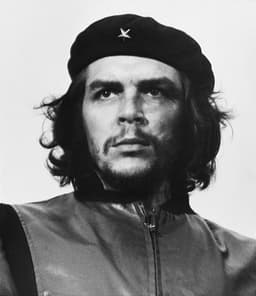
Che Guevara
Revolutionary · Modern
41.5Total

Mekatilili wa Menza
Revolutionary · Modern
44.5Total
Basic Information
Born
1928
1860
Died
—
1924
Era
Modern
Modern
Nationality
Argentina
Kenya
Occupation
Revolutionary
Revolutionary
Civilization
Western
Other
Score Comparison
Military (10%)
35.0
45.0
Political (20%)
25.0
33.6
Influence (20%)
55.0
49.4
Legacy (20%)
50.0
39.2
Leadership (15%)
30.0
57.1
Strategy (15%)
35.0
42.3
TOTAL
41.5
44.5
Che Guevara — Complete Timeline
1956 AD
Participation in the Cuban RevolutionWar
Guevara joined Fidel Castro's 26th of July Movement, landing in Cuba aboard the Granma. He became a key guerrilla commander, leading troops in the Battle of Santa Clara, which helped overthrow Fulgencio Batista's regime.
Cuban RevolutionGuerrilla WarfareCastro
Impact: regional
1961 AD
Appointment as Minister of IndustriesPolitical Action◆ Major
Guevara was appointed Minister of Industries in Cuba, where he implemented radical economic policies, including nationalization and central planning. His efforts to diversify the economy and reduce dependence on sugar largely failed.
Economic PolicyNationalizationCuba
Impact: national
1965 AD
Guerrilla Campaign in the CongoWar◆ Major
Guevara led a small Cuban force to support the Simba rebellion in the Democratic Republic of the Congo. The campaign was unsuccessful due to poor logistics, lack of local support, and superior opposition forces, leading to his withdrawal.
CongoGuerrillaFailed Revolution
Impact: regionaldestructive
1967 AD
Capture and Execution in BoliviaPolitical Action
Guevara was captured by Bolivian forces, trained and advised by the CIA, while leading a guerrilla insurgency. He was executed the next day in La Higuera. His death turned him into a global icon of revolutionary struggle.
ExecutionBoliviaMartyrdom
Impact: globaltragic
Mekatilili wa Menza — Complete Timeline
1913 AD
Giriama Rebellion Against British TaxationWar◆ Major
Mekatilili wa Menza organized the Giriama people in a revolt against British colonial taxation and forced labor policies. She used traditional oathing ceremonies to unite the Giriama and led attacks on British administrative posts. The rebellion was suppressed by British forces after several months.
Anti-Colonial RevoltTax ResistanceGiriama
Impact: regional
1914 AD
Exile by British AuthoritiesPolitical Action
Mekatilili wa Menza was captured by British forces and exiled to the remote town of Kisii in western Kenya. Her exile was intended to remove her influence from the Giriama. She remained in exile for several years before being allowed to return to her people.
ExileColonial RepressionGiriama
tragic
1918 AD
Return from Exile and Continued ActivismPolitical Action
Mekatilili wa Menza returned from exile and continued to advocate for Giriama rights and cultural preservation. She opposed further colonial encroachment and encouraged the maintenance of traditional practices. Her activism persisted until her death in 1924.
ActivismCultural PreservationGiriama
constructive
This comparison has not been analyzed yet.
One-time AI generation (~1 minute). Scores and timeline are already available below.
Rankings
🥇
Mekatilili wa MenzaLeader
Mil: 45.0Pol: 33.6Inf: 49.4
44.5
🥈
Che Guevara
Mil: 35.0Pol: 25.0Inf: 55.0
41.5
+3.0 behind
How This Comparison Works
Algorithm
Each figure is scored on 6 dimensions (0—100 scale) based on structured historical data: Military (10%), Political (20%), Influence (20%), Legacy (20%), Leadership (15%), Strategy (15%). The weighted total produces the final ranking.
Data Sources
Scores are computed from structured sub-indicators in the database. Scale factors adjust for era (Ancient ×0.85, Modern ×1.0) and civilization size (Eastern ×1.05, Other ×0.80) to account for differences in population and military scale.
Maximum 3 Figures
Comparisons are limited to 2—3 figures to ensure readability and statistical meaningfulness.
Error Margins
±5 points per dimension — Sub-scores are derived from historical records with inherent uncertainty. Two figures within 5 points on a dimension should be considered roughly equivalent in that area.
Total Score Accuracy
±3 points overall — The weighted combination of 6 dimensions produces a total score with approximately ±3 points of uncertainty. Differences of less than 3 points are not statistically significant— the figures are effectively tied.
Known Limitations
- Historical records are incomplete and uneven across civilizations
- Figures from oral-tradition societies may be underrepresented
- Occupation labels can misclassify multi-role figures
- Scores measure capability and impact, not moral character
- Quantitative scoring is a comparison tool, not absolute truth
Capability Radar
Military (10%) — Battles & Warfare
Battles
35
15
Win Rate
40
10
Expansion
25
5
Political (20%) — Governance & Reform
Reform
35
15
Diplomacy
20
20
Economy
15
5
Influence (20%) — Cultural & Global Reach
Cultural
75
35
Global
70
20
Legacy (20%) — Historical Impact
Historical
70
30
Longevity
65
25
Leadership (15%) — Power & Stability
Tenure
30
10
Stability
10
5
Strategy (15%) — Tactics & Innovation
Strategy
45
25
Tactics
55
20
Reform
30
5
Similar Comparisons
Comments & Discussion
No comments yet. Be the first to share your thoughts!