Loading...
Charles XII of Sweden vs Katsu Kaishu
Katsu Kaishu leads by 2.9 pts · 2 figures compared
…
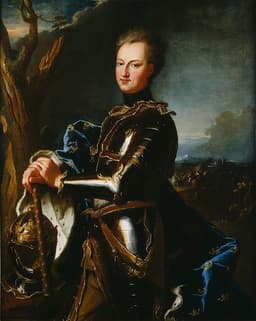
Charles XII of Sweden
General · Modern
56.6Total

Katsu Kaishu
General · Modern
59.5Total
Basic Information
Born
1682
1823
Died
1718
1899
Era
Modern
Modern
Nationality
Sweden
Japan
Occupation
General
General
Civilization
Western
Eastern
Score Comparison
Military (10%)
78.0
50.0
Political (20%)
39.4
62.7
Influence (20%)
56.7
59.0
Legacy (20%)
52.0
58.0
Leadership (15%)
68.0
71.0
Strategy (15%)
55.0
51.7
TOTAL
56.6
59.5
Charles XII of Sweden — Complete Timeline
1700 AD
Battle of NarvaWar◆ Major
Charles XII led a Swedish army of 8,000 to defeat a Russian force of 37,000 besieging Narva. The victory established his reputation as a military prodigy and temporarily halted Russian expansion in the Baltic.
Great Northern WarBattleSwedish Empire
Impact: regional
1706 AD
Invasion of SaxonyWar◆ Major
Charles XII invaded Saxony and forced Elector Augustus II to renounce his claim to the Polish throne through the Treaty of Altranst
Great Northern WarPolandSaxony
Impact: regional
1709 AD
Battle of PoltavaWar
Charles XII's Swedish army was decisively defeated by Peter the Great's Russian forces at Poltava. Charles fled to the Ottoman Empire, and the battle marked the end of Sweden's status as a great power and the rise of Russia.
Great Northern WarBattleSwedish Decline
Impact: globaldestructive
1718 AD
Siege of FredrikstenWar◆ Major
Charles XII was killed by a bullet to the head while besieging the Norwegian fortress of Fredriksten. His death ended the Great Northern War and led to the collapse of the Swedish Empire, with territories ceded to Russia.
DeathSiegeNorway
Impact: regionaltragic
Katsu Kaishu — Complete Timeline
1862 AD
Studied Naval Science in the NetherlandsCultural
Katsu was sent by the shogunate to study Western naval science and shipbuilding in the Netherlands. He returned with knowledge that he applied to modernize Japan's navy, including the construction of modern warships.
EducationWesternizationNaval Reform
Impact: nationalconstructive
1864 AD
Commanded the Shogunate NavyWar◆ Major
Katsu was appointed commander of the Tokugawa shogunate's navy. He modernized the fleet and trained officers, including future leaders of the Imperial Japanese Navy, but was unable to prevent the shogunate's eventual defeat.
Naval CommandModernizationBakumatsu
Impact: national
1868 AD
Negotiated the Surrender of Edo CastlePolitical Action
Katsu Kaishu, as the shogunate's representative, met with Saigo Takamori of the imperial forces to negotiate the peaceful surrender of Edo Castle. This prevented a destructive battle in the capital and facilitated the transition to imperial rule.
Meiji RestorationNegotiationPeaceful Transition
Impact: nationalconstructive
1872 AD
Served as Minister of the Navy in the Meiji GovernmentReform◆ Major
After the Restoration, Katsu served as Minister of the Navy in the new Meiji government. He oversaw the consolidation of the imperial navy and the adoption of Western naval practices, but resigned in 1873 due to political disagreements.
Meiji GovernmentNaval ReformModernization
Impact: nationalconstructive
Expert Analysis
Origins
Charles XII of Sweden was born in 1682 to King Charles XI and Queen Ulrika Eleonora. He received a thorough education in statecraft, military theory, and languages, becoming fluent in Latin, German, French, and Swedish. His father died in 1697, leaving him king at age 15. Charles showed early aptitude for horsemanship and military drills, but lacked diplomatic experience.
Katsu Kaishu was born in 1823 in Edo (Tokyo) as Katsu Rintaro, the son of a low-ranking samurai. His family served the Tokugawa shogunate. Katsu studied Dutch learning (Rangaku) and swordsmanship. In 1855, he was sent to the Netherlands to study naval science and shipbuilding, returning in 1860 with knowledge that would shape Japan's modernization. His background was scholarly and administrative, not military.
Rise to Power
Charles XII became king of Sweden in 1697 at age 15. The Great Northern War began in 1700 when Denmark-Norway, Saxony-Poland, and Russia attacked Sweden. Charles's first major action was the landing on Zealand, forcing Denmark out of the war. In November 1700, at the Battle of Narva, he led 8,000 Swedes to defeat a Russian army of 37,000, capturing many supplies. This victory established his reputation as a military prodigy. He then turned against Poland, spending years dethroning Augustus II and installing Stanisław Leszczyński as king. By 1706, he had achieved his goal, but the campaign exhausted Sweden's resources.
Katsu Kaishu rose through the shogunate bureaucracy. In 1860, he commanded the Kanrin Maru, the first Japanese ship to cross the Pacific, to deliver diplomats to the United States. This demonstrated his naval competence. He became a key adviser to the shogun, advocating for modernization and peaceful transition. In 1866, he was appointed commander of the shogunate's navy, training officers who later led the Imperial Japanese Navy.
Leadership & Governance
Charles XII ruled as an absolute monarch and military commander. He led from the front, sharing hardships with his soldiers. His governance was focused on war: he levied taxes, conscripted soldiers, and demanded loyalty. He refused to negotiate with Peter the Great, insisting on restoring Sweden's pre-war borders. His strategic decisions were often based on personal honor rather than pragmatism. For example, after defeating Saxony, he invaded Russia in 1708 without securing supply lines, leading to disaster.
Katsu Kaishu was a reformer and diplomat. As naval commander, he modernized the fleet with Western ships and training. He believed in gradual change to avoid civil war. In the Bakumatsu period, he negotiated with imperial forces while trying to preserve shogunate authority. His leadership was collaborative: he mentored younger samurai like Enomoto Takeaki and Yamaoka Tesshu. Politically, he scored 62.7, reflecting his ability to navigate the Meiji Restoration without bloodshed.
Triumph & Tragedy
Charles XII's greatest triumph was the Battle of Narva (1700), where he crushed a numerically superior Russian army. His victory at the Battle of Fraustadt (1706) was also decisive. However, his greatest failure was the invasion of Russia (1708-1709), culminating in the Battle of Poltava (1709), where his army was destroyed. He fled to the Ottoman Empire, where he spent five years in exile. His refusal to compromise led to Sweden's decline as a great power. His military score of 78.0 reflects his tactical brilliance but strategic flaws.
Katsu Kaishu's greatest achievement was negotiating the peaceful surrender of Edo Castle in 1868, preventing a destructive siege. He also modernized the shogunate navy and trained future leaders. His failure was his inability to prevent the Boshin War entirely; some shogunate forces fought on. He was criticized by imperial loyalists for his role in the old regime. His legacy score of 58.0 reflects his behind-the-scenes influence rather than fame.
Character & Destiny
Charles XII was stubborn, courageous, and pious. He believed in his divine right and refused to accept defeat. His character led him to make irrational decisions, like rejecting a Russian peace offer in 1707 that would have given Sweden most of its captured territory. He was killed in 1718 by a bullet at the Siege of Fredriksten, possibly by his own troops. His death ended the Great Northern War and led to Sweden's loss of its Baltic empire.
Katsu Kaishu was pragmatic, patient, and diplomatic. He understood that the shogunate could not survive and worked to ensure a peaceful transition. He was not a charismatic leader but a skilled negotiator. He lived until 1899, serving the Meiji government as Minister of the Navy and privy councillor. His character allowed him to adapt, unlike Charles XII.
Legacy
Charles XII is remembered as a warrior king who led Sweden to its peak and then its fall. He is a symbol of Swedish military glory but also of reckless ambition. His military campaigns are studied for tactics, but his strategic failures are cautionary. His legacy score of 52.0 reflects his limited long-term impact beyond military history.
Katsu Kaishu is remembered as a key figure in Japan's modernization. He helped avoid a bloody civil war and laid foundations for the Imperial Navy. His role as a reformer is celebrated in Japan, though he is less known abroad. His legacy score of 58.0 reflects his influence on Japan's transition from feudalism to modern state.
Conclusion
While Charles XII scored 78.0 in military prowess, Katsu Kaishu's total score of 59.5 surpasses Charles's 56.6. More importantly, Katsu's political and leadership scores (62.7 and 71.0) exceed Charles's (39.4 and 68.0). Charles's impact was primarily negative: he destroyed Sweden's empire. Katsu's impact was positive: he helped create modern Japan. Therefore, Katsu Kaishu had greater overall impact due to his constructive role in a major historical transition.
Rankings
🥇
Katsu KaishuLeader
Mil: 50.0Pol: 62.7Inf: 59.0
59.5
🥈
Charles XII of Sweden
Mil: 78.0Pol: 39.4Inf: 56.7
56.6
+2.9 behind
How This Comparison Works
Algorithm
Each figure is scored on 6 dimensions (0—100 scale) based on structured historical data: Military (10%), Political (20%), Influence (20%), Legacy (20%), Leadership (15%), Strategy (15%). The weighted total produces the final ranking.
Data Sources
Scores are computed from structured sub-indicators in the database. Scale factors adjust for era (Ancient ×0.85, Modern ×1.0) and civilization size (Eastern ×1.05, Other ×0.80) to account for differences in population and military scale.
Maximum 3 Figures
Comparisons are limited to 2—3 figures to ensure readability and statistical meaningfulness.
Error Margins
±5 points per dimension — Sub-scores are derived from historical records with inherent uncertainty. Two figures within 5 points on a dimension should be considered roughly equivalent in that area.
Total Score Accuracy
±3 points overall — The weighted combination of 6 dimensions produces a total score with approximately ±3 points of uncertainty. Differences of less than 3 points are not statistically significant— the figures are effectively tied.
Known Limitations
- Historical records are incomplete and uneven across civilizations
- Figures from oral-tradition societies may be underrepresented
- Occupation labels can misclassify multi-role figures
- Scores measure capability and impact, not moral character
- Quantitative scoring is a comparison tool, not absolute truth
Capability Radar
Military (10%) — Battles & Warfare
Battles
85
15
Win Rate
75
10
Expansion
65
10
Political (20%) — Governance & Reform
Reform
30
55
Diplomacy
20
70
Economy
25
30
Influence (20%) — Cultural & Global Reach
Cultural
50
45
Global
45
40
Legacy (20%) — Historical Impact
Historical
65
65
Longevity
55
50
Leadership (15%) — Power & Stability
Tenure
60
40
Stability
15
50
Strategy (15%) — Tactics & Innovation
Strategy
70
30
Tactics
90
20
Reform
40
60
Similar Comparisons
Comments & Discussion
No comments yet. Be the first to share your thoughts!