Loading...
Katsu Kaishu vs Oda Nobuhide
Katsu Kaishu leads by 5.4 pts · 2 figures compared
…

Katsu Kaishu
General · Modern
59.5Total
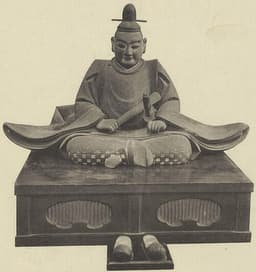
Oda Nobuhide
General · Modern
54.1Total
Basic Information
Born
1823
1510
Died
1899
1551
Era
Modern
Modern
Nationality
Japan
Japan
Occupation
General
General
Civilization
Eastern
Eastern
Score Comparison
Military (10%)
50.0
40.0
Political (20%)
62.7
54.7
Influence (20%)
59.0
56.4
Legacy (20%)
58.0
48.3
Leadership (15%)
71.0
64.5
Strategy (15%)
51.7
60.0
TOTAL
59.5
54.1
Katsu Kaishu — Complete Timeline
1862 AD
Studied Naval Science in the NetherlandsCultural
Katsu was sent by the shogunate to study Western naval science and shipbuilding in the Netherlands. He returned with knowledge that he applied to modernize Japan's navy, including the construction of modern warships.
EducationWesternizationNaval Reform
Impact: nationalconstructive
1864 AD
Commanded the Shogunate NavyWar◆ Major
Katsu was appointed commander of the Tokugawa shogunate's navy. He modernized the fleet and trained officers, including future leaders of the Imperial Japanese Navy, but was unable to prevent the shogunate's eventual defeat.
Naval CommandModernizationBakumatsu
Impact: national
1868 AD
Negotiated the Surrender of Edo CastlePolitical Action
Katsu Kaishu, as the shogunate's representative, met with Saigo Takamori of the imperial forces to negotiate the peaceful surrender of Edo Castle. This prevented a destructive battle in the capital and facilitated the transition to imperial rule.
Meiji RestorationNegotiationPeaceful Transition
Impact: nationalconstructive
1872 AD
Served as Minister of the Navy in the Meiji GovernmentReform◆ Major
After the Restoration, Katsu served as Minister of the Navy in the new Meiji government. He oversaw the consolidation of the imperial navy and the adoption of Western naval practices, but resigned in 1873 due to political disagreements.
Meiji GovernmentNaval ReformModernization
Impact: nationalconstructive
Oda Nobuhide — Complete Timeline
1542 AD
Battle of AzukizakaWar◆ Major
Nobuhide defeated the forces of Imagawa Yoshimoto at Azukizaka. This victory secured his control over Owari Province and established him as a major daimyo in the region, setting the stage for his son Nobunaga's rise.
BattleOwariSengoku Period
Impact: regional
1547 AD
Conflict with Saito DosanWar◆ Major
Nobuhide fought a series of inconclusive battles against Saito Dosan of Mino Province. The conflict ended with a peace treaty sealed by the marriage of Nobuhide's son Nobunaga to Dosan's daughter Nohime.
ConflictAllianceSengoku Period
Impact: regional
1551 AD
Death from illnessOther◆ Major
Nobuhide died suddenly from illness at the age of 41. His death left his young son Nobunaga as head of the Oda clan, leading to a period of instability and rebellion within the clan.
DeathSuccessionOda Clan
Impact: regionaltragic
Expert Analysis
Origins
Katsu Kaishu (born 1823) was born into a low-ranking samurai family in Edo. His father was a minor official, and Katsu showed early aptitude for Dutch studies, which led him to Western military science. In contrast, Oda Nobuhide (born 1510) was the head of a powerful samurai clan in Owari Province, inheriting a domain with strategic importance. While Katsu's background was humble and intellectual, Nobuhide's was aristocratic and martial, with his father being a daimyo.
Rise to Power
Katsu's rise came through his expertise in Western naval technology. In 1860, he commanded the first Japanese ship to cross the Pacific, the Kanrin Maru, to San Francisco. This earned him recognition, and he was appointed commander of the shogunate's navy in 1864. Nobuhide, however, rose through warfare. He fought the Imagawa clan at the Battle of Azukizaka in 1542, securing control over Owari. His conflict with Saito Dosan ended in a peace sealed by the marriage of his son Nobunaga to Dosan's daughter, Nōhime.
Leadership & Governance
Katsu's leadership was diplomatic and modernizing. As shogunate navy commander, he trained officers in Western methods, scoring 71.0 in leadership. He later served as Minister of the Navy in the Meiji government, overseeing the consolidation of the imperial navy. Nobuhide, with a leadership score of 64.5, was a traditional warlord. He expanded his territory through battles and alliances, but his governance was cut short by his early death at 41. Katsu's approach was collaborative and strategic, while Nobuhide's was confrontational and feudal.
Triumph & Tragedy
Katsu's greatest triumph was negotiating the peaceful surrender of Edo Castle in 1868, preventing a devastating civil war. His tragedy was that his efforts were often underappreciated; he was sidelined by the Meiji oligarchs despite his contributions. Nobuhide's triumph was defeating the Imagawa at Azukizaka, establishing the Oda clan as a major power. His tragedy was dying suddenly in 1551, leaving his young son Nobunaga to face a rebellion. Nobuhide scored 40.0 in military, while Katsu scored 50.0, reflecting their different roles.
Character & Destiny
Katsu was pragmatic and forward-thinking, traits that allowed him to adapt from shogunate loyalist to Meiji minister. His ability to negotiate with enemies like Saigo Takamori showed his diplomatic skill. Nobuhide was a capable commander but his early death cut his potential short. His character as a traditional daimyo limited his impact compared to his son. Historical assessments note Katsu's integrity and Nobuhide's ambition, but both were constrained by their eras.
Legacy
Katsu's legacy is in the peaceful transition to modernity; he is remembered as a key figure in Japan's modernization. His naval reforms influenced the Imperial Japanese Navy. Nobuhide's legacy is indirect: he laid the foundation for Nobunaga's unification of Japan. Without Nobuhide's consolidation of Owari, Nobunaga might not have succeeded. Katsu scores 58.0 in legacy, while Nobuhide scores 48.3, reflecting Katsu's more direct impact on national history.
Conclusion
Katsu Kaishu, with a total score of 59.5, had a greater impact on Japan than Oda Nobuhide (54.1). Katsu's role in the peaceful end of the shogunate and his contributions to modern naval development shaped Japan's trajectory into the modern era. Nobuhide, while important as a father and local unifier, did not achieve national significance. The 5.4-point gap reflects Katsu's broader influence. Therefore, Katsu Kaishu is the more significant historical figure.
Rankings
🥇
Katsu KaishuLeader
Mil: 50.0Pol: 62.7Inf: 59.0
59.5
🥈
Oda Nobuhide
Mil: 40.0Pol: 54.7Inf: 56.4
54.1
+5.4 behind
How This Comparison Works
Algorithm
Each figure is scored on 6 dimensions (0—100 scale) based on structured historical data: Military (10%), Political (20%), Influence (20%), Legacy (20%), Leadership (15%), Strategy (15%). The weighted total produces the final ranking.
Data Sources
Scores are computed from structured sub-indicators in the database. Scale factors adjust for era (Ancient ×0.85, Modern ×1.0) and civilization size (Eastern ×1.05, Other ×0.80) to account for differences in population and military scale.
Maximum 3 Figures
Comparisons are limited to 2—3 figures to ensure readability and statistical meaningfulness.
Error Margins
±5 points per dimension — Sub-scores are derived from historical records with inherent uncertainty. Two figures within 5 points on a dimension should be considered roughly equivalent in that area.
Total Score Accuracy
±3 points overall — The weighted combination of 6 dimensions produces a total score with approximately ±3 points of uncertainty. Differences of less than 3 points are not statistically significant— the figures are effectively tied.
Known Limitations
- Historical records are incomplete and uneven across civilizations
- Figures from oral-tradition societies may be underrepresented
- Occupation labels can misclassify multi-role figures
- Scores measure capability and impact, not moral character
- Quantitative scoring is a comparison tool, not absolute truth
Capability Radar
Military (10%) — Battles & Warfare
Battles
15
40
Win Rate
10
45
Expansion
10
40
Political (20%) — Governance & Reform
Reform
55
30
Diplomacy
70
45
Economy
30
35
Influence (20%) — Cultural & Global Reach
Cultural
45
30
Global
40
20
Legacy (20%) — Historical Impact
Historical
65
45
Longevity
50
35
Leadership (15%) — Power & Stability
Tenure
40
40
Stability
50
30
Strategy (15%) — Tactics & Innovation
Strategy
30
45
Tactics
20
50
Reform
60
35
Similar Comparisons
Comments & Discussion
No comments yet. Be the first to share your thoughts!