Loading...
Charles XII of Sweden vs Norman Schwarzkopf Jr.
Norman Schwarzkopf Jr. leads by 5.3 pts · 2 figures compared
…
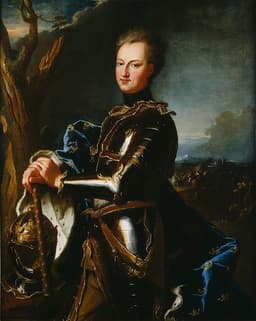
Charles XII of Sweden
General · Modern
56.6Total
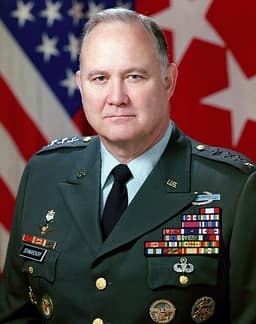
Norman Schwarzkopf Jr.
General · Modern
61.9Total
Basic Information
Born
1682
1934
Died
1718
—
Era
Modern
Modern
Nationality
Sweden
United States
Occupation
General
General
Civilization
Western
Western
Score Comparison
Military (10%)
78.0
76.0
Political (20%)
39.4
68.0
Influence (20%)
56.7
56.7
Legacy (20%)
52.0
50.0
Leadership (15%)
68.0
71.0
Strategy (15%)
55.0
68.1
TOTAL
56.6
61.9
Charles XII of Sweden — Complete Timeline
1700 AD
Battle of NarvaWar◆ Major
Charles XII led a Swedish army of 8,000 to defeat a Russian force of 37,000 besieging Narva. The victory established his reputation as a military prodigy and temporarily halted Russian expansion in the Baltic.
Great Northern WarBattleSwedish Empire
Impact: regional
1706 AD
Invasion of SaxonyWar◆ Major
Charles XII invaded Saxony and forced Elector Augustus II to renounce his claim to the Polish throne through the Treaty of Altranst
Great Northern WarPolandSaxony
Impact: regional
1709 AD
Battle of PoltavaWar
Charles XII's Swedish army was decisively defeated by Peter the Great's Russian forces at Poltava. Charles fled to the Ottoman Empire, and the battle marked the end of Sweden's status as a great power and the rise of Russia.
Great Northern WarBattleSwedish Decline
Impact: globaldestructive
1718 AD
Siege of FredrikstenWar◆ Major
Charles XII was killed by a bullet to the head while besieging the Norwegian fortress of Fredriksten. His death ended the Great Northern War and led to the collapse of the Swedish Empire, with territories ceded to Russia.
DeathSiegeNorway
Impact: regionaltragic
Norman Schwarzkopf Jr. — Complete Timeline
1983 AD
Command of the 24th Mechanized Infantry Division in Grenada (Operation Urgent Fury)War◆ Major
Schwarzkopf commanded the 24th Mechanized Infantry Division during the US invasion of Grenada. The operation successfully overthrew the Marxist government and evacuated US citizens, though it faced criticism for coordination issues.
Cold WarGrenadaInvasion
Impact: regionalconstructive
1988 AD
Appointment as Commander of US Central Command (CENTCOM)Political Action◆ Major
Schwarzkopf was appointed commander of US Central Command, responsible for US military operations in the Middle East. This position placed him in charge of planning and executing the response to Iraq's invasion of Kuwait.
Middle EastCommandCENTCOM
Impact: globalconstructive
1991 AD
Command of Operation Desert StormWar
Schwarzkopf commanded the coalition forces in the Gulf War, executing a 100-hour ground campaign that liberated Kuwait from Iraqi occupation. The operation involved a massive air campaign followed by a rapid armored thrust that destroyed the Iraqi army.
Gulf WarDesert StormVictory
Impact: globalconstructive
Negotiation of the Ceasefire at SafwanPolitical Action◆ Major
Schwarzkopf negotiated the ceasefire agreement with Iraqi military commanders at Safwan airfield on March 3, 1991. The agreement ended the Gulf War and established terms for the withdrawal of Iraqi forces from Kuwait.
Gulf WarCeasefireDiplomacy
Impact: regionalconstructive
Expert Analysis
Origins
Charles XII of Sweden was born in 1682 to King Charles XI and Queen Ulrika Eleonora. He received a rigorous education in statecraft, military science, and languages, preparing him for rule. His father died when Charles was 14, and he assumed the throne at 15 in 1697, inheriting a well-organized Swedish Empire with a formidable army.
Norman Schwarzkopf Jr. was born in 1934 in Trenton, New Jersey, to a military family. His father, Norman Schwarzkopf Sr., was a police officer and later a general. Schwarzkopf attended West Point, graduating in 1956. He served in Vietnam, where he was awarded three Silver Stars, and later earned a master's degree in guided missile engineering from the University of Southern California.
Rise to Power
Charles XII's rise began with the outbreak of the Great Northern War in 1700, when Denmark, Poland-Saxony, and Russia allied against Sweden. At age 18, he led the Swedish army to a stunning victory at the Battle of Narva (1700), where his force of 8,000 defeated a Russian army of 37,000. This victory established his reputation as a military prodigy. He then turned on Poland, invading Saxony and forcing Augustus II to renounce the Polish throne via the Treaty of Altranstädt (1706). By 1707, Charles controlled much of Eastern Europe.
Schwarzkopf rose through the ranks via staff and command positions. He served two tours in Vietnam, then held key posts including assistant division commander of the 8th Infantry Division in Germany. In 1983, he commanded the 24th Mechanized Infantry Division during the US invasion of Grenada (Operation Urgent Fury), which successfully overthrew the Marxist government. His performance led to his appointment as Commander of US Central Command (CENTCOM) in 1988, placing him in charge of US military operations in the Middle East.
Leadership & Governance
Charles XII ruled as an absolute monarch, personally leading his army in battle. He was known for his courage and discipline, often sharing hardships with his soldiers. However, his governance was autocratic and focused on military expansion. He refused diplomatic solutions, such as accepting peace offers from Peter the Great, and instead pursued total victory. His strategic decisions, like the invasion of Russia in 1708, were bold but poorly supplied, leading to the catastrophic defeat at Poltava (1709).
Schwarzkopf led by building consensus and leveraging technology. As Desert Storm commander, he orchestrated a coalition of 35 nations, coordinating air and ground forces with precision. His leadership style was direct and demanding, earning the nickname "Stormin' Norman." He delegated operational details while focusing on the overall strategy. His political acumen (score 68.0) allowed him to manage coalition politics and media relations effectively.
Triumph & Tragedy
Charles XII's greatest triumph was the victory at Narva, which made him a legend. His invasion of Saxony also demonstrated his strategic reach. His greatest failure was the invasion of Russia, which ended in the Battle of Poltava (1709), where his army was destroyed and he fled to the Ottoman Empire. He later died at the Siege of Fredriksten (1718) in Norway, shot in the head, ending the war and leading to Sweden's decline as a great power.
Schwarzkopf's triumph was Operation Desert Storm (1991), a 100-hour ground campaign that liberated Kuwait with minimal coalition casualties. His strategy of a left-hook flanking maneuver through the desert was highly effective. His failure or controversy includes the ceasefire negotiations at Safwan (1991), where he allowed Iraqi helicopters to fly, which were later used to suppress uprisings. Critics argue this was a political mistake, though Schwarzkopf followed his orders.
Character & Destiny
Charles XII was stubborn and obsessive, believing in divine providence and personal bravery. His refusal to compromise led to his downfall. Historians note his tactical brilliance but strategic blindness. He scored 78.0 in military, reflecting his battlefield prowess, but only 39.4 in political, indicating his inability to navigate diplomacy.
Schwarzkopf was pragmatic and media-savvy, but also prone to outbursts. He balanced military effectiveness with political constraints. His leadership score of 71.0 and strategy of 68.1 reflect his ability to adapt to modern warfare. He retired in 1991, avoiding the pitfalls of prolonged occupation.
Legacy
Charles XII is remembered as a warrior-king who expanded Sweden briefly but ultimately caused its decline. His tactics influenced later generals, but his strategic failures serve as a cautionary tale. His legacy score of 52.0 reflects limited long-term impact.
Schwarzkopf's legacy is tied to the success of Desert Storm, which restored US confidence after Vietnam and demonstrated the effectiveness of precision warfare. His model of coalition warfare and media management shaped post-Cold War military doctrine. He scored 50.0 in legacy, but his influence on military strategy endures.
Conclusion
While Charles XII was a tactical genius, his political ineptitude and strategic errors led to Sweden's downfall. Schwarzkopf, with a higher total score of 61.9 vs. Charles's 56.6, achieved his objectives with fewer long-term negative consequences. Schwarzkopf's ability to integrate technology, diplomacy, and military power in a modern context makes him more impactful. Charles's legacy is one of tragic brilliance; Schwarzkopf's is one of effective command. Therefore, Norman Schwarzkopf Jr. had a greater overall impact.
Rankings
🥇
Norman Schwarzkopf Jr.Leader
Mil: 76.0Pol: 68.0Inf: 56.7
61.9
🥈
Charles XII of Sweden
Mil: 78.0Pol: 39.4Inf: 56.7
56.6
+5.3 behind
How This Comparison Works
Algorithm
Each figure is scored on 6 dimensions (0—100 scale) based on structured historical data: Military (10%), Political (20%), Influence (20%), Legacy (20%), Leadership (15%), Strategy (15%). The weighted total produces the final ranking.
Data Sources
Scores are computed from structured sub-indicators in the database. Scale factors adjust for era (Ancient ×0.85, Modern ×1.0) and civilization size (Eastern ×1.05, Other ×0.80) to account for differences in population and military scale.
Maximum 3 Figures
Comparisons are limited to 2—3 figures to ensure readability and statistical meaningfulness.
Error Margins
±5 points per dimension — Sub-scores are derived from historical records with inherent uncertainty. Two figures within 5 points on a dimension should be considered roughly equivalent in that area.
Total Score Accuracy
±3 points overall — The weighted combination of 6 dimensions produces a total score with approximately ±3 points of uncertainty. Differences of less than 3 points are not statistically significant— the figures are effectively tied.
Known Limitations
- Historical records are incomplete and uneven across civilizations
- Figures from oral-tradition societies may be underrepresented
- Occupation labels can misclassify multi-role figures
- Scores measure capability and impact, not moral character
- Quantitative scoring is a comparison tool, not absolute truth
Capability Radar
Military (10%) — Battles & Warfare
Battles
85
75
Win Rate
75
85
Expansion
65
70
Political (20%) — Governance & Reform
Reform
30
30
Diplomacy
20
60
Economy
25
30
Influence (20%) — Cultural & Global Reach
Cultural
50
55
Global
45
60
Legacy (20%) — Historical Impact
Historical
65
65
Longevity
55
40
Leadership (15%) — Power & Stability
Tenure
60
40
Stability
15
50
Strategy (15%) — Tactics & Innovation
Strategy
70
85
Tactics
90
80
Reform
40
60
Similar Comparisons
Comments & Discussion
No comments yet. Be the first to share your thoughts!