Loading...
This comparison has not been analyzed yet.
One-time AI generation (~1 minute). Scores and timeline are already available below.
Charles XII of Sweden vs Hussein Farrah Aidid
Charles XII of Sweden leads by 18.1 pts · 2 figures compared
…
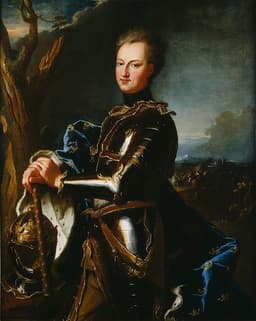
Charles XII of Sweden
General · Modern
56.6Total

Hussein Farrah Aidid
General · Modern
38.5Total
Basic Information
Born
1682
1962
Died
1718
—
Era
Modern
Modern
Nationality
Sweden
Somalia
Occupation
General
General
Civilization
Western
Other
Score Comparison
Military (10%)
78.0
50.0
Political (20%)
39.4
26.4
Influence (20%)
56.7
47.1
Legacy (20%)
52.0
37.5
Leadership (15%)
68.0
35.4
Strategy (15%)
55.0
30.3
TOTAL
56.6
38.5
Charles XII of Sweden — Complete Timeline
1700 AD
Battle of NarvaWar◆ Major
Charles XII led a Swedish army of 8,000 to defeat a Russian force of 37,000 besieging Narva. The victory established his reputation as a military prodigy and temporarily halted Russian expansion in the Baltic.
Great Northern WarBattleSwedish Empire
Impact: regional
1706 AD
Invasion of SaxonyWar◆ Major
Charles XII invaded Saxony and forced Elector Augustus II to renounce his claim to the Polish throne through the Treaty of Altranst
Great Northern WarPolandSaxony
Impact: regional
1709 AD
Battle of PoltavaWar
Charles XII's Swedish army was decisively defeated by Peter the Great's Russian forces at Poltava. Charles fled to the Ottoman Empire, and the battle marked the end of Sweden's status as a great power and the rise of Russia.
Great Northern WarBattleSwedish Decline
Impact: globaldestructive
1718 AD
Siege of FredrikstenWar◆ Major
Charles XII was killed by a bullet to the head while besieging the Norwegian fortress of Fredriksten. His death ended the Great Northern War and led to the collapse of the Swedish Empire, with territories ceded to Russia.
DeathSiegeNorway
Impact: regionaltragic
Hussein Farrah Aidid — Complete Timeline
1980 AD
Served as a U.S. MarineOther
Hussein Farrah Aidid served as a U.S. Marine, including a tour of duty in Somalia during Operation Restore Hope. This background made his later role as a warlord fighting U.S. forces highly ironic and controversial.
US MarineIronySomalia
Impact: national
1996 AD
Became Leader of the Somali National AlliancePolitical Action◆ Major
After the death of his father, Mohamed Farrah Aidid, Hussein Farrah Aidid was chosen as the leader of the Somali National Alliance (SNA). He inherited control of the faction and continued the civil war against rival groups.
Faction LeadershipCivil WarSomalia
Impact: nationaldestructive
2004 AD
Participated in the 2004 Peace ProcessPolitical Action◆ Major
Hussein Farrah Aidid participated in the peace talks that led to the formation of the Transitional Federal Government (TFG). He later served as a deputy prime minister in the TFG, marking a shift from warlord to politician.
Peace ProcessTFGSomalia
Impact: nationalconstructive
This comparison has not been analyzed yet.
One-time AI generation (~1 minute). Scores and timeline are already available below.
Rankings
🥇
Charles XII of SwedenLeader
Mil: 78.0Pol: 39.4Inf: 56.7
56.6
🥈
Hussein Farrah Aidid
Mil: 50.0Pol: 26.4Inf: 47.1
38.5
+18.1 behind
How This Comparison Works
Algorithm
Each figure is scored on 6 dimensions (0—100 scale) based on structured historical data: Military (10%), Political (20%), Influence (20%), Legacy (20%), Leadership (15%), Strategy (15%). The weighted total produces the final ranking.
Data Sources
Scores are computed from structured sub-indicators in the database. Scale factors adjust for era (Ancient ×0.85, Modern ×1.0) and civilization size (Eastern ×1.05, Other ×0.80) to account for differences in population and military scale.
Maximum 3 Figures
Comparisons are limited to 2—3 figures to ensure readability and statistical meaningfulness.
Error Margins
±5 points per dimension — Sub-scores are derived from historical records with inherent uncertainty. Two figures within 5 points on a dimension should be considered roughly equivalent in that area.
Total Score Accuracy
±3 points overall — The weighted combination of 6 dimensions produces a total score with approximately ±3 points of uncertainty. Differences of less than 3 points are not statistically significant— the figures are effectively tied.
Known Limitations
- Historical records are incomplete and uneven across civilizations
- Figures from oral-tradition societies may be underrepresented
- Occupation labels can misclassify multi-role figures
- Scores measure capability and impact, not moral character
- Quantitative scoring is a comparison tool, not absolute truth
Capability Radar
Military (10%) — Battles & Warfare
Battles
85
15
Win Rate
75
10
Expansion
65
10
Political (20%) — Governance & Reform
Reform
30
5
Diplomacy
20
10
Economy
25
5
Influence (20%) — Cultural & Global Reach
Cultural
50
5
Global
45
5
Legacy (20%) — Historical Impact
Historical
65
10
Longevity
55
5
Leadership (15%) — Power & Stability
Tenure
60
10
Stability
15
5
Strategy (15%) — Tactics & Innovation
Strategy
70
15
Tactics
90
20
Reform
40
5
Similar Comparisons
Comments & Discussion
No comments yet. Be the first to share your thoughts!