Loading...
Charles VII vs Frederick I of Baden
Charles VII leads by 3.8 pts · 2 figures compared
…

Charles VII
Emperor · Modern
50.4Total
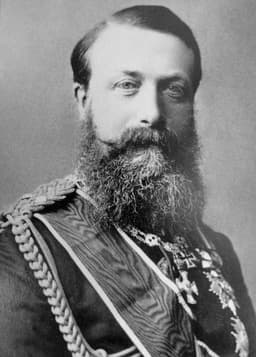
Frederick I of Baden
Emperor · Modern
46.6Total
Basic Information
Born
1697
1826
Died
1745
1907
Era
Modern
Modern
Nationality
Holy Roman Empire
Baden
Occupation
Emperor
Emperor
Civilization
Western
Western
Score Comparison
Military (10%)
55.0
22.9
Political (20%)
46.6
45.0
Influence (20%)
50.2
48.6
Legacy (20%)
40.0
36.7
Leadership (15%)
62.2
68.0
Strategy (15%)
60.0
60.0
TOTAL
50.4
46.6
Charles VII — Complete Timeline
1742 AD
Lost Bavaria to Austrian occupationWar◆ Major
After his election, Austrian forces under Maria Theresa invaded and occupied Bavaria, Charles VII's hereditary lands. He was forced to flee to Frankfurt, and his rule as emperor was largely nominal, as he lacked effective control over the empire.
War of the Austrian SuccessionOccupationBavaria
Impact: regionaldestructive
Elected Holy Roman EmperorPolitical Action◆ Major
Charles VII, a Wittelsbach prince, was elected Holy Roman Emperor during the War of the Austrian Succession, becoming the first non-Habsburg emperor in over 300 years. His election was supported by France and Prussia, challenging Habsburg dominance.
ElectionWar of the Austrian SuccessionWittelsbach
Impact: regional
1745 AD
Died in exileOther
Charles VII died in Munich shortly after returning from exile, ending his brief and troubled reign. His death allowed the Habsburgs to regain the imperial title, as his son Maximilian III Joseph made peace with Maria Theresa.
DeathExilePeace
Impact: regionaltragic
Frederick I of Baden — Complete Timeline
1856 AD
Marriage to Princess Louise of PrussiaOther
Frederick I married Princess Louise of Prussia, daughter of Prince Wilhelm (later Emperor Wilhelm I), on 20 September 1856. This marriage strengthened ties between Baden and Prussia, influencing Baden's alignment in German politics.
MarriagePrussiaBaden
Impact: nationalconstructive
1858 AD
Accession as Grand Duke of BadenPolitical Action◆ Major
Frederick I became Grand Duke of Baden on 5 September 1858, succeeding his father Leopold. His reign was noted for liberal reforms and constitutional governance.
BadenSuccession
Impact: national
1860 AD
Liberal reforms in BadenReform◆ Major
Frederick I implemented a series of liberal reforms in Baden, including freedom of the press, religious tolerance, and judicial independence. These reforms made Baden one of the most progressive states in the German Confederation.
BadenLiberalismReform
Impact: nationalprogressive
1871 AD
Support for German unificationPolitical Action◆ Major
Frederick I supported the unification of Germany under Prussian leadership. He proclaimed the German Empire in Versailles on 18 January 1871, alongside other German monarchs, and Baden became a state within the empire.
German unificationBadenEmpire
Impact: nationalconstructive
Expert Analysis
Origins
Charles VII, born 6 April 1697 in Brussels, was a member of the Wittelsbach dynasty. His father, Maximilian II Emanuel, was Elector of Bavaria and Governor of the Spanish Netherlands. Charles grew up in exile after the War of the Spanish Succession, which shaped his ambition to restore Bavarian prestige. He studied at the University of Leuven but was primarily trained in military and courtly affairs.
Frederick I of Baden, born 9 September 1826 in Karlsruhe, was the third son of Grand Duke Leopold of Baden. His mother, Princess Sophie of Sweden, instilled liberal ideals. Frederick studied at the University of Heidelberg and Bonn, where he was influenced by liberal professors. His marriage in 1856 to Princess Louise of Prussia, daughter of Prince Wilhelm (later Emperor Wilhelm I), positioned him as a mediator between liberal and conservative forces.
Rise to Power
Charles VII became Elector of Bavaria in 1726 after his father's death. His rise to imperial power came during the War of the Austrian Succession (1740-1748). He contested the Pragmatic Sanction that allowed Maria Theresa to inherit Habsburg lands. Backed by France and Prussia, he was elected Holy Roman Emperor on 24 January 1742 as Charles VII, the first non-Habsburg emperor in over 300 years. His election was a political victory, but it triggered immediate military retaliation.
Frederick I became Grand Duke of Baden on 5 September 1858 after his father's death. He ascended during a period of rising German nationalism and liberal demands. Unlike Charles, Frederick did not seek imperial office. His rise was legal and peaceful, supported by the Baden constitution. His close ties to the Prussian royal family, via his marriage, helped him navigate the unification era.
Leadership & Governance
Charles VII's leadership was reactive and undermined by military weakness. He scored 62.2 in leadership and 55.0 in military. His governance was traditional, relying on noble support. He failed to secure his own duchy: Austrian forces invaded Bavaria in 1742, forcing him to flee to Frankfurt. He spent most of his reign in exile, unable to rule effectively. His political score of 46.6 reflects his inability to maintain power.
Frederick I's leadership (68.0) was proactive and liberal. He implemented reforms: freedom of the press (1864), religious tolerance, judicial independence, and a constitutional government. He supported the German Customs Union and educational expansion. His strategy score of 60.0 reflects his support for Prussian-led unification. He proclaimed the German Empire on 18 January 1871 in Versailles, acting as a loyal ally to Wilhelm I.
Triumph & Tragedy
Charles VII's greatest triumph was his election as Holy Roman Emperor, a symbol of Wittelsbach power. However, his tragedy was immediate: he lost his hereditary lands and died in exile on 20 January 1745 in Munich, shortly after returning. His reign lasted only three years and failed to achieve any lasting political gains. His legacy score of 40.0 reflects this failure.
Frederick I's triumph was his successful liberal reforms, which made Baden a model state. He also played a key role in German unification. His tragedy was that his reforms were partly reversed after 1871 under conservative pressures. He died on 28 September 1907, seeing his liberal ideals eroded. His legacy score of 36.7 reflects moderate but incomplete impact.
Character & Destiny
Charles VII was ambitious but overreliant on foreign allies. His character was shaped by exile and a desire for revenge against the Habsburgs. He made tactical errors, such as underestimating Maria Theresa's resolve. His destiny was to be a short-lived emperor whose reign highlighted the decline of imperial authority.
Frederick I was pragmatic, conciliatory, and principled. He balanced liberal convictions with loyalty to Prussia. His character allowed him to survive the turbulent 1860s. His destiny was to be a successful but overshadowed ruler, remembered more for his reforms than his power.
Legacy
Charles VII's legacy is minimal. He is remembered as the last non-Habsburg emperor before the empire's dissolution. His scores: influence 50.2, legacy 40.0. His reign demonstrated the Habsburgs' resilience. He left no enduring institutions.
Frederick I's legacy is more positive. Baden's liberal constitution survived until 1918. His support for unification and reforms influenced later German states. His scores: influence 48.6, legacy 36.7. He is a symbol of liberal constitutionalism in 19th-century Germany.
Conclusion
Frederick I of Baden had greater impact than Charles VII. Despite a lower total score (46.6 vs. 50.4), Frederick's reforms and role in unification had lasting effects, while Charles's reign was a failure. Frederick's leadership score of 68.0 and political 45.0 indicate effective governance, compared to Charles's 62.2 leadership and 46.6 political. Frederick's legacy, though modest, is tangible; Charles's is negligible. The score gap of 3.8 points does not reflect historical significance. Frederick I is the more consequential ruler.
Rankings
🥇
Charles VIILeader
Mil: 55.0Pol: 46.6Inf: 50.2
50.4
🥈
Frederick I of Baden
Mil: 22.9Pol: 45.0Inf: 48.6
46.6
+3.8 behind
How This Comparison Works
Algorithm
Each figure is scored on 6 dimensions (0—100 scale) based on structured historical data: Military (10%), Political (20%), Influence (20%), Legacy (20%), Leadership (15%), Strategy (15%). The weighted total produces the final ranking.
Data Sources
Scores are computed from structured sub-indicators in the database. Scale factors adjust for era (Ancient ×0.85, Modern ×1.0) and civilization size (Eastern ×1.05, Other ×0.80) to account for differences in population and military scale.
Maximum 3 Figures
Comparisons are limited to 2—3 figures to ensure readability and statistical meaningfulness.
Error Margins
±5 points per dimension — Sub-scores are derived from historical records with inherent uncertainty. Two figures within 5 points on a dimension should be considered roughly equivalent in that area.
Total Score Accuracy
±3 points overall — The weighted combination of 6 dimensions produces a total score with approximately ±3 points of uncertainty. Differences of less than 3 points are not statistically significant— the figures are effectively tied.
Known Limitations
- Historical records are incomplete and uneven across civilizations
- Figures from oral-tradition societies may be underrepresented
- Occupation labels can misclassify multi-role figures
- Scores measure capability and impact, not moral character
- Quantitative scoring is a comparison tool, not absolute truth
Capability Radar
Military (10%) — Battles & Warfare
Battles
35
38
Win Rate
30
37
Expansion
25
41
Political (20%) — Governance & Reform
Reform
25
60
Diplomacy
45
55
Economy
30
50
Influence (20%) — Cultural & Global Reach
Cultural
20
20
Global
20
10
Legacy (20%) — Historical Impact
Historical
30
20
Longevity
20
10
Leadership (15%) — Power & Stability
Tenure
40
50
Stability
20
55
Strategy (15%) — Tactics & Innovation
Strategy
35
45
Tactics
40
51
Reform
20
49
Similar Comparisons
Comments & Discussion
No comments yet. Be the first to share your thoughts!