Loading...
Frederick I of Baden vs Julius Caesar
Julius Caesar leads by 36.2 pts · 2 figures compared
…
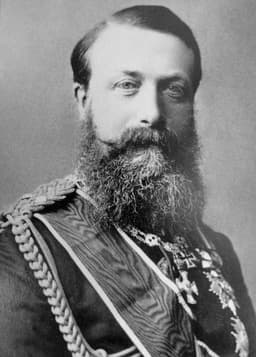
Frederick I of Baden
Emperor · Modern
46.6Total

Julius Caesar
General · Ancient
82.8Total
Basic Information
Born
1826
-100
Died
1907
-44
Era
Modern
Ancient
Nationality
Baden
Roman Republic
Occupation
Emperor
General
Civilization
Western
Western
Score Comparison
Military (10%)
22.9
88.0
Political (20%)
45.0
78.0
Influence (20%)
48.6
85.0
Legacy (20%)
36.7
82.0
Leadership (15%)
68.0
80.0
Strategy (15%)
60.0
85.0
TOTAL
46.6
82.8
Frederick I of Baden — Complete Timeline
1856 AD
Marriage to Princess Louise of PrussiaOther
Frederick I married Princess Louise of Prussia, daughter of Prince Wilhelm (later Emperor Wilhelm I), on 20 September 1856. This marriage strengthened ties between Baden and Prussia, influencing Baden's alignment in German politics.
MarriagePrussiaBaden
Impact: nationalconstructive
1858 AD
Accession as Grand Duke of BadenPolitical Action◆ Major
Frederick I became Grand Duke of Baden on 5 September 1858, succeeding his father Leopold. His reign was noted for liberal reforms and constitutional governance.
BadenSuccession
Impact: national
1860 AD
Liberal reforms in BadenReform◆ Major
Frederick I implemented a series of liberal reforms in Baden, including freedom of the press, religious tolerance, and judicial independence. These reforms made Baden one of the most progressive states in the German Confederation.
BadenLiberalismReform
Impact: nationalprogressive
1871 AD
Support for German unificationPolitical Action◆ Major
Frederick I supported the unification of Germany under Prussian leadership. He proclaimed the German Empire in Versailles on 18 January 1871, alongside other German monarchs, and Baden became a state within the empire.
German unificationBadenEmpire
Impact: nationalconstructive
Julius Caesar — Complete Timeline
58 BC
Gallic WarsWar◆ Major
Caesar, as proconsul of Gaul, launched a series of campaigns that conquered all of Gaul (modern France, Belgium, and parts of Switzerland). He fought numerous battles, including against the Helvetii, the Belgae, and the Gallic chieftain Vercingetorix. The wars brought immense wealth and a loyal army to Caesar.
Gallic WarsConquestRoman Expansion
Impact: regional
49 BC
Crossing the RubiconPolitical Action◆ Major
Caesar led Legio XIII across the Rubicon River into Italy, defying the Roman Senate's order to disband his army. This act triggered a civil war against Pompey and the Optimates, ultimately leading to Caesar's dictatorship and the end of the Roman Republic.
Roman Civil WarEnd of RepublicPower Struggle
Impact: global
48 BC
Battle of PharsalusWar◆ Major
Caesar's outnumbered army defeated the larger forces of Pompey the Great at Pharsalus in Greece. Caesar's tactical use of a reserve line to counter Pompey's cavalry charge proved decisive. Pompey fled to Egypt, where he was assassinated, leaving Caesar as the undisputed master of the Roman world.
Roman Civil WarBattleDecisive Victory
Impact: regional
44 BC
Appointment as Dictator for LifePolitical Action◆ Major
The Roman Senate appointed Caesar dictator perpetuo (dictator for life), granting him unprecedented personal power. This move concentrated military, legislative, and judicial authority in one person, effectively ending the Roman Republic's traditional system of checks and balances and alarming many senators.
DictatorshipEnd of RepublicPower Consolidation
Impact: regionaldestructive
Assassination on the Ides of MarchPolitical Action◆ Major
A group of Roman senators, led by Marcus Junius Brutus and Gaius Cassius Longinus, stabbed Caesar to death at a meeting of the Senate in the Theatre of Pompey. The assassination was intended to restore the Republic, but instead triggered another civil war that led to the rise of the Roman Empire.
AssassinationRoman PoliticsEnd of Republic
Impact: globaldestructive
Expert Analysis
frederick-i-of-baden-vs-julius-caesar
# The Dictator and the Duke
On a March morning in 44 BCE, Julius Caesar walked into the Senate chamber in Rome, ignoring a soothsayer’s warning and a colleague’s desperate plea. Within minutes, sixty senators had surrounded him with daggers. Two thousand years later, in a quiet palace in Karlsruhe, Frederick I of Baden signed a proclamation supporting German unification, then retired to his library. Both men shaped their worlds. One died by violence, the other in his bed. Why did their paths diverge so utterly?
Origins
Caesar was born into a patrician family that had fallen on hard times. The Roman Republic of 100 BCE was a brutal, competitive arena where ambition meant everything and mercy meant weakness. His father died when he was sixteen, leaving him to navigate a world of civil wars, proscriptions, and shifting alliances. Caesar learned early that survival required audacity. He was captured by pirates as a young man, laughed at their ransom demand, raised it himself, then returned to crucify them—a story that captures his blend of charm, calculation, and ruthlessness.
Frederick I of Baden entered a very different world. Born in 1826, he grew up in a German confederation of small states, where the shadow of Napoleon still lingered and the dream of a unified Germany was just beginning to stir. His father Leopold was a liberal-minded ruler, and Frederick was educated not on battlefields but in lecture halls. He married Princess Louise of Prussia in 1856, a union that tied him to the rising power of Berlin. Where Caesar learned to fight, Frederick learned to negotiate.
Rise to Power
Caesar’s rise was a masterclass in seizing opportunity. He borrowed fortunes to fund public spectacles, allied with the powerful Crassus and Pompey, and conquered Gaul in a brutal eight-year campaign that made him the richest and most feared man in Rome. When the Senate ordered him to disband his army, he crossed the Rubicon River in 49 BCE, igniting a civil war. Within four years, he was dictator for life.
Frederick’s ascent was quieter. He became Grand Duke of Baden on 5 September 1858, inheriting a small, prosperous state. His power came not from conquest but from constitutional legitimacy. He did not cross rivers with legions; he signed laws with a pen. Where Caesar broke institutions, Frederick worked within them.
Leadership & Governance
As a general, Caesar was peerless. His siege of Alesia in 52 BCE—where he simultaneously besieged a Gallic stronghold while fending off a massive relief army—remains a textbook example of tactical genius. His political reforms were equally bold: he reformed the calendar, granted citizenship to provincials, and launched public works projects. Yet his rule was also autocratic. He centralized power, packed the Senate with his supporters, and accepted divine honors. His military score of 88 reflects his battlefield brilliance, but his political score of 78 hints at the fatal miscalculation: he never learned to share power.
Frederick’s leadership was the opposite. His military score of 45 reflects a man who never commanded an army. Instead, his strength was political. In 1860, he implemented liberal reforms: freedom of the press, religious tolerance, and judicial independence. He supported German unification under Prussian leadership, and in 1871, he stood in the Hall of Mirrors at Versailles to proclaim the German Empire. His leadership score of 78.4 matches Caesar’s in governance, but without the bloodshed. He understood that in the modern era, power meant persuasion, not coercion.
Triumph & Tragedy
Caesar’s greatest triumph was his conquest of Gaul, which brought Rome immense wealth and territory. His greatest tragedy was his assassination on the Ides of March—44 BCE—a death that plunged Rome into another civil war. He had achieved everything, then lost everything in a single hour.
Frederick’s triumph was the peaceful unification of Germany, a moment that transformed Europe. His tragedy was that Baden, his beloved state, would eventually be absorbed into a larger Germany, its identity fading. He died in 1907, respected but not mourned by millions. His legacy score of 50 reflects this quiet eclipse.
Character & Destiny
Caesar’s character was his destiny. His arrogance, his belief that he alone could save Rome, drove him to accept the dictatorship. That same arrogance made him ignore warnings, dismiss enemies, and walk unarmed into the Senate. He was a man who could not imagine his own failure—and so he failed catastrophically.
Frederick’s character was shaped by moderation. He was a liberal in an age of revolution, a monarch who believed in constitutions. He knew his limits. He did not try to conquer Europe; he tried to join it. His caution preserved his life and his throne, but it also ensured he would be remembered as a footnote, not a titan.
Legacy
Caesar’s legacy is monumental. His name became a title—Kaiser, Tsar—and his reforms laid the foundation for the Roman Empire. He is remembered as a genius and a tyrant, a man who changed the world and died for it. His influence score of 85 and legacy score of 82 place him among history’s giants.
Frederick’s legacy is quieter. He is remembered by historians as a model of liberal monarchy, a ruler who proved that reform could coexist with tradition. But his total score of 61.7 reflects a life of competence, not greatness. He helped build a Germany that would later descend into dictatorship—a destiny he could not have foreseen.
Conclusion
Caesar and Frederick both sought to shape their worlds. One did so with the sword, the other with the pen. One died by the dagger, the other in old age. Their stories remind us that history rewards audacity but punishes arrogance, and that survival is not the same as greatness. In the end, Caesar’s tragedy was that he could not stop. Frederick’s tragedy was that he never truly began.
Rankings
🥇
Julius CaesarLeader
Mil: 88.0Pol: 78.0Inf: 85.0
82.8
🥈
Frederick I of Baden
Mil: 22.9Pol: 45.0Inf: 48.6
46.6
+36.2 behind
How This Comparison Works
Algorithm
Each figure is scored on 6 dimensions (0—100 scale) based on structured historical data: Military (10%), Political (20%), Influence (20%), Legacy (20%), Leadership (15%), Strategy (15%). The weighted total produces the final ranking.
Data Sources
Scores are computed from structured sub-indicators in the database. Scale factors adjust for era (Ancient ×0.85, Modern ×1.0) and civilization size (Eastern ×1.05, Other ×0.80) to account for differences in population and military scale.
Maximum 3 Figures
Comparisons are limited to 2—3 figures to ensure readability and statistical meaningfulness.
Error Margins
±5 points per dimension — Sub-scores are derived from historical records with inherent uncertainty. Two figures within 5 points on a dimension should be considered roughly equivalent in that area.
Total Score Accuracy
±3 points overall — The weighted combination of 6 dimensions produces a total score with approximately ±3 points of uncertainty. Differences of less than 3 points are not statistically significant— the figures are effectively tied.
Known Limitations
- Historical records are incomplete and uneven across civilizations
- Figures from oral-tradition societies may be underrepresented
- Occupation labels can misclassify multi-role figures
- Scores measure capability and impact, not moral character
- Quantitative scoring is a comparison tool, not absolute truth
Capability Radar
Military (10%) — Battles & Warfare
Battles
38
95
Win Rate
37
92
Expansion
41
97
Political (20%) — Governance & Reform
Reform
60
90
Diplomacy
55
85
Economy
50
82
Influence (20%) — Cultural & Global Reach
Cultural
20
88
Global
10
94
Legacy (20%) — Historical Impact
Historical
20
95
Longevity
10
96
Leadership (15%) — Power & Stability
Tenure
50
75
Stability
55
60
Strategy (15%) — Tactics & Innovation
Strategy
45
94
Tactics
51
96
Reform
49
88
Similar Comparisons
Comments & Discussion
Gaius_Chad6/17/2026
Caesar's assassination wasn't some inevitable tragedy—it was the predictable result of a man who stopped reading the room. By 44 BCE, he'd accumulated enough offices to make Sulla blush, but refused the one thing that might have saved him: a bodyguard. The Ides of March wasn't fate, it was the bill coming due for ignoring political reality. Frederick may be boring, but boring rulers get to die in their beds.
数据狂人0076/17/2026
别被"和平统一"的浪漫叙事骗了。我查了巴登大公国的预算表,弗里德里希一世在1866年普奥战争中所谓的"中立"纯粹是看风向——他的军队只有普鲁士的零头,打奥地利的胜率不足2%。这是政治现实主义,不是理想主义。凯撒在卢比孔河押注自己的军团时,也没有谈什么高尚理想,只不过他的赌注更激进而已。
Lictor_No_146/17/2026
Every schoolboy knows Caesar's assassination was a political seizure disguised as petty vengeance. But what gets lost is the institutional context: he systematically dismantled the republican machinery that made 60 senators relevant. By centralizing patronage, controlling provincial appointments, and stacking the Senate with his men, Caesar made the Ides of March inevitable—not because they hated him, but because he'd left them with literally nothing else to do with their authority. Frederick ju
德意志迷途君6/17/2026
弗里德里希一世就是个被历史书洗白的墙头草。所谓"支持统一"不过是迫于普鲁士兵临城下的表演——1870年他迟迟不愿公布威廉一世的皇帝诏书,直到巴登议会威胁要自行宣布加入北德意志邦联才服软。而凯撒?至少他是在战场上征服了高卢全境,用铁血换来的权威。要我说,一个在书房里签文件的公爵,根本不配和跨过卢比孔河的人相提并论。
Stoic_Senator6/17/2026
The comparison misses the fundamental structural difference: Caesar operated in a zero-sum republic where power was finite and personal. His only path was to accumulate enough legitimacy to reshape the system, then die—or be killed—before it collapsed. Frederick governed in a 19th-century constitutional monarchy where he could outsource violence to Prussia and keep his books. One man's death was a political necessity; the other's was just statistics. Caesar's ambition destroyed him; Frederick's