Loading...
Frederick I of Baden vs Napoleon Bonaparte
Napoleon Bonaparte leads by 24.3 pts · 2 figures compared
…
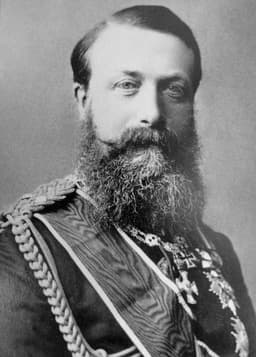
Frederick I of Baden
Emperor · Modern
46.6Total

Napoleon Bonaparte
General · Modern
70.9Total
Basic Information
Born
1826
1769
Died
1907
1821
Era
Modern
Modern
Nationality
Baden
France
Occupation
Emperor
General
Civilization
Western
Western
Score Comparison
Military (10%)
22.9
94.0
Political (20%)
45.0
72.0
Influence (20%)
48.6
40.0
Legacy (20%)
36.7
80.0
Leadership (15%)
68.0
78.0
Strategy (15%)
60.0
90.0
TOTAL
46.6
70.9
Frederick I of Baden — Complete Timeline
1856 AD
Marriage to Princess Louise of PrussiaOther
Frederick I married Princess Louise of Prussia, daughter of Prince Wilhelm (later Emperor Wilhelm I), on 20 September 1856. This marriage strengthened ties between Baden and Prussia, influencing Baden's alignment in German politics.
MarriagePrussiaBaden
Impact: nationalconstructive
1858 AD
Accession as Grand Duke of BadenPolitical Action◆ Major
Frederick I became Grand Duke of Baden on 5 September 1858, succeeding his father Leopold. His reign was noted for liberal reforms and constitutional governance.
BadenSuccession
Impact: national
1860 AD
Liberal reforms in BadenReform◆ Major
Frederick I implemented a series of liberal reforms in Baden, including freedom of the press, religious tolerance, and judicial independence. These reforms made Baden one of the most progressive states in the German Confederation.
BadenLiberalismReform
Impact: nationalprogressive
1871 AD
Support for German unificationPolitical Action◆ Major
Frederick I supported the unification of Germany under Prussian leadership. He proclaimed the German Empire in Versailles on 18 January 1871, alongside other German monarchs, and Baden became a state within the empire.
German unificationBadenEmpire
Impact: nationalconstructive
Napoleon Bonaparte — Complete Timeline
1799 AD
Coup of 18 BrumaireOther◆ Major
Napoleon Bonaparte, with support from his brother Lucien and key political figures, overthrew the Directory in a bloodless coup. He established the Consulate with himself as First Consul, effectively becoming the ruler of France. This event ended the French Revolution's most unstable period.
French RevolutionCoupRise to Power
Impact: regional
1804 AD
Promulgation of the Napoleonic CodeOther◆ Major
Napoleon enacted the Civil Code of the French, known as the Napoleonic Code, a comprehensive set of laws that replaced the fragmented feudal legal systems. The code established legal equality, protected property rights, and secularized law. It became the basis for legal systems in many European and world countries.
Legal ReformNapoleonic CodeCivil Law
Impact: globalconstructive
1805 AD
Battle of AusterlitzWar◆ Major
Napoleon's Grande Arm
Napoleonic WarsBattleDecisive Victory
Impact: global
1812 AD
Invasion of RussiaWar◆ Major
Napoleon led the Grande Arm
Napoleonic WarsInvasionDisaster
Impact: globaldestructive
1815 AD
Battle of WaterlooWar◆ Major
Napoleon's French army was defeated by the combined forces of the Duke of Wellington's Anglo-Allied army and Gebhard Leberecht von Bl
Napoleonic WarsBattleFinal Defeat
Impact: globaldestructive
Expert Analysis
frederick-i-of-baden-vs-napoleon-bonaparte
# The Conqueror and the Conciliator
On a September morning in 1858, Frederick I ascended the throne of Baden, a small German state barely visible on the map of Europe. Half a century earlier, another man had stood at the pinnacle of world power—Napoleon Bonaparte, master of an empire stretching from Madrid to Warsaw. One commanded armies that shook continents; the other governed a territory smaller than many French departments. Yet both left marks that outlasted their reigns. What drove them down such divergent paths? The answer lies not merely in talent or circumstance, but in the deepest currents of their ages.
Origins
Napoleon Bonaparte was born in 1769 on Corsica, an island only recently annexed by France. His family belonged to the minor nobility—enough to send him to military school, not enough to guarantee advancement. The French Revolution shattered the old order, and young Napoleon seized the chaos. He rose by merit, by audacity, and by a relentless will that recognized no limits. The world was molten, and he would forge it.
Frederick I of Baden, born in 1826, inherited a different Europe. The revolutionary fires had cooled. The Congress of Vienna had redrawn borders and restored monarchies. Frederick was born into a ruling house, but one that ruled not by conquest but by marriage, diplomacy, and careful navigation between Prussia and Austria. His era demanded not the sword but the olive branch.
Rise to Power
Napoleon’s ascent was a thunderclap. At twenty-four, he cleared the streets of Paris with a “whiff of grapeshot.” At twenty-seven, he led the Army of Italy to victories that stunned Europe. By thirty, he was First Consul; by thirty-five, Emperor. Each step was a gamble, each victory a foundation for the next. His political score of 75.0 reflects a man who understood power but never fully mastered its subtleties—he could win a throne but not hold a peace.
Frederick’s rise was a quiet sunrise. He became Grand Duke in 1858 at age thirty-two, succeeding his father Leopold. There was no coup, no battlefield. His marriage in 1856 to Princess Louise of Prussia, daughter of the future Emperor Wilhelm I, was his most decisive move. It was a marriage of alliance, not love—but in the world of German politics, alliances mattered more than passions.
Leadership & Governance
Napoleon governed as he conquered: with overwhelming force and brilliant organization. The Napoleonic Code, his greatest peacetime achievement, standardized law across Europe, abolished feudal privileges, and enshrined merit over birth. Yet his political wisdom lagged behind his military genius. He could not stop conquering, could not share power, could not see that even empires need rest. His strategic score of 93.0 and military score of 94.0 tell of a master of war; his political score of 75.0 tells of a man who never mastered peace.
Frederick governed as a liberal reformer—a rarity among German princes. In 1860, he implemented freedom of the press, religious tolerance, and judicial reforms in Baden. These were not grand gestures but steady work: building institutions, earning trust, creating a state where citizens had rights. His leadership score of 78.4 reflects a ruler who led by persuasion rather than fear. Where Napoleon commanded, Frederick convinced.
Triumph & Tragedy
Napoleon’s triumph was Austerlitz in 1805, where he destroyed an Austro-Russian army and crowned himself master of Central Europe. His tragedy was Waterloo in 1815, where his genius met the Duke of Wellington’s stubbornness and Prussian reinforcements. Between these two poles lay a decade of glory and a lifetime of exile—first to Elba, then to the barren rock of Saint Helena, where he died in 1821 at age fifty-one.
Frederick’s triumph was subtler. In 1871, he stood in the Hall of Mirrors at Versailles and proclaimed the German Empire—not as its ruler, but as a loyal prince supporting his father-in-law, now Emperor Wilhelm I. His tragedy was that his liberal vision for Germany was swallowed by Prussian militarism. The unified Germany that emerged was Bismarck’s creation, not Frederick’s dream.
Character & Destiny
Napoleon’s character was a furnace of ambition, intelligence, and ego. He trusted no one fully, delegated nothing important, and believed his star would never set. That conviction made him unstoppable—until it made him blind. He invaded Russia in 1812 against all advice, lost his Grand Army, and never recovered. His destiny was to rise higher than any man of his age, and to fall farther.
Frederick’s character was a study in moderation. He understood that a small state survives not by conquering but by aligning. He supported German unification under Prussia because he saw it was inevitable, and because he hoped to steer it toward liberalism. He failed in that hope, but he kept Baden stable, prosperous, and respected. His destiny was not to change the world, but to preserve a corner of it.
Legacy
Napoleon’s legacy is written in every modern legal code, every map of Europe, every discussion of military strategy. He is remembered as a titan—flawed, destructive, but undeniable. His scores for influence (82.0) and legacy (78.0) reflect a man whose shadow still falls across two centuries.
Frederick’s legacy is quieter. His liberal reforms in Baden were a model for constitutional monarchy in Germany. His support for unification helped create the nation that would shape the twentieth century. But he is remembered, if at all, as a footnote—the liberal grand duke who married the emperor’s daughter. His legacy score of 50.0 reflects the truth: history remembers conquerors, not conciliators.
Conclusion
Standing at their respective heights, Napoleon and Frederick saw different worlds. Napoleon saw a continent to be remade by fire and steel; Frederick saw a delicate balance to be preserved by patience and principle. One was a comet, the other a steady star. Both were necessary. The comet illuminates the sky, but the star guides the ship home. In the end, perhaps the question is not which was greater, but which we need more—and the answer changes with every age.
Rankings
🥇
Napoleon BonaparteLeader
Mil: 94.0Pol: 72.0Inf: 40.0
70.9
🥈
Frederick I of Baden
Mil: 22.9Pol: 45.0Inf: 48.6
46.6
+24.3 behind
How This Comparison Works
Algorithm
Each figure is scored on 6 dimensions (0—100 scale) based on structured historical data: Military (10%), Political (20%), Influence (20%), Legacy (20%), Leadership (15%), Strategy (15%). The weighted total produces the final ranking.
Data Sources
Scores are computed from structured sub-indicators in the database. Scale factors adjust for era (Ancient ×0.85, Modern ×1.0) and civilization size (Eastern ×1.05, Other ×0.80) to account for differences in population and military scale.
Maximum 3 Figures
Comparisons are limited to 2—3 figures to ensure readability and statistical meaningfulness.
Error Margins
±5 points per dimension — Sub-scores are derived from historical records with inherent uncertainty. Two figures within 5 points on a dimension should be considered roughly equivalent in that area.
Total Score Accuracy
±3 points overall — The weighted combination of 6 dimensions produces a total score with approximately ±3 points of uncertainty. Differences of less than 3 points are not statistically significant— the figures are effectively tied.
Known Limitations
- Historical records are incomplete and uneven across civilizations
- Figures from oral-tradition societies may be underrepresented
- Occupation labels can misclassify multi-role figures
- Scores measure capability and impact, not moral character
- Quantitative scoring is a comparison tool, not absolute truth
Capability Radar
Military (10%) — Battles & Warfare
Battles
38
95
Win Rate
37
90
Expansion
41
95
Political (20%) — Governance & Reform
Reform
60
95
Diplomacy
55
80
Economy
50
85
Influence (20%) — Cultural & Global Reach
Cultural
20
85
Global
10
90
Legacy (20%) — Historical Impact
Historical
20
95
Longevity
10
90
Leadership (15%) — Power & Stability
Tenure
50
85
Stability
55
70
Strategy (15%) — Tactics & Innovation
Strategy
45
95
Tactics
51
98
Reform
49
92
Similar Comparisons
Comments & Discussion
SpartanStats6/17/2026
Comparing Frederick I of Baden to Napoleon is like comparing a candle to a supernova. Napoleon conquered Italy, Egypt, and most of Europe by age 35. Frederick got a duchy half the size of Corsica by birthright. Let’s call it what it is: one was a strategic genius who rewrote war itself; the other was a footnote even in Baden’s own history books. I’ll take the guy who actually won battles over the prince who managed not to get annexed. That’s real history.
数据拆解师6/17/2026
说拿破仑比巴登大公强?数据先过一遍:拿破仑统治时法国人口超2800万,军队60万,巴登人口不到100万,军队最多1万。什么“不同时代的领袖”?根本是量级悬殊的组织能力对比。拿破仑从炮兵少尉到皇帝,靠的是战功和行政改革;弗里德里希一世只是生对家族,借联姻续命。别浪漫化小国妥协外交,这是资源硬碰硬。真要评历史影响,拿破仑的民法典至今在用,巴登的边界合并进了德意志帝国。数据不说谎。收起“两人都留痕”那套软话。
GallicaScribe6/17/2026
As a classics scholar, I see this as a clash of archetypes: the Homeric hero versus the prudent steward. Napoleon embodies Achilles—furious, brilliant, self-destructive. Frederick I is Odysseus, but without the cunning, more like Nestor—old, cautious, preserving what’s left. One expanded the known world with sword and code; the other kept a minor state breathing through diplomacy. Which legacy echoes more? The man who redefined Europe or the man whose major achievement is not losing his throne?
历史控黑胶6/17/2026
我这种老派历史迷,最烦把妥协吹成美德。弗里德里希一世最出名的是啥?1859年巴登加入奥地利对普鲁士的战争,然后被自己邻居打残,最后乖乖倒向俾斯麦。这叫“审时度势”?这叫跪得及时。拿破仑滑铁卢输了叫悲剧英雄,他输外省也算温和宽厚?别拿“不同时代需要不同领袖”糊弄人。真正跨越时代的品质是野心和执行力,这两样巴登哪一点都不沾边。一个摆摊的,非要和皇帝比格局。
CorsicanThunder6/17/2026
Military historian here: let's cut the false equivalence. Napoleon’s 1796 Italian campaign alone—six weeks, 150,000 prisoners, 130 flags captured—outshines Frederick I’s entire reign. Frederick’s claim to fame is signing treaties. Napoleon invented corps organization, revolutionized artillery tactics with the grande batterie, and fought over 60 battles. Frederick? He managed to keep Baden neutral in 186