Loading...
Charles V of France vs Sejong the Great
Sejong the Great leads by 7.8 pts · 2 figures compared
…
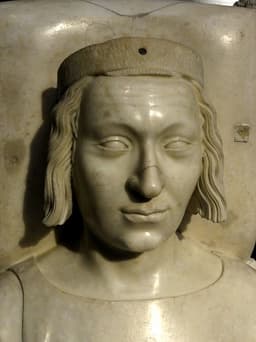
Charles V of France
Emperor · Medieval
59.9Total

Sejong the Great
Emperor · Medieval
67.7Total
Basic Information
Born
1338
1397
Died
1380
1450
Era
Medieval
Medieval
Nationality
France
Korea
Occupation
Emperor
Emperor
Civilization
Western
Eastern
Score Comparison
Military (10%)
55.0
55.0
Political (20%)
59.3
78.0
Influence (20%)
61.0
65.0
Legacy (20%)
56.0
65.0
Leadership (15%)
72.0
80.0
Strategy (15%)
55.0
60.0
TOTAL
59.9
67.7
Charles V of France — Complete Timeline
1364 AD
Reforms of the Royal AdministrationReform◆ Major
Charles V reorganized the French royal administration, establishing a more efficient tax system and a standing army. He appointed capable officials and strengthened the monarchy's control over finances. These reforms provided the resources needed to recover from the Hundred Years' War.
AdministrationTaxationArmy
Impact: nationalconstructive
1368 AD
Establishment of the Royal LibraryCultural
Charles V founded the Royal Library in the Louvre, collecting over 900 manuscripts. He patronized scholars and translators, making works available in French. This library became the foundation of the Biblioth
LibraryPatronageManuscripts
Impact: nationalconstructive
1369 AD
Recovery of Territories from EnglandWar◆ Major
Charles V launched a series of military campaigns under Bertrand du Guesclin to reclaim lands lost to England. Using a strategy of avoiding pitched battles, the French gradually recaptured most of the territories ceded at Br
ReconquestHundred Years' WarDu Guesclin
Impact: regionalconstructive
1370 AD
Construction of the BastilleCultural
Charles V ordered the construction of the Bastille fortress in Paris to protect the city and serve as a royal residence. The fortress later became a symbol of royal authority and a prison. It was a key element of Charles's fortification of Paris.
FortressParisArchitecture
Sejong the Great — Complete Timeline
1432 AD
Promotion of Scientific InstrumentsInvention◆ Major
Sejong the Great commissioned the development of advanced astronomical instruments, including the armillary sphere and water clock. These tools improved timekeeping and calendar accuracy in Joseon.
ScienceAstronomyInvention
Impact: nationalprogressive
1433 AD
Military Campaigns against JurchensWar◆ Major
Sejong the Great launched military campaigns against the Jurchen tribes in the north, securing the border and establishing the Four Forts and Six Garrisons. This expanded Joseon territory and stabilized the frontier.
JurchenBorderExpansion
Impact: regionalconstructive
1443 AD
Creation of HangulInvention
King Sejong the Great oversaw the creation of Hangul, the Korean alphabet, to improve literacy among commoners. The script was promulgated in 1446 and remains the writing system of Korea.
HangulAlphabetLiteracy
Impact: globalprogressive
1446 AD
Promulgation of the HunminjeongeumCultural◆ Major
Sejong the Great officially promulgated the Hunminjeongeum, the document explaining the new Hangul script. This marked the formal introduction of the alphabet to the Korean people.
HangulPublicationLanguage
Impact: globalprogressive
Expert Analysis
Origins
**Charles V of France** was born on January 21, 1338, in Vincennes, France, as the eldest son of King John II of France and Bonne of Luxembourg. His early life was overshadowed by the Hundred Years' War and the captivity of his father after the Battle of Poitiers in 1356. Charles received a strong education in governance and military strategy, but was physically frail, which shaped his preference for cautious, administrative approaches over direct combat. He became regent during his father's imprisonment, gaining firsthand experience in crisis management.
**Sejong the Great** was born on May 6, 1397, in Hanseong (now Seoul), Korea, as the third son of King Taejong of Joseon. His father had abdicated in favor of his older brother, but Sejong was selected as crown prince due to his intellect and character. He was educated in Confucian classics, astronomy, and music, and showed early aptitude for learning. Unlike Charles, Sejong was physically robust and directly engaged in military campaigns, but both rulers were shaped by their respective dynastic crises—Charles by the Hundred Years' War, Sejong by the consolidation of Joseon power.
Rise to Power
Charles V became king of France in 1364 upon the death of his father, who had been a prisoner in England. His rise was marked by the need to restore royal authority after the humiliating Treaty of Brétigny (1360), which ceded vast territories to England. Charles appointed Bertrand du Guesclin as constable in 1370, shifting to a strategy of attrition rather than pitched battles. By 1375, he had recovered most of the lost lands, including Poitou and Brittany, through careful diplomacy and military pressure.
Sejong ascended the throne in 1418 at age 21, after his father Taejong abdicated. His rise was aided by his father's reforms that strengthened royal power. Sejong immediately faced Jurchen raids in the north and Japanese piracy in the south. He launched campaigns against the Jurchens in 1433–1434, led by generals like Kim Jongseo, securing the border and establishing the Four Forts and Six Garrisons. Unlike Charles, Sejong was an active military commander, personally overseeing operations.
Leadership & Governance
Charles V's leadership style was administrative and delegative. He reorganized the royal administration, creating a more efficient tax system (the aides and gabelle) and establishing a standing army of paid soldiers. He appointed capable officials like Bureau de la Rivière and Jean de Berry. Charles also founded the Royal Library in the Louvre, collecting over 900 manuscripts and patronizing translations. His governance focused on centralization and fiscal stability, scoring 72.0 in leadership.
Sejong's leadership was more interventionist and innovative. He personally oversaw the creation of Hangul, the Korean alphabet, in 1443–1446, to improve literacy among commoners. He commissioned scientific instruments like the armillary sphere and water clock, and promoted agricultural reforms, including the distribution of farming manuals. Sejong also established a hall of worthies (Jiphyeonjeon) to support scholars. His political score of 78.0 reflects his effective governance and cultural achievements.
Triumph & Tragedy
Charles V's greatest triumph was the recovery of French territories from England, achieved through a strategy of attrition and avoiding major battles. By 1375, he had regained most of the lands lost in the Treaty of Brétigny. His greatest failure was the ongoing financial strain from war and his inability to fully expel the English, leaving the conflict unresolved. Additionally, his administrative reforms were partly undone by his successors.
Sejong's greatest triumph was the creation of Hangul, which revolutionized Korean literacy and culture. The Hunminjeongeum, promulgated in 1446, remains a cornerstone of Korean identity. His military campaigns against the Jurchens successfully secured northern borders. However, his failures include the limited immediate adoption of Hangul among the elite, who preferred Chinese characters, and the high cost of his scientific and cultural projects, which strained state finances.
Character & Destiny
Charles V was cautious, methodical, and intellectually inclined. His physical frailty and early experiences with captivity made him avoid direct conflict, relying on capable subordinates like du Guesclin. His character shaped a reign focused on recovery and consolidation, but his lack of personal military leadership limited his ability to fully defeat England. Historians note that his administrative legacy was crucial for future French monarchs.
Sejong was visionary, benevolent, and determined. His commitment to improving the lives of commoners drove the creation of Hangul and scientific advancements. His Confucian ideals emphasized education and meritocracy. Sejong's character allowed him to pursue long-term cultural goals while managing military threats. His destiny was to be remembered as one of Korea's greatest kings, with a legacy that extends to modern times.
Legacy
Charles V's legacy is mixed. His administrative reforms laid the groundwork for French absolutism, and his military recovery of territories was significant. However, his achievements were overshadowed by the later victories of Joan of Arc and Charles VII. The Royal Library he founded evolved into the Bibliothèque Nationale de France. He scored 56.0 in legacy, reflecting his moderate long-term impact.
Sejong's legacy is immense and enduring. Hangul is the official script of both North and South Korea, with a literacy rate near 100%. His scientific instruments and agricultural reforms advanced Korean technology. Sejong is revered as a national symbol of wisdom and innovation. His legacy score of 65.0, combined with influence 65.0, shows his sustained impact.
Conclusion
Sejong the Great had a greater impact than Charles V of France. While Charles successfully recovered territories and reformed administration, his achievements were context-dependent and later reversed. Sejong's creation of Hangul, promotion of science, and military successes created lasting cultural and technological advancements that continue to benefit millions. With a total score of 67.7 against Charles's 59.9, Sejong's influence on Korean identity and global linguistics is unparalleled. Charles was a competent ruler, but Sejong was a transformative one.
Rankings
🥇
Sejong the GreatLeader
Mil: 55.0Pol: 78.0Inf: 65.0
67.7
🥈
Charles V of France
Mil: 55.0Pol: 59.3Inf: 61.0
59.9
+7.8 behind
How This Comparison Works
Algorithm
Each figure is scored on 6 dimensions (0—100 scale) based on structured historical data: Military (10%), Political (20%), Influence (20%), Legacy (20%), Leadership (15%), Strategy (15%). The weighted total produces the final ranking.
Data Sources
Scores are computed from structured sub-indicators in the database. Scale factors adjust for era (Ancient ×0.85, Modern ×1.0) and civilization size (Eastern ×1.05, Other ×0.80) to account for differences in population and military scale.
Maximum 3 Figures
Comparisons are limited to 2—3 figures to ensure readability and statistical meaningfulness.
Error Margins
±5 points per dimension — Sub-scores are derived from historical records with inherent uncertainty. Two figures within 5 points on a dimension should be considered roughly equivalent in that area.
Total Score Accuracy
±3 points overall — The weighted combination of 6 dimensions produces a total score with approximately ±3 points of uncertainty. Differences of less than 3 points are not statistically significant— the figures are effectively tied.
Known Limitations
- Historical records are incomplete and uneven across civilizations
- Figures from oral-tradition societies may be underrepresented
- Occupation labels can misclassify multi-role figures
- Scores measure capability and impact, not moral character
- Quantitative scoring is a comparison tool, not absolute truth
Capability Radar
Military (10%) — Battles & Warfare
Battles
45
30
Win Rate
60
35
Expansion
40
25
Political (20%) — Governance & Reform
Reform
80
90
Diplomacy
75
75
Economy
70
80
Influence (20%) — Cultural & Global Reach
Cultural
55
85
Global
40
70
Legacy (20%) — Historical Impact
Historical
60
80
Longevity
50
85
Leadership (15%) — Power & Stability
Tenure
65
70
Stability
75
85
Strategy (15%) — Tactics & Innovation
Strategy
75
45
Tactics
55
40
Reform
70
50
Similar Comparisons
Comments & Discussion
No comments yet. Be the first to share your thoughts!