Loading...
Charles V of France vs Emperor Xuanzong of Tang
Emperor Xuanzong of Tang leads by 0.9 pts · 2 figures compared
…

Charles V of France
Emperor · Medieval
59.9Total
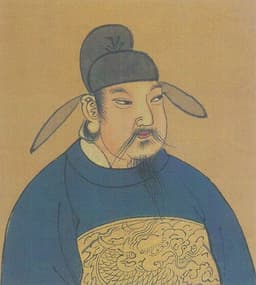
Emperor Xuanzong of Tang
Emperor · Medieval
60.8Total
Basic Information
Born
1338
685
Died
1380
762
Era
Medieval
Medieval
Nationality
France
China
Occupation
Emperor
Emperor
Civilization
Western
Eastern
Score Comparison
Military (10%)
55.0
65.0
Political (20%)
59.3
82.0
Influence (20%)
61.0
40.0
Legacy (20%)
56.0
65.0
Leadership (15%)
72.0
68.0
Strategy (15%)
55.0
55.0
TOTAL
59.9
60.8
Charles V of France — Complete Timeline
1364 AD
Reforms of the Royal AdministrationReform◆ Major
Charles V reorganized the French royal administration, establishing a more efficient tax system and a standing army. He appointed capable officials and strengthened the monarchy's control over finances. These reforms provided the resources needed to recover from the Hundred Years' War.
AdministrationTaxationArmy
Impact: nationalconstructive
1368 AD
Establishment of the Royal LibraryCultural
Charles V founded the Royal Library in the Louvre, collecting over 900 manuscripts. He patronized scholars and translators, making works available in French. This library became the foundation of the Biblioth
LibraryPatronageManuscripts
Impact: nationalconstructive
1369 AD
Recovery of Territories from EnglandWar◆ Major
Charles V launched a series of military campaigns under Bertrand du Guesclin to reclaim lands lost to England. Using a strategy of avoiding pitched battles, the French gradually recaptured most of the territories ceded at Br
ReconquestHundred Years' WarDu Guesclin
Impact: regionalconstructive
1370 AD
Construction of the BastilleCultural
Charles V ordered the construction of the Bastille fortress in Paris to protect the city and serve as a royal residence. The fortress later became a symbol of royal authority and a prison. It was a key element of Charles's fortification of Paris.
FortressParisArchitecture
Emperor Xuanzong of Tang — Complete Timeline
713 AD
Kaiyuan Golden AgeCultural
Emperor Xuanzong initiated the Kaiyuan era, a period of political stability, economic prosperity, and cultural flourishing. He appointed capable ministers, reformed the bureaucracy, and promoted the arts. This era is considered the peak of the Tang dynasty.
Golden AgeProsperity
Impact: globalconstructive
720 AD
Reform of the Equal-Field SystemReform
Emperor Xuanzong implemented reforms to the Equal-Field System to address land concentration and tax evasion. These reforms temporarily stabilized the agrarian economy and increased state revenue, but they could not reverse the long-term decline of the system.
Land ReformEconomic Policy
Impact: nationalconstructive
755 AD
An Lushan RebellionWar
The general An Lushan launched a rebellion against Emperor Xuanzong, capturing the capital Chang'an. Xuanzong fled to Sichuan and was forced to abdicate. The rebellion lasted eight years, devastating the Tang empire and leading to its decline.
RebellionCivil War
Impact: globaltragic
756 AD
Abdication and Death of Yang GuifeiPolitical Action◆ Major
During the flight from Chang'an, Emperor Xuanzong's troops mutinied and forced him to order the execution of his beloved consort Yang Guifei, whom they blamed for the rebellion. Xuanzong then abdicated in favor of his son, Emperor Suzong.
AbdicationExecution
Impact: nationaltragic
Expert Analysis
Origins
Charles V of France was born in 1338 in Vincennes, the eldest son of King John II and Bonne of Luxembourg. His upbringing during the Hundred Years' War exposed him to military defeat and political instability. He received a strong education under the tutelage of scholars like Nicole Oresme, which shaped his intellectual approach to governance. His father's capture at the Battle of Poitiers in 1356 forced Charles to act as regent at age 18, confronting peasant revolts and noble unrest.
Emperor Xuanzong of Tang, born Li Longji in 685, was the grandson of Empress Wu Zetian. His early life was marked by political intrigue; he staged a coup in 710 to overthrow Empress Wei, placing his father Ruizong on the throne. Xuanzong's upbringing in the imperial court gave him firsthand experience of power struggles, but also exposure to the cultural and artistic traditions of Tang China.
Rise to Power
Charles V became king in 1364 upon his father's death in English captivity. His early reign focused on restoring royal authority after the chaos of the Jacquerie uprising and the Treaty of Brétigny (1360), which had ceded vast territories to England. He appointed Bertrand du Guesclin as constable in 1370 and adopted a strategy of avoiding large battles, instead using sieges and attrition to recover lands.
Xuanzong seized power in a 713 coup against his aunt, Princess Taiping, consolidating control and initiating the Kaiyuan era (713–741). He appointed capable ministers like Yao Chong and Song Jing, who implemented reforms that stabilized the empire. His rise was swift because of his decisive action and political acumen.
Leadership & Governance
Charles V reformed the French royal administration by establishing a more efficient tax system (aides, gabelle) and a standing army of paid soldiers. He created the Royal Library in the Louvre, patronizing translators to make classical works available in French. His leadership was methodical and cautious, relying on capable subordinates. He scored 72.0 in leadership, reflecting his ability to manage a fractured kingdom.
Xuanzong's governance during the Kaiyuan golden age emphasized meritocracy and economic growth. He reformed the equal-field system and reduced taxes, leading to population growth and cultural flowering. However, his later years saw him withdraw from governance, favoring his consort Yang Guifei and corrupt ministers like Li Linfu. This neglect contributed to the An Lushan Rebellion. His political score of 82.0 reflects his early successes but also his eventual failure.
Triumph & Tragedy
Charles V's greatest triumph was recovering most of the territories lost to England without a major pitched battle, using attrition and diplomacy. He fortified Paris with the Bastille and stabilized the currency. His tragedy: he died in 1380 at age 42, leaving a regency for his young son Charles VI, which led to renewed civil strife and English resurgence.
Xuanzong's triumph was the Kaiyuan golden age, a period of prosperity, cultural achievement (poets like Li Bai and Du Fu), and territorial expansion. His tragedy: the An Lushan Rebellion (755–763) shattered the Tang dynasty, leading to his abdication, the death of Yang Guifei, and decades of decline. His military score of 65.0 indicates his inability to prevent the rebellion.
Character & Destiny
Charles V was known as 'the Wise' for his intellectual and strategic approach. He was cautious, delegating military command while focusing on administration. His health was poor, possibly due to tuberculosis, which limited his energy. His character shaped a reign of consolidation but not expansion.
Xuanzong was energetic and cultured in his early years, but grew complacent and hedonistic later. His decision to trust An Lushan despite warnings reflected overconfidence. His character led to both the golden age and the rebellion, a classic arc of hubris.
Legacy
Charles V's administrative reforms laid the groundwork for the French monarchy's centralization, influencing later kings like Louis XI. His library fostered French as a literary language. He scored 56.0 in legacy, reflecting his role as a builder of institutions.
Xuanzong's legacy is mixed: the Kaiyuan era is remembered as a cultural high point, but the An Lushan rebellion marked the beginning of Tang decline. He scored 65.0 in legacy, largely due to the enduring cultural achievements. His influence score of 40.0 is lower because his reign's collapse limited long-term impact.
Conclusion
While Xuanzong presided over a more spectacular golden age, his reign ended in catastrophe that weakened the Tang dynasty permanently. Charles V, though less flashy, built institutions that strengthened France for generations. Xuanzong's total score of 60.8 slightly edges Charles's 59.9, but in terms of sustainable impact, Charles's reforms had a more lasting positive effect. Therefore, Charles V of France had a greater impact on history through his institutional legacy, whereas Xuanzong's golden age was fleeting and followed by ruin.
Rankings
🥇
Emperor Xuanzong of TangLeader
Mil: 65.0Pol: 82.0Inf: 40.0
60.8
🥈
Charles V of France
Mil: 55.0Pol: 59.3Inf: 61.0
59.9
+0.9 behind
How This Comparison Works
Algorithm
Each figure is scored on 6 dimensions (0—100 scale) based on structured historical data: Military (10%), Political (20%), Influence (20%), Legacy (20%), Leadership (15%), Strategy (15%). The weighted total produces the final ranking.
Data Sources
Scores are computed from structured sub-indicators in the database. Scale factors adjust for era (Ancient ×0.85, Modern ×1.0) and civilization size (Eastern ×1.05, Other ×0.80) to account for differences in population and military scale.
Maximum 3 Figures
Comparisons are limited to 2—3 figures to ensure readability and statistical meaningfulness.
Error Margins
±5 points per dimension — Sub-scores are derived from historical records with inherent uncertainty. Two figures within 5 points on a dimension should be considered roughly equivalent in that area.
Total Score Accuracy
±3 points overall — The weighted combination of 6 dimensions produces a total score with approximately ±3 points of uncertainty. Differences of less than 3 points are not statistically significant— the figures are effectively tied.
Known Limitations
- Historical records are incomplete and uneven across civilizations
- Figures from oral-tradition societies may be underrepresented
- Occupation labels can misclassify multi-role figures
- Scores measure capability and impact, not moral character
- Quantitative scoring is a comparison tool, not absolute truth
Capability Radar
Military (10%) — Battles & Warfare
Battles
45
65
Win Rate
60
60
Expansion
40
70
Political (20%) — Governance & Reform
Reform
80
90
Diplomacy
75
80
Economy
70
95
Influence (20%) — Cultural & Global Reach
Cultural
55
90
Global
40
75
Legacy (20%) — Historical Impact
Historical
60
85
Longevity
50
80
Leadership (15%) — Power & Stability
Tenure
65
85
Stability
75
40
Strategy (15%) — Tactics & Innovation
Strategy
75
70
Tactics
55
55
Reform
70
75
Similar Comparisons
Comments & Discussion
No comments yet. Be the first to share your thoughts!