Loading...
Charles V of France vs Julius Caesar
Julius Caesar leads by 22.9 pts · 2 figures compared
…
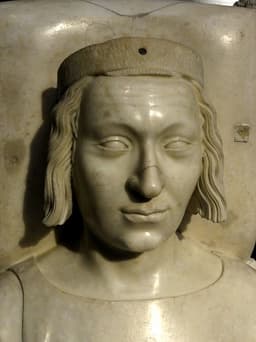
Charles V of France
Emperor · Medieval
59.9Total

Julius Caesar
General · Ancient
82.8Total
Basic Information
Born
1338
-100
Died
1380
-44
Era
Medieval
Ancient
Nationality
France
Roman Republic
Occupation
Emperor
General
Civilization
Western
Western
Score Comparison
Military (10%)
55.0
88.0
Political (20%)
59.3
78.0
Influence (20%)
61.0
85.0
Legacy (20%)
56.0
82.0
Leadership (15%)
72.0
80.0
Strategy (15%)
55.0
85.0
TOTAL
59.9
82.8
Charles V of France — Complete Timeline
1364 AD
Reforms of the Royal AdministrationReform◆ Major
Charles V reorganized the French royal administration, establishing a more efficient tax system and a standing army. He appointed capable officials and strengthened the monarchy's control over finances. These reforms provided the resources needed to recover from the Hundred Years' War.
AdministrationTaxationArmy
Impact: nationalconstructive
1368 AD
Establishment of the Royal LibraryCultural
Charles V founded the Royal Library in the Louvre, collecting over 900 manuscripts. He patronized scholars and translators, making works available in French. This library became the foundation of the Biblioth
LibraryPatronageManuscripts
Impact: nationalconstructive
1369 AD
Recovery of Territories from EnglandWar◆ Major
Charles V launched a series of military campaigns under Bertrand du Guesclin to reclaim lands lost to England. Using a strategy of avoiding pitched battles, the French gradually recaptured most of the territories ceded at Br
ReconquestHundred Years' WarDu Guesclin
Impact: regionalconstructive
1370 AD
Construction of the BastilleCultural
Charles V ordered the construction of the Bastille fortress in Paris to protect the city and serve as a royal residence. The fortress later became a symbol of royal authority and a prison. It was a key element of Charles's fortification of Paris.
FortressParisArchitecture
Julius Caesar — Complete Timeline
58 BC
Gallic WarsWar◆ Major
Caesar, as proconsul of Gaul, launched a series of campaigns that conquered all of Gaul (modern France, Belgium, and parts of Switzerland). He fought numerous battles, including against the Helvetii, the Belgae, and the Gallic chieftain Vercingetorix. The wars brought immense wealth and a loyal army to Caesar.
Gallic WarsConquestRoman Expansion
Impact: regional
49 BC
Crossing the RubiconPolitical Action◆ Major
Caesar led Legio XIII across the Rubicon River into Italy, defying the Roman Senate's order to disband his army. This act triggered a civil war against Pompey and the Optimates, ultimately leading to Caesar's dictatorship and the end of the Roman Republic.
Roman Civil WarEnd of RepublicPower Struggle
Impact: global
48 BC
Battle of PharsalusWar◆ Major
Caesar's outnumbered army defeated the larger forces of Pompey the Great at Pharsalus in Greece. Caesar's tactical use of a reserve line to counter Pompey's cavalry charge proved decisive. Pompey fled to Egypt, where he was assassinated, leaving Caesar as the undisputed master of the Roman world.
Roman Civil WarBattleDecisive Victory
Impact: regional
44 BC
Appointment as Dictator for LifePolitical Action◆ Major
The Roman Senate appointed Caesar dictator perpetuo (dictator for life), granting him unprecedented personal power. This move concentrated military, legislative, and judicial authority in one person, effectively ending the Roman Republic's traditional system of checks and balances and alarming many senators.
DictatorshipEnd of RepublicPower Consolidation
Impact: regionaldestructive
Assassination on the Ides of MarchPolitical Action◆ Major
A group of Roman senators, led by Marcus Junius Brutus and Gaius Cassius Longinus, stabbed Caesar to death at a meeting of the Senate in the Theatre of Pompey. The assassination was intended to restore the Republic, but instead triggered another civil war that led to the rise of the Roman Empire.
AssassinationRoman PoliticsEnd of Republic
Impact: globaldestructive
Expert Analysis
charles-v-of-france-vs-julius-caesar
# The Conqueror and the Wise: Two Paths to Power
On a winter day in January 49 BCE, Julius Caesar stood on the banks of the Rubicon River, a small stream separating his province of Gaul from Italy proper. To cross with his army was treason; to turn back was political oblivion. He hesitated for a moment, then uttered what became the most famous gamble in history: "The die is cast." Nearly fourteen centuries later, another ruler faced a different kind of reckoning. Charles V of France, a pale, scholarly man in his thirties, sat in the Louvre Palace, not contemplating a river crossing but the slow, methodical recovery of a kingdom shattered by war and plague. Where Caesar chose the swift blade, Charles chose the patient quill. Their worlds could not have been more different—and yet both reshaped the Western world.
Origins
Julius Caesar was born into a patrician family that had fallen on hard times, both financially and politically. Rome in 100 BCE was a republic in decay, torn between populist reformers and conservative oligarchs. Caesar's uncle by marriage, Gaius Marius, had been a populist hero; his rival Sulla, a conservative dictator. From childhood, Caesar learned that politics was a blood sport, and that survival required cunning, ruthlessness, and ambition without limit. His education in rhetoric and military command was the standard for a Roman noble, but his true schooling came from watching the Republic tear itself apart.
Charles V, born in 1338, inherited a different crisis. France was in the throes of the Hundred Years' War, a conflict that had already seen the catastrophic defeat at Crécy and the capture of his father, King John II, by the English. Charles was not a warrior king; he was sickly, reserved, and deeply intellectual. Where Caesar thrived on the roar of the battlefield, Charles found solace in books and administration. His France was a land of devastation, where the Black Death had wiped out a third of the population and where unpaid soldiers roamed the countryside as bandits. Survival, for Charles, meant rebuilding, not conquering.
Rise to Power
Caesar's path to supremacy was a masterclass in political theater. He allied with the wealthy Crassus and the popular general Pompey to form the First Triumvirate, then used his consulship in 59 BCE to push through land reforms that won him the loyalty of veterans and the poor. When his term ended, he secured command of Gaul, a province that offered endless opportunities for glory. Over eight years, from 58 to 50 BCE, he conquered the entirety of Gaul, wrote his own propaganda in the form of *Commentaries on the Gallic War*, and built an army that worshipped him. When the Senate ordered him to disband, he refused. The Rubicon was the final act.
Charles V rose to power in the shadow of disaster. His father was a prisoner in London, and the French crown was bankrupt. Charles became regent in 1356, then king in 1364, but his authority was hollow. He had no army, no treasury, and no allies. Unlike Caesar, who could seize power by force, Charles had to earn it through patience. He negotiated the Treaty of Brétigny in 1360, which ceded vast territories to England but bought peace. While his father languished in captivity, Charles quietly reformed the royal administration, established a standing army funded by a permanent tax, and waited. His rise was not a storm but a slow tide.
Leadership & Governance
Caesar ruled as a dictator in all but name. As consul, he passed laws that redistributed land and debt, winning the adoration of the urban poor. As governor of Gaul, he commanded legions with a personal touch that bordered on the fraternal—he knew his centurions by name, shared their hardships, and rewarded them generously. His military genius was unmatched: at the Siege of Alesia in 52 BCE, he surrounded the Gallic stronghold and then built a second ring of fortifications to fend off a relief army, crushing the rebellion in a single campaign. Yet his political wisdom was more fragile. He pardoned his enemies, reformed the calendar, and planned grand public works, but he failed to build a lasting political structure. He ruled by personal charisma, not institutions.
Charles V governed through systems, not spectacle. He appointed Bertrand du Guesclin as his constable, a brilliant strategist who avoided pitched battles and instead used Fabian tactics—harassing English supply lines, retaking castles one by one, and wearing down the enemy through attrition. Between 1369 and 1380, Charles recovered nearly all the territories lost to England, including Poitou and Brittany, without ever leading an army himself. He reformed the tax system, creating a permanent salt tax (the *gabelle*) that funded a professional army. He also founded the Royal Library in the Louvre, collecting over 900 manuscripts and patronizing translators who made classical texts available in French. His governance was quiet, efficient, and enduring.
Triumph & Tragedy
Caesar’s greatest triumph was his conquest of Gaul, which added a vast, wealthy province to Rome and made him the richest man in the Republic. His greatest tragedy was his own success. When he declared himself dictator for life in 44 BCE, he broke the Republic's unwritten rules. On the Ides of March, a group of senators stabbed him to death in the Senate chamber. He fell at the foot of a statue of Pompey, his former ally, bleeding from twenty-three wounds. His last words, according to legend, were "Et tu, Brute?"—a cry of betrayal that echoed through history.
Charles V’s triumph was the recovery of French sovereignty. By the time of his death in 1380, he had restored the kingdom’s borders and stabilized its finances. Yet his tragedy was that his work was undone by his successors. His son, Charles VI, descended into madness, and France plunged into civil war. The English under Henry V would soon defeat the French at Agincourt, and the hard-won gains of Charles the Wise were lost. His life’s work, built on patience and order, collapsed under the weight of a single unstable heir.
Character & Destiny
Caesar was driven by an insatiable need for glory. He once said, "I would rather be the first man in a barbarian village than the second man in Rome." His personality was magnetic, generous, and ruthless. He forgave his enemies, but he never forgot a slight. He was a gambler who trusted his luck, and for two decades, his luck held. But his arrogance blinded him to the resentment he bred. He believed his enemies would accept his mercy; instead, they saw weakness.
Charles V was cautious, methodical, and deeply aware of his limits. He was called "the Wise" not because of brilliance but because of prudence. He knew he could not match the English on the battlefield, so he built a war of attrition. He knew he could not inspire armies with his presence, so he found men who could. His personality shaped a destiny of slow, steady recovery—but also one of fragility. His system depended on his own vigilance; without him, it crumbled.
Legacy
Caesar’s legacy is the Roman Empire. Though he never wore the crown, his adopted heir Octavian became Augustus, the first emperor. The title "Caesar" became synonymous with imperial rule, passed down through Byzantium, the Holy Roman Empire, and even Tsarist Russia. His writings shaped Latin prose for millennia. His life became a template for ambition and tragedy, from Shakespeare to Hollywood.
Charles V’s legacy is more subtle but no less profound. He transformed France from a feudal patchwork into a centralized monarchy. His administrative reforms laid the groundwork for the absolute monarchy of Louis XIV. His library became the foundation of the Bibliothèque Nationale de France. He is remembered as a king who saved his kingdom not with a sword but with a ledger.
Conclusion
Two men, two worlds. Caesar crossed a river and changed history in an instant; Charles V built a library and changed history over a lifetime. One sought glory and found assassination; the other sought stability and found fragility. Their stories remind us that power comes in many forms—the flash of a blade and the slow turn of a page. The die is cast, the book is closed, and the reader is left to wonder: which path would they have chosen?
Rankings
🥇
Julius CaesarLeader
Mil: 88.0Pol: 78.0Inf: 85.0
82.8
🥈
Charles V of France
Mil: 55.0Pol: 59.3Inf: 61.0
59.9
+22.9 behind
How This Comparison Works
Algorithm
Each figure is scored on 6 dimensions (0—100 scale) based on structured historical data: Military (10%), Political (20%), Influence (20%), Legacy (20%), Leadership (15%), Strategy (15%). The weighted total produces the final ranking.
Data Sources
Scores are computed from structured sub-indicators in the database. Scale factors adjust for era (Ancient ×0.85, Modern ×1.0) and civilization size (Eastern ×1.05, Other ×0.80) to account for differences in population and military scale.
Maximum 3 Figures
Comparisons are limited to 2—3 figures to ensure readability and statistical meaningfulness.
Error Margins
±5 points per dimension — Sub-scores are derived from historical records with inherent uncertainty. Two figures within 5 points on a dimension should be considered roughly equivalent in that area.
Total Score Accuracy
±3 points overall — The weighted combination of 6 dimensions produces a total score with approximately ±3 points of uncertainty. Differences of less than 3 points are not statistically significant— the figures are effectively tied.
Known Limitations
- Historical records are incomplete and uneven across civilizations
- Figures from oral-tradition societies may be underrepresented
- Occupation labels can misclassify multi-role figures
- Scores measure capability and impact, not moral character
- Quantitative scoring is a comparison tool, not absolute truth
Capability Radar
Military (10%) — Battles & Warfare
Battles
45
95
Win Rate
60
92
Expansion
40
97
Political (20%) — Governance & Reform
Reform
80
90
Diplomacy
75
85
Economy
70
82
Influence (20%) — Cultural & Global Reach
Cultural
55
88
Global
40
94
Legacy (20%) — Historical Impact
Historical
60
95
Longevity
50
96
Leadership (15%) — Power & Stability
Tenure
65
75
Stability
75
60
Strategy (15%) — Tactics & Innovation
Strategy
75
94
Tactics
55
96
Reform
70
88
Similar Comparisons
Comments & Discussion
QUIRINUS_THE_BLADE6/17/2026
Caesar was a tactical genius, but Charles V outsmarted him in statecraft. Caesar's Rubicon crossing won a civil war, but his gamble led to assassination—he neglected the long game of building loyal institutions. Charles, recovering France after Poitiers and plague, used the Estates General and legal reforms to centralize power without alienating nobles. Caesar conquered; Charles consolidated. One died on the Senate floor, the other left a stable throne for his son. Give me the quiet pragmatist o