Loading...
Charles the Bald vs Emperor Xianzong of Tang
Emperor Xianzong of Tang leads by 10.0 pts · 2 figures compared
…
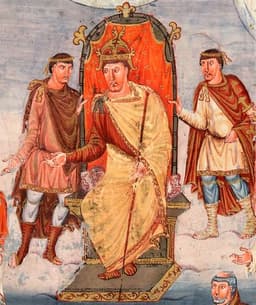
Charles the Bald
Emperor · Medieval
50.7Total
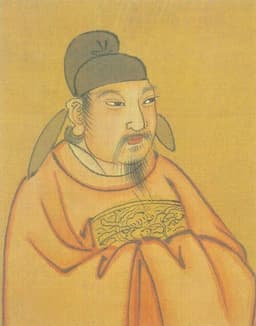
Emperor Xianzong of Tang
Emperor · Medieval
60.7Total
Basic Information
Born
823
778
Died
877
820
Era
Medieval
Medieval
Nationality
Frankish Empire
China
Occupation
Emperor
Emperor
Civilization
Western
Eastern
Score Comparison
Military (10%)
10.0
70.0
Political (20%)
68.0
65.0
Influence (20%)
54.9
59.0
Legacy (20%)
46.7
54.0
Leadership (15%)
65.0
68.0
Strategy (15%)
43.3
55.0
TOTAL
50.7
60.7
Charles the Bald — Complete Timeline
843 AD
Treaty of VerdunPolitical Action
Charles the Bald, along with his brothers Lothair and Louis the German, signed the Treaty of Verdun, dividing the Carolingian Empire into three kingdoms. Charles received West Francia, which became the foundation of modern France.
TreatyDivisionWest FranciaFrance
Impact: global
845 AD
Defense against Viking RaidsWar
Charles faced repeated Viking invasions, including the siege of Paris in 845. He paid large tributes (Danegeld) to buy off attackers, a strategy that temporarily secured peace but drained royal resources and exposed military weakness.
VikingsDanegeldSiege of Paris
Impact: national
875 AD
Coronation as Holy Roman EmperorPolitical Action◆ Major
Pope John VIII crowned Charles the Bald as Holy Roman Emperor, following the death of Louis II. This coronation asserted Charles's claim to imperial authority but was contested by other Carolingian rulers.
CoronationHoly Roman EmpirePapacy
Impact: regionalconstructive
Emperor Xianzong of Tang — Complete Timeline
805 AD
Yuanhe RestorationPolitical Action
Emperor Xianzong initiated the Yuanhe Restoration, a series of reforms aimed at centralizing power and curbing the autonomy of military governors (jiedushi). He reasserted imperial authority over several rebellious provinces, strengthening the Tang state.
ReformCentralization
Impact: regionalconstructive
810 AD
Campaign against the Chengde CircuitWar◆ Major
Emperor Xianzong launched a military campaign against the Chengde Circuit, a rebellious province in Hebei. After initial setbacks, the Tang forces secured a victory, forcing the Chengde governor to submit to imperial authority.
Military CampaignRebellion Suppression
Impact: nationalconstructive
812 AD
Campaign against the Zhaoyi CircuitWar◆ Major
Emperor Xianzong's forces conquered the Zhaoyi Circuit, a rebellious province in modern Shanxi. This victory further reduced the power of the military governors and strengthened imperial control.
Military CampaignRebellion Suppression
Impact: nationalconstructive
818 AD
Campaign against the Pinglu CircuitWar◆ Major
Emperor Xianzong launched a campaign against the Pinglu Circuit in Shandong. The Tang forces defeated the rebel governor, bringing the province back under imperial control and completing the Yuanhe Restoration's military successes.
Military CampaignRebellion Suppression
Impact: nationalconstructive
820 AD
Death of Emperor XianzongPolitical Action◆ Major
Emperor Xianzong died suddenly, possibly poisoned by eunuchs. His death ended the Yuanhe Restoration, and subsequent emperors were unable to maintain the centralization he achieved, leading to the Tang dynasty's further decline.
DeathSuccession Crisis
Impact: regionaltragic
Expert Analysis
Origins
Charles the Bald was born on June 13, 823, in Frankfurt, the youngest son of Emperor Louis the Pious and his second wife Judith of Bavaria. His birth created dynastic tensions, as Louis's attempts to secure a kingdom for Charles led to conflicts with his older half-brothers. Charles received a clerical education under the tutelage of scholars like Walahfrid Strabo, but his early life was dominated by the crumbling of the Carolingian Empire. He became king of Aquitaine in 832 and later West Francia after the Treaty of Verdun in 843.
Emperor Xianzong of Tang was born Li Chun in 778, the eldest son of Emperor Shunzong. His family was part of the Tang imperial house, but the dynasty had been weakened by the An Lushan Rebellion (755-763) and subsequent autonomy of military governors (jiedushi). Xianzong's early life was spent in the palace, where he witnessed the eunuchs' growing power. He ascended the throne in 805 after his father's brief reign, determined to restore central authority.
Rise to Power
Charles the Bald rose to power through the Treaty of Verdun (843), which divided the Carolingian Empire among Louis's three surviving sons. Charles received West Francia, roughly corresponding to modern France. His rise was contested: he fought his brother Louis the German and faced rebellions from Aquitainian nobles. In 875, after the death of Emperor Louis II, Pope John VIII crowned Charles Holy Roman Emperor, asserting his claim over Italy, though his authority there was weak.
Emperor Xianzong's rise was more direct. He became emperor in 805 at age 27, following his father's abdication due to illness. Xianzong immediately set about curbing the power of eunuchs and military governors. His reign marked a turning point: he rejected the appeasement policies of his predecessors and launched a series of campaigns to reassert imperial control. His political skill was evident in his ability to balance factions at court.
Leadership & Governance
Charles the Bald's leadership style was pragmatic but often reactive. He relied on alliances with the Church and used grants of land to secure loyalty. His governance focused on maintaining the fragmented West Frankish kingdom through diplomacy and occasional military action. He issued capitularies to standardize laws, but his authority was limited by powerful nobles. Charles's decision to pay Danegeld to Vikings (e.g., 845 siege of Paris) preserved his kingdom but drained resources. His political score of 68.0 reflects his ability to navigate complex feudal relationships, but his military score of 10.0 underscores his failure to defend his realm effectively.
Emperor Xianzong's leadership was proactive and centralized. He implemented the Yuanhe Restoration (806-820), a series of reforms to reduce the power of jiedushi. He reorganized the bureaucracy, improved tax collection, and strengthened the imperial army. Xianzong personally directed campaigns against rebellious circuits, such as Chengde (812), Zhaoyi (814), and Pinglu (818). His military score of 70.0 and political score of 65.0 reflect his success in reunifying Tang China. However, his reliance on eunuchs for palace administration sowed seeds of future decay.
Triumph & Tragedy
Charles the Bald's greatest triumph was securing the throne of West Francia and being crowned Holy Roman Emperor in 875. He also expanded his influence into Italy and Lorraine. His tragedy was the inability to stop Viking raids; he paid massive tributes (e.g., 7,000 pounds of silver in 845) and lost control of parts of his kingdom. His death in 877 while returning from Italy led to further fragmentation: his son Louis the Stammerer ruled only two years. Charles's legacy score of 46.7 reflects the ephemeral nature of his achievements.
Emperor Xianzong's triumph was the Yuanhe Restoration, which brought most of the rebellious circuits back under Tang control. He reduced the autonomy of jiedushi and restored imperial prestige. His tragedy was his sudden death in 820, possibly poisoned by eunuchs, which ended the restoration. Subsequent Tang emperors could not maintain his gains, and the dynasty declined further. His total score of 60.7 is higher than Charles's 50.7, but his legacy score of 54.0 is only moderately above Charles's 46.7.
Character & Destiny
Charles the Bald was a cultured ruler who patronized scholars and built libraries, but he was indecisive in military matters. His character—cautious and diplomatic—suited a king of a fractured realm but not a warrior emperor. His destiny was to preside over the decline of Carolingian power, and his reign set the stage for the rise of feudal France.
Emperor Xianzong was determined and ruthless, willing to execute officials and generals who opposed him. His decisiveness drove the Yuanhe Restoration, but his trust in eunuchs proved fatal. His character—assertive but politically naive—led to his possible murder. His destiny was to briefly revive a dynasty that was already in irreversible decline.
Legacy
Charles the Bald's legacy is mixed: he is remembered as a patron of learning (e.g., the Carolingian minuscule script) but also as a ruler who failed to stop Viking incursions. His division of the empire contributed to the development of distinct French and German identities. His influence score of 54.9 is moderate.
Emperor Xianzong's legacy is more positive: he is celebrated as a restorer of Tang power, and his reign is studied as a model of centralization. However, his failure to address eunuch power meant his reforms did not last. His legacy score of 54.0 is similar to Charles's, but his overall impact on Chinese history is greater because he temporarily reversed a century of decentralization.
Conclusion
Emperor Xianzong of Tang had a greater impact than Charles the Bald. Xianzong's total score of 60.7 surpasses Charles's 50.7 by 10 points, primarily due to his military successes (70.0 vs. 10.0) and effective governance. While Charles's political maneuvering kept West Francia intact, his inability to defend his realm and his reliance on appeasement limited his achievements. Xianzong, by contrast, actively reunified a fractured empire, even if his gains were temporary. The Yuanhe Restoration remains a significant episode in Chinese history, whereas Charles's reign is often seen as a prelude to feudalism. Therefore, Xianzong's legacy as a reformer and conqueror outweighs Charles's as a diplomat and patron.
Rankings
🥇
Emperor Xianzong of TangLeader
Mil: 70.0Pol: 65.0Inf: 59.0
60.7
🥈
Charles the Bald
Mil: 10.0Pol: 68.0Inf: 54.9
50.7
+10.0 behind
How This Comparison Works
Algorithm
Each figure is scored on 6 dimensions (0—100 scale) based on structured historical data: Military (10%), Political (20%), Influence (20%), Legacy (20%), Leadership (15%), Strategy (15%). The weighted total produces the final ranking.
Data Sources
Scores are computed from structured sub-indicators in the database. Scale factors adjust for era (Ancient ×0.85, Modern ×1.0) and civilization size (Eastern ×1.05, Other ×0.80) to account for differences in population and military scale.
Maximum 3 Figures
Comparisons are limited to 2—3 figures to ensure readability and statistical meaningfulness.
Error Margins
±5 points per dimension — Sub-scores are derived from historical records with inherent uncertainty. Two figures within 5 points on a dimension should be considered roughly equivalent in that area.
Total Score Accuracy
±3 points overall — The weighted combination of 6 dimensions produces a total score with approximately ±3 points of uncertainty. Differences of less than 3 points are not statistically significant— the figures are effectively tied.
Known Limitations
- Historical records are incomplete and uneven across civilizations
- Figures from oral-tradition societies may be underrepresented
- Occupation labels can misclassify multi-role figures
- Scores measure capability and impact, not moral character
- Quantitative scoring is a comparison tool, not absolute truth
Capability Radar
Military (10%) — Battles & Warfare
Battles
45
60
Win Rate
40
65
Expansion
35
50
Political (20%) — Governance & Reform
Reform
45
80
Diplomacy
55
70
Economy
50
70
Influence (20%) — Cultural & Global Reach
Cultural
40
55
Global
30
40
Legacy (20%) — Historical Impact
Historical
45
65
Longevity
35
50
Leadership (15%) — Power & Stability
Tenure
60
65
Stability
40
60
Strategy (15%) — Tactics & Innovation
Strategy
40
70
Tactics
35
55
Reform
30
75
Similar Comparisons
Comments & Discussion
No comments yet. Be the first to share your thoughts!